Best Hearing Aids for Alzheimer’s Patients, Approved by Audiologists
Our experts reviewed the industry’s best hearing aids for Alzheimer’s patients; they picked Jabra Enhance as our top choice for their excellent follow-up care, long battery life, and solid value.

Our audiologists and senior tech experts tested the best hearing aids for those with Alzheimer’s disease and narrowed down the list to our top picks.
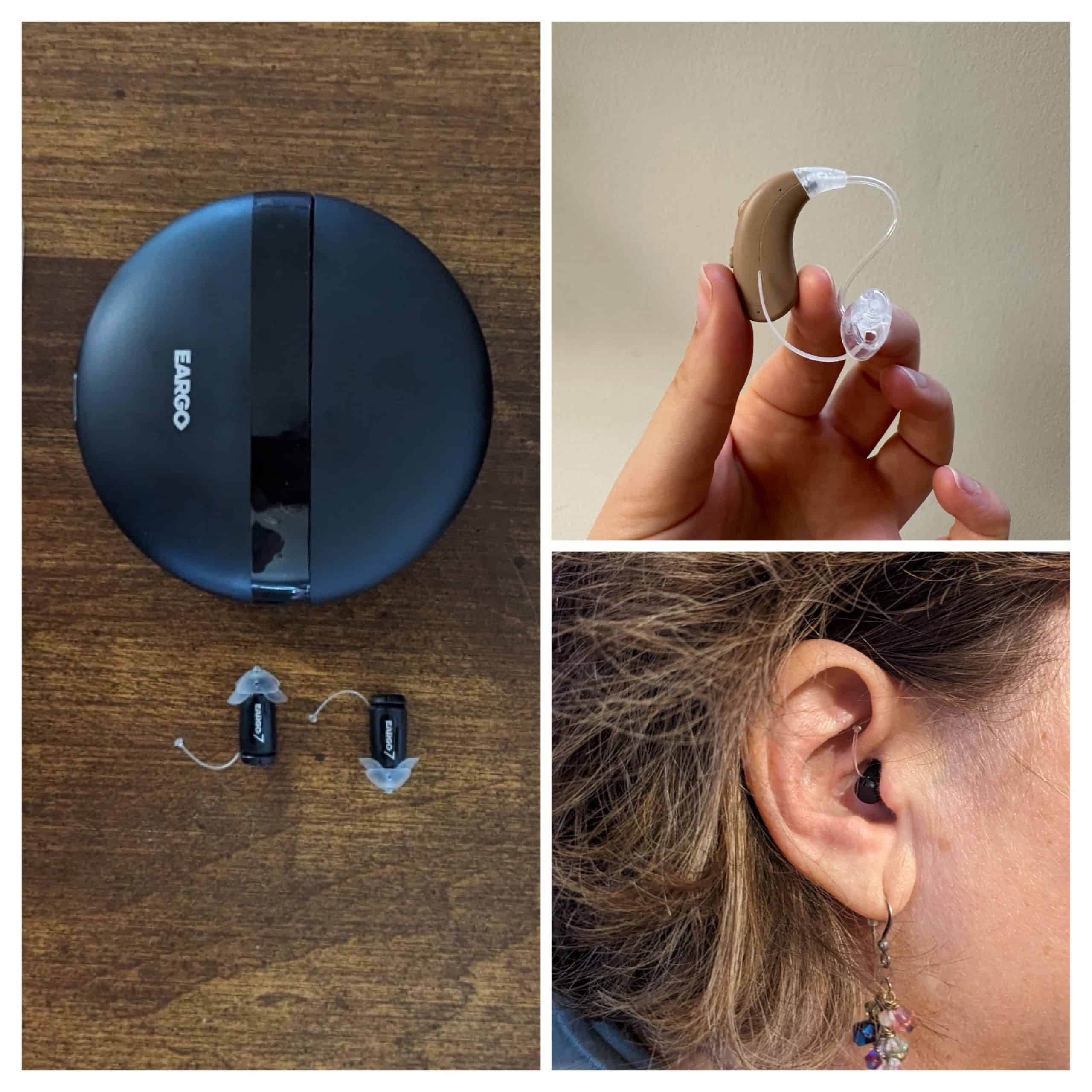
Our team testing out different hearing aids
How We Tested the Hearing Aids
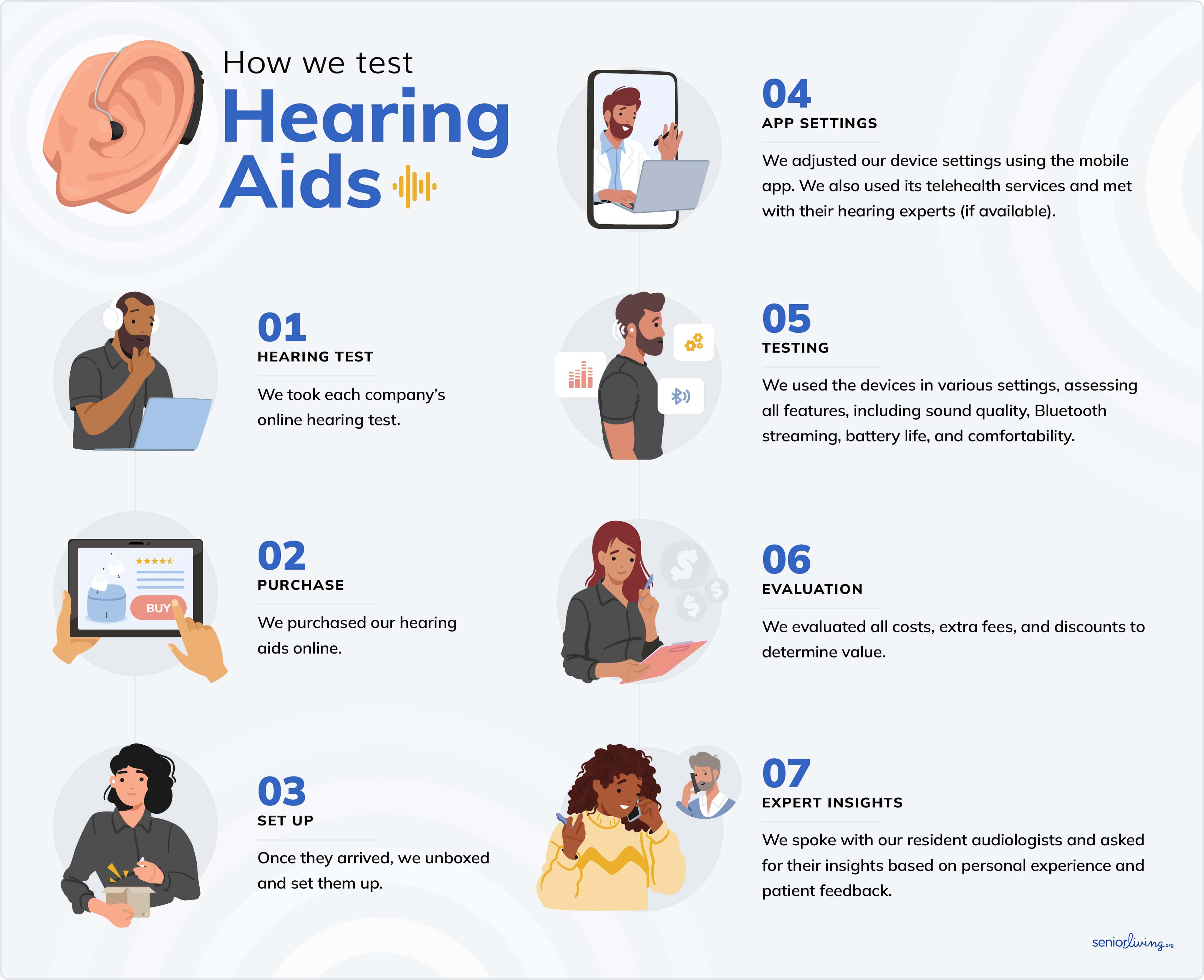
Our team spent 200 hours testing the best-reviewed hearing aids on the market. From the comfort of wearing different models to battery life on a single charge, we took notes on every aspect of our experience.
Here’s what our testing process looked like for OTC hearing aids that could be ordered online:
- We took each brand’s online hearing test and compared our results to in-person evaluations from an audiologist.
- Then, we ordered our hearing aids, taking note of the purchasing process and how easy (or difficult) it was. We evaluated the price and value of each hearing aid, including seasonal promotions, additional fees, and upfront costs.
- Once we received our devices, we set them up following the instructions. We evaluated the ease of use and steps required to get our hearing aids (and mobile app, if applicable) up and running.
- We spoke with customer service several times to evaluate the quality of care, including over the phone, through the mobile app (if applicable), and using any online chat features.
- Our team tested each hearing aid for a week, using them at home, in noisy environments such as restaurants and busy streets, and in quiet one-on-one settings. We evaluated the hearing aid’s features and sound quality in different locations.
For prescription hearing aids that can’t be ordered online, we spoke with Dr. Reisman about her expertise with each brand. We considered her experience prescribing and testing each brand, as well as patient feedback, to evaluate and rank each brand.
How We Chose the Best Hearing Aids
With this hands-on testing complete, we compiled a list of the top providers that outshine the competition based on our testing experience and Dr. Ruth Reisman’s expertise. We evaluated criteria including:
- Ease of use: Many older adults with dementia may get frustrated when tasks are too complex or difficult to remember. Our tech team focused on hearing aids that we could easily put on without extra help or limited dexterity. We noted the steps needed for daily use and adjustments, comparing ease of use between models.
- Battery life: All providers on our list offer rechargeable hearing aids. Dementia patients often struggle to handle tiny disposable batteries, so we looked for hearing aids that can last a day or longer on a single charge, making life easier for those who struggle with memory problems. We used each hearing aid every day for a week, taking note of how long the battery lasted. We only included models lasting 16 hours or more on a single charge.
- Purchase process: We went through the traditional route of purchasing OTC hearing aids and compared that with the more involved process of acquiring prescription hearing aids. Our final list includes both OTC and prescription hearing aids to accommodate patients with different hearing needs and preferences.
- Pricing: We selected hearing aids with varied price points to help seniors on any budget. You can expect to pay anywhere between $300 and several thousand dollars for a pair of hearing aids that meet the unique needs of individuals with dementia. We also researched seasonal deals and other ways to reduce hearing aid costs.
- Dementia-friendly features: The best hearing aids for seniors with dementia or Alzheimer’s need features that can make daily life easier. We evaluated and compared useful features, including simple designs, low-battery reminders, 24/7 customer support, fall detection, and the ability to locate lost hearing aids. We also tested these features to evaluate their functionality and compare them with other providers.
Why Trust Us
Our team of tech experts tries out the latest gadgets and devices for seniors each year. We’ve logged hundreds of hours testing and reviewing hearing aids from dozens of providers.
We also collaborate with experts who have been working in health care for decades. Each hearing aid in this guide was reviewed by Dr. Ruth Reisman. She’s a licensed audiologist and hearing aid dispenser in New York.
Dr. Reisman has been at the forefront of new hearing aid technology, specializing in tinnitus therapy and communication coaching for those with hearing loss. She gave the green light for every hearing aid on this list and offered her personal and professional experience with each provider.
SeniorLiving.org is supported by commissions from providers listed on our site. Read our Editorial Guidelines

- Three BTE rechargeable models
- Prices start at $995 per pair
- Up to 30 hours of battery life on a single charge

- Six rechargeable models (BTE and in-canal)
- Prices start at $297 per pair
- Up to 20 hours of battery life on a single charge

- Three rechargeable models (in-canal and earbud style)
- Prices start at $799 per pair
- Up to 16 hours of battery life on a single charge

- Solutions for mild to profound hearing loss
- Rich sound quality
- Industry-leading technology

- Options for mild to profound hearing loss
- Health and wellness features
- Advanced AI technology
Contents
The combination of hearing loss and dementia presents a unique challenge for family members and caregivers searching for the best hearing aids for their loved one. You must consider both the person’s level of hearing loss and the severity of Alzheimer’s disease or other forms of dementia. Fortunately, there are hearing aids capable of improving quality of life without adding complexity to a dementia patient’s day-to-day activities.
Our senior tech experts and resident audiologist, Dr. Ruth Reisman, have tested the industry’s best hearing aids to select our top picks for patients with dementia. We evaluated critical factors of each aid, like price, battery life, and dementia-friendly features. Ultimately, Jabra Enhance won our top honor thanks to their BTE hearing aids. They all have a long battery life, up to three years of follow-up care, and an excellent balance between affordable pricing and valuable features.

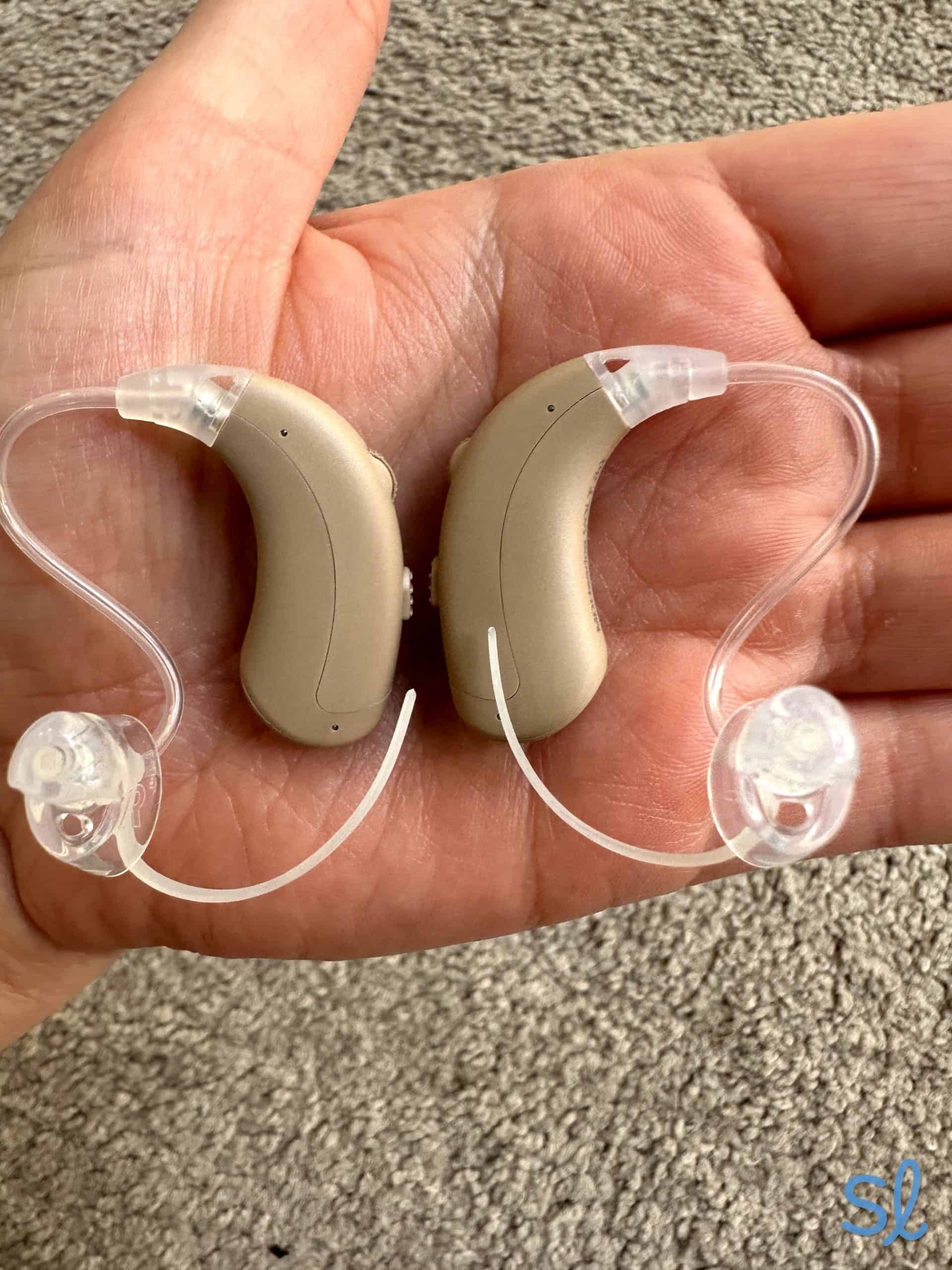
Testing out MDHearing's VOLT devices
The Best Hearing Aids for Seniors With Alzheimer’s in 2026
-
1. Jabra Enhance - Best rechargeable
 See Pricing Links to Jabra Enhance
What we like most
- Three BTE rechargeable models
- Prices start at $995 per pair
- Up to 30 hours of battery life on a single charge
Jabra EnhanceSee Pricing Links to Jabra EnhanceOverview:
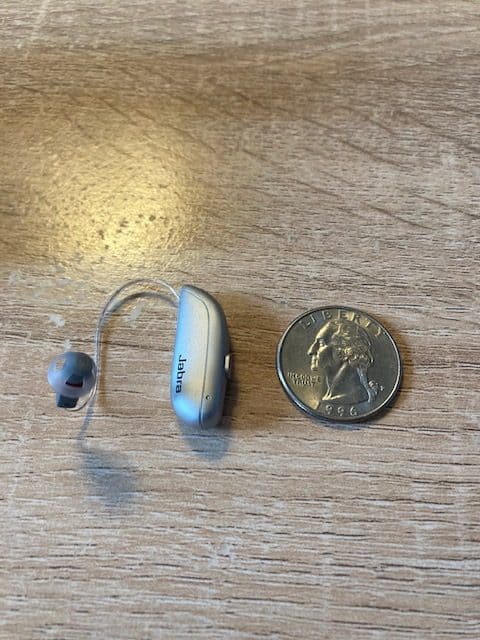
Testing out Jabra Enhance Select 300 hearing aids
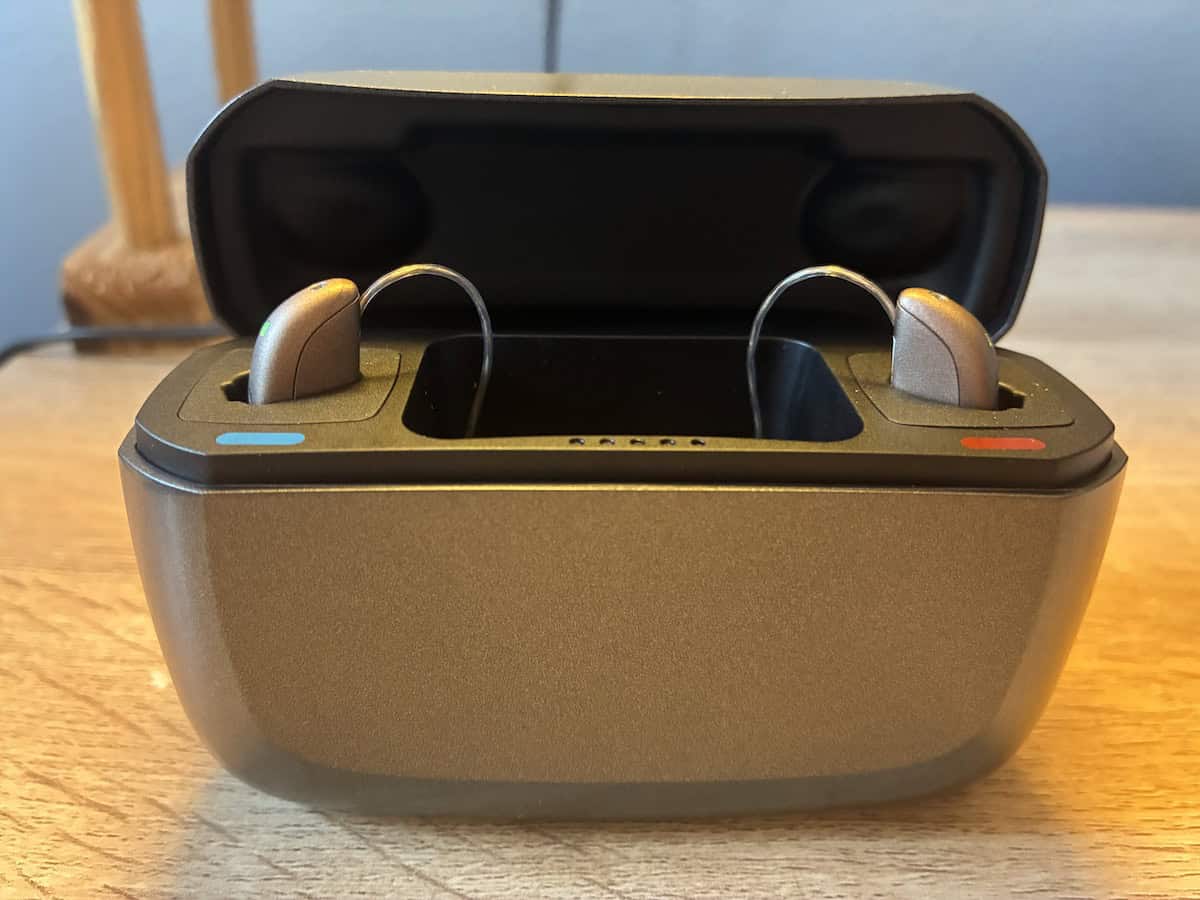
Cognitive challenges, such as difficulty learning new tasks or forgetting the steps to complete a task, are common struggles for people with dementia. We like that Jabra Enhance’s rechargeable, behind-the-ear (BTE) hearing aids don’t require all the steps of replacing batteries. All three of their hearing aid models make it convenient to keep powered on, with up to 30 hours of battery life per charge — nearly twice as long as Eargo. This is perfect for those with Alzheimer’s who may occasionally forget to charge them.
Current Deal: Jabra Enhance is offering up to $200 off when you sign up for their mailing list!
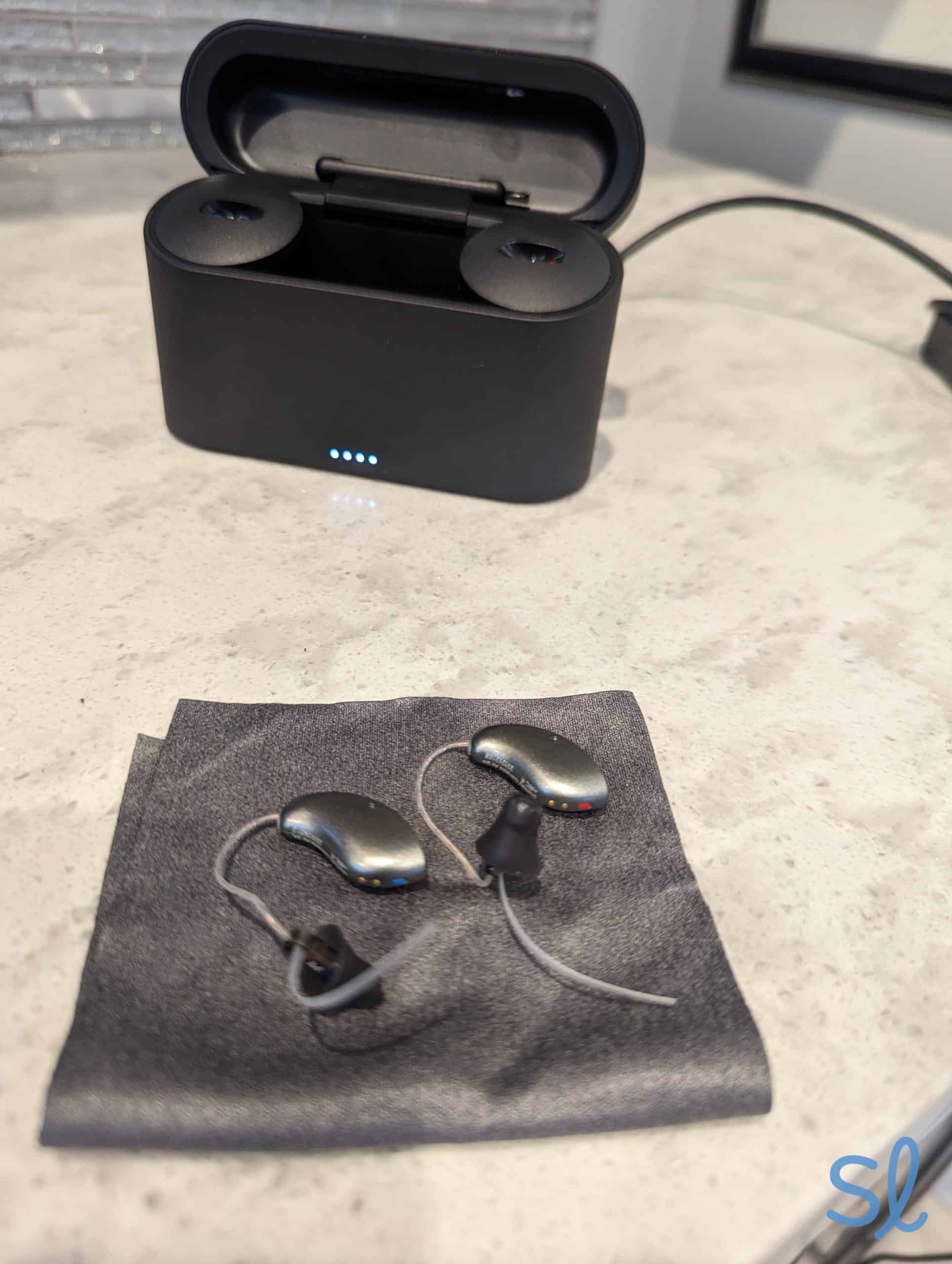
We’re big fans of the convenient charging case, which holds up to three additional charges. During testing, we appreciated their low-battery alert, as it provides a reminder to recharge the hearing aids (a great feature for seniors with memory loss). These BTE hearing aids are best for individuals with mild to moderate hearing loss and are custom-programmed based on your loved one’s needs.
 Expert InsightsFrom Audiologist Dr. Ruth Reisman,Without family support, navigating the technology and the fittings with Jabra Enhance will be very difficult for this population.Pros & Cons:
Pros About Jabra Enhance
- Long battery life of 30 hours per charge and low-battery warning
- Low-battery warning
- Remote care and adjustments with Premium packages
- Find My Jabra feature
- 100-day,money-back guarantee
- Can be purchased online
- Three years of follow-up care, warranty, and loss and damage protection with Premium packages
Cons About Jabra Enhance
- Must have a compatible smartphone or tablet to use
- Extended warranty and audiologist support cost extra
- Only sold in pairs
Our Experience With Jabra Enhance:Jabra Enhance’s over-the-counter (OTC) hearing aids are available online from the comfort of your home, and Premium packages come with virtual follow-up care. It is beneficial if your loved one feels anxious or uneasy in new situations, like visiting a doctor’s office.
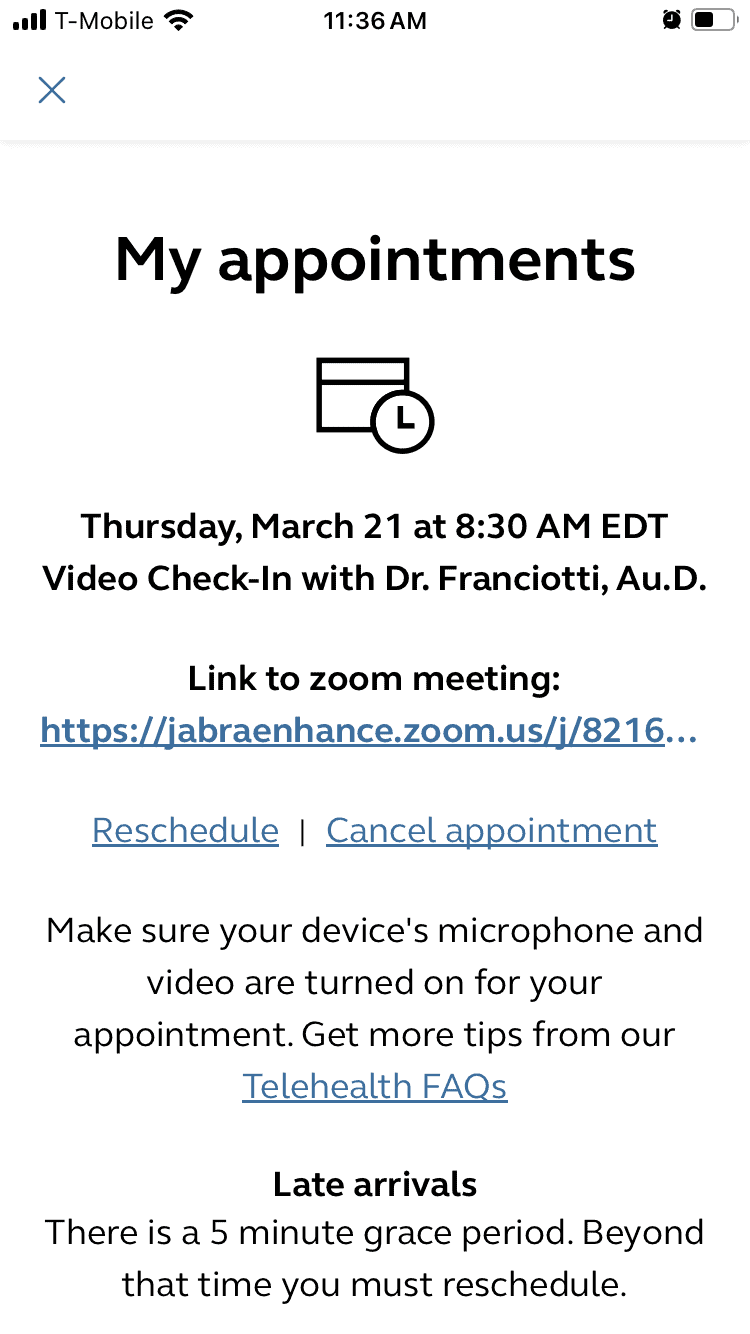
When our team tested the Jabra Enhance Select 300 model, we collaborated with an audiologist who taught us how to use the hearing aids and mobile app. She also helped us adjust our hearing aids for the best fit and listening experience. We could easily make additional appointments with her through the brand’s mobile app.

You can easily schedule an appointment with a Jabra Enhance audiologist through the mobile app.
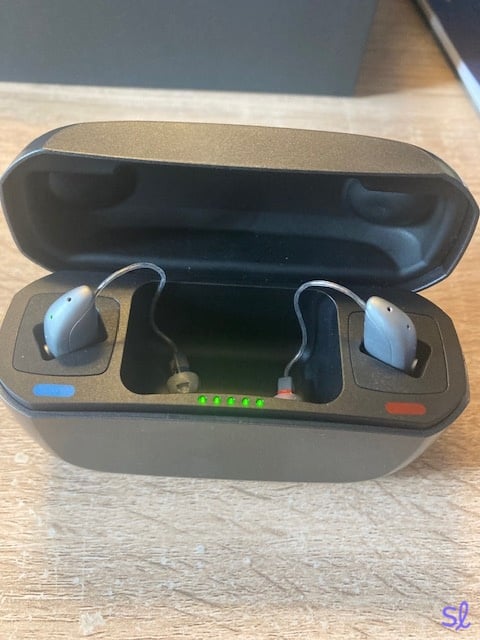
We love the long battery life of the Jabra Enhance Select 300. Seniors won’t have to remember to charge their devices as frequently as they would with a comparable model from MDHearing or Eargo. Our hearing aids lasted 30 hours on a single charge. Battery life was reduced by a few hours when we streamed music or made phone calls via Bluetooth. We brought our charging case with us wherever we went. That meant we could charge our devices on the go. Read our Jabra Enhance Select 300 review to learn more about our experience with this model.

Charging Jabra Enhance Select 300 hearing aids
One potential downside is that Jabra Enhance hearing aids require a smartphone or tablet. We needed the Jabra Enhance mobile app for the initial setup, such as ongoing volume and settings adjustments.
That might be an advantage for some seniors, but if your loved one struggles with technology, it could be harder for them to get the most out of their hearing aids. However, a caregiver or loved one could help the user adjust settings in the mobile app to make daily use less challenging.
» Our Full Review: Jabra Enhance hearing aids review 2026
Pricing
Jabra Enhance is more affordable compared to prescription hearing aids. There are a few more affordable OTC options on the market, including MDHearing. For example, Jabra Enhance’s rechargeable models start at $1,195 for the Enhance Select 50R Premium package. The mid-range model, Enhance Select 300, starts at $1,695, while the Enhance Select 700, the company’s high-end hearing aid packed with the most advanced tech, costs $1,995 for the Premium option.
FYI: Jabra Enhance’s pricing is much lower than traditional prescription hearing aids like Phonak and Starkey, which cost at least a few thousand dollars and require multiple in-person appointments.
It comes with a three-year warranty and three years of remote audiologist support. Our tech experts and Dr. Reisman think the care is well worth the cost, as it ensures that your hearing aids are fine-tuned to your individual hearing loss.
-
2. MDHearing - Best basic options
 See Pricing Links to MDHearing
What we like most
- Six rechargeable models (BTE and in-canal)
- Prices start at $297 per pair
- Up to 20 hours of battery life on a single charge
MDHearingSee Pricing Links to MDHearingOverview:
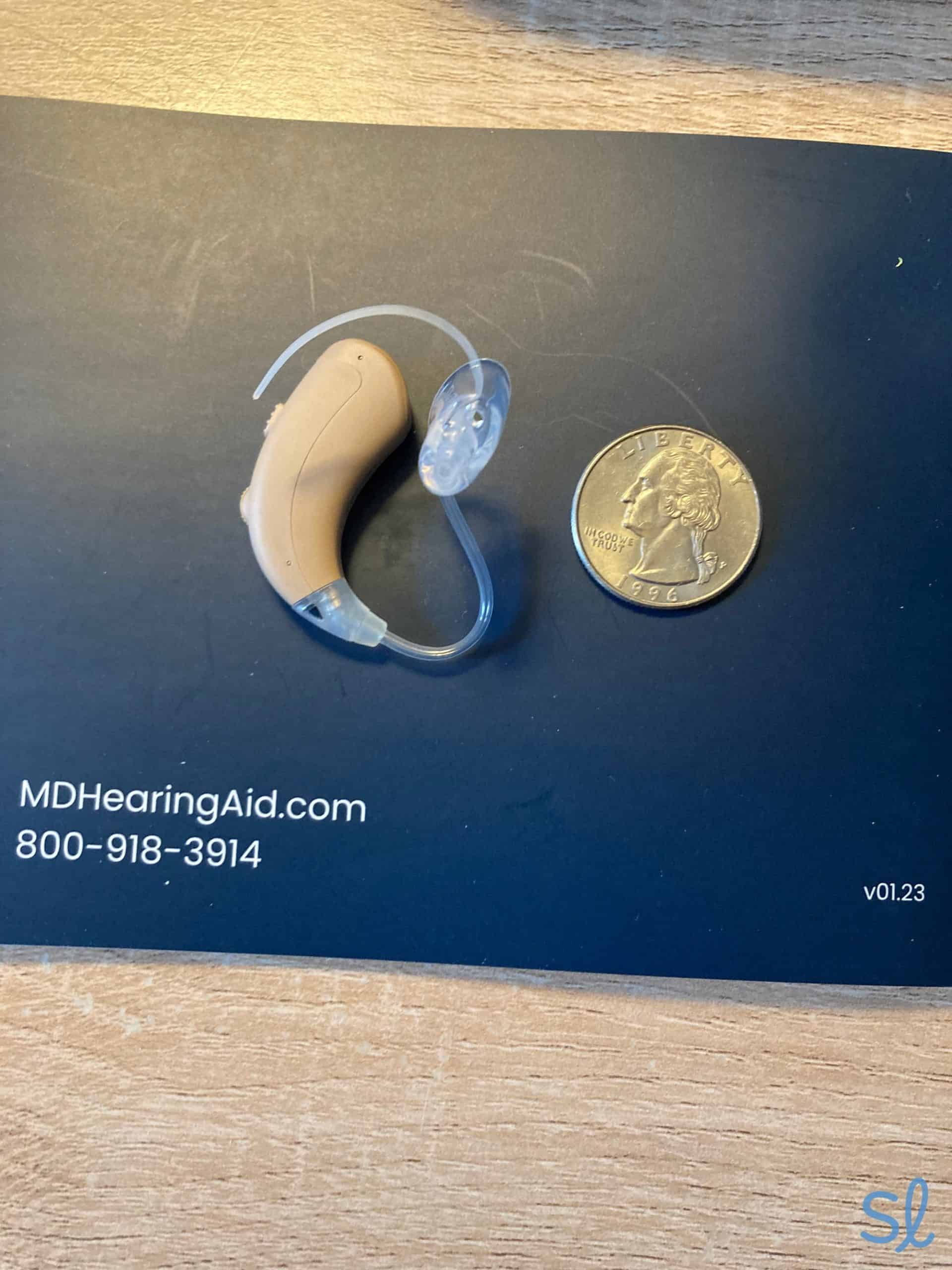
Testing out MDHearing's VOLT devices, which are small and sit behind the ear.
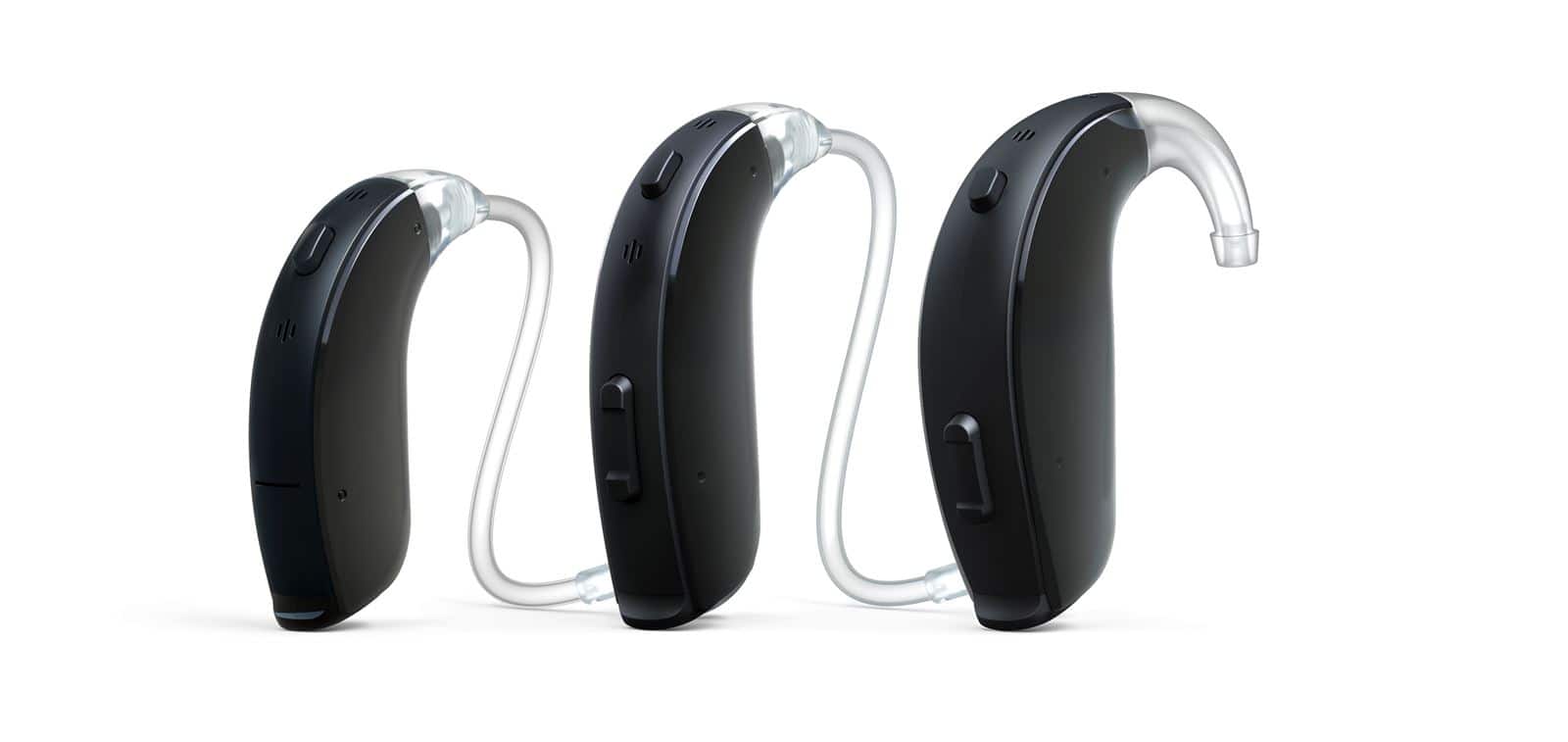
MDHearing is an OTC brand that offers simple, no-frills hearing aids. They’re the least expensive hearing aids on our list, starting at just $297 per pair, making them highly accessible. The provider offers BTE models, including the VOLT and VOLT MAX, as well as more discreet in-ear models, like the NEO and NEO XS. They’re not as discreet as hearing aids from Eargo, though.
» Compare Providers: MDHearing Aid vs. Eargo
Since the VOLT is rechargeable with limited advanced features, it requires minimal adjustments, a benefit for users with Alzheimer’s who could be easily confused or agitated when using advanced tech. Unlike Jabra Enhance, which requires a mobile app, MDHearing does not for most models. The latest model, VOLT MAX, is the only Bluetooth-ready model with a mobile companion app, which means seniors who want to pay less and still get advanced features do have options with MDHearing.
Current Deal: MDHearing offers seasonal promotions with discounted rates and free accessories.
Pros & Cons:Pros About MDHearing
- Affordable pricing
- Free 24/7 lifetime support
- Available in single or pairs
- Does not require custom fittings or an in-person appointment
- Fits comfortably with glasses
- One- to two-year warranty
Cons About MDHearing
- Not suitable for severe-to-profound hearing loss
- Some models can be difficult to adjust manually
- BTE options can over-amplify sounds
- Only one model with mobile app and Bluetooth
Our Experience With MDHearing:As with other online hearing aid companies, MDHearing offers online hearing tests to help you determine if their devices are right for you. The test only took about five minutes, and it was simple. From there, we ordered MDHearing’s hearing aids on their website. That is a plus, as in-person office visits may negatively disrupt or disorient a structured day.
Did You Know? Approximately one-third of Americans with hearing loss — or 20 million people — have not purchased hearing aids or even seen a doctor about their condition.
Our team has tested four MDHearing models, ranging from BTE to in-ear options. The VOLT model includes a simple volume control dial and a button to adjust preprogrammed settings. Its user-friendly design makes it a solid selection for older adults with dementia.
However, Dr. Reisman notes that MDHearing’s BTE options can over-amplify sounds, so it’s essential to keep the volume low and gradually increase it as needed. It could be a concern if your loved one tries to turn the hearing aid volume up after you’ve fine-tuned the settings.
» Our Favorite MDHearing Model: MDHearing VOLT review
We consider the lack of extra features with most MDHearing models to be a plus for Alzheimer’s patients who need simple devices. The roughly 20 hours of listening time on a single charge is four more hours than costlier models from Eargo, but it still couldn’t compete with the 30 hours you get with the Jabra Enhance Select 300.

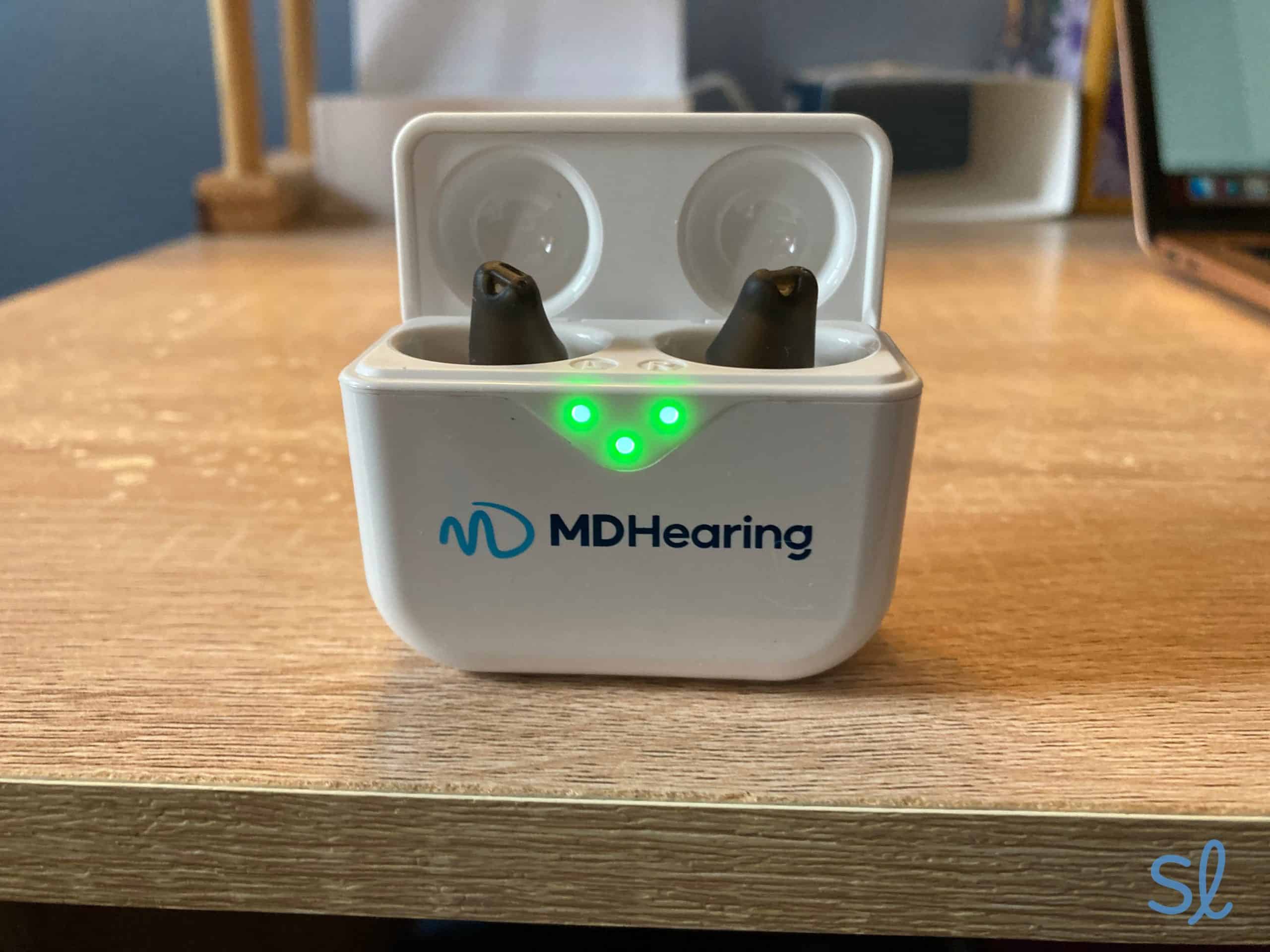
Most of MDHearing's devices are rechargeable, including the NEO XS, which we tested.
While testing the NEO XS model, our tech experts struggled to change the domes and needed to call support. This kind of issue could prove challenging for seniors with Alzheimer's. That said, the VOLT and AIR BTE models are both physically larger and easier to adjust than the in-ear NEO XS.
» Our Full Review: MDHearing reviews
Want a closer look at MDHearing? Watch our MDHearing VOLT review with audiologist Dr. Brad Ingrao below.
Audiologist Brad Ingrao unboxes the MDHearingAid Volt Hearing Aid so you can make an informed decision whether to try this well-regarded device. Pricing
MDHearing's pricing ranges from $297 to $999 per pair for their most advanced model. Ensure that you review MDHearing’s range of competitive financing options, including three-, six-, or 12-month payment plans that start at 0 percent APR. While you may not get all the advanced features that come with Jabra Enhance or Eargo, it’s hard to compete with MDHearing’s low prices.
Pro Tip: Our comprehensive hearing aid buying guide includes essential details on types of hearing aids and how to choose the best hearing aid for your loved one.
The new VOLT MAX is the most expensive MDHearing model at $597, but it’s the only one to offer a companion mobile app and Bluetooth connectivity. If you’re willing to pay $200 more for VIP Care, you get an extended two-year warranty. You also get priority care when you call customer service, a one-on-one fitting with a hearing aid professional, and personalized follow-up care. Remember that VIP Care is currently only available with the VOLT MAX. You can still receive lifetime customer support. The standard one- to two-year warranty is valid with any other MDHearing model.
-
3. Eargo - Most discreet
 See Pricing Links to Eargo
What we like most
- Three rechargeable models (in-canal and earbud style)
- Prices start at $799 per pair
- Up to 16 hours of battery life on a single charge
EargoSee Pricing Links to EargoOverview:
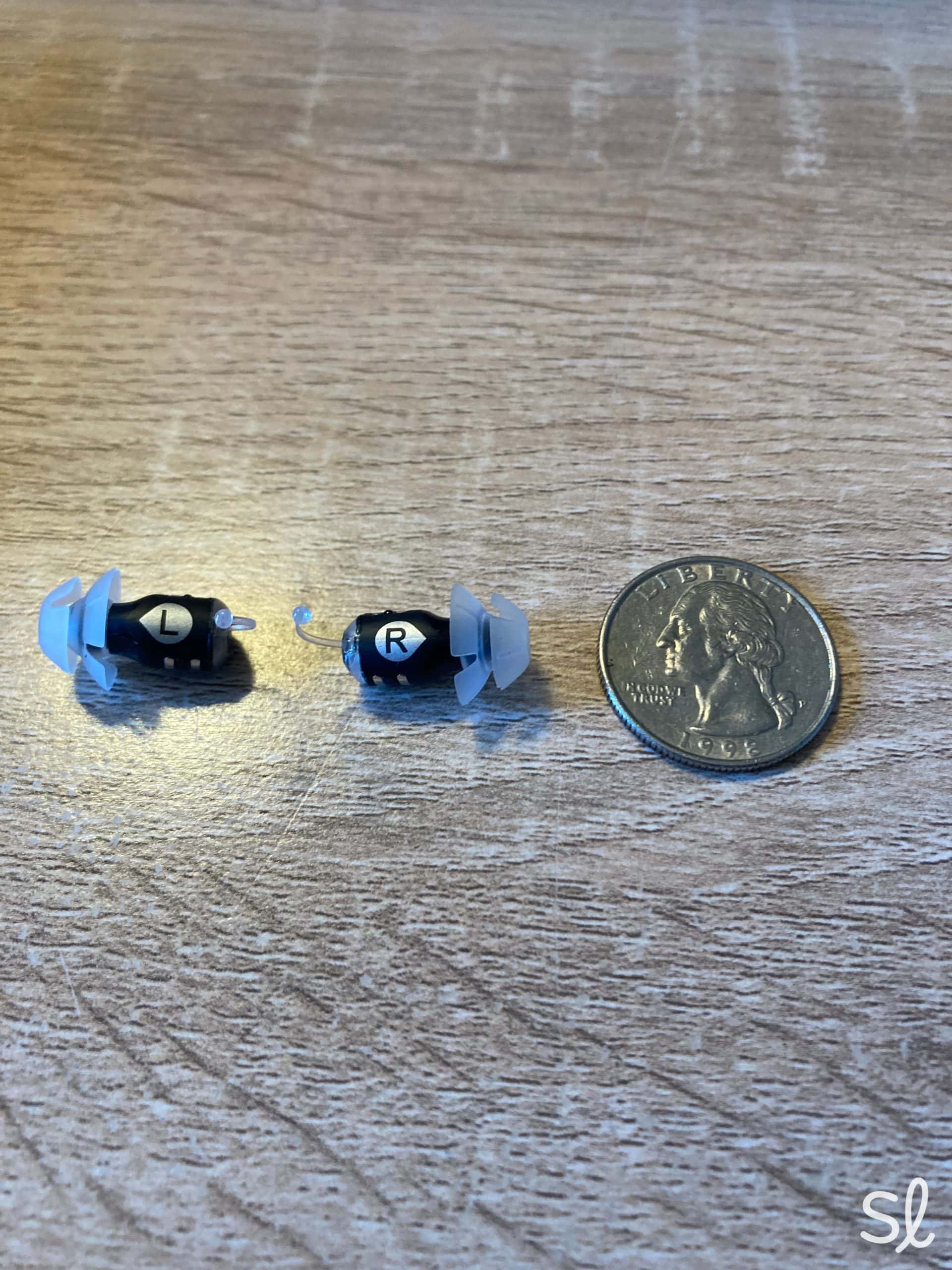
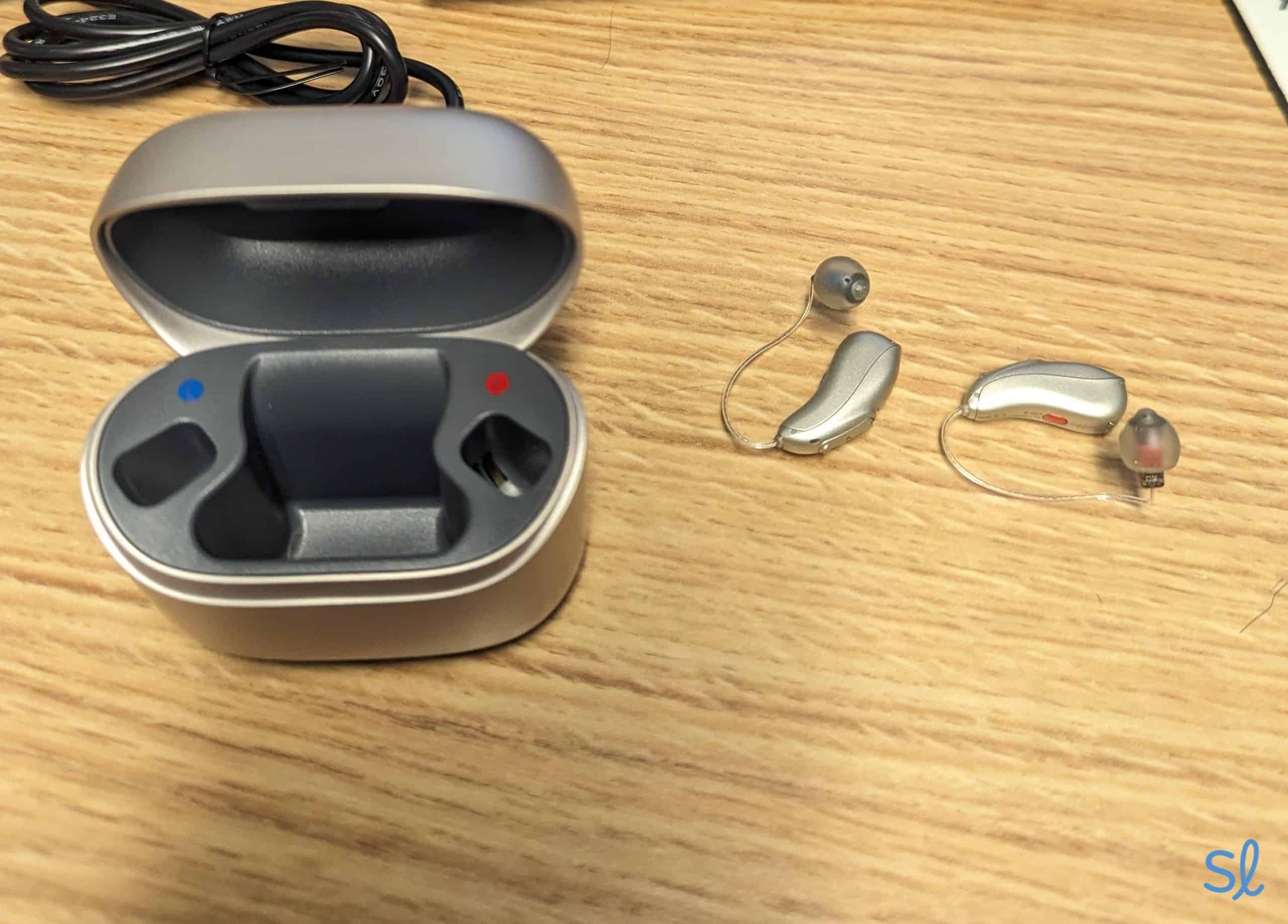
Eargo SE hearing aids are small and fit in the canal, making them very discreet.
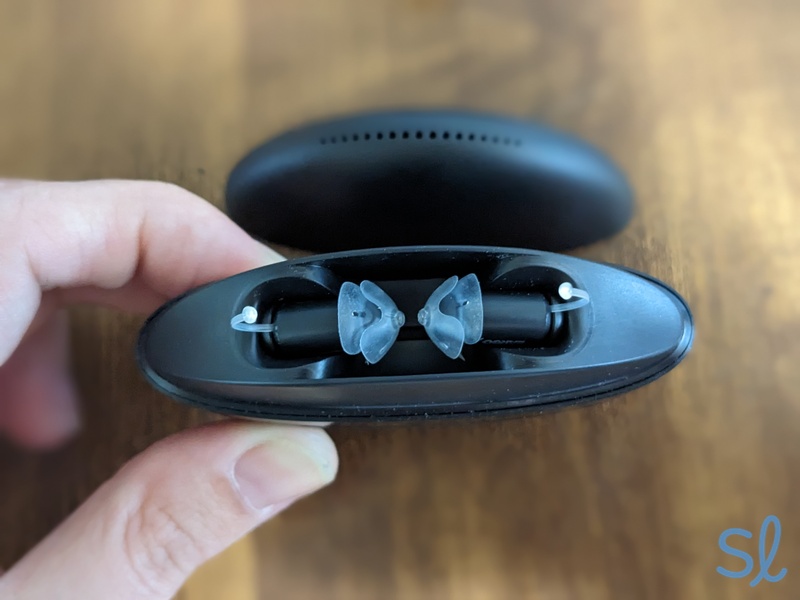
Eargo’s two completely-in-canal (CIC) rechargeable models and one earbud-style device are designed for adults with mild to moderate hearing loss who want a discreet hearing aid. Simplicity is key for individuals battling dementia or Alzheimer’s disease. Because Eargo is a rechargeable CIC hearing aid, it requires the fewest steps. Your loved one will simply take the hearing aids from the charging case and place them in the ear.
» Compare Providers: Eargo vs. Phonak
Eargo delivers a discreet and easy-to-use hearing aid. It’s practical if your loved one has difficulty with detailed instructions. CIC hearing aids may not be ideal for everyone due to ear shape and anatomy. One of our testers has smaller ears, and she found the Eargo models uncomfortable. Before using CIC models, we recommend a professional medical evaluation.
Pros & Cons:Pros About Eargo
- Minimal steps for hearing aid usage
- Rechargeable, discreet designs
- Try before you buy option
- Lifetime on-demand telecare support
- One-time loss or damage coverage
- Discreet design
- Online purchase without a prescription
Cons About Eargo
- Loss potential may be greater due to small size
- Not for severe-to-profound hearing loss
- May not be suitable for all ear shapes and sizes
Our Experience With Eargo:We’re big fans of Eargo’s free sample kit that allows individuals to try before they buy. The user-friendly kit includes a handy product guide and two non-working replicas of Eargo devices. Eargo is a fantastic choice for first-time users or if your loved one feels comfortable wearing CIC hearing aids. One major downside is that even Eargo’s best models only offer 16 hours of listening time per charge. Your loved one must remember to charge the devices more often.
» For Additional Help: How to put in hearing aids
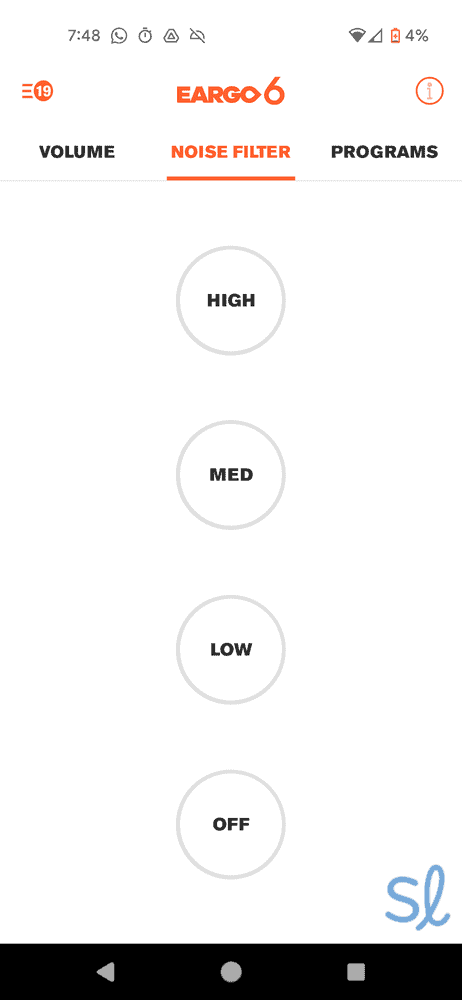
Eargo’s customer service is impressive, with personalized support from licensed hearing professionals available via phone, text, email, or video chat. Unlike Jabra Enhance, Eargo doesn’t make you pay extra to see a specialist. Like Jabra Enhance, however, Eargo requires a smartphone or tablet app to set up the hearing aids and to make adjustments. That could be a drawback for Alzheimer’s patients who don’t want to use a separate device.

You can easily adjust your hearing aid settings in the Eargo mobile app.
Due to their small size, Eargo hearing aids might be easy to misplace. According to the Alzheimer’s Association, a person living with Alzheimer's or dementia may put things in unusual places or lose them and be unable to retrace their steps to find them.1 Fortunately, Eargo offers one-time coverage for loss or damage. If your loved one is prone to losing things, you might want to select a provider offering larger and less expensive hearing aids. Examples include MDHearing. Alternatively, a provider that offers features to locate lost hearing aids, such as Jabra Enhance or Starkey, might work.
» Our Full Review: Eargo hearing aid review
Pricing
Eargo’s hearing aid prices are below the average prescription hearing aid cost, though they are on the expensive side of OTC options. They range from $799 to $2,699 per pair. For comparison, Jabra Enhance’s top-tier model is around $1,000 less than Eargo 8, the company’s premium model.
If you’d prefer to pay over time, choose between Eargo’s 12- or 24-month financing plans. Eargo’s most affordable hearing aid is the earbud-style LINK by Eargo ($799). If you want a more advanced CIC model with a longer battery life, the next most affordable option is the Eargo SE, $1,699 per pair. Meanwhile, the Eargo 8 costs $2,699 per pair.
If you’re shopping for hearing aids on a budget and the LINK doesn’t seem like a good fit for you, MDHearing may be a better option. While MDHearing doesn’t offer the same degree of discretion as Eargo, their hearing aids are affordable.
Current Deal: Keep your eyes peeled for deals when shopping on Eargo’s website. Healthcare workers and veterans can save on select devices at any time.
-
4. Phonak - Best extended-wear hearing aid
 See Pricing Links to ZipHearing.com
What we like most
- Solutions for mild to profound hearing loss
- Rich sound quality
- Industry-leading technology
PhonakSee Pricing Links to ZipHearing.comOverview:
Phonak offers a variety of hearing aids for all levels of hearing loss.
Phonak (a member of the Sonova Group) manufactures cutting-edge hearing aids and accessories available in over 100 countries worldwide. Phonak’s comprehensive product line includes the noteworthy Lyric model. This extended-wear hearing aid, suitable for mild to profound hearing loss, is an attractive option for individuals with Alzheimer’s disease or other forms of dementia.
» You Might Like: Best Invisible Hearing Aids
Lyric hearing aids eliminate the wearer’s responsibility of inserting, removing, charging, and changing batteries for the hearing aid. It is inserted into the ear canal (near the eardrum) by a certified Lyric provider every four months. Your loved one can wear their Lyric hearing aids 24/7 without needing to remove them for activities like sleeping or showering! This feature helps eliminate costly damage or loss of hearing aids.
Pros & Cons:Pros About Phonak
- Extended-wear 24/7 hearing aid
- Inserted by a hearing aid professional
- No battery to change or recharge
- 100% invisible
- Can wear while sleeping and showering
- Range of sizes for a comfortable fit
Cons About Phonak
- Hearing aid must be inserted and programmed by a Lyric provider
- More expensive than OTC alternatives
- Must be purchased in person
Our Hands Experience:Our Experience With Phonak
Phonak’s product line is well-made, reliable, and durable. The Lyric is a low-maintenance hearing aid option that provides 24/7 hearing and lasts for months. This feature is noteworthy as it eliminates potentially confusing tasks common in traditional hearing aids, such as inserting them, turning the power on, and keeping the battery charged. Phonak’s Lyric may be wise if you’re looking for a hands-off hearing aid.
» Our Full Review: Phonak hearing aid reviews
If Lyric isn’t the right fit for your loved one, Phonak offers several traditional hearing aids for all levels of hearing loss. Phonak is one of Dr. Reisman’s top picks for severe-to-profound hearing loss, as the brand offers excellent support and audibility for more intense levels of hearing loss.
One of her favorite models is the Phonak Naída Lumity BTE. In her words, “These devices are often the only option for individuals with very significant hearing loss,” while offering “Bluetooth, hands-free calls, and Roger compatibility for seamless communication in all environments.”
Expert InsightsFrom Audiologist Dr. Ruth Reisman,The Lyric is truly a great option for this population. It requires zero or minimal involvement for the patient, and regular appointments and reminders can be set up to have them changed quarterly. That makes hearing aids effortless.Pricing
All Phonak products, including the Lyric, are sold through authorized Phonak providers. Phonak hearing aid pricing is not published online and varies by location. Dr. Reisman estimates that Phonak hearing aids cost somewhere between $1,000 and $3,750 per device (and twice as much for a pair). It’s similar to other prescription providers, including Starkey, but still far more expensive than MDHearing, Jabra Enhance, and Eargo.
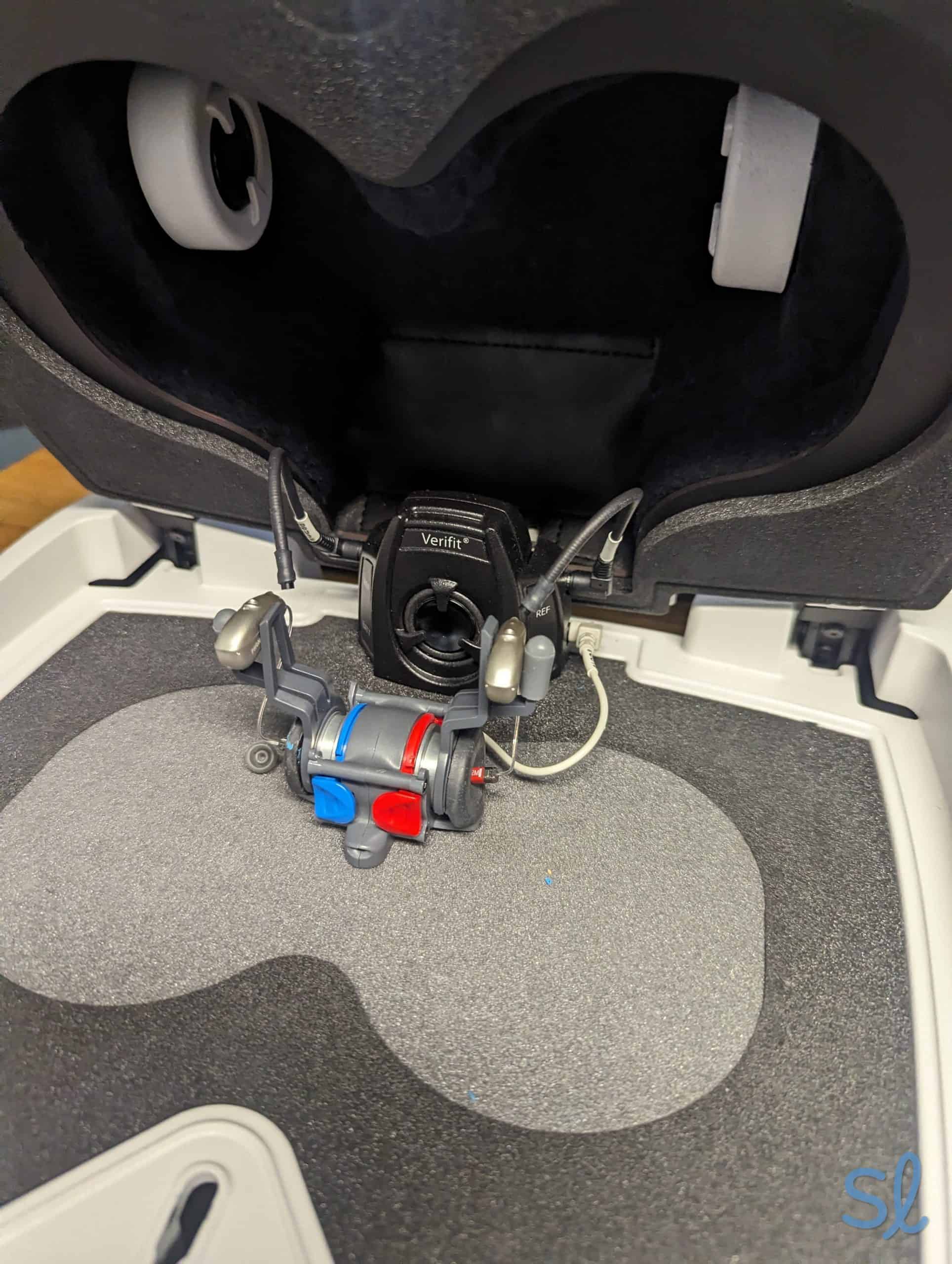
Just remember: Prescription hearing aids offer more support and customization than OTC hearing aids. Dr. Reisman and other audiologists use special equipment and hearing evaluations to ensure your hearing aids are tailored to your unique hearing loss. It may be worth the price for those with more severe or complex hearing loss.

Dr. Reisman uses Verifit equipment to test Phonak hearing aids and ensure the best experience for her patients.
-
5. Starkey - Best medical alert features
 See Pricing Links to ZipHearing.com
What we like most
- Options for mild to profound hearing loss
- Health and wellness features
- Advanced AI technology
StarkeySee Pricing Links to ZipHearing.comOverview:
Testing out Starkey hearing aids
Since 1967, Starkey has been at the forefront of hearing health, delivering innovative hearing aids for individuals with mild to profound hearing loss. Each year, three million older people are treated in emergency departments for fall injuries.2 Starkey’s answer to fall prevention is the Genesis AI and Genesis AI, which offers fall detection and caregiver alerts. Because those with dementia are at higher risk of falling than those without dementia, this feature could be useful.3 Dr. Reisman notes that fall detection is “truly a great feature for this population.”
Starkey’s models include health, wellness, and safety features similar to medical alert systems. Starkey’s Hear Share app allows hearing aid wearers to share information, such as hearing aid usage, physical activity, and social engagement, with preselected individuals. You can set reminders for recurring events, such as personal tasks or taking medication, which is an excellent feature for those with memory loss. The Gensis AI has several styles, including CIC, receiver-in-canal (RIC), and BTE models.
Pros & Cons:Pros About Starkey
- Fall detection and alerts
- Reminders through hearing aids
- Built-in health and wellness features
- Find My Hearing Aids feature
- Suitable for mild to profound hearing loss
- TeleHear remote adjustments
Cons About Starkey
- Must purchase through an in-person visit with a hearing clinic
- Model pricing not provided on website
- More expensive than OTC hearing aids
Our Hands Experience:Our Experience With Starkey
When a person struggles with Alzheimer’s or another type of dementia, family members and caregivers must remain in close contact. Starkey’s Genesis AI can send immediate alerts if a fall occurs. The bonus of scheduling reminders for medication or other routine tasks helps promote independence while providing additional support. Medical alert features are rare in hearing aids, making the brand stand out in our book.
» Our Full Review: Starkey hearing aid review
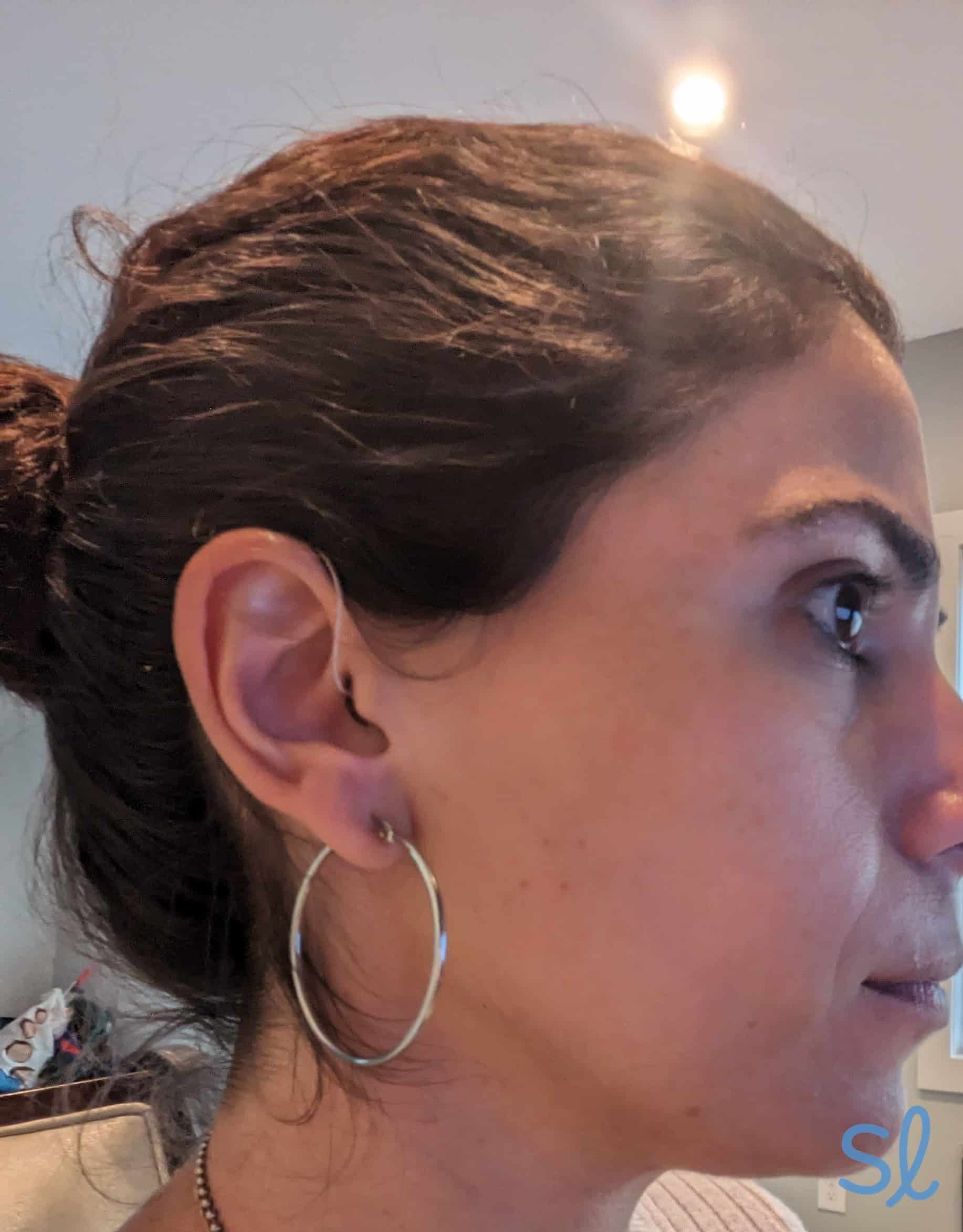
Dr. Reisman calls Starkey Genesis “the Rolls-Royce of hearing aids.” She also notes, “In addition to superior sound quality, the health features offered by Starkey hearing aids are not something you can find with any other provider. The future of their fall prevention feature will likely assist in balance rehabilitation for individuals with peripheral vestibular disorders.”

Dr. Ruth Reisman wearing Starkey Genesis hearing aids
Pricing
As with Phonak, Starkey’s hearing aid pricing isn’t advertised online. Dr. Reisman estimates you’ll need to pay between $1,000 and $4,000 per device. Visit your local Starkey retailer to find out if Starkey hearing aids will meet the needs of your loved one. It’s vital to know that you can obtain hearing aid quotes to compare pricing and services included, such as hearing tests, fittings, and follow-up care.
The Runners-Up
While the brands below didn’t make our list, they may still be suitable for some users.
- Lexie: The large buttons for volume control and listening environment adjustments make Lexie Lumen OTC hearing aids a beneficial option for loved ones with dementia. Head over to our Lexie hearing aid review to learn more.
- Otofonix: Otofonix provides OTC hearing aids at an affordable price. In fact, they’re one of the most affordable options for seniors with mild to moderate hearing loss. You can learn all about the provider and its offerings in our Otofonix hearing aid review.
- Signia: Signia is a notable leader in the hearing aid industry, offering hearing aid models with advanced customization, ensuring a comfortable fit, as well as easy insertion and removal. Read our review of Signia hearing aids to discover how Signia products stood up to our hands-on testing.
Are Hearing Loss and Dementia Related?
There is an undeniable connection between hearing loss and dementia. A multi-year brain scan study by Johns Hopkins Medicine revealed that hearing loss might contribute to a faster rate of atrophy in the brain.4 If you suspect your loved one is experiencing hearing loss (even if it appears mild), a hearing exam is essential in maintaining and maximizing hearing health.
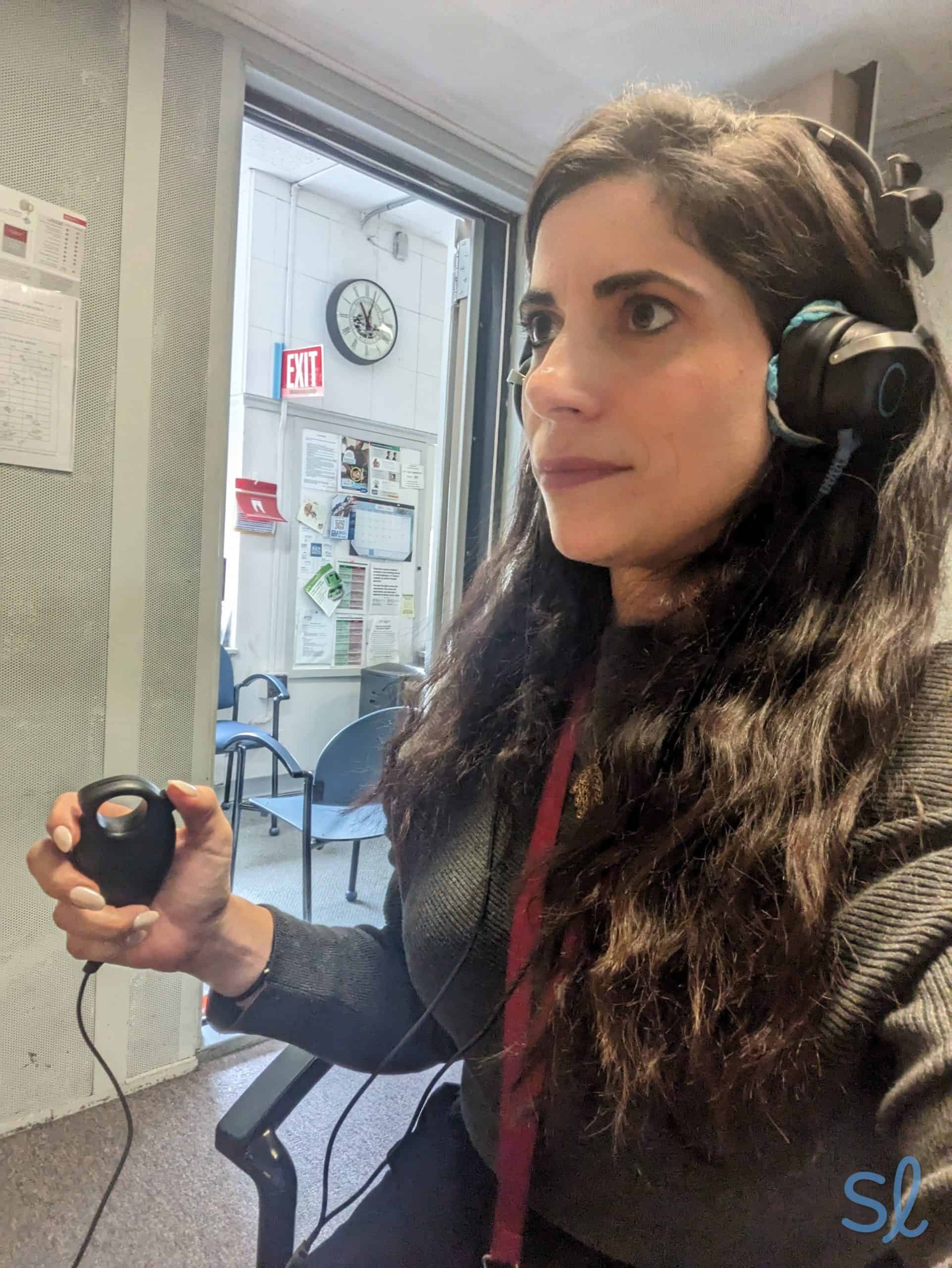
Audiologist Dr. Ruth Reisman demonstrates taking a hearing evaluation
From The Experts: Hearing aid usage among older adults has been linked with improved communication abilities and the slowing of cognitive decline.5
Common risk factors for dementia are family history, age, and the effects of strokes. However, individuals and their caregivers may be surprised to find that hearing loss is estimated to account for 8 percent of dementia cases. It means that hearing loss may be responsible for 800,000 of the nearly 10 million new cases of dementia diagnosed each year.6
Tips for Choosing Dementia-Friendly Hearing Aids From an Audiologist
There are several key features to consider when choosing a hearing aid for seniors with dementia.
| Hearing aid feature | Dementia-friendly benefit |
|---|---|
| Long battery life | This reduces the challenge of remembering to change or recharge batteries. |
| Medical alert notifications | Hearing loss and dementia can make your loved one more susceptible to falls. Built-in medical alert features enable family members to be notified immediately. |
| Dexterity-friendly | Ensure ease of adjusting hearing aids by avoiding models with small buttons. |
| Protection plan | Protection plans safeguard your loved one’s hearing aid investment from accidental damage (for example, water damage) or loss. |
| Tinnitus relief | Tinnitus may heighten memory problems, anxiety, and irritability.7 Hearing aids with tinnitus relief help reduce symptoms like ringing or buzzing in the ears. |
| Water-resistant technology | Your loved one may not always remember to take their hearing aids out before showering. Water-resistant and waterproof technology helps protect the aids from shorting out. |
| Background noise suppression | Directional microphones help reduce distracting noises. It is helpful if your loved one participates in group memory care activities or spends time in noisy or busy environments. |
Dr. Reisman also has several tips and tricks to make hearing aid usage easier for individuals with dementia. We’ve listed her tips below:
- “Options like selecting two different color devices can help patients differentiate between right and left hearing aids.
- Rechargeable batteries help reduce the need to remember to bring and change batteries on the go.
- Devices with ‘find my hearing aid' features are great.
- Using hearing device clothing clips, as they might for eyeglasses, has always worked well with this population.
- Giving hearing aid instructions to family members and caretakers is always a good idea as a backup solution, especially if the user has support.
- In senior centers, putting small labels with names or phone numbers helps to find and identify devices when they get misplaced.
- Additional hearing aid insurance offered from companies like ESCO can be helpful in the event of a loss or misplacement.”
Did You Know? Hearing loss may affect cognition and dementia risk in older adults and can make it harder to interact with others.8
Best Ways to Communicate With Individuals With Hearing Loss and Dementia
First and foremost, patience is essential. Your loved one is living with two health challenges, and some days will be better than others. Improve connecting with your loved one by using these five communication tools:
- Arrange routine hearing tests: Consistent testing (either online hearing tests or in-person at the audiologist) ensures your loved one receives the appropriate support for their level of hearing loss.
- Get the person’s attention: Say their name or touch their arm or shoulder before starting a conversation.
- Talk face-to-face: Ensure your loved one can see your face. Don’t attempt to communicate from another room.
- Avoid speaking or changing topics too quickly: Give them enough time to process your conversation.
- Reduce background noise: Optimize the environment by removing distractions or ambient sound.
Pro Tip: Our comprehensive hearing aid buying guide includes essential details on types of hearing aids and how to choose the best hearing aid for your loved one.
Additional Hearing Aid Resources for Those With Dementia
Want to compare all of your options? We’ve tested and reviewed hearing aids for several other categories that could help you find the right fit for your loved one:
- Best hearing aids for severe hearing loss
- Best Bluetooth hearing aids
- Best hearing aids for single-sided hearing loss
- Best hearing aids for tinnitus
- Most affordable hearing aids
- Best Android-compatible hearing aids
- Best OTC hearing aids
- Best hearing aids for iPhone users
- Best hearing aids for active seniors
- Best rechargeable hearing aids
- Best BTE hearing aids
Frequently Asked Questions About Hearing Aids for Alzheimer’s Patients
-
Can people with dementia wear hearing aids?
Yes. Individuals in the beginning stage of dementia may be comfortable inserting hearing aids, while patients with moderately severe or severe dementia may benefit from an extended-wear hearing aid.
-
What happens if a hearing aid is lost or damaged?
Many hearing aid manufacturers offer hearing aid loss and damage through insurance. This may be included in the warranty or purchased at an additional cost.
-
Does Medicare pay for hearing aids?
No. Medicare does not cover hearing aid exams or the aids themselves. Medicare Advantage Plans (Medicare Part C) or Medicaid may cover hearing aids.
-
What is the easiest hearing aid to use?
It will vary based on the patient’s hearing loss level and the severity of dementia or Alzheimer’s disease. Dr. Reisman notes, “Larger devices tend to be easier to manage and less likely to get lost.”
-
Alzheimer’s Association. (n.d.). 10 Early Signs and Symptoms of Alzheimer's and Dementia.
-
Centers for Disease Control and Prevention. (2024). Facts About Falls.
-
National Library of Medicine. (2017). Risk Factors Associated with Falls in Older Adults with Dementia: A Systematic Review.
-
Johns Hopkins Medicine. (n.d.). The Hidden Risks of Hearing Loss.
-
National Institute on Aging. (2023). Hearing aids slow cognitive decline in people at high risk.
-
Johns Hopkins Medicine. (2021). Hearing Loss and the Dementia Connection.
-
Mayo Clinic. (2022). Tinnitus – Symptoms and causes.
-
Alzheimers.gov. (2025). Can I Prevent Dementia?