Best Medical Alert Systems for Seniors With Hearing Loss (2026)
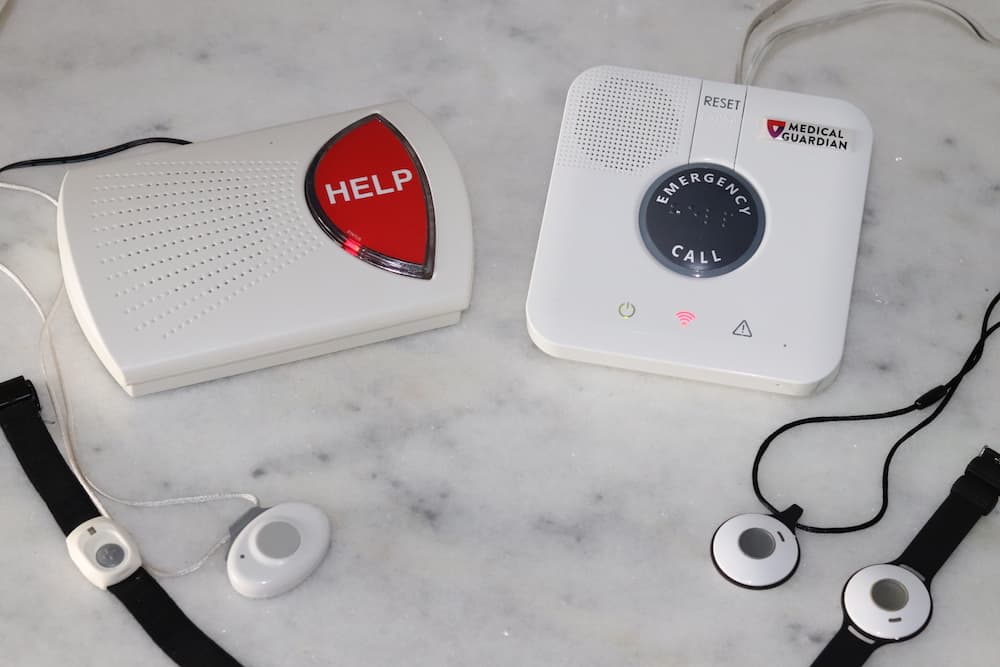
The best medical alert systems for seniors with hearing loss have loud speakers, visual alerts, and automatic fall detection.


Our team of senior tech and fall prevention experts tested and compared the best medical alert systems and narrowed down the list to our top picks for those with hearing loss.
How We Tested the Medical Alert Systems
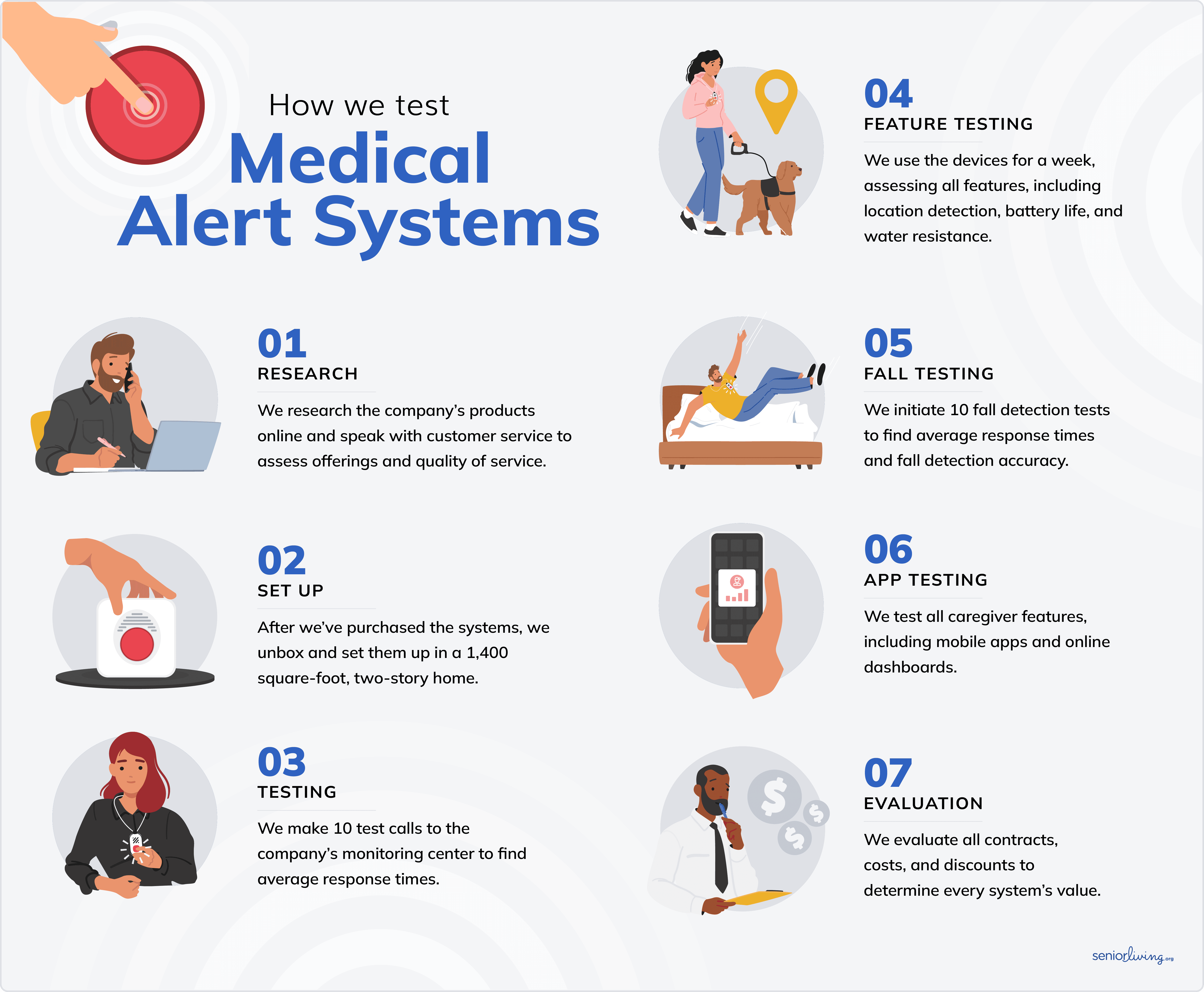
Our team of senior tech experts tested each system for a minimum of one week. We focused on price, ease of use, volume quality, and visual cues. We consulted with Linda Schlenker, an occupational therapist with over three decades of experience, to validate our criteria. We also recruited older adults to provide real-world feedback on the user experience.
How We Chose the Best Medical Alert Systems for Those With Hearing Loss
To make it on our list, a provider had to excel in the following areas:
- Pricing: Safety shouldn’t be a financial burden. We selected systems ranging from budget-friendly options to premium devices, ensuring all offer transparent pricing without hidden contracts.
- Features for hearing loss: We prioritized systems with specific utility for the hearing impaired, such as blinking LED alerts, vibrating bands, and high-decibel speakers.
- Fall detection: Since hearing loss is linked to a higher risk of balance issues1, fall detection was a requirement. We simulated falls to test accuracy and response speed.
- Ease of use: Devices must be intuitive. We ensured buttons were easy to press and that setting up the system didn’t require complex technical skills.
- Response times: We made multiple test calls to each provider. All systems on our list maintained average response times of under a minute.
- Operator training: Operators must interpret silence or confusion correctly. The best services keep your hearing status on file, prompting agents to speak clearly or alert EMS immediately if they get no verbal response.
To learn more about how we test medical alert systems, check out our medical alert system methodology guide.
Why Trust Us
SeniorLiving.org’s senior tech experts have tested dozens of medical alert systems from the industry’s top providers. We’re always trying out and evaluating the newest tech for older adults. All of our medical alert content is reviewed by Linda Schlenker, an occupational therapist with more than three decades of experience advising older adults and their caregivers on how to stay safe while aging in place. She and her patients have years of experience with medical alert systems. Linda approved all of the systems on our list and provided her insights and expertise.
SeniorLiving.org is supported by commissions from providers listed on our site. Read our Editorial Guidelines

- Prices starting at $27.95 per month
- Free caregiver mobile app
- Unique features: At-home and on-the-go bundles

- Prices starting at $31.95 per month
- Free caregiver mobile app
- Unique features: High-tech equipment and features

- Prices starting at $24.99 per month
- Free caregiver mobile app
- Unique features: Phones with medical alert features

- Easy-to-use systems
- Lifetime warranty
- Seasonal promotions
Contents
If you have hearing loss, the right medical alert system needs more than just a button. Many people need features like extra-loud speakers, visual flashing alerts, and reliable automatic fall detection.
My team and I spent over 100 hours testing the best medical alert systems to identify which ones truly serve older adults with hearing impairment. We evaluated volume levels, strobe light notifications, and operator clarity. Below, we break down the top systems that combine safety with hearing-friendly features.
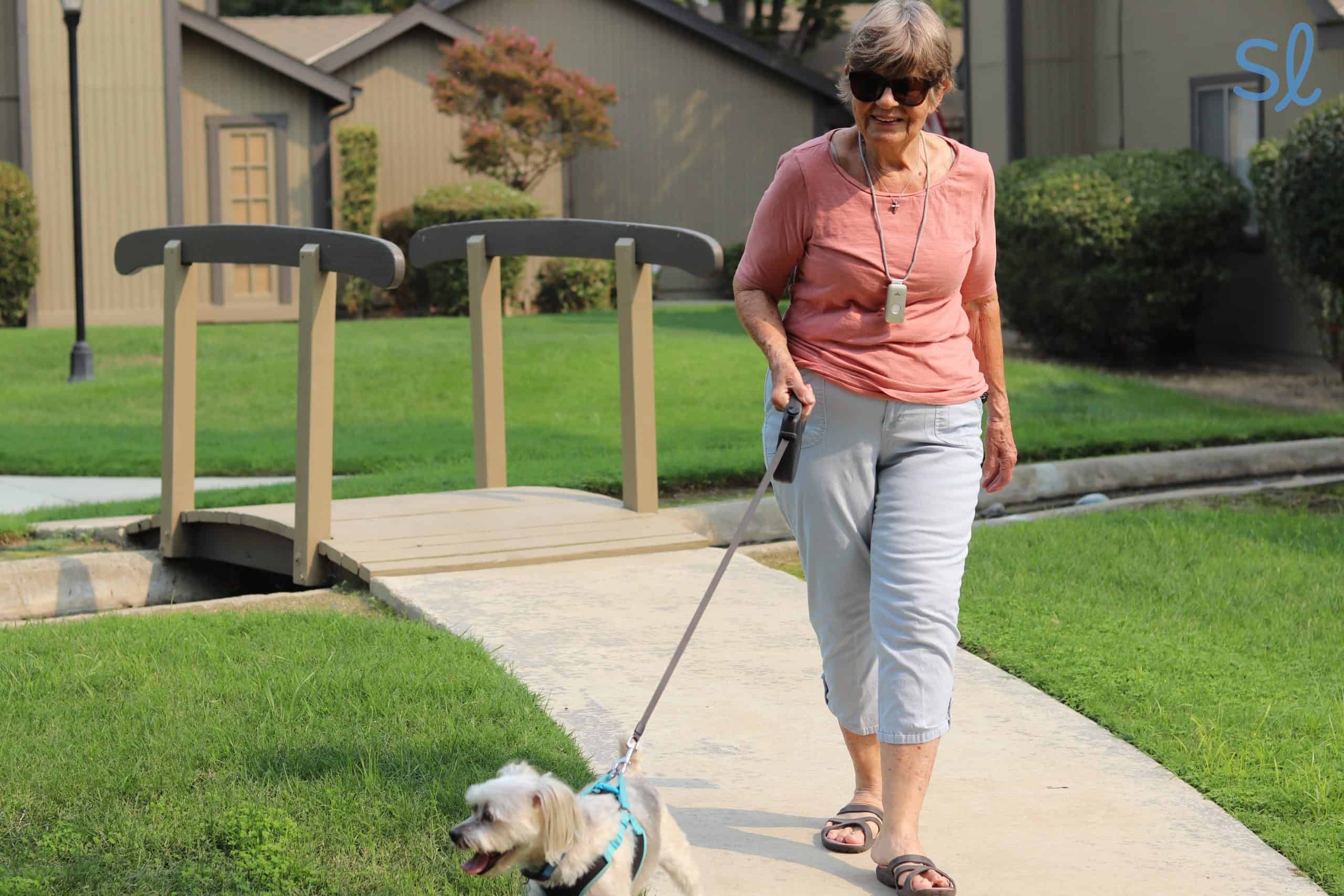
Testing medical alert systems with fall detection

The Best Medical Alert Systems for Older Adults With Hearing Loss
Our Methodology
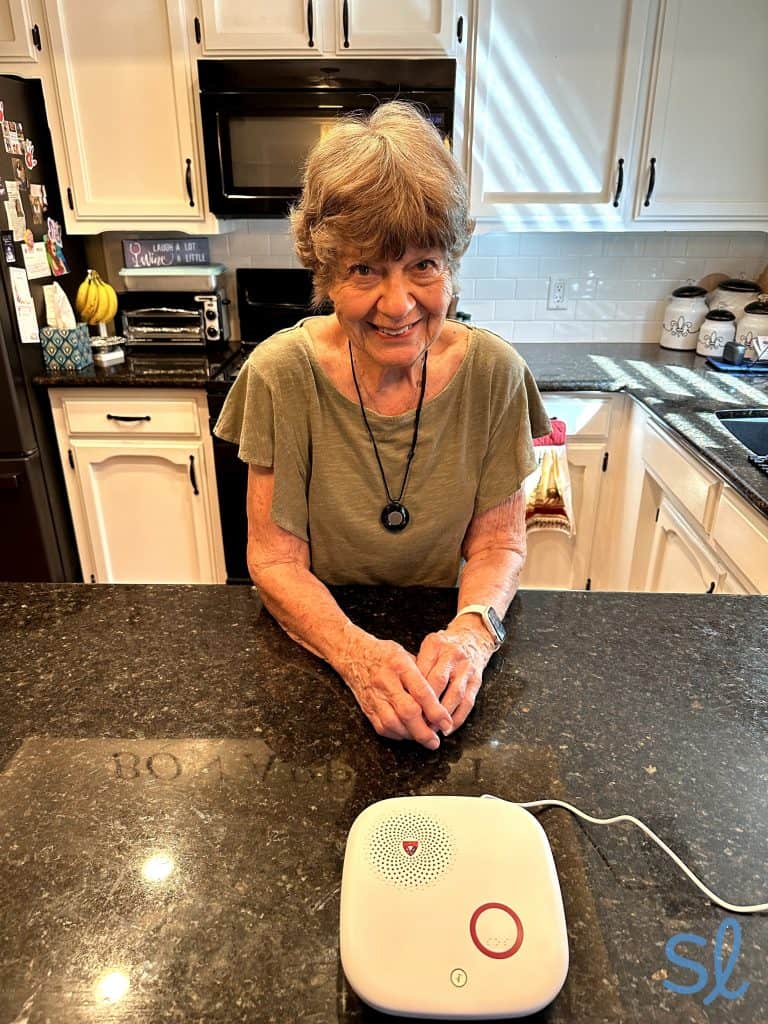
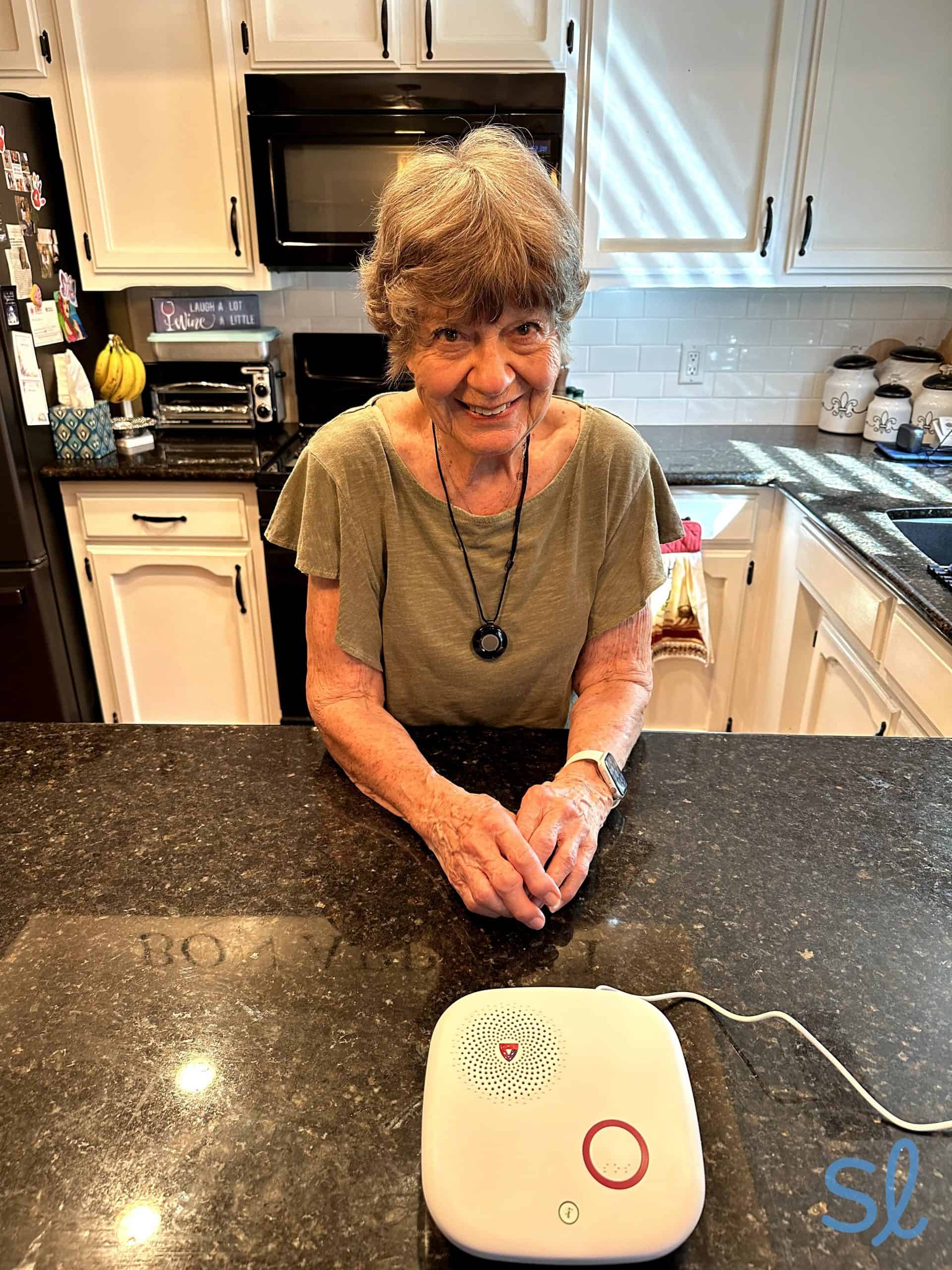
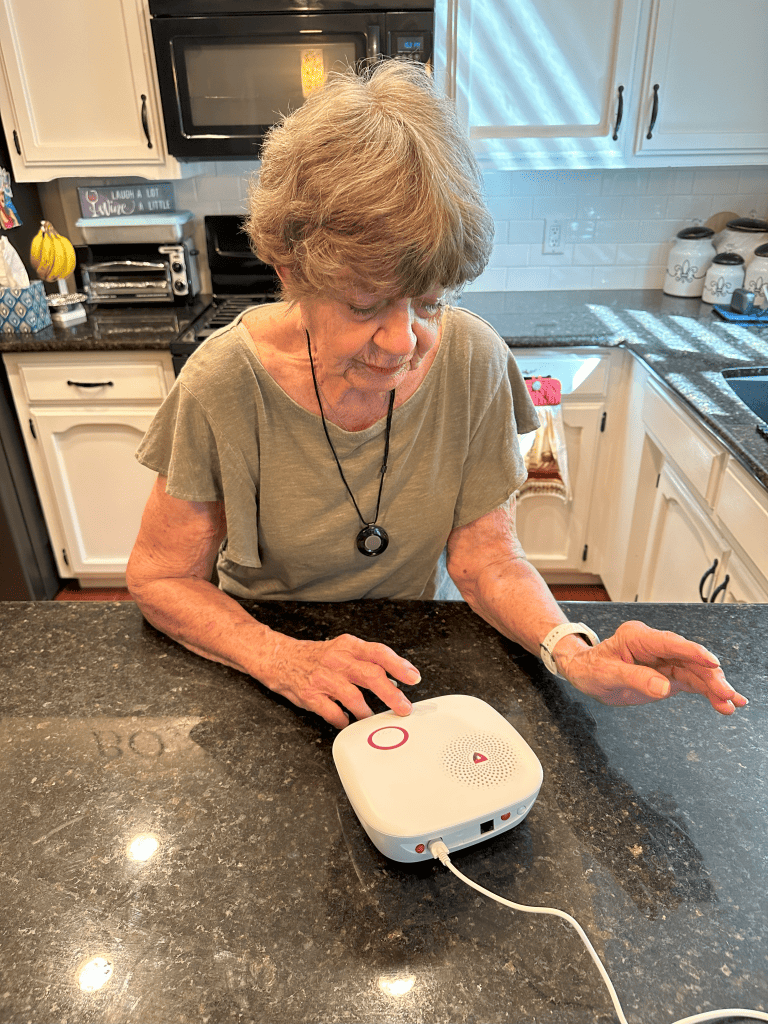
My grandma testing out Medical Guardian's Home 2.0 system
How We Tested the Medical Alert Systems
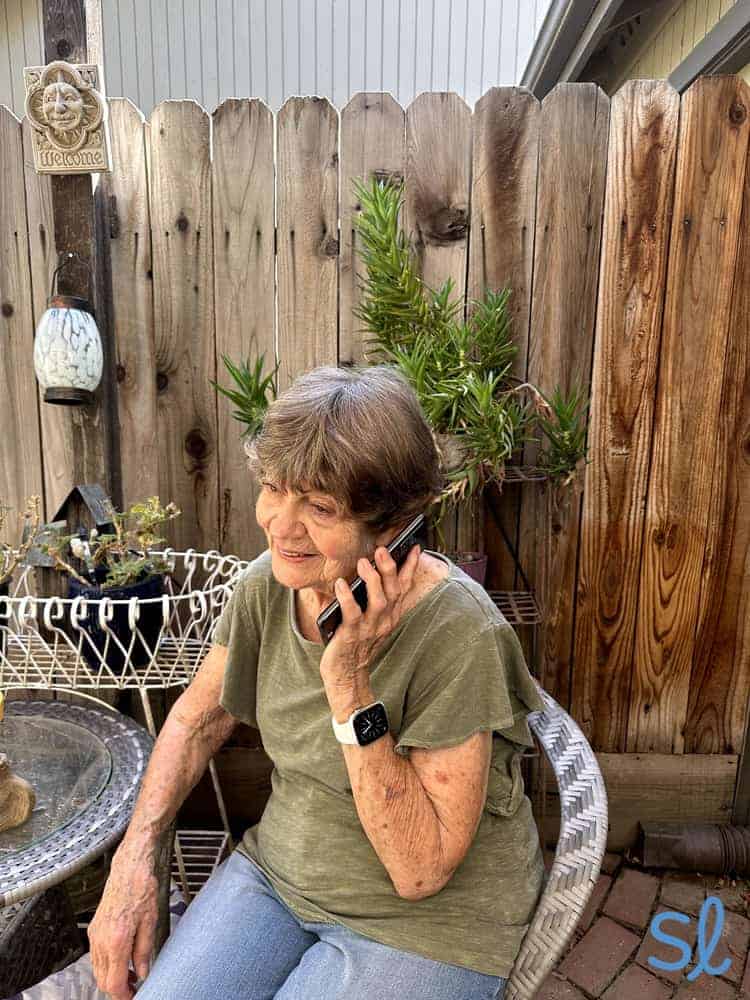
Our team of medical alert and senior tech experts evaluated each system for a week. We used essential factors such as price, ease of use, features, speaker quality, nonverbal cues/features, and operator training. Before finalizing our top choices, we consulted with Linda Schlenker, an occupational therapist with over three decades of experience finding medical alert solutions for seniors with hearing loss. We also recruited older adults (like my grandma) to help test out the systems whenever possible.
How We Chose the Best Medical Alert Systems for Those With Hearing Loss
To make it on our list, a provider had to excel in the following areas:
- Pricing: Medical alert protection shouldn’t break the bank. We’ve included systems that will fit most budgets, ranging from low-cost, wallet-friendly systems to top-tier systems that offer excellent value. Every provider on our list offers plans starting at $33 or less. We evaluated monthly costs, equipment fees, extra fees, seasonal promotions, and other ways to save.
- Features for hearing loss: Every system on our list had to offer useful features for those with hearing loss. These features include things like loud or adjustable speakers, visual alerts, and nonverbal protocol.
- Fall detection: Hearing loss can increase your chances of experiencing a fall. For this reason, every provider on our list offers at least one system with automatic fall detection. We tested out this feature by simulating 10 falls and recording average response times.
- Ease of use: Hearing loss can make everyday tasks more challenging, especially for seniors who may be experiencing cognitive decline or difficulty with fine motor skills. Medical alert systems should be easy to use, regardless of hearing loss level. For this reason, we spent hours testing out each model to ensure users could get help with ease.
- Response times: We made 10 test calls to each provider’s emergency response center and recorded average response times for each. All the systems on our list had average response times of under a minute.
- Operator training: To truly benefit seniors with hearing loss, emergency response agents need to be trained to effectively communicate with users with hearing loss. Many systems have medical alert operators with useful information related to the user’s medical history and hearing level. This can help them use their training to communicate via nonverbal cues, be patient, evaluate the situation when verbal communication is not possible, and send help when needed.
To learn more about how we test medical alert systems, check out our medical alert system methodology guide.
Why Trust Us
SeniorLiving.org’s senior tech experts have tested dozens of medical alert systems from the industry’s top providers. We’re always trying out and evaluating the newest tech for older adults. All of our medical alert content is reviewed by Linda Schlenker, an occupational therapist with more than three decades of experience advising older adults and their caregivers about how to stay safe while aging in place. She and her patients have years of experience with medical alert systems. Linda approved all of the systems on our list and provided her insights and expertise.
-
1. Bay Alarm Medical - Best Value
View Packages Links to Bay Alarm MedicalWhat we like most
- Prices starting at $27.95 per month
- Free caregiver mobile app
- Unique features: At-home and on-the-go bundles
Bay Alarm MedicalView Packages Links to Bay Alarm MedicalOverview:
Bay Alarm Medical s SOS Mobile system
Bay Alarm Medical’s in-home and on-the-go systems are simple, affordable, and offer great value, starting at $27.95 per month. Whether you want a smartwatch system, a mobile unit to wear on the go, or an in-home unit, Bay Alarm has an inexpensive option for your needs. The company runs seasonal promotions throughout the year, offering discounts on monthly service and equipment fees, so be on the lookout!
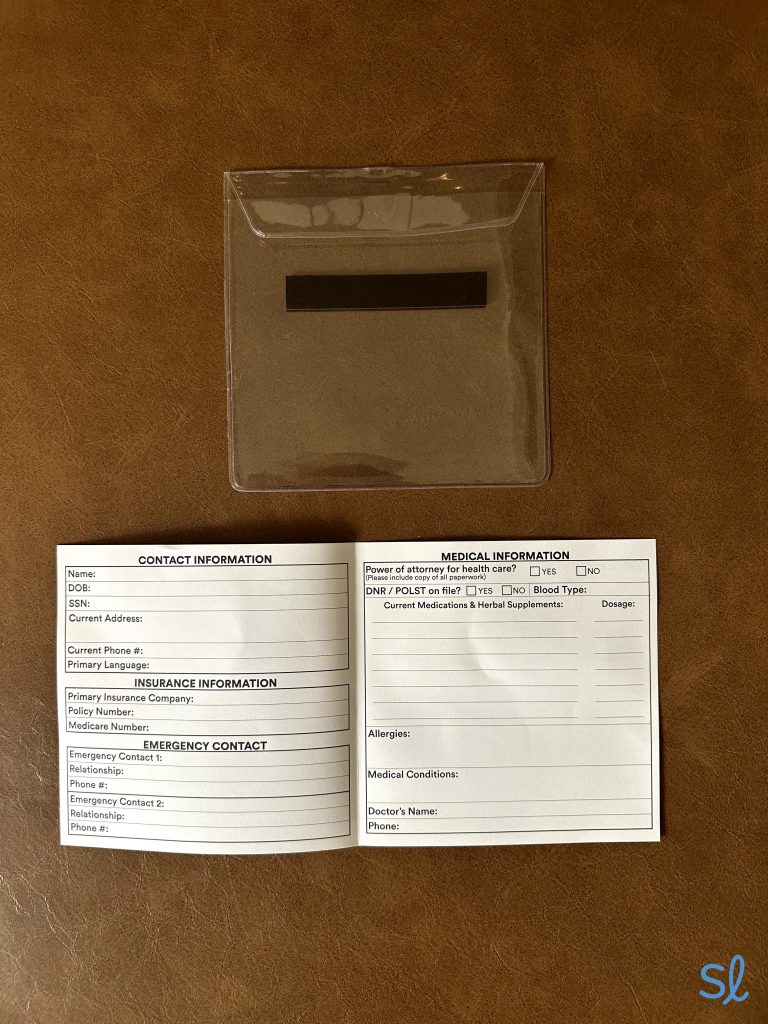
My Bay Alarm Medical package came with a “Vial of Life,” a magnet for the refrigerator where I listed my medical history and hearing status. This simple tool is vital for deaf seniors, ensuring paramedics get crucial info even if you can't communicate verbally during an emergency.
Filling out my Vial of Life card from Bay Alarm Medical
I was also able to input entry instructions in the mobile app. This ensures EMS knows how to enter your home if you don't hear them knocking. I highly recommend completing this profile immediately upon setup.
Current Deal: New customers can get 40 percent off select plans with Bay Alarm Medical, plus a free month of service and free shipping.
Pros & Cons:Pros About Bay Alarm Medical
- Inexpensive systems
- Vial of Life included for free
- Price-lock guarantee
- 30-day money-back guarantee
- Easy installation
- No long-term contracts
- Bundles available
Cons About Bay Alarm Medical
- Limited product lineup
- Equipment fees for some systems
Our Hands-on Experience:Speaker Quality
I tested the speakers on the SOS Home and SOS Mobile systems. The volume was adequate, though the base unit sounded slightly muffled at times. Crucially, the response agent understood me perfectly every time.
Both units feature a status light that remains green when the signal is strong. This visual confirmation provides peace of mind if you cannot hear the system's audible self-checks.

Testing out Bay Alarm Medical's SOS Home system
Similar to Medical Guardian’s MGMini Lite, Bay Alarm’s SOS Micro system doesn’t let you adjust the speaker volume. I was disappointed to see this same missing feature with many of the industry’s best GPS medical alert systems. Still, the SOS Micro’s speaker was loud, and I could clearly hear the response agent.

Trying out Medical Guardian's MGMini Lite
Response Times
When I pressed the help button on my SOS Mobile, the button turned solid blue, an excellent visual cue that the call was connecting. On average, it took about 20 seconds to hear an agent's voice. While slightly slower than Medical Guardian, it is still well within the safe range for emergencies.
» Our Full Review:Bay Alarm Medical alert system review 2026
Pricing
Bay Alarm Medical’s prices range from $27.95 to $64.95 per month, plus equipment fees for certain systems. That's affordable when compared to Medical Guardian or Lively. You can also save money by bundling systems together, with costs starting at $64.95.
For instance, if you want an in-home system and a mobile unit, a bundle would help you save significantly compared to purchasing the two systems separately. Fall detection costs an extra $10 with any system, which is standard for the industry.
 Expert InsightsFrom Linda Schlenker, M.S., M.A., O.T.RI love Bay Alarm Medical’s affordability. A medical alert system is a necessity, so it’s important to keep the price where people can afford it.
 -
2. Medical Guardian - Best customer service
View Packages Links to Medical GuardianWhat we like most
- Prices starting at $31.95 per month
- Free caregiver mobile app
- Unique features: High-tech equipment and features
Medical GuardianView Packages Links to Medical GuardianOverview:
Testing out Medical Guardian's MGHome Cellular system
Medical Guardian consistently ranks high for its service. In my tests, operators were incredibly articulate and well-trained. They greeted me by name and had my profile—including hypothetical hearing loss notes—ready immediately. This preparedness is invaluable during a crisis.
Did You Know? Approximately 15% of American adults (ages 18 and over) report some trouble hearing, according to the National Institute on Deafness and Other Communication Disorders.2
I appreciate the free lockbox included with annual plans. It means operators can share your spare key code with EMS, preventing forced entry if you cannot hear them knocking.
Expert InsightsFrom Linda Schlenker, M.S., M.A., O.T.RIt’s great that Medical Guardian has visual cues, which is so important for people with hearing loss. The free lockbox is also helpful. I have worked with many older adults who required emergency responders to kick down their door, which is the last thing one wants to have to deal with while on their way to the hospital!The MGHome Cellular is a standout for those with severe hearing impairments. The base unit lights up during an emergency call, and the adjustable volume is exceptionally loud. My grandma could hear the operator clearly from across the room without her hearing aids.
» You Might Like: Best hearing aids for severe hearing loss
Pros & Cons:Pros About Medical Guardian
- Adjustable volume control
- Free lockbox with annual plans
- Landline and cellular options
- No hidden fees or long-term contracts
- Free spousal monitoring with select systems
- Fast response times
Cons About Medical Guardian
- Pricey premium systems
- Upfront equipment fees apply
Our Hands-on Experience:Speaker Quality
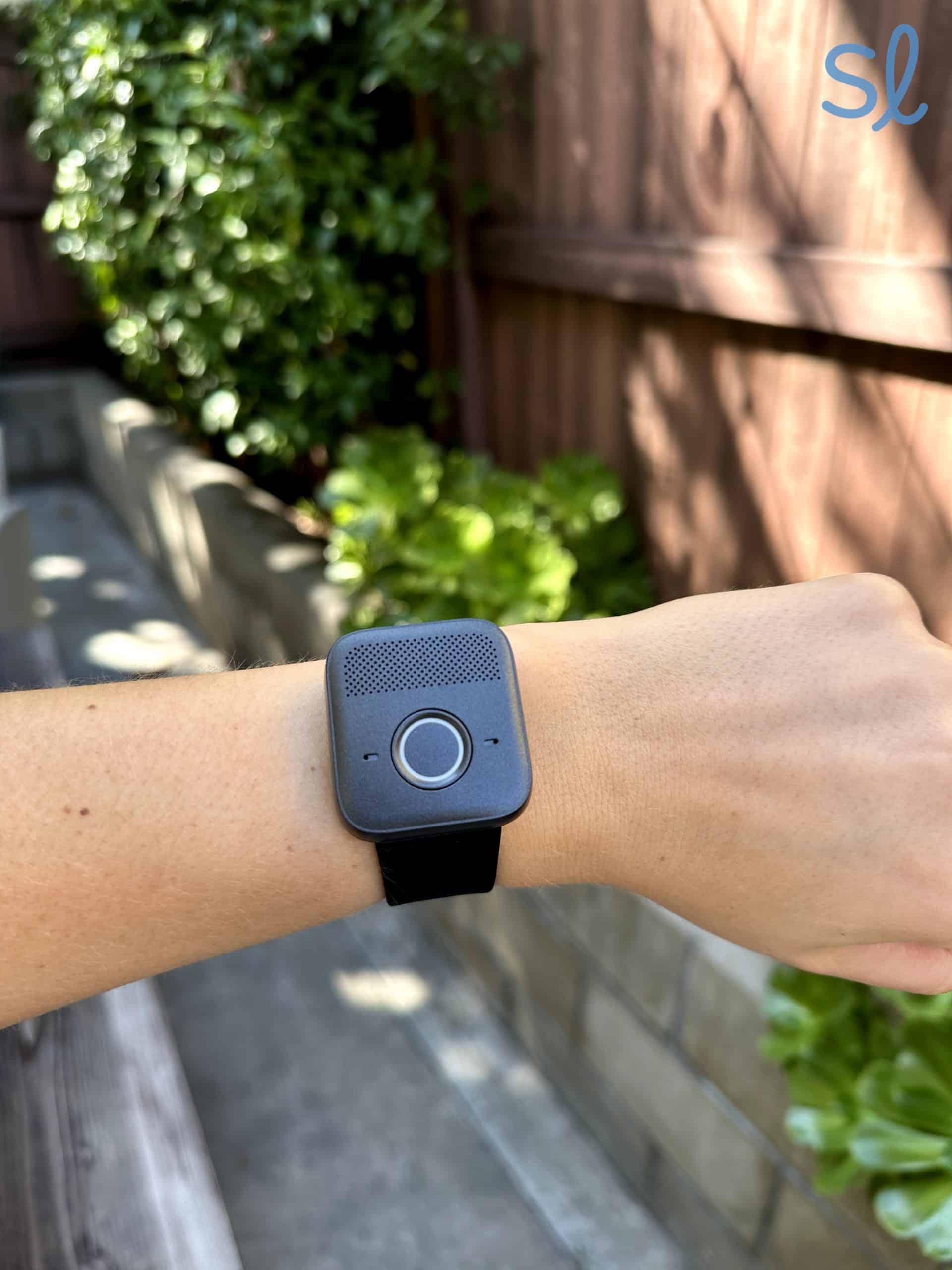
I tested the speaker volume on several Medical Guardian systems, including the MGMini Lite. This system combines the comfort of a watch-style device with the simplicity of a standard call button. It doesn't have any bells and whistles — just a help button and a two-way speaker. This is perfect for those who want to keep things simple.
Testing out Medical Guardian's MGMini Lite
After holding the alert button, I was connected with a Medical Guardian response agent who asked if I needed help right away. The volume was loud and clear, even when I held the device at arm's length. I also tested how well the agent could hear me at different volumes. The two-way speaker picked up my voice well, even when I spoke quietly.
» Further Reading: Best Medical Alert Bracelets
For more control, the MGHome Cellular is superior. Its two-way speaker is powerful, effectively turning your home into a speakerphone during emergencies. Visual indicators, such as the buttons lighting up, provide necessary confirmation that help is on the way.
Grandma testing Medical Guardian's Home system
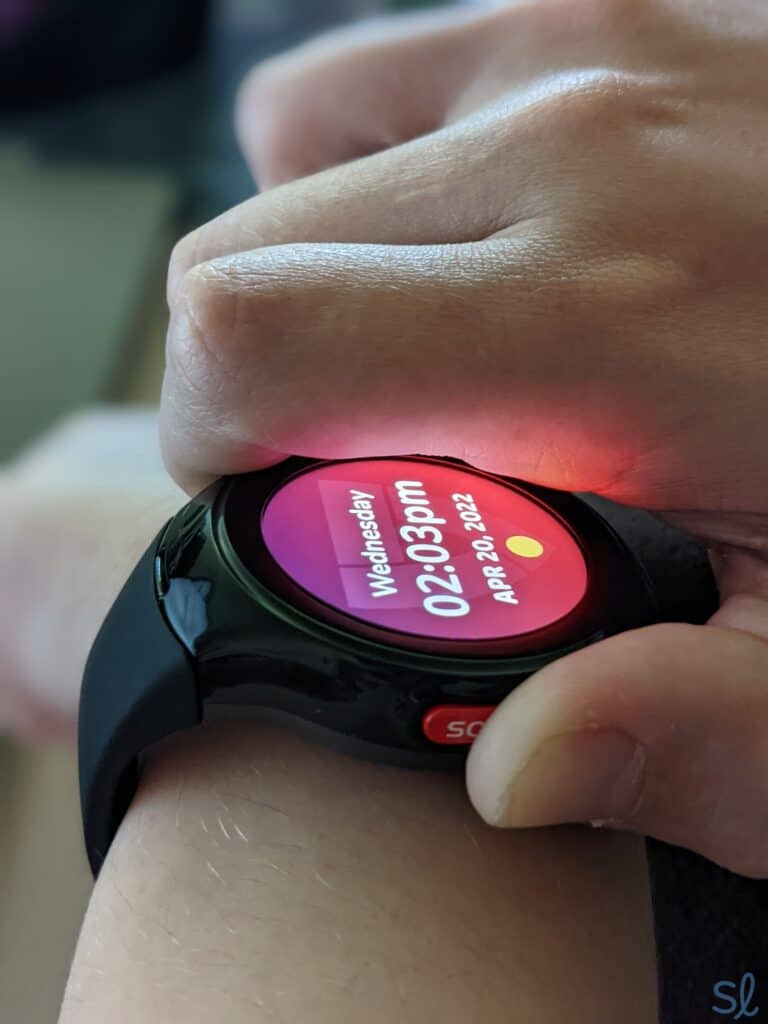
Medical Guardian's systems all offer nonverbal cues to let you know a call is being placed. For instance, the MGMove smartwatch screen displays a countdown when you press your help button, while the buttons on the MGHome Cellular base unit light up when you place a call. I appreciate this for those who might not hear the call ringing.
Expert InsightsFrom Linda Schlenker, M.S., M.A., O.T.RI frequently hear from my clients that Medical Guardian has exceptional customer service. No high pressure sales, very friendly, and very helpful.Response Times
Medical Guardian is fast. I averaged a 15-second connection time across the MGHome Cellular and MGMove devices. This matches the speed of Lively's Mobile2.
Pressing in the red SOS button on the side of the MGMove
My test with the MGMini Lite was slower, taking about a minute, likely due to local cellular reception issues. Always check cellular signal strength in your home before committing to a mobile-only system.
» Our Full Review: Medical Guardian review 2026
Pricing
Monthly costs for Medical Guardian's systems range from $31.95 to $46.95, plus $10 per month to add fall detection. There are also one-time equipment fees with select systems.
I'm not a fan of these extra fees, but they're common with other top providers like Bay Alarm Medical. Compared to Lively's monthly rates, Medical Guardian's standard monthly premiums are affordable.
Current Deal: Medical Guardian is offering a special on the MGMini, including a free lockbox, free activation, and free shipping.
You could also save by paying annually or quarterly instead of monthly. Medical Guardian will give you a prorated refund for unused months of service if you cancel before your payment period is up.
They don't charge any cancellation fees either, so I'd recommend going with an annual plan if it suits your budget. Annual plans also come with perks like a free lockbox.
» Pricing Guide: Medical Guardian prices and deals
-
3. Lively - Best hearing aid compatibility
See Pricing Links to LivelyWhat we like most
- Prices starting at $24.99 per month
- Free caregiver mobile app
- Unique features: Phones with medical alert features
LivelySee Pricing Links to LivelyOverview:
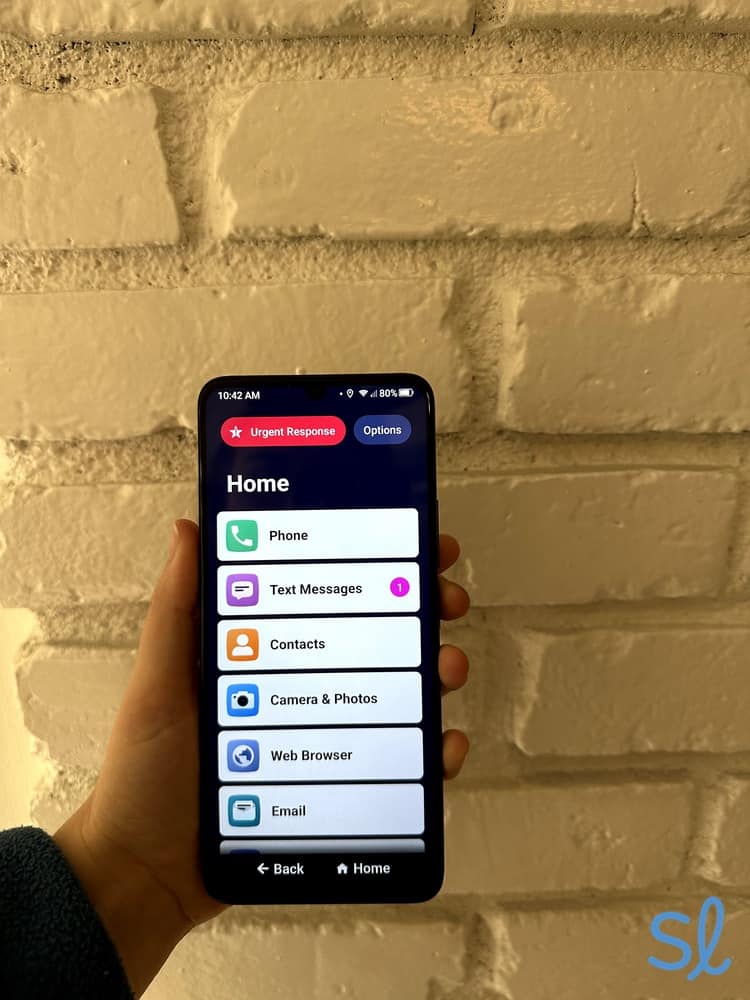
Testing out Lively's Jitterbug Smart4
Lively made our list for its senior-friendly phones with built-in medical alert technology. With Lively's phones, you get a phone and medical alert device in one — no need to carry two separate devices! Plus, the Jitterbug Flip2 and Jitterbug Smart4 are both compatible with hearing aids. The Jitterbug Flip2 has an M4/T4 compatibility rating, the best possible rating, while the Jitterbug Smart4 has an M3/T4 rating.
I could also adjust the phone’s volume from low to high and turn on speakerphone mode with the press of a button. I found both phones’ speakers to be loud and of high quality when I made calls. These features can make communicating with an Urgent Response agent easier, especially if you have hearing loss.
» Our Full Review: Lively medical alert system review
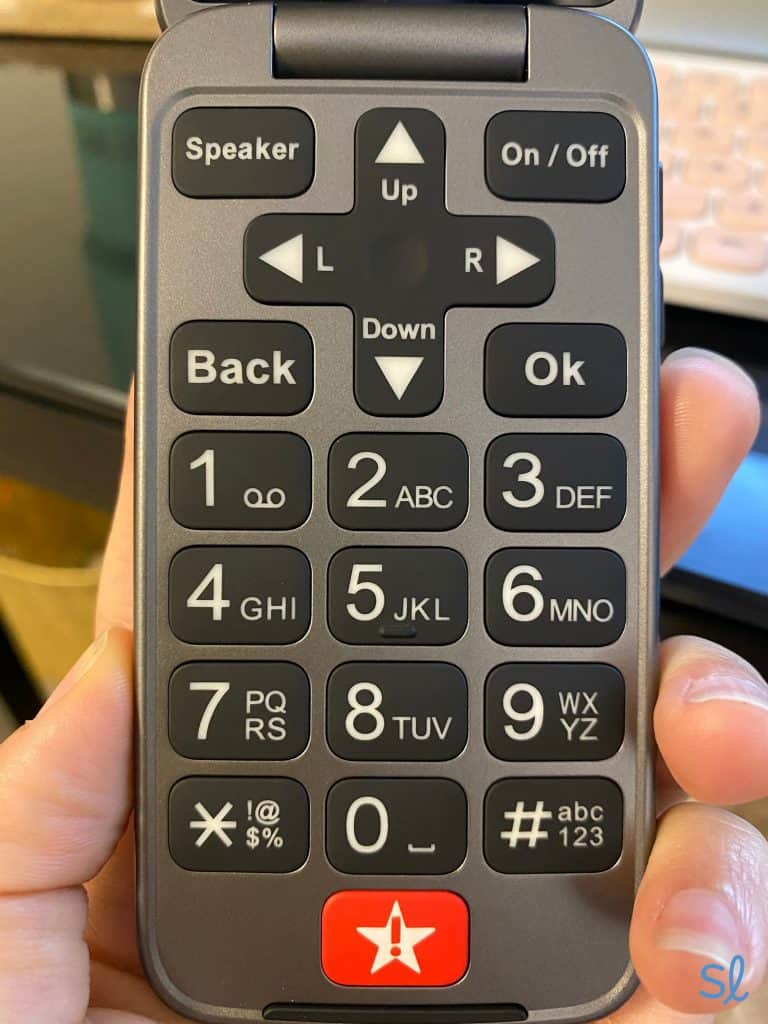
Both phones feature a red Urgent Response button that acts like the alert or help button you'd find on a traditional medical alert system. Plus, Lively offers a standalone medical alert device, the Lively Mobile2.
The Jitterbug Flip2 has a large red Urgent Response button
Pros & Cons:Pros About Lively
- Senior-friendly phones with built-in medical alert features
- Jitterbug phones are compatible with hearing aids
- Affordable plans
- Discounts for AARP members
- No long-term contracts
- GPS monitoring
- U.S.-based monitoring centers
- No cancellation fees
- One-year equipment warranty
Cons About Lively
- No landline systems
- Fall detection not available with phones
- High equipment fees
Our Hands-on Experience:Speaker Quality
Both Jitterbug phones allowed me to adjust calls to high volume easily. My grandma tested the Jitterbug Smart4 and could converse with her daughter without difficulty. The side buttons make volume adjustment tactile and simple.
My grandma making a call on the Jitterbug Smart4
The speaker clarity is just as good on the Lively Mobile2. I found that the volume level was perfect for me — it wasn't too loud or too quiet. I wish you could adjust the volume on this mobile unit, but, as I've mentioned, mobile systems don't typically come with this option.
Response Times
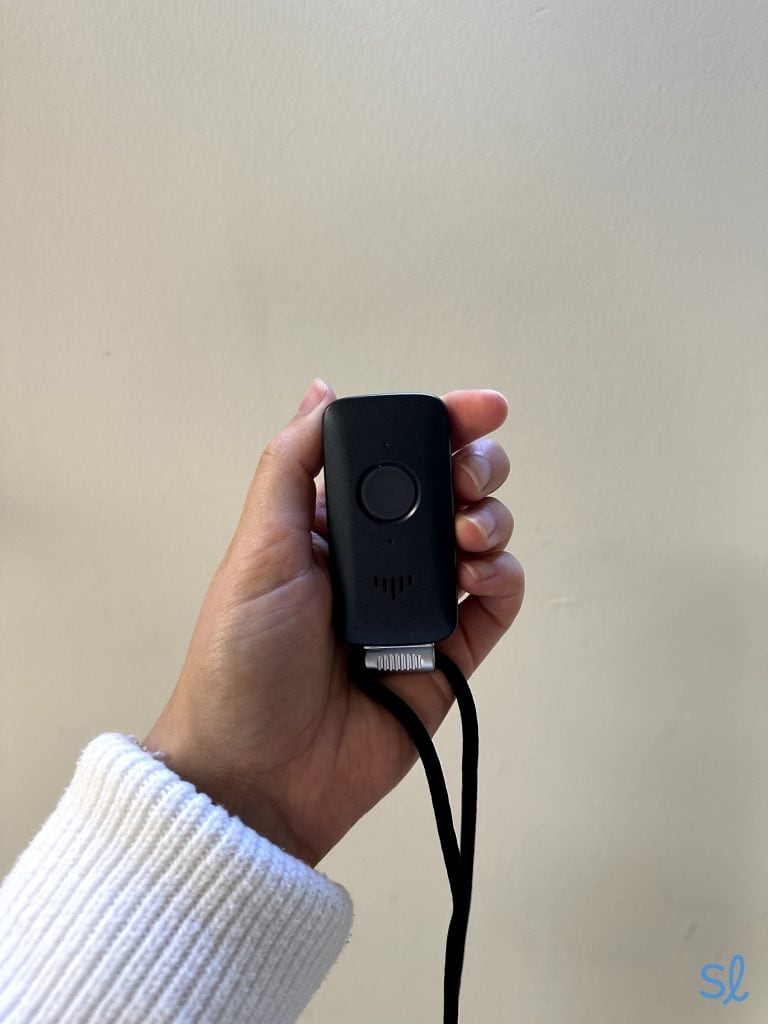
My grandma and I tested response times on both Jitterbug phones and the Lively Mobile2. Calling for help was easy on each device. On the Jitterbug phones, we pressed their respective red Urgent Response buttons.
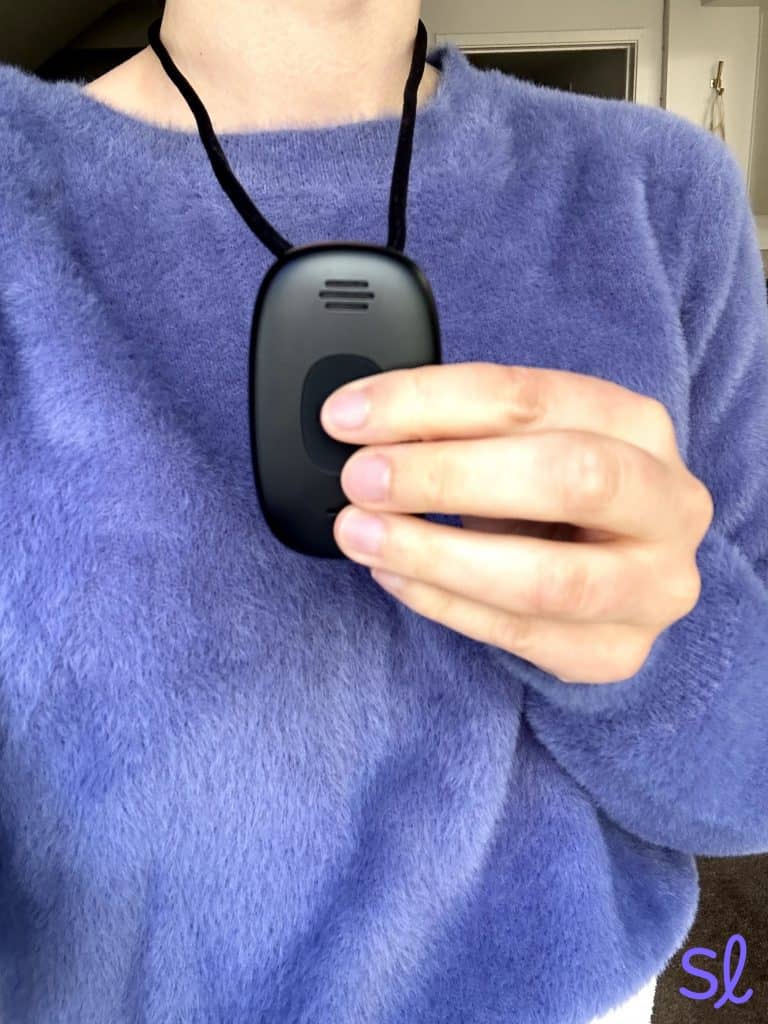
For the Lively Mobile2, we pressed the unit's black help button. We recorded average response times of just 10 seconds on the Lively Mobile2 and 20 seconds on the Jitterbug phones. This puts Lively on par with Bay Alarm Medical and Medical Guardian's response times.
Placing a test call on the Lively Mobile2
Pricing
You must purchase the phone hardware upfront: $99.99 for the Flip2 and $149.99 for the Smart4. To activate medical alert features, you select a service plan ranging from $24.99 to $49.99 per month. Data plans for the smartphone are extra.
» Pricing Guide: Lively medical alert system cost and pricing
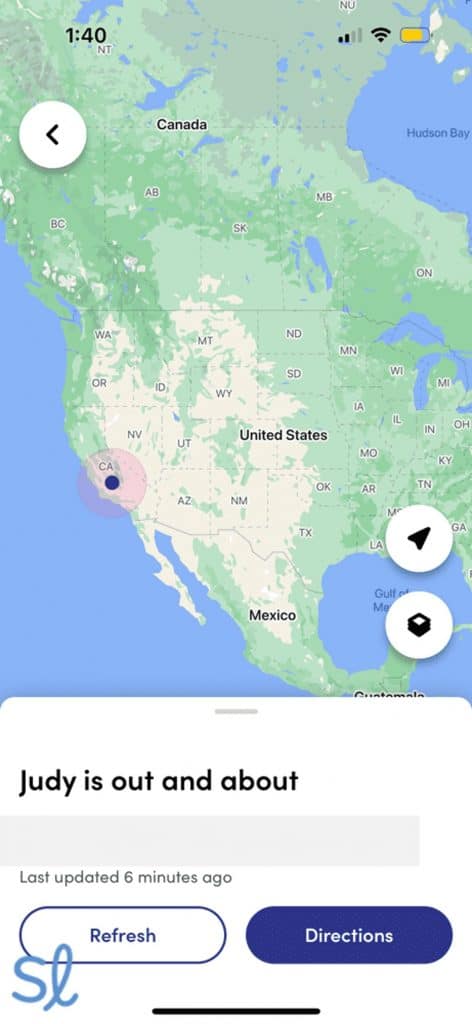
Lively Link is a standout app feature that keeps caregivers informed. It alerts family members if an emergency call is made, providing peace of mind without needing a separate monitoring device

Tracking my grandmas location using the Lively Link mobile app
If you don't need a phone or don't want to combine your phone and medical alert system, you can opt for the Lively Mobile2. This on-the-go medical alert device costs $79.99, and you can choose between the Basic plan ($24.99 per month) and Premium plan ($34.99 per month).
Expert InsightsFrom Linda Schlenker, M.S., M.A., O.T.RLively being compatible with hearing aids is so helpful! It is also terrific that they have U.S.-based monitoring. Many monitoring centers outside of the U.S. have agents who speak with thick accents, making it more difficult for someone with hearing loss to understand. -
4. LifeFone - Most affordable fall detection
 See Pricing Links to LifeFone
What we like most
- Easy-to-use systems
- Lifetime warranty
- Seasonal promotions
LifeFoneSee Pricing Links to LifeFoneOverview:
Testing out LifeFone's At-Home Cellular system
Did you know research shows that hearing loss can increase your risk of falling?3 It’s one of the reasons I recommend automatic fall detection for those with hearing loss. This feature can detect the motion of a fall and call for help, even if you can’t press your help button. Fall detection can be pricey for those on a budget, so I was impressed with LifeFone’s affordable fall detection. At just $5 per month, it's one of the lowest rates for automatic fall detection — and half the price of fall detection from Medical Guardian or Bay Alarm Medical.
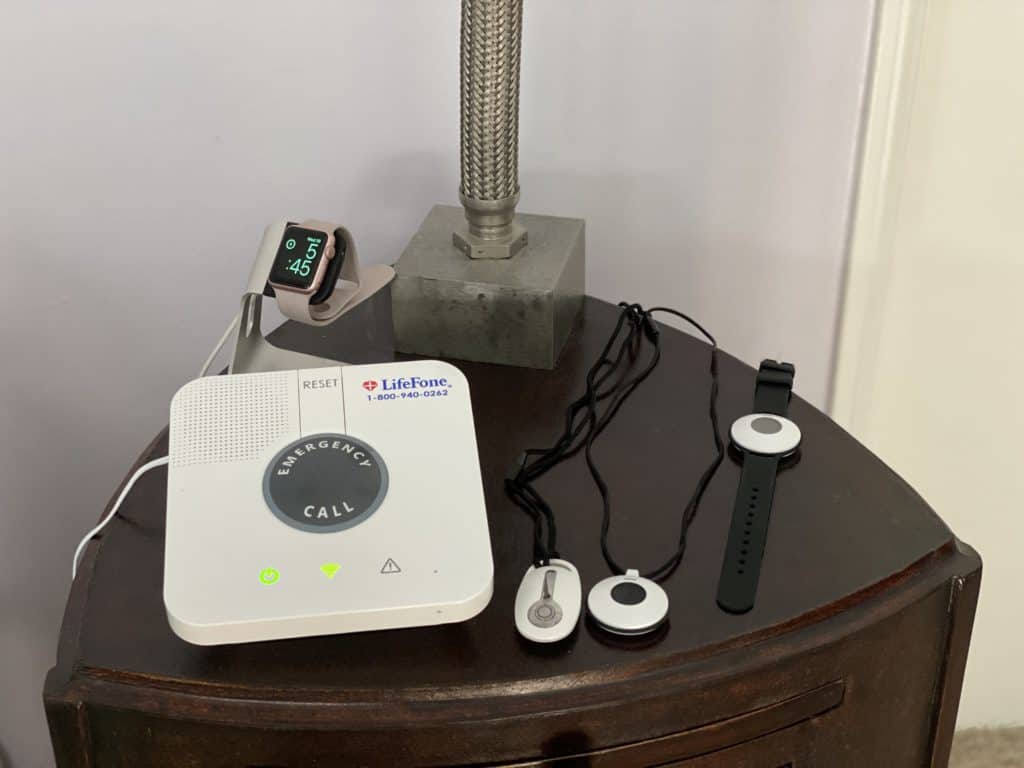
I’d recommend LifeFone’s At-Home & On-the-Go, VIP Active system for older adults with hearing loss. It has a built-in two-way speaker for communicating with the emergency operator. You can hold the speaker right up to your ear if you’re struggling to hear the operator. If you’re a homebody, the At-Home Cellular unit is a good option, too. It has an ultra-sensitive microphone and adjustable volume control. It lights up when an emergency call is made, so you’ll know a call is being placed even if you can’t hear it.
» Related Reading: Best medical alert systems with fall detection for seniors
Pros & Cons:Pros About LifeFone
- Inexpensive fall detection
- Pendant with two-way speakerphone
- 30-day money-back guarantee
- Free spouse monitoring
- Large in-home coverage range
- Lifetime price guarantee
- Caregiver mobile app
- Client information visible to operators when they answer a call
- Lockbox available
Cons About LifeFone
- No language support
- Potentially pricey add-ons and accessories
Our Hands-on Experience:Speaker Quality
Testing the At-Home base station and the VIP Active, I found excellent audio clarity. Unlike many competitors, the VIP Active allows volume adjustment on the pendant itself. This is a massive benefit for active seniors with variable hearing needs.
You Might Like: Best medical alert systems for active seniors
Response Times
Like Medical Guardian and Lively, LifeFone offers excellent customer service and fast response times. After testing several of LifeFone’s systems, I recorded average response times of 20 seconds. This is the same response time we experienced with Lively’s Jitterbug phones and Bay Alarm Medical’s systems.
» Our Full Review: LifeFone medical alert system review 2026
Pricing
LifeFone’s prices range from $29.95 to $47.95 per month. These starting prices are higher than other providers on our list, like Medical Guardian and Bay Alarm Medical. However, you can save by choosing an annual or quarterly payment plan, which brings down the price significantly.
Plus, the $5 monthly cost for fall detection is affordable. Another major benefit of LifeFone is that they don't charge any equipment or activation fees. When you compare LifeFone's prices to those offered by Lively (considering the hefty equipment fees), you'll see that you can avoid significant upfront costs with LifeFone.
Expert InsightsFrom Linda Schlenker, M.S., M.A., O.T.RFall detection is absolutely critical, so it’s wonderful that LifeFone makes the feature affordable. It’s a double bonus that the company offers a price-lock guarantee so there are no surprises with the bill in years to come.One other drawback to note: LifeFone’s companion mobile app for caregivers costs an extra $8 per month. I wasn’t happy about this, as other providers like Bay Alarm Medical and Medical Guardian offer access to their mobile apps at no additional cost. Still, if you find a LifeFone system that fits your needs and want affordable fall detection, the company might be worth it.
» You Might Like: Best affordable medical alert systems
Best Medical Alert Features for Seniors With Hearing Loss
Having a medical alert system in your home is always a good idea for older adults. However, if you are deaf or living with hearing loss, it's important to choose a system that meets your hearing needs. Here are a few key features to consider.
Visual Alerts
Most medical alert systems make a noise when an alert is activated. At the very least, the voice of the monitoring center operator will sound over a two-way speakerphone. If you have hearing loss, it's helpful to find a system that uses visual or haptic alerts, too.
This might be a button on the base unit that lights up or a pendant that vibrates. When you see or feel that alert, you'll know that a call was placed successfully.
Did You Know? Older adults with Alzheimer’s or dementia are at least twice as likely to experience a fall.4 Check out our guide on the best medical alert systems for seniors with dementia to learn more.
Fall Detection
Falls are already the leading cause of injuries for seniors in the U.S.5 Research suggests that even mild hearing loss increases your risk of falling.
If you are concerned about falling, or already have a history of falling, look for a medical alert system with fall detection. Also, consider the price of add-on fall detection when comparing medical alert system prices.

Testing out a Medical Guardian fall detection help pendant
Watch the video below to learn more about the relationship between falls and hearing loss.
Trained Operators
Make sure the company you choose has a monitoring center with trained professionals who are accustomed to working with seniors with hearing loss. These professionals will know to speak clearly and loudly on the phone.
You'll also want to ask if they keep the subscriber's medical conditions and medical history on file. That way, as soon as you call, they'll know that you are deaf or have hearing loss and will take steps to get you help, even if you can't speak to or hear them.
Volume Control
Changing the volume on your TV or phone is second nature, so it’s easy to assume every audible device would offer the same feature. That’s not always the case with medical alert systems.
For example, Medical Alert’s base unit doesn’t have volume control. Before purchasing, ensure the system you’re interested in offers adjustable volume control, or at least a pendant with a speaker that you can hold up to your ear.
Accessories
Certain accessories, such as lockboxes and medical alert ID bracelets, can make your medical alert system work better for you. If you’re deaf, you may not hear emergency personnel arrive. They may then have to break down the door, causing unnecessary property damage.
If you have a lockbox on your front door, your operator can give emergency personnel the code to retrieve a key. Medical alert bracelets, meanwhile, can let first responders know that you are deaf or have hearing loss, as well as show them your name and other vital information.
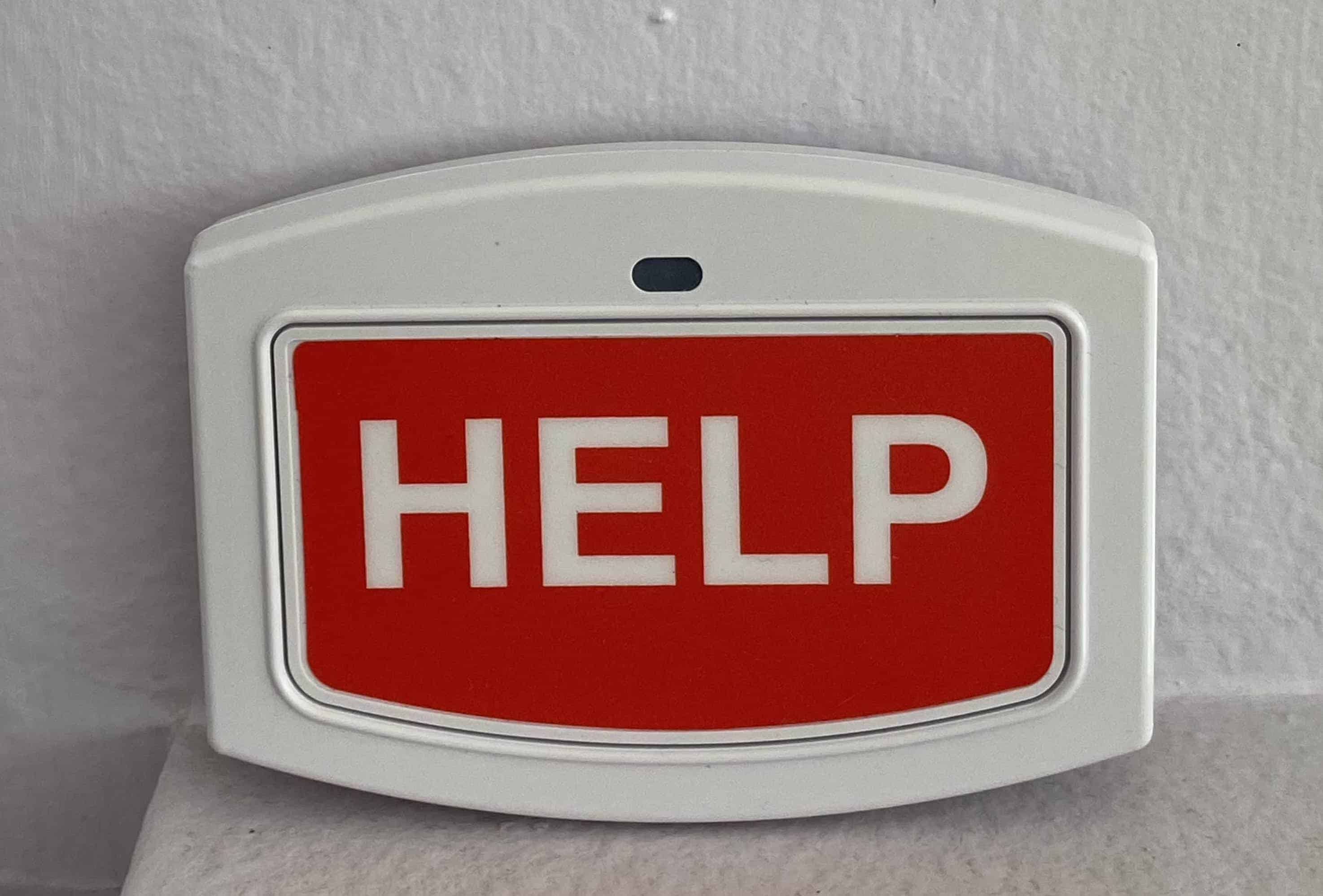
Bay Alarm Medical – Wall Button
Do Hearing Aids Work With Medical Alert Systems?
Nowadays, it's common for hearing aids to connect directly to televisions, tablets, and cell phones. Unfortunately, hearing aids don't connect directly to most medical alert systems. The biggest exception is Lively's Jitterbug phones, which are hearing aid-compatible. Whichever medical alert system you choose, your hearing aids will still boost your hearing as you speak with the operator through your system's base unit or pendant speakerphone.
FYI: Almost half of all U.S. veterans are 65 or older.6 If you or a loved one has served in the armed forces, you’ll want to check out our guide on the best medical alert systems for veterans.
Some hearing aids actually come with some of the same features as a medical alert system. The Evolv AI hearing aids from Starkey double as fall detection devices. If you fall while wearing them, the connected app will notify three contacts of the fall and your GPS location. That way, someone can give you a call, come over to help you, and/or contact emergency services on your behalf.
FAQs
-
What is the most vital alert for users with hearing loss?
Visual and haptic alerts are commonly used to notify users with hearing loss about smoke, carbon monoxide, doorbells, and potential break-ins. These can work well in tandem with medical alert devices to ensure that seniors with hearing loss and emergency responders stay informed.
-
What is a deaf alerter system?
A deaf alerter system is a type of fire alarm that sends a notification to connected devices within a building when a fire alarm is triggered. It is different from a medical alert system, which sends an alert to a 24/7 monitoring center if a user experiences a fall or similar emergency.
-
Does Life Alert have medical alert systems for hearing loss?
Yes, Life Alert offers medical alert systems with loud speakers and other features for users. You can learn more in our most recent review of Life Alert.
-
What’s the cheapest medical alert system for hearing-impaired users?
Bay Alarm Medical currently offers the most affordable medical alert systems for hearing loss. However, if you plan to add fall detection and don’t mind paying for a year of service in advance, you could save more with LifeFone.
-
Purdue University. (2024). Purdue Clinician: Hearing Loss Leads to More Falls For Older Adults.
-
National Institute on Deafness and Other Communication Disorders. (2024). Quick Statistics About Hearing, Balance, & Dizziness.
-
NPR. (2023). Hearing Loss Can Lead to Deadly Falls, But Hearing Aids May Cut the Risk.
-
National Library of Medicine. (2024). Falls and Alzheimer's Disease.
-
CDC. (2024). About Older Adult Fall Prevention.
-
United States Census Bureau. (2023). Census Bureau Releases New Report on Aging Veterans.