Best Hearing Aids for Tinnitus in 2026
Our experts reviewed and researched the best hearing aids for tinnitus and found ReSound, Widex, and Signia to be the top prescription options for seniors.

Our audiologists and senior tech experts tested the industry’s leading hearing aids to find the best solutions for older adults and caregivers managing tinnitus.
Our team testing out different hearing aids
How We Tested the Hearing Aids
Our tech team conducted over 100 hours of hands-on testing and research to evaluate each hearing aid for tinnitus management. We focused on a wide range of factors that could affect efficacy and comfort for users, and we noted our experience.
Here’s what our testing process looked like for over-the-counter OTC hearing aids that could be ordered online without a prescription:
- We tried each brand’s online hearing test, comparing our results to in-person evaluations from an audiologist.
- We selected our hearing aids and made our purchase, evaluating the purchasing process. We considered the price and value of each device, keeping seasonal promotions, extra fees, and upfront costs in mind.
- Once we got our hearing aids in the mail, we followed the instructions to set them up. If the brand had a mobile app, we downloaded it and tried any features designed for tinnitus, such as soundscape generators. We also evaluated the ease of use and the total number of steps required to get our devices up and running.
- We spoke with customer service multiple times to evaluate the quality of care by phone, mobile app (if applicable), and online chat features.
- Our team tested each hearing aid for a week, using them at home, in noisy environments, and in quiet conversational settings. We evaluated the hearing aid’s features, sound quality, ease of use, and ability to provide tinnitus relief in each location.
For prescription hearing aids that can’t be ordered online, we spoke with Dr. Reisman about her experience with each brand. We used her knowledge in prescribing and testing the hearing aids, along with feedback from her patients, to evaluate and rank them.
How We Chose the Best Hearing Aids
Dr. Reisman and our tech team focused on specific features that make certain models and providers better for people who struggle with tinnitus and hearing loss. We examined the following criteria for each hearing aid provider.
- Tinnitus features: While amplifying external sound can help minimize tinnitus ringing, some features combine sound amplification with sound therapy to relieve tinnitus symptoms. Our team tested different brands and models to see which ones offered sound therapy, and compiled our results with Dr. Reisman’s recommendations.
- Sound quality: The symptoms of tinnitus can be mild, profound, or somewhere in between, and even the slightest improvements in sound quality can help environmental sounds drown out the buzzing or ringing symptoms. We tried multiple providers to see which could offer the best overall sound quality. We also considered the ability to adjust sound settings for different situations and sound environments.
- Size and design: Some seniors prefer small, discreet hearing aids, while others don’t mind wearing a behind-the-ear (BTE) model that’s much larger and more visible. Our tech team tested several different types of tinnitus hearing aids, varying in size and design.
- Price: Price is a significant factor for tinnitus sufferers, especially if they’re already seeking other forms of medical treatment for the condition. We evaluated the best tinnitus hearing aids at multiple price points to ensure we found a quality option for seniors on virtually any budget.
- Ease of use: While some older adults are tech-savvy and have no issues with new devices, others are not. We spent hands-on time with each model to see how easy (or hard) they were to use. Our tests covered the initial setup, as well as ongoing maintenance and settings adjustments.
Why Trust Us?
Our team of senior tech experts tries the latest devices for older adults each year. We’ve logged hundreds of hours testing and reviewing hearing aids from dozens of providers.
We also worked with experts, such as Dr. Reisman, to learn about prescription hearing aids for tinnitus. She has personally tested and prescribed hearing aids from all the providers on our list, and she approved each entry. She worked with us to choose the best ones for tinnitus and offered her feedback on specific providers and models. Dr. Reisman has more than 15 years of experience working with older adults with hearing loss and tinnitus.
SeniorLiving.org is supported by commissions from providers listed on our site. Read our Editorial Guidelines

- Tinnitus management feature
- Mobile app for remote adjustments
- Unique Features: Both free and paid tinnitus support

- Zen tinnitus management app can provide long-term relief
- Mobile app for remote adjustments
- Unique Features: Excellent sound quality for musicians
- Patented Notch Therapy (NT) for tonal tinnitus
- Mobile app for remote adjustments
- Unique features: NT can eliminate tinnitus entirely in some patients

- Only OTC hearing aid with tinnitus treatment features
- Offers relief via the Tinnitus Sound Generator
- Highly customizable sound calibration and control

- Sound Adjust feature automatically recalibrates sound in the surrounding environment
- Long battery life
- Track record of providing relief from tinnitus symptoms
Contents
Key Takeaways
- ReSound Nexia won our top spot for tinnitus hearing aids because it offers some of the most natural sound quality for tinnitus patients, plus tinnitus sound therapy and educational resources via the ReSound Relief mobile app.
- Tinnitus affects about 10% of the U.S. adult population, with greater prevalence among those ages 65 and older.1
- Some form of sound therapy is the most important feature to look for in a hearing aid for tinnitus, because it can help minimize tinnitus “buzzing” and maximize natural sound in your environment.
Millions of Americans suffer from tinnitus, many of whom are older adults with diminished hearing.2 That means hearing aids with tinnitus-management features are particularly important for people with hearing loss. The features include symptom relief via ambient sound generation, automatic calibration based on environmental noises, and audiologist support. Not all seniors with hearing loss can get tinnitus relief from hearing aids, but those who can will likely see the best results from hearing aids that offer tinnitus-specific features.
Our resident audiologist, Dr. Ruth Reisman, and our tech experts tested and researched the best hearing aids for tinnitus. We evaluated each hearing aid for important criteria like tinnitus-specific features, price, ease of use, sound quality, and more. ReSound’s Nexia model is our top pick, thanks to the company’s enhanced tinnitus sound therapy features. The Nexia’s third microphone also offers a more natural listening experience.
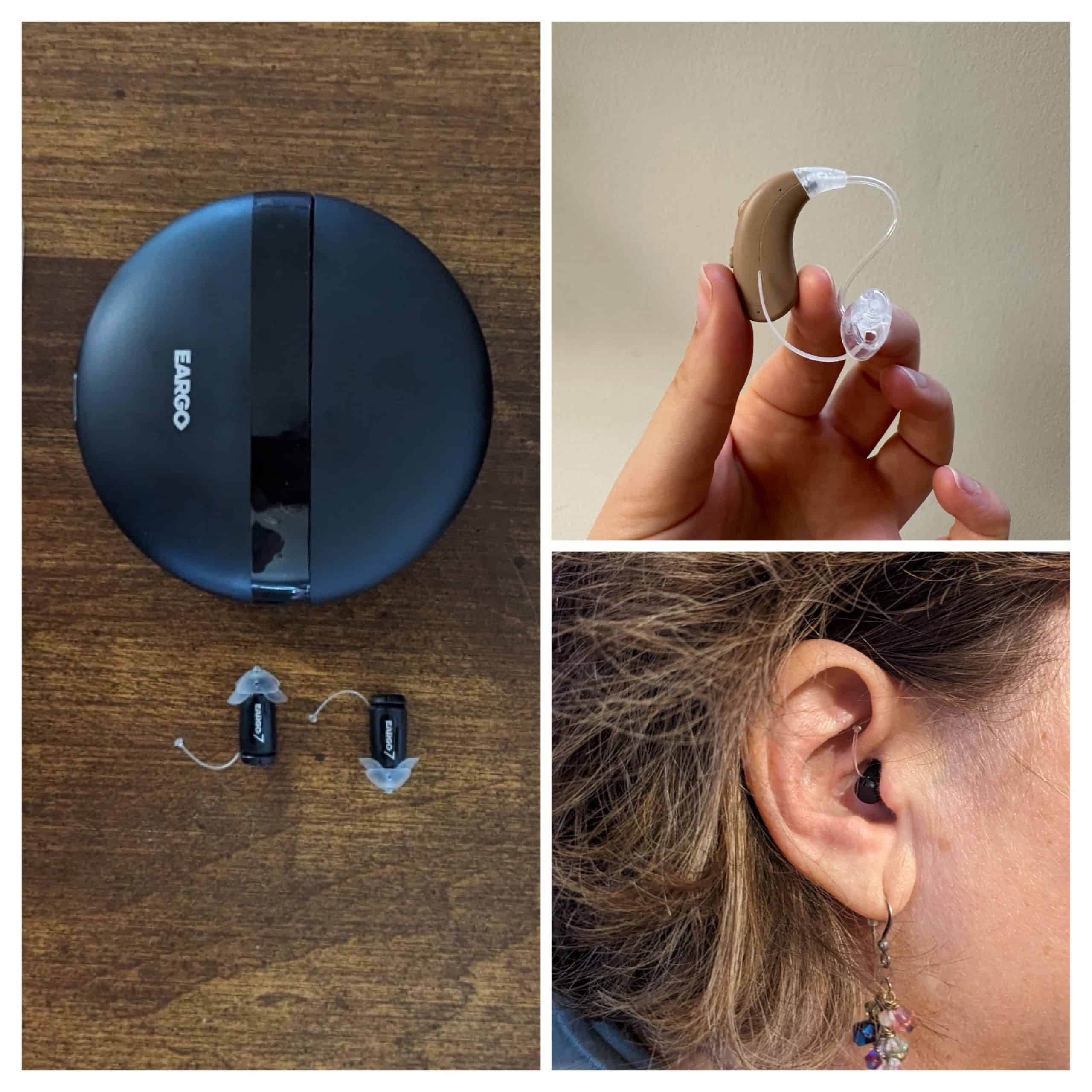
Our team tested all of the hearing aids on our best list, including Eargo.

One of my areas of expertise is working with tinnitus patients. In practice, one of the most common symptoms of hearing loss is tinnitus. When both are present, I have found that appropriately fitted hearing aids can help manage hearing deficits and any subjective tinnitus.
Here Are the Best Hearing Aids for Tinnitus 2026
-
 ReSound - ReSound Relief mobile app features sound therapy, tinnitus education, and relaxation exercises
 -
 Widex - Zen tinnitus management app offers unique sound therapy for long-term relief
 -
 Signia - Patented tinnitus therapy provides a wide range of tinnitus relief options with the potential to eliminate tinnitus completely
 -
 Jabra Enhance - 90 percent of users report relief from tinnitus symptoms
 -
 Eargo - Evidence-based reduction in tinnitus symptoms when wearing Eargo devices
-
1. ReSound - Best tinnitus relief app
See Pricing Links to ZipHearing.comWhat we like most
- Tinnitus management feature
- Mobile app for remote adjustments
- Unique Features: Both free and paid tinnitus support
ReSoundSee Pricing Links to ZipHearing.comOverview:
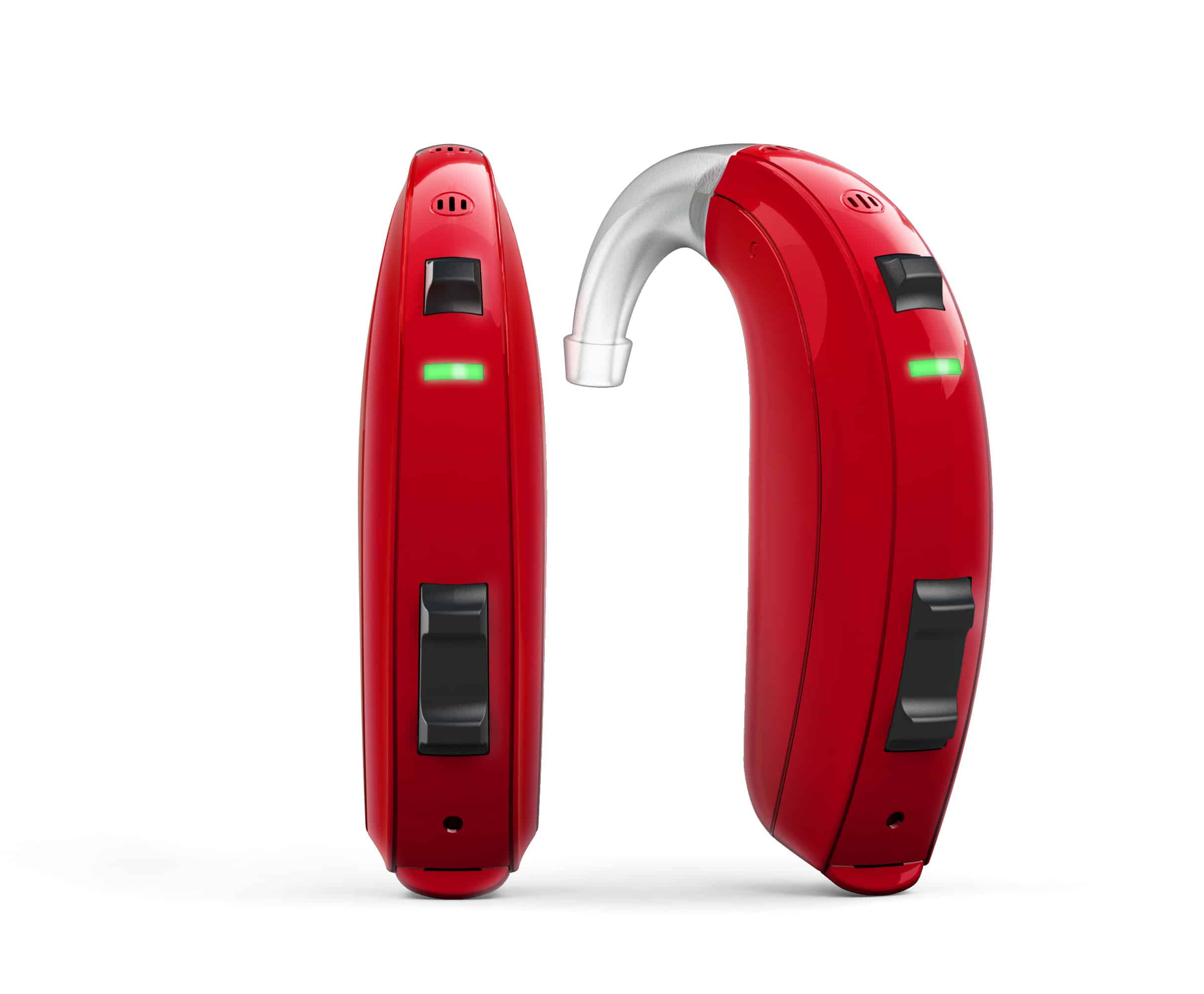
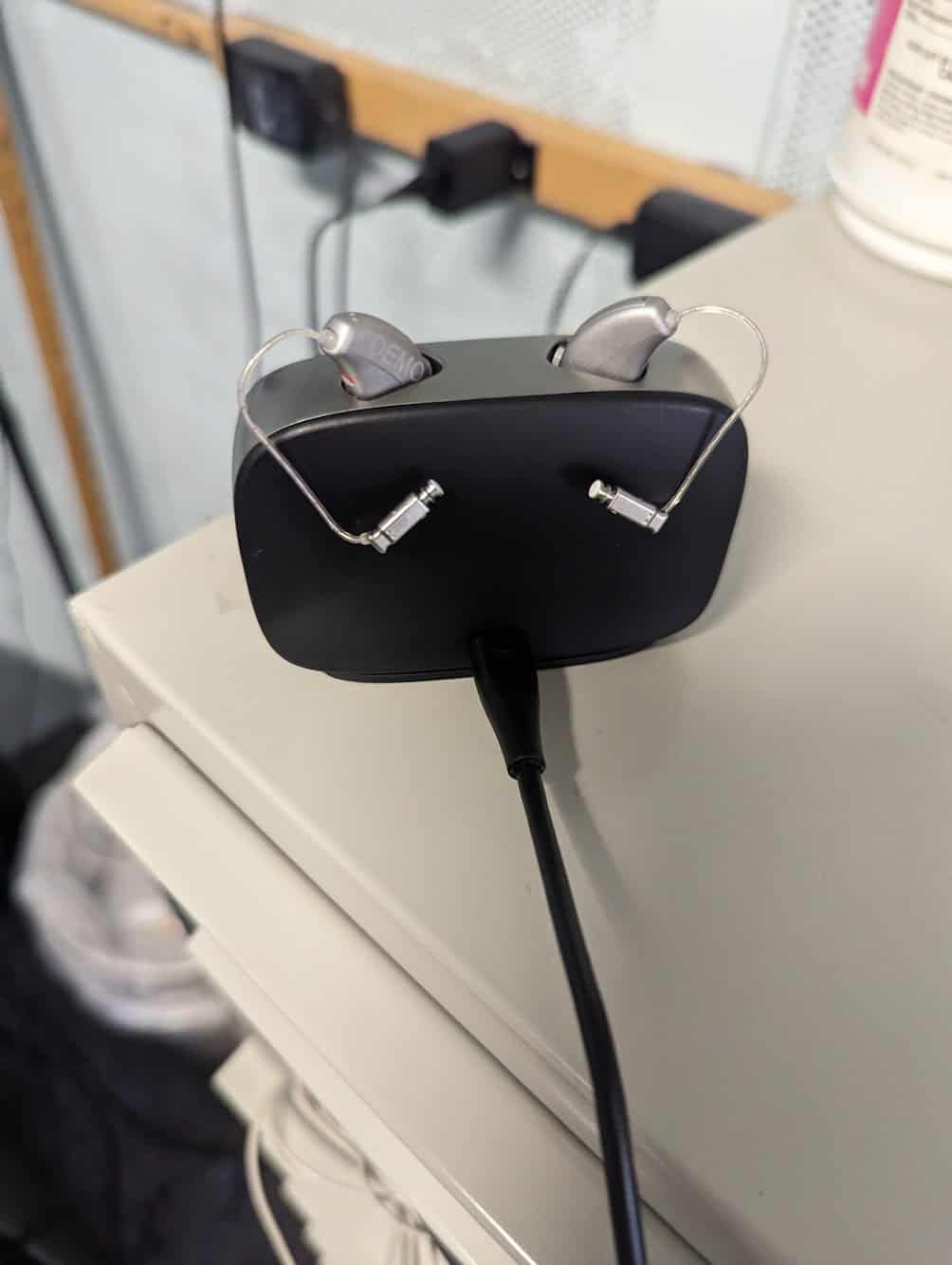
Testing out ReSound BTE hearing aids
Price: $1,000 to $3,750 per ear
Designed for: Mild to profound hearing loss
Hearing aid type: Prescription
Styles: Variety of in-ear and BTE options
ReSound’s hearing aid line and tinnitus-management features support users with mild to profound hearing loss. That is one major advantage ReSound and Signia have over providers like Jabra Enhance and MDHearing. Older adults with any level of hearing loss can find a ReSound hearing aid to fit their needs, plus a variety of sizes and styles. The Assist Live remote service also makes adjustments easy on the fly. Dr. Reisman recommends the ReSound Nexia due to its third microphone, which allows for enhanced, natural sound quality.
» Related Reading: ReSound vs. Signia
What ReSound has in variety, it lacks in convenience. Unlike OTC hearing aids like Jabra Enhance and Eargo, ReSound requires an in-person visit with an audiologist to get a prescription. This means that seniors with tinnitus may be able to get a better fit for their ear canals and specific tinnitus symptoms, but they’ll have to deal with a slower and less convenient process.
ReSound's use of the 2.4 GHz wireless platform makes it easier to connect smartphones and other devices than standard Bluetooth-ready hearing aids, as it has a longer range and better energy efficiency. Plus, newer ReSound models are Auracast-ready, future-proofing your device for public broadcasts. This makes ReSound a solid option for seniors who want to stream music, watch videos, or even make phone calls.
» Our Full Review: ReSound hearing aid reviews from an audiologist
Pros & Cons:Pros About ReSound
- Tinnitus therapy and resources in ReSound Relief app
- Real-time remote adjustments via Assist Live
- Supports mild to profound hearing loss
- Customized hearing aids for optimal comfort
- Advanced surround sound technology
- Bluetooth direct audio streaming and Auracast ready
- Three-microphone system available on select models
Cons About ReSound
- Must purchase through an in-person visit with a hearing clinic
- Virtual support may come with a learning curve for non-tech-savvy users
Our Hands-on Experience:Tinnitus Features
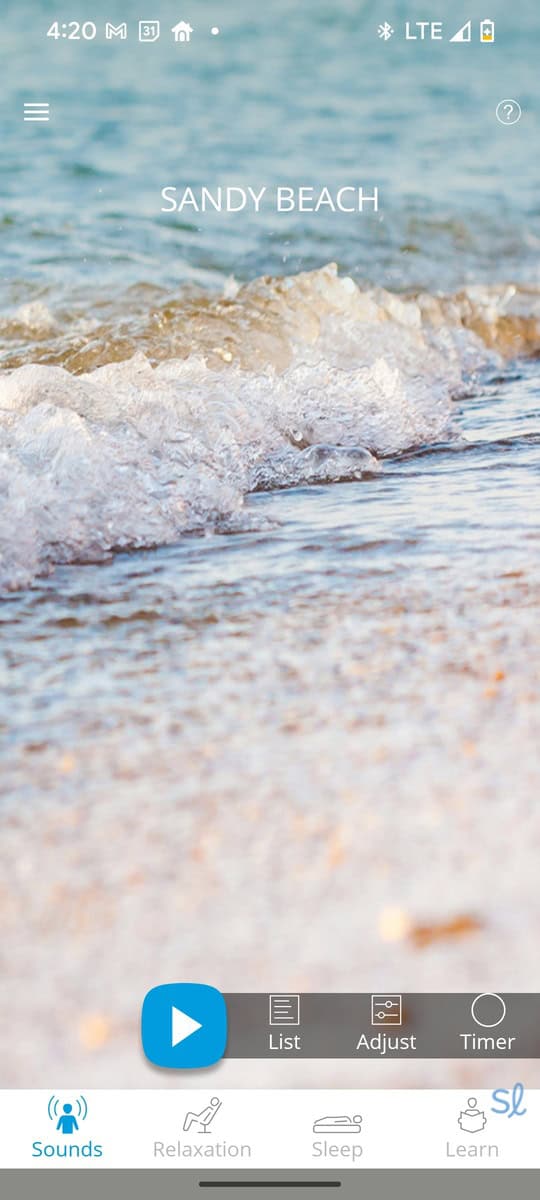
The ReSound Tinnitus Relief app uses a multipronged approach to decreasing tinnitus symptoms. Users can tap into resources, including sound therapy, tinnitus education, and relaxation exercises.
All the tinnitus tools and therapies are free in the app’s basic version – ideal for seniors on a budget. Users can upgrade to the premium version for $6.99 per month (or $69.99 per year) for a tailored tinnitus plan and additional app features.
 Expert InsightsFrom Audiologist Dr. Ruth Reisman,I advise all patients to download the Resound Tinnitus app. It is helpful to give patients additional tools to manage their tinnitus, particularly when there is a shift in intensity or frequency. Having control over the sound they prefer to hear over their tinnitus is very therapeutic.
We found that the synchronization between the directional microphones helped block out background noise in different settings. That also made listening a less laborious task.
According to our resident audiologist, Dr. Ruth Reisman, the microphone placement in the helix of the inner ear enhances speech understanding, despite tinnitus buzzing or background noise. In her experience, the ReSound Tinnitus Relief app is one of the best and most effective supportive apps for tinnitus.

ReSound Tinnitus Relief App
-
2. Widex - Best tinnitus masker
See Pricing Links to ZipHearing.comWhat we like most
- Zen tinnitus management app can provide long-term relief
- Mobile app for remote adjustments
- Unique Features: Excellent sound quality for musicians
WidexSee Pricing Links to ZipHearing.comOverview:
Testing out Widex Moment hearing aids
Price: $1,000 to $3,750 per ear
Designed for: Mild to severe hearing loss
Hearing aid type: Prescription
Styles: Variety of in-ear and BTE options
Widex’s hearing aid models are specifically designed to help adults with hearing loss that ranges from mild to severe. It’s important to note that Widex doesn’t offer options for profound hearing loss like other prescription providers, including ReSound and Signia. However, Widex can still work for a wider range of users than Jabra Enhance or Eargo.
» You Might Like: Best Hearing Aids for Severe Hearing Loss
Widex is widely recognized as one of the best providers of hearing aids for musicians. Dr. Reisman states that the Widex Moment Sheer “ZeroDelay technology allows music and speech to be prioritized and offers the best sound quality for the user.” Additionally, she notes that “Widex has been at the forefront of tinnitus management” for years. The downside is that, unlike tinnitus-friendly hearing aids from Jabra Enhance and Eargo, Widex hearing aids require an in-person consultation.
Pros & Cons:Pros About Widex
- Supports mild to severe hearing loss
- Widex app enables easy adjustments and personalization
- Best-in-class PureSound ZeroDelay technology
- Water-resistant
- Direct iOS and Android streaming
- Excellent sound quality for musicians
Cons About Widex
- Cannot purchase online
- Not suitable for those with profound hearing loss
- Remote Link, a dedicated programming interface for remote care, must be obtained from the provider
Our Hands-on Experience:Tinnitus Features
Widex’s hearing aid models are compatible with the company’s Zen tinnitus management app. This user-friendly app focuses on the sound therapy aspect of tinnitus treatment. The white line-noise sounds can be selected by the dispenser or via the Zen smartphone app. Widex’s tinnitus management is unique, as the sound patterns are ever-changing, which prevents patients from adapting to the noises.
Expert InsightsFrom Audiologist Dr. Ruth Reisman,Widex’s fractal tones are uniquely different from any other manufacturer. Because the fractal tones always shift their melody ever so slightly, the preferred Zen masker will always be able to keep the patient’s tinnitus at bay. The risk of habituation to the fractal tones is much lower than any other white-noise masker.Should the therapy work, it will likely continue to work long-term, keeping tinnitus at bay for longer. When the distraction of tinnitus flares up, the user can activate the Zen app, easily tailoring the type of sound and level needed for optimal relief.
We loved having this type of immediate, customizable care right at our fingertips. Dr. Reisman likes that users can select different sounds and adjust them based on the quality and loudness of their tinnitus at any time.
» Our Full Review: Widex Hearing Aid Review
-
3. Signia - Best for long-term relief
See Pricing Links to ZipHearing.comWhat we like most
- Patented Notch Therapy (NT) for tonal tinnitus
- Mobile app for remote adjustments
- Unique features: NT can eliminate tinnitus entirely in some patients
SigniaSee Pricing Links to ZipHearing.comOverview:
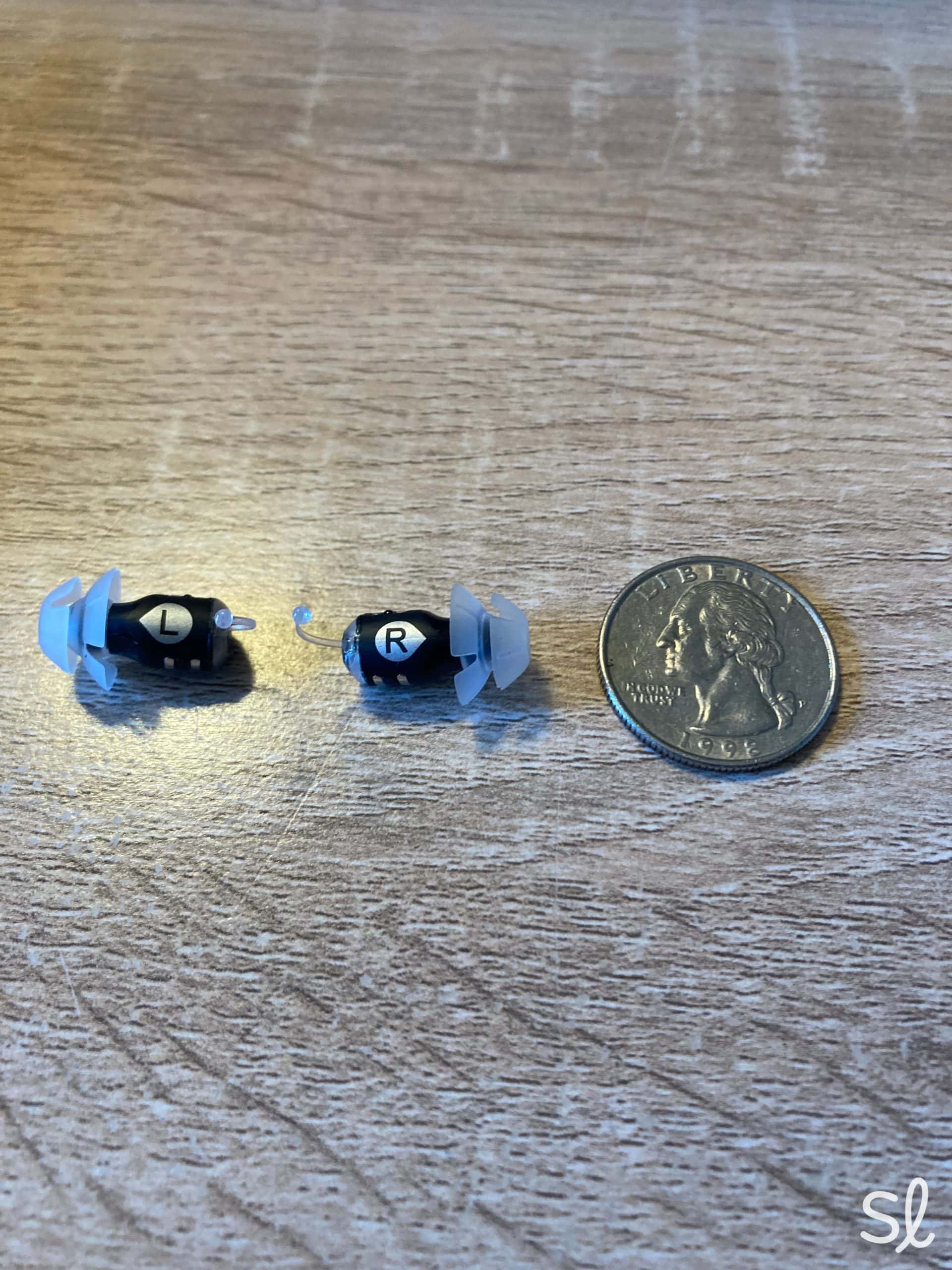
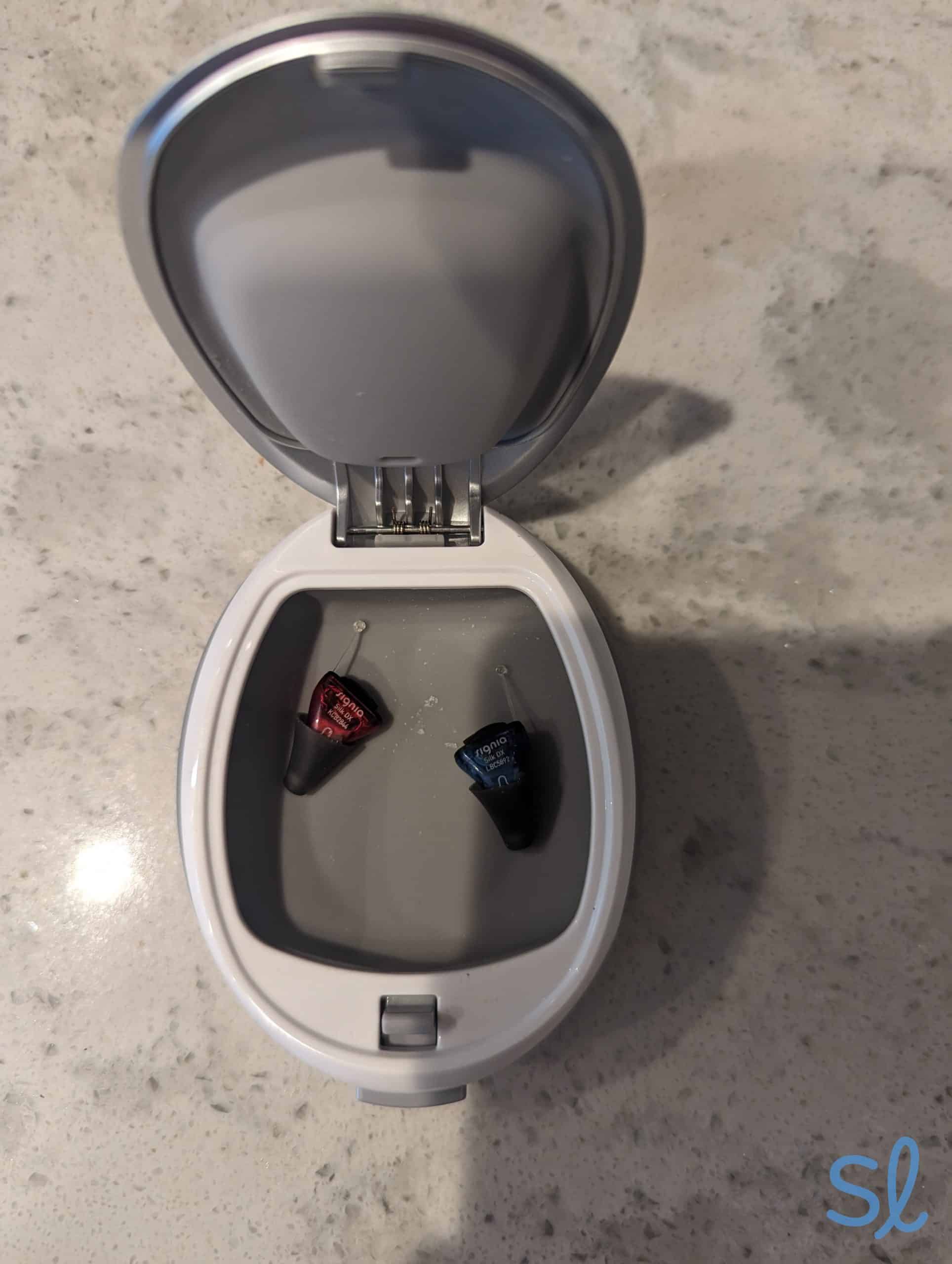
Trying out Signia's Silk hearing aids
Price: $1,000 to $3,750 per ear
Designed for: Mild to profound hearing loss
Hearing aid type: Prescription
Styles: Variety of in-ear and BTE options
Like ReSound, Signia offers a wide range of products designed for adults with mild to profound hearing loss. It’s also one of the only providers on this list that has dispensers in countries outside the U.S. to provide warranty services to Americans living or traveling abroad. It also has multiple hearing aid models that are great for adults with tinnitus, potentially giving long-term relief and possibly subduing the condition permanently.
Inside Tip: Signia and Widex are both well-established brands in the hearing aid industry. Learn more about their product features, including tinnitus relief, in our Signia vs. Widex comparison.
Signia’s hearing aids have advanced features that OTC providers don’t offer. For example, let’s say you’re having a group conversation, turning your head to look at different people. The other people are moving and speaking in different directions as well. Signia’s IX Silk hearing aids can pinpoint individual voices and focus on those sounds, minimizing background noise and maximizing your ability to listen — even when people are talking over each other! It makes Signia a stellar choice for complex listening environments.
» Our Full Review: Signia Hearing Aid Reviews
Pros & Cons:Pros About Signia
- Suitable for all levels of hearing loss
- Patented Notch Therapy for tonal tinnitus
- Mimics natural hearing via Own Voice Processing
- Manage audio settings, connectivity, and preferences with Signia app
- Direct streaming of phone calls, music, and TV audio via Bluetooth
- Remote telehealth support available
Cons About Signia
- Requires a consultation
- Higher price point
- Can’t be purchased online
Our Hands-on Experience:Tinnitus Features
Signia’s hearing aids deliver innovative tinnitus therapy in a sophisticated design. Their tinnitus strategies target both fluctuating non-tonal and tonal tinnitus. Soothing ocean waves, static presets, and Signia’s patented Notch Therapy (NT) provide users with many tinnitus relief options.
NT is a targeted approach that enables the brain to recalibrate and take control of tonal tinnitus. One study found that NT offers the potential to greatly reduce or even eliminate tinnitus in some patients by reorganizing the emotional control center in the brain.3
Expert InsightsFrom Audiologist Dr. Ruth Reisman,Combining Signia’s Notched Therapy and a frequency-shaped masker has shown greater success at reducing tinnitus symptoms than either therapeutic option independently. -
4. Jabra Enhance - Best Overall
See Pricing Links to Jabra EnhanceWhat we like most
- Only OTC hearing aid with tinnitus treatment features
- Offers relief via the Tinnitus Sound Generator
- Highly customizable sound calibration and control
Jabra EnhanceSee Pricing Links to Jabra EnhanceOverview:
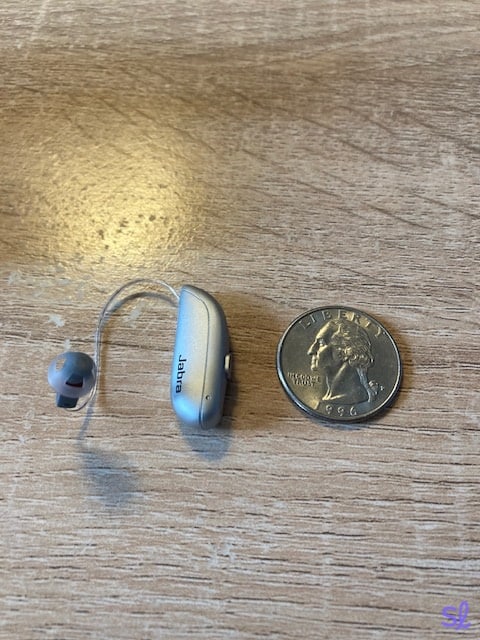
Jabra Enhance Select 300 hearing aids
Price: $995 to $1,995 per pair
Designed for: Mild to moderate hearing loss
Hearing aid type: Over-the-counter (OTC)
Styles: BTE
Jabra Enhance, formerly named Lively, is an OTC hearing aid provider. While the brand doesn’t have tinnitus-specific features, their BTE hearing aids may still help reduce tinnitus symptoms. They’re also a fantastic option for people who can’t afford prescription hearing aids. Jabra Enhance hearing aids make the external sounds you want to hear louder, which can mask tinnitus symptoms.
All three Jabra Enhance hearing aid models can also be adjusted and customized in the Jabra Enhance Select mobile app to best fit your needs. Plus, Premium packages offer three years of follow-up support from an audiologist. You can ask for information about your options for tinnitus relief. Prices start at $1,195 per pair for the budget-friendly Select 50R, making them more affordable than the other OTC option on our list, Eargo.
From the Provider: Jabra Enhance reports that 90 percent of their customers experience some relief from tinnitus.
Even though Jabra Enhance and ReSound hearing aids are manufactured by the same company, GN Hearing, Jabra Enhance offers its OTC models at more competitive prices. However, they are only suitable for mild to moderate hearing loss, while ReSound offers more advanced solutions for all levels of hearing loss.
Remember that Jabra Enhance’s follow-up care is only available in Premium packages, which cost $200 more than the Basic package. While it may cost a bit more, the upside is that you can request the same audiologist each time, which can help make your virtual visits more personalized.
Pros & Cons:Pros About Jabra Enhance
- Three years of follow-up care with the Jabra Enhance audiology team for premium packages
- Hearing environment presets with 360-degree sound
- No in-person office visit required
- Direct streaming from Apple and Android devices
- Remote adjustments available
- 100-day money-back guarantee
Cons About Jabra Enhance
- Not suitable for severe or profound hearing loss
- Only behind-the-ear (BTE) models available
- Must have a compatible smartphone or tablet
Our Hands-on Experience:Tinnitus Features
As over-the-counter hearing aids, Jabra Enhance devices aren’t preset for your specific needs right out of the box. That said, Jabra Enhance allows you to meet (virtually) with a specialist first so that you can get a more customized experience.
We met with an audiologist to set up our hearing aids and adjust the settings to suit our hearing loss. We asked about features for tinnitus relief, and the audiologist informed us that there aren’t any specific features for tinnitus, though the hearing aids may help relieve symptoms. The audiologist recommended downloading the ReSound Tinnitus Relief app, one of our favorite options for tinnitus treatment.
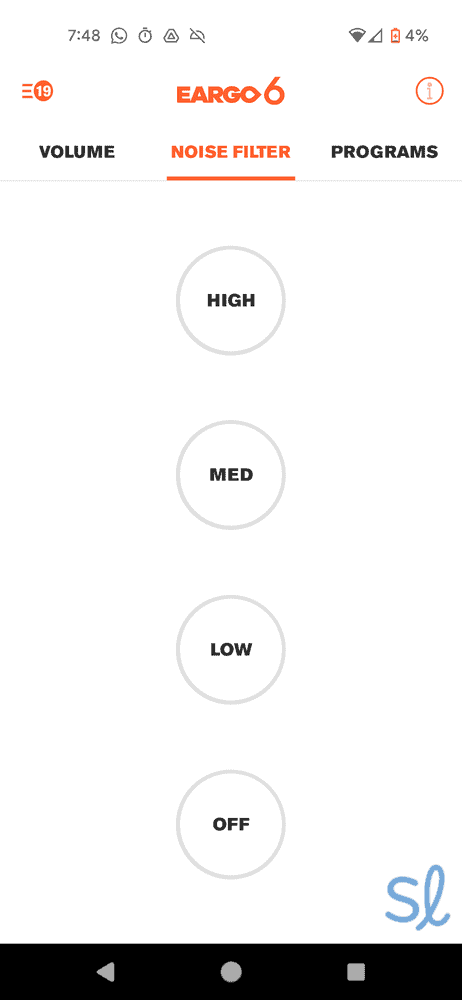
It’s easy to adjust hearing aid settings based on your environment via the mobile app; we could tinker with the noise filter and sound clarity to further customize what we wanted (and didn’t want) to hear. Trying to make similar adjustments on the hearing aids themselves is a bit trickier, as we had to rely on the number of beeps to know if the devices were set to Restaurant, Outdoors, or something else entirely.
FYI: Tinnitus symptoms can look different from one person to the next. Some people experience constant buzzing or ticking, while others only hear intrusive sounds occasionally.4
Dr. Reisman notes that the Jabra Enhance 300 is a “great solution for someone who is independently tech savvy and wants an affordable and flexible solution to manage their hearing loss and tinnitus.” We also tried out the hands-free calling feature and didn’t experience any additional buzzing or feedback, which is ideal for seniors who want to multitask without exacerbating their tinnitus symptoms.
» Our Full Review: Jabra Enhance Hearing Aid Review 2026
-
5. Eargo - Best Low Profile
See Pricing Links to EargoWhat we like most
- Sound Adjust feature automatically recalibrates sound in the surrounding environment
- Long battery life
- Track record of providing relief from tinnitus symptoms
EargoSee Pricing Links to EargoOverview:
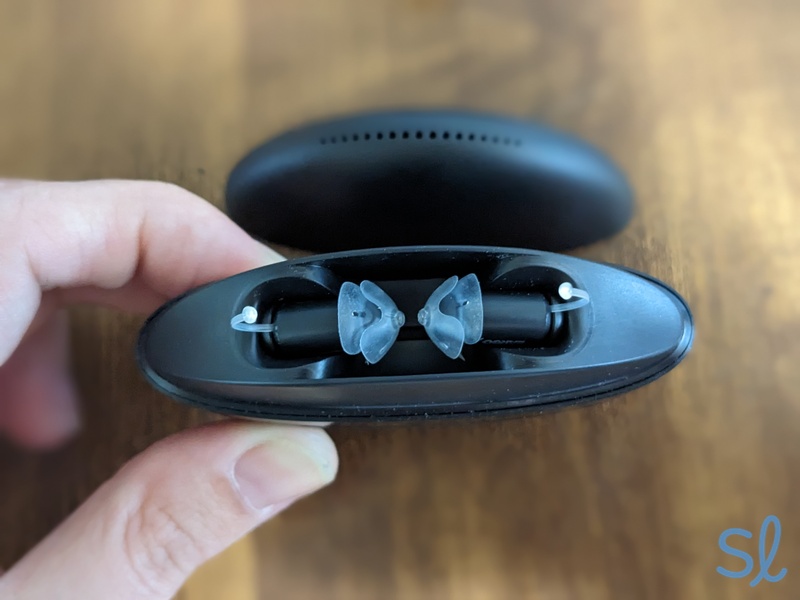
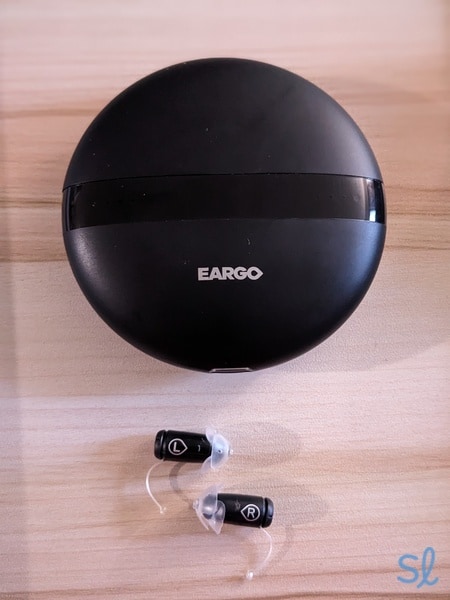
Testing out Eargo 7 hearing aids
Price: $799 to $2,699 per pair
Designed for: Mild to moderate hearing loss
Hearing aid type: OTC
Styles: In-the-canal (ITC) and earbuds
According to Eargo, many Eargo hearing aid wearers have reported a reduction in tinnitus symptoms; as hearing aids amplify other sounds, they can reduce the volume of tinnitus. Eargo hearing aids are affordable — with the Eargo SE starting as low as $1,650 — and can be purchased online. With three ITC and one earbud-style device available, Eargo’s hearing aids are discreet and virtually invisible. You can’t get that with one of the BTE models from Jabra Enhance.
After taking an online hearing test, you’ll undergo an interview with Eargo’s team of hearing care professionals. They’ll configure your hearing aids to best fit your needs based on the test results and interviews. Once you receive your hearing aids, you can either make changes in the mobile app or have a telehealth-style remote visit to have a professional make any necessary adjustments.
Did You Know? Tinnitus is the number-one disability among American veterans.5 Many veterans need tinnitus relief, and Eargo provides veterans with a 20 percent discount on select models.
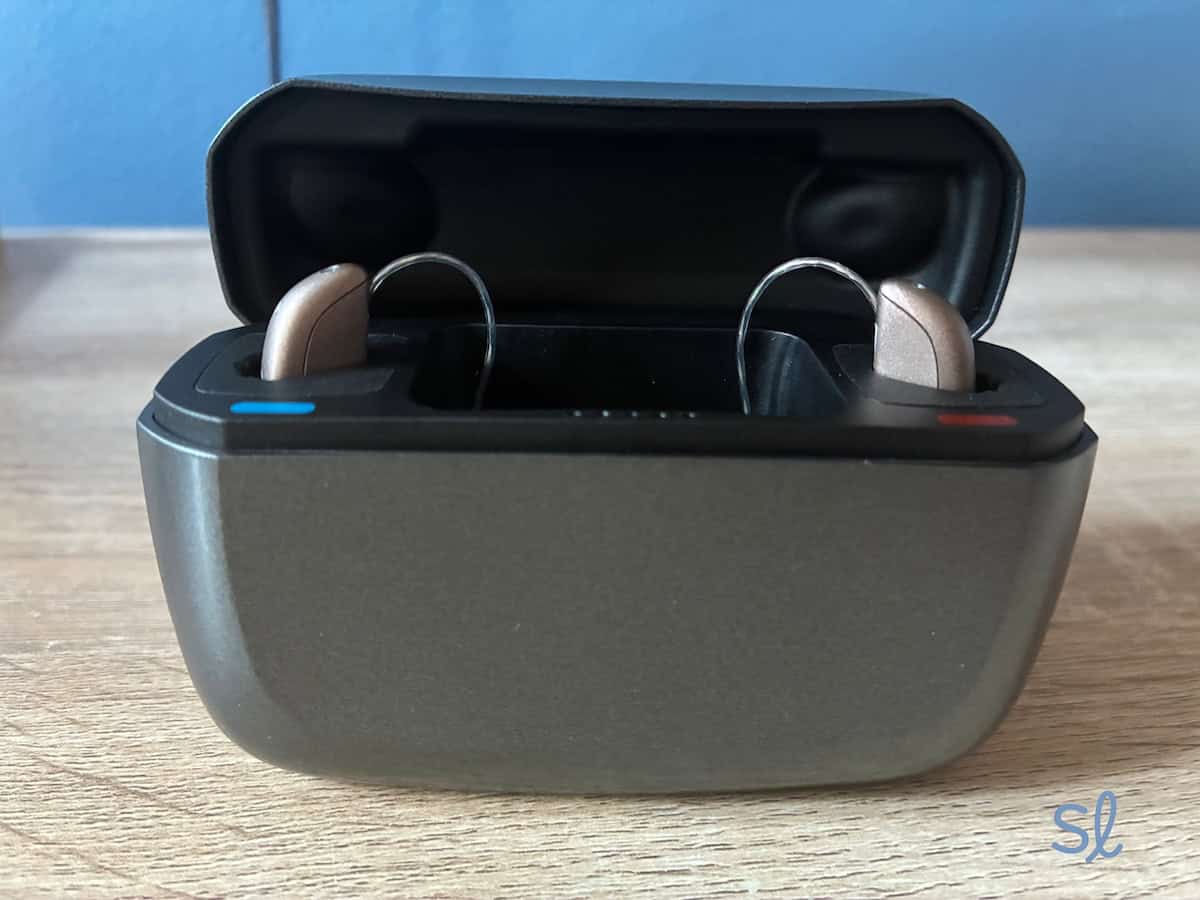
There’s no need to worry about changing small, pesky batteries, as these hearing aids are rechargeable. They offer a battery life of up to 16 hours on a single charge. This battery life is decent, but Jabra Enhance’s Select 300 model lasted 30 hours during testing.

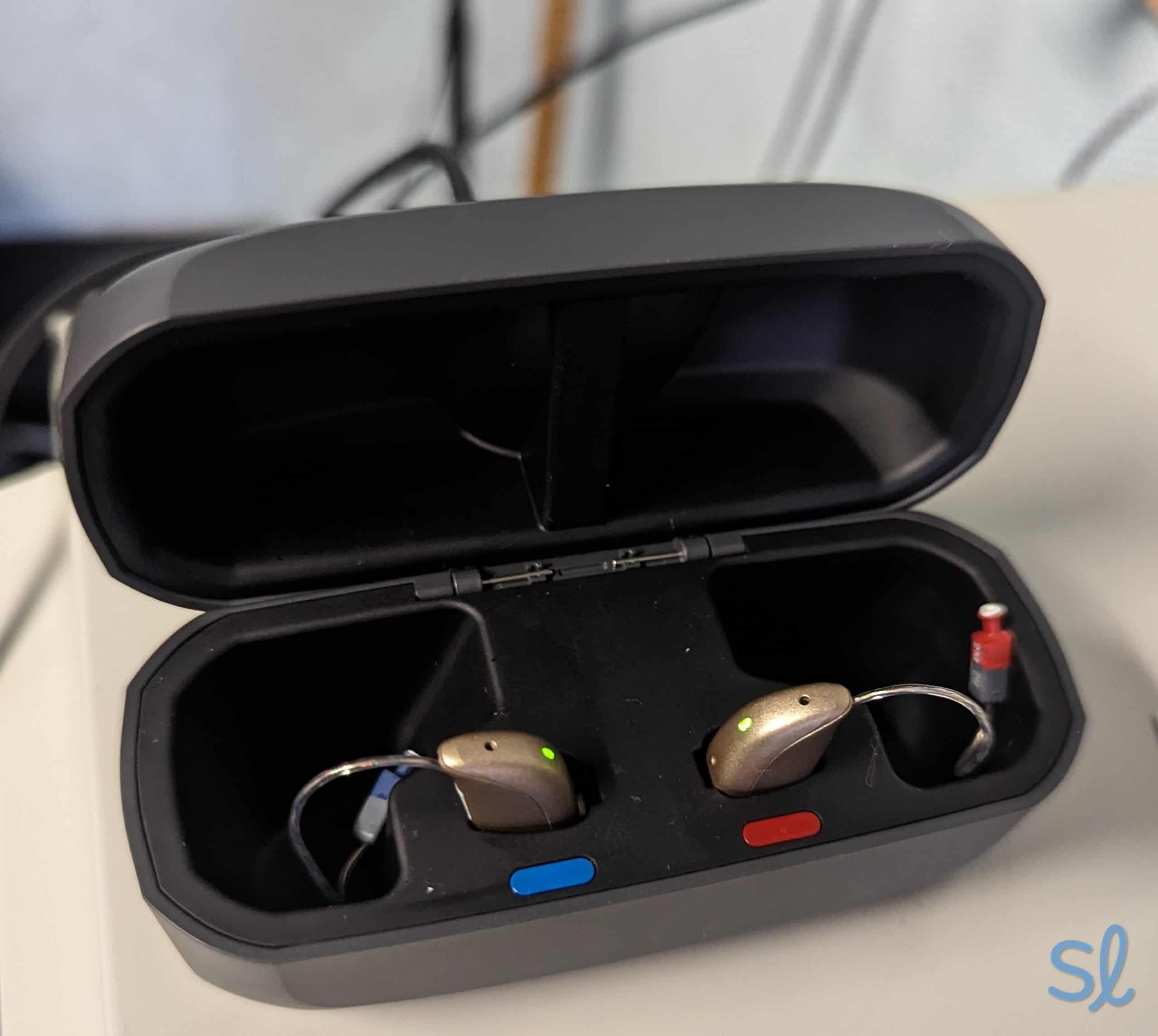
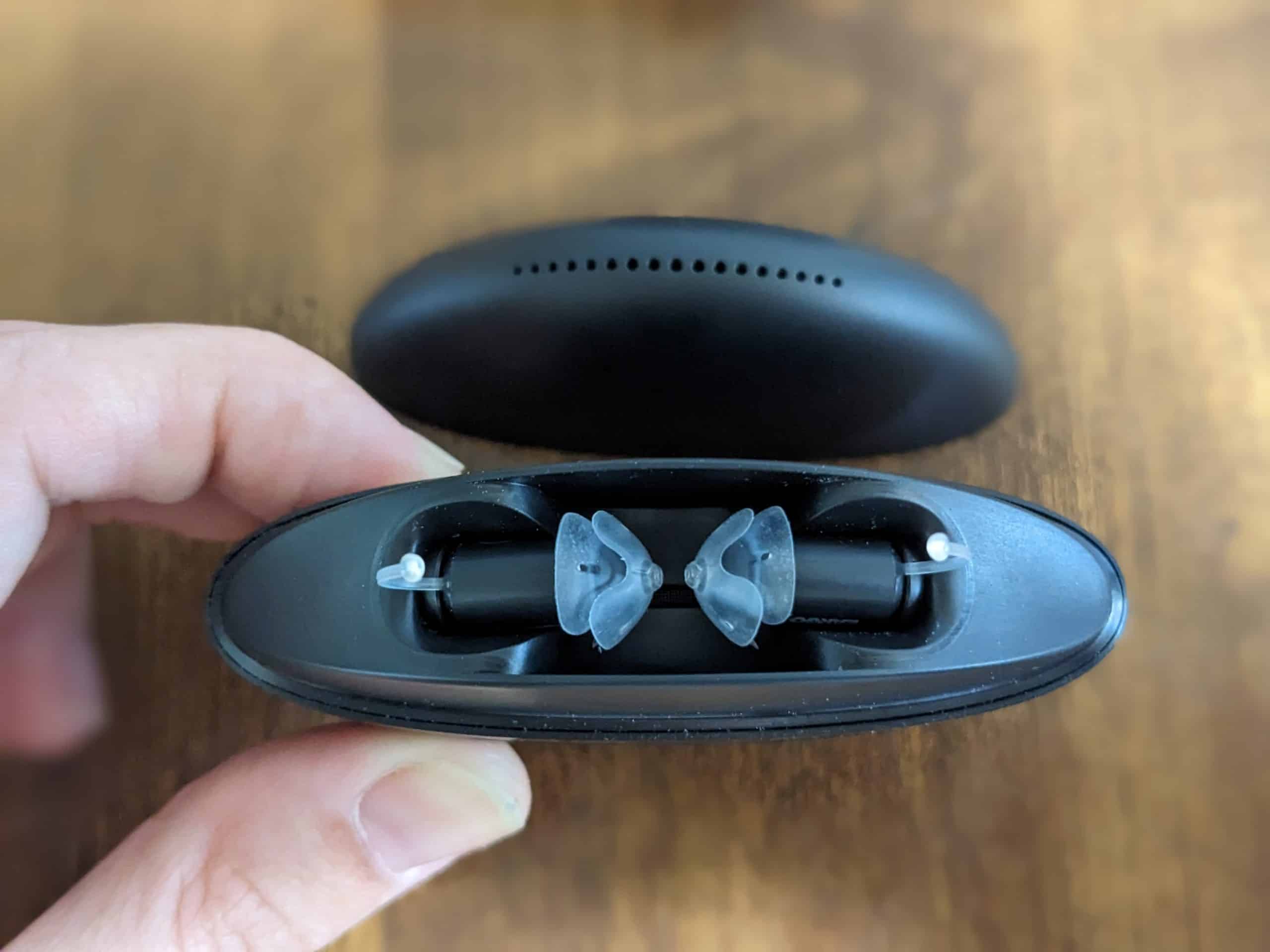
Charging our Eargo 7 hearing aids
Pros & Cons:Pros About Eargo
- Sound Adjust feature with soundscape optimization
- Online purchase with no prescription required
- iOS and Android mobile apps
- Lifetime remote support from a team of 30+ hearing professionals
- One-time loss/damage coverage per unit
Cons About Eargo
- Smartphone required
- Fit is not for everyone due to ear canal anatomy
- Shorter battery life than comparable BTE options
- In-ear options can sometimes enhance tinnitus symptoms
Our Hands-on Experience:Tinnitus Features
While Eargo doesn’t have any features specifically for tinnitus, many users experience relief from tinnitus symptoms. Eargo’s hearing aids are very customizable, so you can adjust the settings to best help your tinnitus. The intuitive Sound Adjust+ feature automatically optimizes sound based on the hearing environment.
Additionally, our tech team was able to make immediate adjustments via the mobile app with ease. One thing we struggled with was the volume requirements. We used an iPhone, and to sync the Eargo 8 with the mobile app, the volume on our phone had to be at 60 percent or higher.
» For Phone Shoppers: Cell Phones for Seniors: A Buyer’s Guide
If you want to turn the volume down on your phone so it doesn’t disturb others, you may end up disconnecting the hearing aids from the app until you turn the volume back up again. That may not be a good fit for older adults who frequently turn down the volume on their phones.

You can easily adjust your hearing aid settings in the Eargo mobile app.
That said, Dr. Reisman recommends the Eargo 8 for seniors with mild to moderate hearing loss who want truly discreet hearing assistance. Our tech team was also impressed with the level of remote support, especially considering that professional help is available (for life) at no extra charge. For comparison, Jabra Enhance only offers three years of remote support for a one-time fee of $200. As a bonus, the device’s built-in Clarity Mode makes it easier to minimize unwanted noise in loud environments.
» Our Full Review: Eargo Hearing Aid Review
The Runners-Up
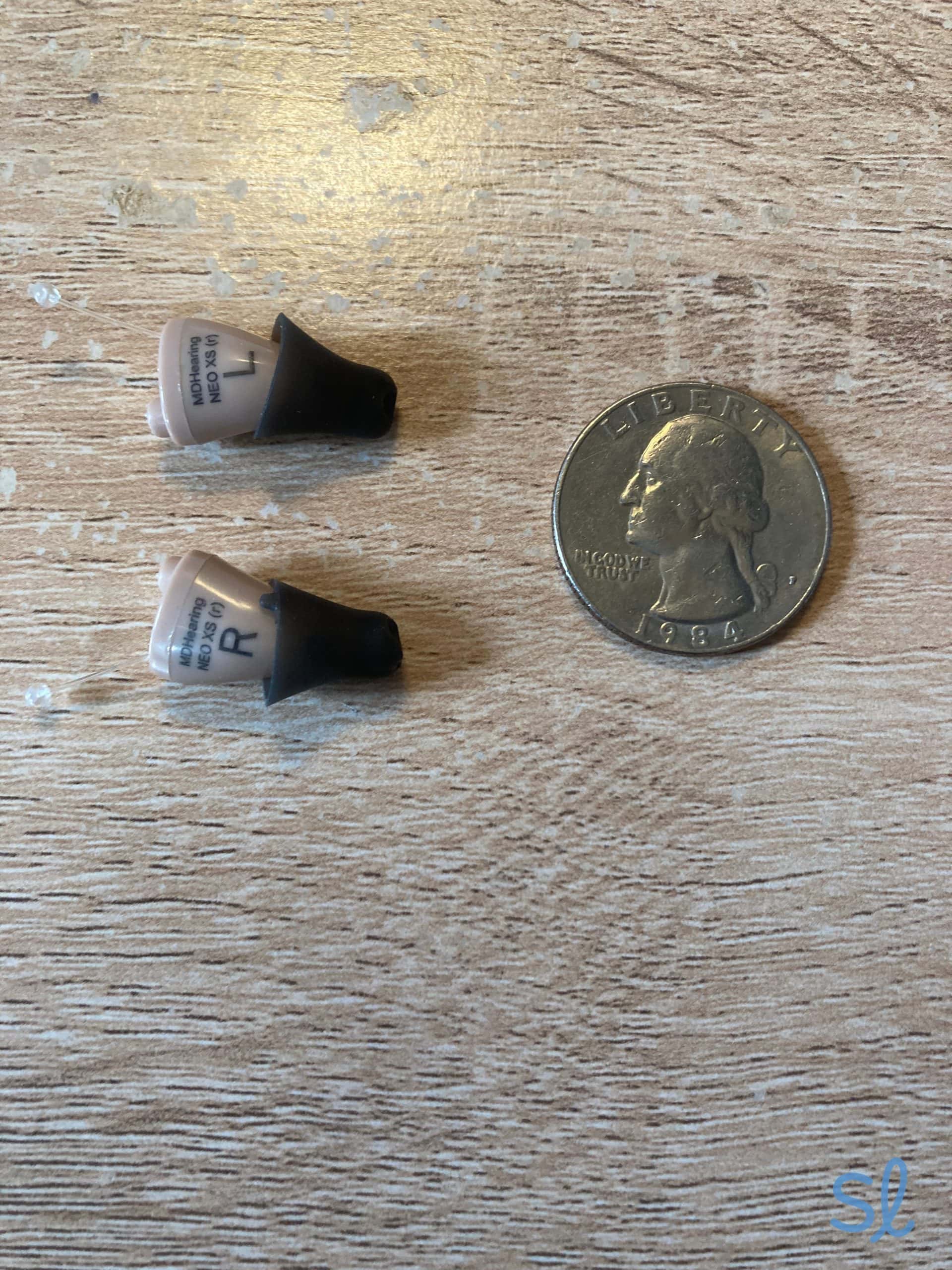
MDHearing, one of our favorite OTC brands, is a runner-up on our list of the best hearing aids for tinnitus.
Below is a quick look at runners-up that didn’t quite make the cut but still offer quality tinnitus hearing aids for many users:
- MDHearing: MDHearing’s affordable BTE and in-the-ear hearing aids offer noise suppression features to address tinnitus from the comfort of home. Check out our MDHearing review to learn more.
- Lexie: With Lexie, you can simply download the Lexie app to your smartphone and take the hearing test, which measures your response to low-pitched, midrange, and high-pitched sounds. Then, you’ll have a better idea of which Lexie hearing aid model is best for treating your tinnitus.
- Otofonix: By cutting out the middleman, Otofonix keeps its OTC hearing aid costs in check. For more details on features and pricing, head to our Otofonix hearing aid review.
Can a Hearing Aid Stop Tinnitus?
There is no quick fix or cure for tinnitus, but there are effective treatments to help manage symptoms. Well-fitted hearing aids are a key initial step to treating tinnitus. Hearing aids can help reduce symptoms by masking those irritating ringing sounds and amplifying the environmental sounds you actually want to hear.
In other words, hearing aids try to distract your brain from tinnitus while teaching it to focus on additional sounds. Some prescription hearing aids, such as those offered by Widex and Signia, may have long-term or even permanent relief from tinnitus symptoms.
» Learn More: How to Choose a Hearing Aid
Tinnitus Treatment and Therapy Options
Amplification alone is usually all a tinnitus patient needs. However, if symptoms are still present, frequency-shaped maskers and cognitive behavioral therapy have been shown to help close the gaps in most cases. When it doesn’t, many more options and tools have been shown to improve the quality of life in patients with tinnitus. Consulting an audiologist who specializes in that area is the best way to find the most effective tinnitus solution.
In the past, the general understanding of tinnitus was that it was a side effect of hearing loss, specifically cochlear (inner ear) damage. Devices called “maskers” were used to cover up the tinnitus, and people were frequently told to “get used to it.”
The good news is that tinnitus treatment has come a long way! Cutting-edge strategies, combined with hearing aids, help those suffering from tinnitus. Based on data from the American Tinnitus Association, we’ve compiled a range of treatments to explore.7
| Tinnitus treatment | Method |
|---|---|
| Cognitive behavioral therapy (CBT) | Involves therapeutic techniques to change thinking and behavioral patterns via goal-oriented strategies |
| Mindfulness-based stress reduction (MBSR) | Instead of attempting to ignore tinnitus symptoms, patients are taught to accept, embrace, and control their episodes |
| Acceptance and commitment therapy (ACT) | Emphasizes the need for patients to fully experience and tolerate the emotions, perceptions, and thoughts linked to their tinnitus symptoms |
| Tinnitus activities treatment (TAT) | Learning-based method focuses on four areas that impact tinnitus: thoughts and emotions, hearing and communication, sleep, and concentration |
| Tinnitus retraining therapy (TRT) | Combines traditional CBT and sound therapy devices like hearing aids or external sound generators |
| Progressive tinnitus management (PTM) | Treatment is based on the level of tinnitus care needed by the patient; care may include education, behavioral therapy, and sound therapy |
Veterans Affairs Tinnitus Treatment
Veterans are at a higher risk of tinnitus than the general population due to their exposure to loud noises. According to the Centers for Disease Control and Prevention, tinnitus is the number-one disability among veterans.
All veterans enrolled in VA health care are eligible for medical services that include diagnostic audiology. Many veterans can receive hearing aids from brands like Oticon, Phonak, ReSound, Signia, and Starkey through their VA audiology clinic. For veterans who prefer to purchase hearing aids online, Eargo provides a 20 percent discount on select models.
Did You Know? Tinnitus can affect individuals with normal hearing. It can be due to many causes, including medications, acoustic trauma, post-traumatic stress disorder (PTSD), and traumatic brain injury.
Created by the National Center for Rehabilitative Auditory Research, the VA’s Progressive Tinnitus Management (PTM) program is commonly used to treat tinnitus in PTM isn’t a one-size-fits-all program. After a comprehensive hearing evaluation, a customized tinnitus management plan is created. Components include sound therapy, education, and addressing reactions to tinnitus.
Free and Discounted Hearing Aids for Those With Tinnitus
Living without hearing aids, especially if you’re experiencing tinnitus, can negatively impact your quality of life. Despite this, our hearing aid study found that fewer than 1 in 3 adults over 60 with hearing loss use hearing aids. A major factor was cost. Fortunately, you can find quality hearing aids at affordable prices by checking out our best cheap hearing aids list.
Additionally, watch the video below to discover if you’re eligible for free or discounted hearing aids.
Are Hearing Aids for Tinnitus Covered by Insurance?
In general, health insurance does not cover the cost of hearing aids — whether or not you have tinnitus. Medicare does not cover hearing loss or tinnitus treatments, and Medicaid hearing coverage varies from state to state.
Some Medicare Advantage plans and other private health insurance plans offer hearing coverage, including annual hearing exams to test for tinnitus and, in some cases, partial coverage for tinnitus hearing aids.
Additional Hearing Aid Resources
Want to compare all your options? We’ve tested and reviewed hearing aids for several other categories that could help you find the right fit.
FAQs
-
Do tinnitus ear drops work?
No, there are currently no medical ear drops to treat tinnitus.
-
What makes tinnitus worse?
Many of the underlying causes of tinnitus can also worsen the condition. Some common examples include head or neck injuries, exposure to loud noises, ear infections, and certain medications.
-
Is there a simple trick to stop tinnitus?
Some patients develop strategies to minimize tinnitus symptoms, particularly with the help of professional therapy or training, but there’s no one-size-fits-all trick to stop the buzzing or ringing sound. As a result, masking the sound is often the most effective solution.
-
Is tinnitus considered a hearing disability?
Tinnitus is generally not considered a hearing disability alone, particularly for non-veterans seeking disability benefits. Moderate to severe hearing loss, combined with tinnitus symptoms, may qualify as a disability if the conditions make it difficult to work or complete everyday tasks.
-
National Institute on Deafness and Other Communication Disorders. (2024). Quick Statistics About Hearing, Balance, & Dizziness.
-
Harvard Health Publishing. (2022). Tinnitus: Ringing in the ears and what to do about it.
-
National Library of Medicine. (2022). Notched Sound Alleviates Tinnitus by Reorganization [of] Emotional Center.
-
National Institute on Deafness and Other Communication Disorders. (2023). https://www.nidcd.nih.gov/health/tinnitus
-
U.S. Department of Veterans Affairs. (n.d.). Hearing Loss.
-
American Tinnitus Association. (n.d.). Behavioral Therapies.
-
U.S. Department of Veterans Affairs. (2018). Progressive Tinnitus Management.