The Best Rechargeable Hearing Aids in 2026, Tested and Reviewed by Audiologists
Our top pick for rechargeable hearing aids is Jabra Enhance, thanks to its solid value, advanced features, long-lasting battery, and excellent audiologist care.


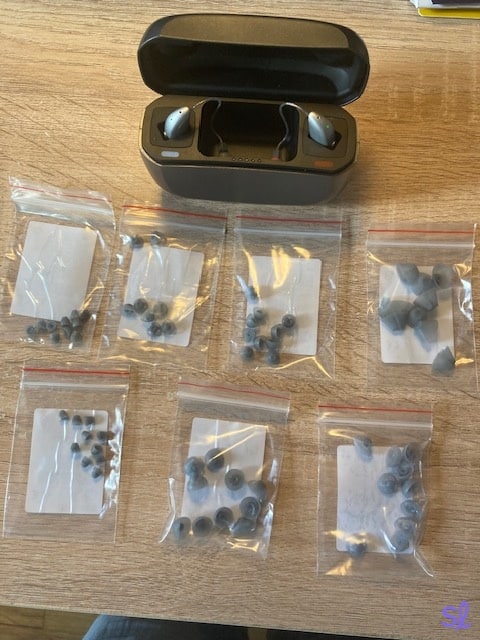
My Jabra Enhance Select 300 came with a wide variety of domes.
How We Tested the Hearing Aids
Our tech team conducted over 100 hours of hands-on testing to compare the top rechargeable hearing aids. Here’s what our testing process looked like for OTC hearing aids that are available online without a prescription:
- We tried each brand’s online hearing test, comparing our results to in-person evaluations from an audiologist.
- We ordered our hearing aids and evaluated the overall purchasing process. We considered the price and value of each hearing aid model, current promotions, additional fees, and upfront costs.
- Our team followed the instructions to set up our devices upon arrival. If the brand had a mobile app, we downloaded and set it up. We evaluated the ease of use and the number of steps required to get our hearing aids up and running. We also ensured that all of the top contenders on our list were easy to charge.
- We contacted customer service several times to evaluate the quality of care by phone, mobile app (if applicable), and online chat features.
- Our team tested each hearing aid for a week, using them while at home, in noisy environments, and in more intimate conversational settings. We evaluated the hearing aids’ features, sound quality, and ease of use.
- We measured how long each brand’s hearing aids could last on a single charge. Our team also measured the time it took to charge hearing aids from 0% to 100%. Finally, we tested how different features, such as Bluetooth streaming, affected battery life.
For prescription hearing aids that can’t be ordered online, we spoke with Dr. Reisman about her experience with each brand. We considered her knowledge in prescribing and testing the rechargeable hearing aids, as well as feedback from her patients, to evaluate and rank them.
How We Chose the Best Rechargeable Hearing Aids
To select the best rechargeable hearing aids, we consulted with our team of audiologists and regular hearing aid users and spent over 100 hours conducting hands-on tests. Some criteria we evaluated during the process included:
- Battery life: Replaceable batteries can last for days at a time — something you can’t usually get with rechargeable batteries — but they can be a hassle. Rechargeable batteries, comparatively, are always ready to go, as long as you remember to charge them! All the hearing aid providers on our list offer models lasting at least 16 hours on a single charge.
- Charging time: It’s great if your hearing aids can last for a day or longer on a single charge, but it could be a problem if it takes more than a few hours to get a full charge. We focused on hearing aid models that require four hours or less of charging time.
- Pricing: You can expect to pay anywhere from around $200 for a pair of OTC hearing aids to upwards of $8,000 for a premium prescription pair. The best way to determine hearing aid costs is to make an appointment with a provider to discuss which model best fits your lifestyle and budget. We included some affordable options for seniors on a budget, plus more advanced (and expensive) providers.
- Ease of use: We acknowledge that not all older adults are comfortable with new tech, so we tested various models to check which ones were easy to use, especially when setting up and charging the devices.
- Size and design: Many older adults want rechargeable hearing aids at decent prices, but don’t want to sacrifice modern, stylish, and discreet designs. We tested models that range from tiny, completely-in-canal (CIC) hearing aids to larger, more robust, behind-the-ear (BTE) models.
- Features: While testing hearing aids, we discussed the most desired features in the devices, including enhanced speech recognition, volume control for each hearing aid, and tinnitus management tools.
Why Trust Us
Our team of tech experts regularly tests the latest devices for seniors. We’ve logged hundreds of hours testing and reviewing hearing aids from dozens of providers.
We also worked with experts like Dr. Reisman, who has over 15 years of experience working with patients. She has personally tested and prescribed hearing aids from providers on this list. She also worked with us to choose the best rechargeable options and offered her feedback on specific models.
SeniorLiving.org is supported by commissions from providers listed on our site. Read our Editorial Guidelines

- Full day of use on a single charge
- Three rechargeable models to choose from
- Three years of follow-up care with premium package

- Resistant to water, dust, and debris
- 20 hours per charge
- Affordable pricing

- Discreet in-ear designs
- Lifetime product support available
- Eargo app makes it easier to customize your experience

- Options for all levels of hearing loss
- State-of-the-art devices and features
- Custom hearing aids

- Notch Therapy (NT) for tonal tinnitus
- Excellent styles and aesthetic appeal
- In-ear and BTE models
Contents
Today’s rechargeable hearing aids offer long-lasting batteries, and many include charging cases that make them easy to power up on the go. They also come in various designs and prices, suitable for all needs.
Our senior tech experts and resident audiologist, Dr. Ruth Reisman, have thoroughly tested and reviewed the best hearing aids, narrowing the list to our top rechargeable picks. We evaluated critical factors such as battery life, charging time, price, ease of use, and design. Ultimately, we chose Jabra Enhance as our top option, thanks to its long-lasting rechargeable batteries, portable charging case, and three years of remote follow-up care.
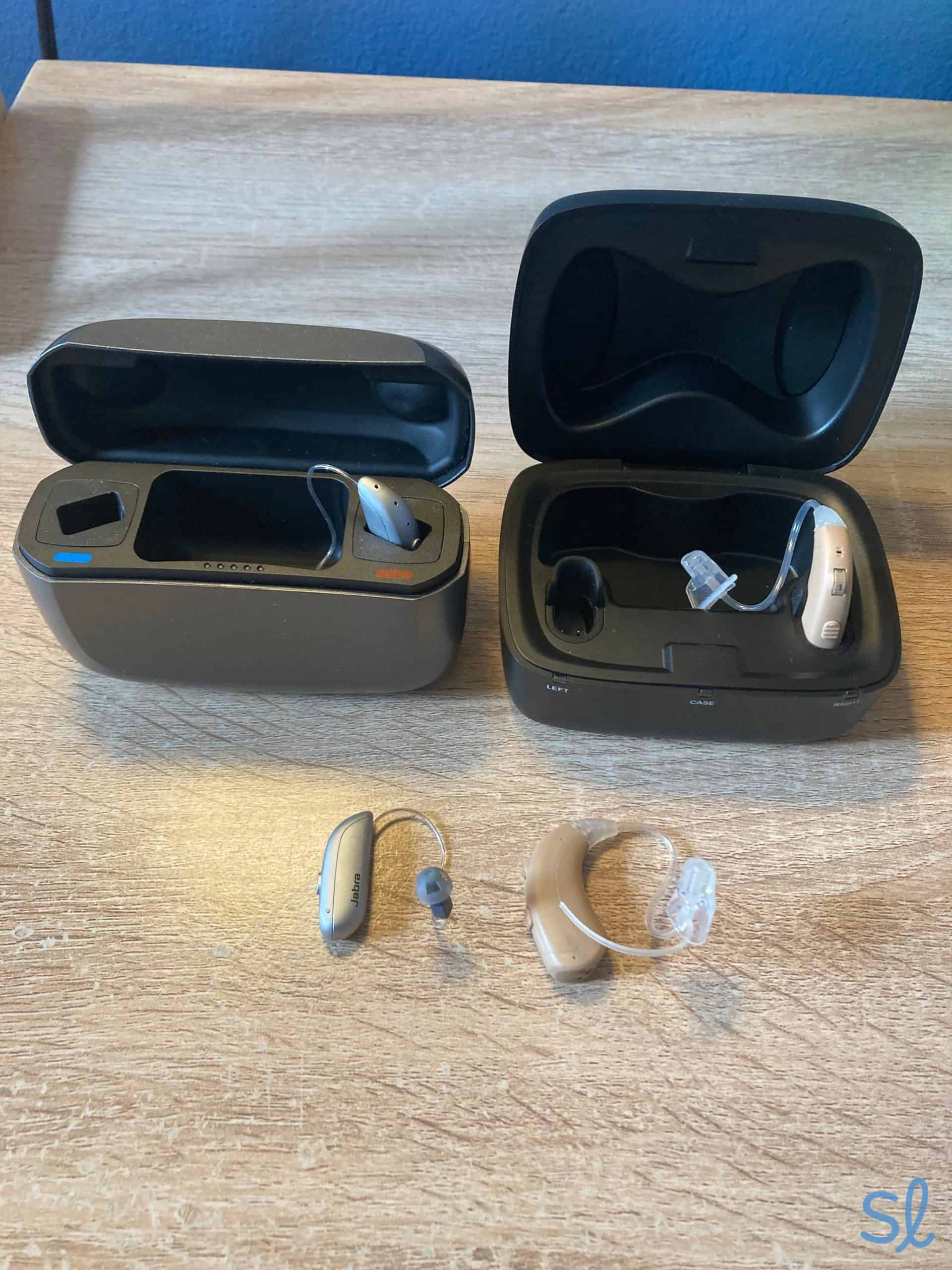
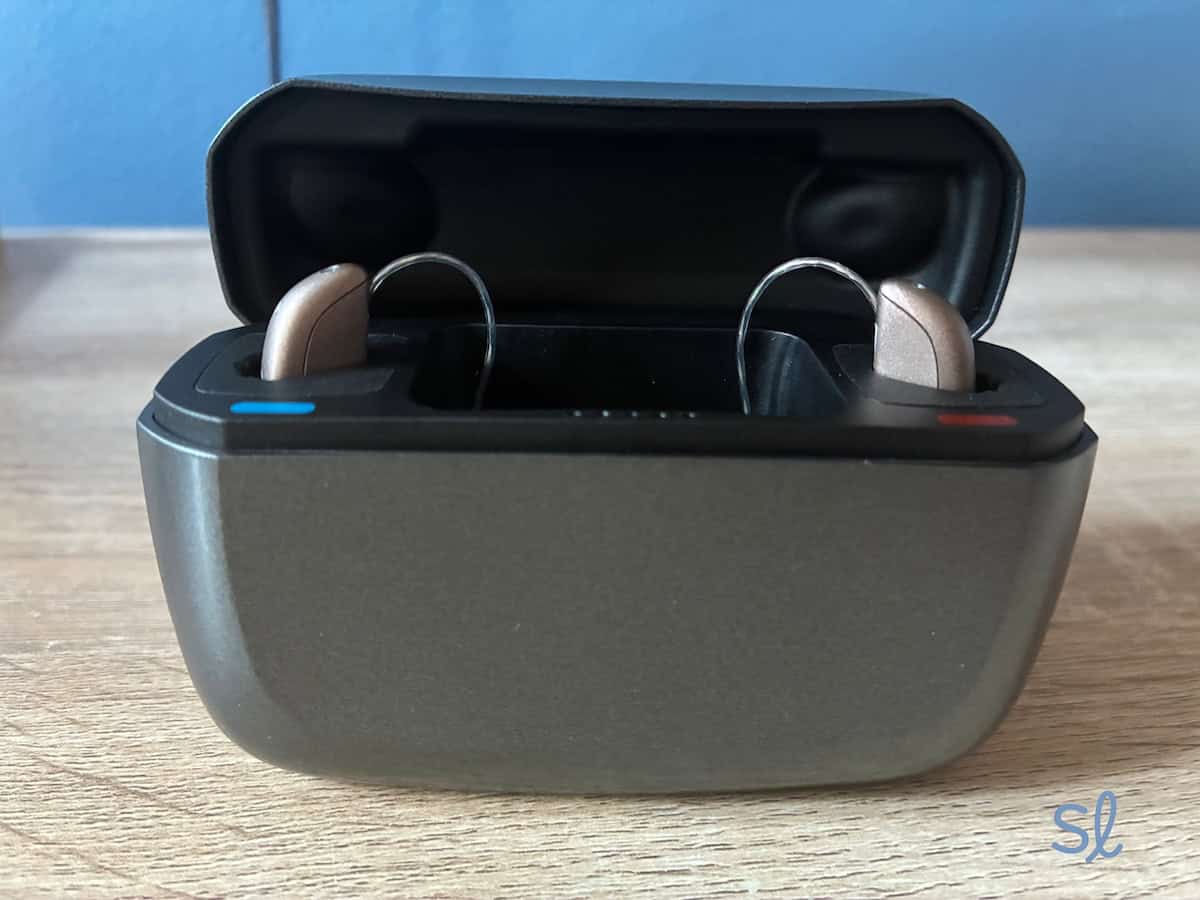
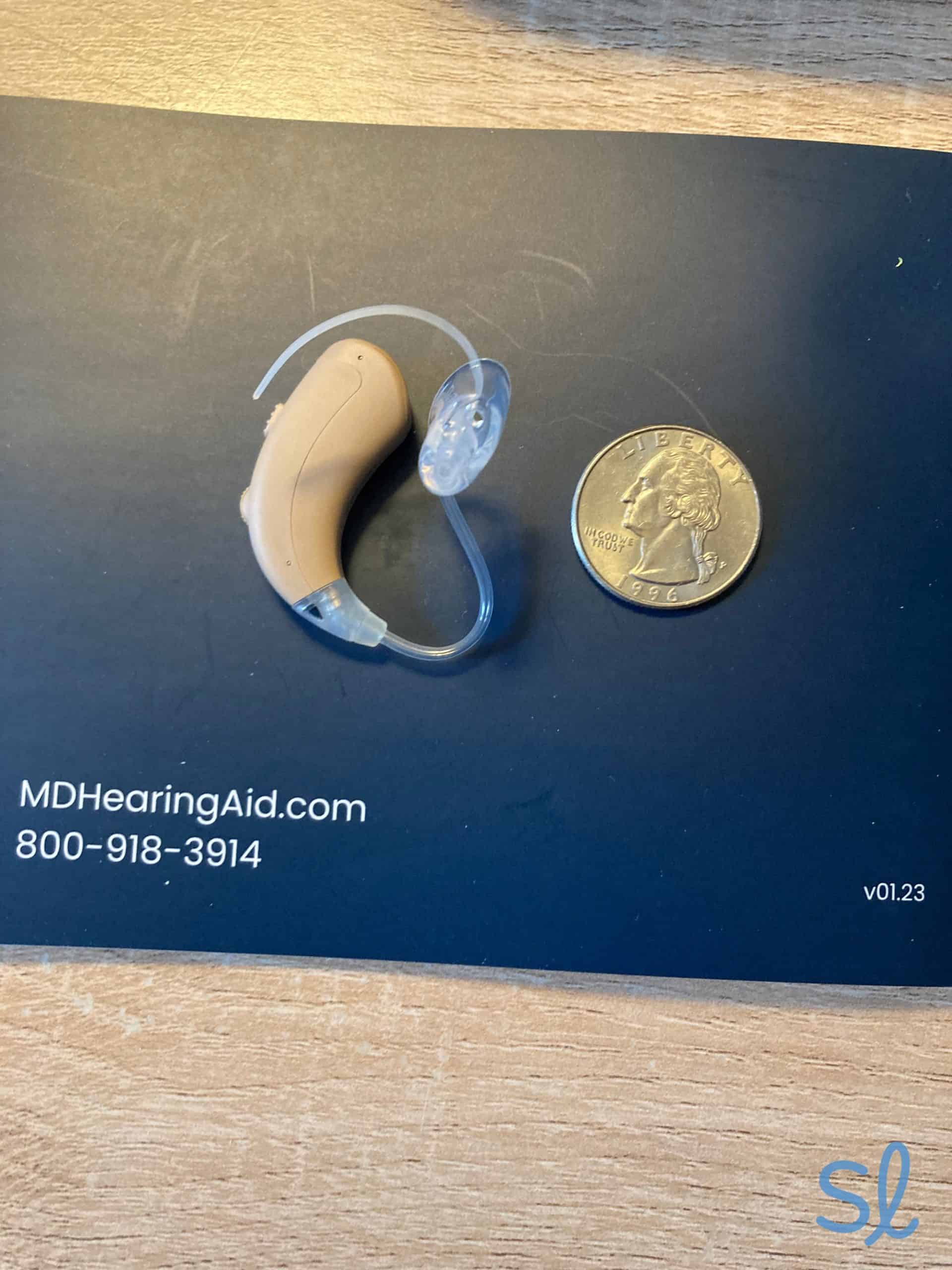
MDHearing and Jabra Enhance both offer BTE hearing aids that are fairly discrete.

The Best Rechargeable Hearing Aids for 2026
Comparing the Best Rechargeable Hearing Aids
| Brand | Starting price | Battery life | Charging time | Hearing aid type | Hearing aid style |
|---|---|---|---|---|---|
| Jabra Enhance | $1,195 per pair | Up to 24 hours | 3 hours | OTC | BTE, mini BTE |
| MDHearing | $297 per pair | Up to 20 hours | 2 hours | OTC | BTE, ITE |
| Eargo | $799 per pair | Up to 16 hours | 4 hours (30 minutes for fast charge) | OTC | IIC, earbud |
| ReSound | Starting at $2,000 per pair | Up to 30 hours | 3 hours (30 minutes for fast charge) | Prescription | BTE, mini BTE, ITE |
| Signia | Starting at $2,000 per pair | Up to 61 hours | 4 hours (30 minutes for fast charge) | Prescription | BTE, mini BTE, ITE |
-
1. Jabra Enhance - Best over-the-counter (OTC) option
See Pricing Links to Jabra EnhanceWhat we like most
- Full day of use on a single charge
- Three rechargeable models to choose from
- Three years of follow-up care with premium package
Jabra EnhanceSee Pricing Links to Jabra EnhanceOverview:
Jabra Enhance Select 300 hearing aids
Product highlights
- Price: Starting at $1,195 per pair
- Battery life: Up to 24 hours
- Hearing aid type: BTE, mini BTE
- Bluetooth: Yes (all models)
- Designed for: Mild to moderate hearing loss
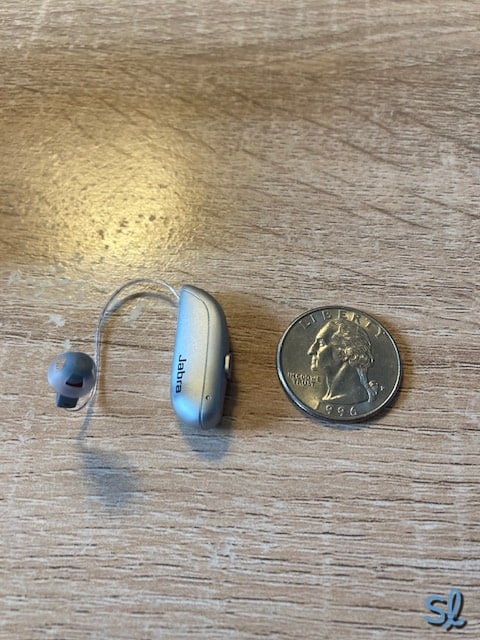
Jabra Enhance offers three BTE hearing aids backed by ReSound’s reliable technology. We found that the company’s hearing aids are pretty advanced for OTC devices, offering a solid battery life of up to 24 hours. Plus, the sleek charging case holds three additional full charges. We could easily charge them on the go.
 Expert InsightsFrom Dr. Ruth Reisman, AuD MBA CCC-AAll-day usage is key for patients who rely on their hearing aids for communication and activities of daily living. Just know that Bluetooth streaming with Jabra Enhance hearing aids may reduce battery life.
Since you can buy these OTC devices online without a prescription, they're accessible and relatively affordable (though not nearly as cheap as MDHearing). Jabra Enhance has three rechargeable BTE models: Enhance Select 50R, Enhance Select 300, and Enhance Select 500, all available in many colors and equipped with Bluetooth technology.
» Related Reading: Best Bluetooth Hearing Aids of 2026
Pros & Cons:Pros About Jabra Enhance
- Up to 24 hours of battery life on a single charge
- Portable charging case with fast-charging options
- Can be bought online or over the phone
- 100-day money-back guarantee
- One- to three-year warranty
- Three years of follow-up care with the Jabra Enhance audiology team with Premium packages
Cons About Jabra Enhance
- Not suitable for severe to profound hearing loss
- Only BTE options available
- Select 50R charger case is not portable
Our Hands-on Experience:Our Experience With Jabra Enhance
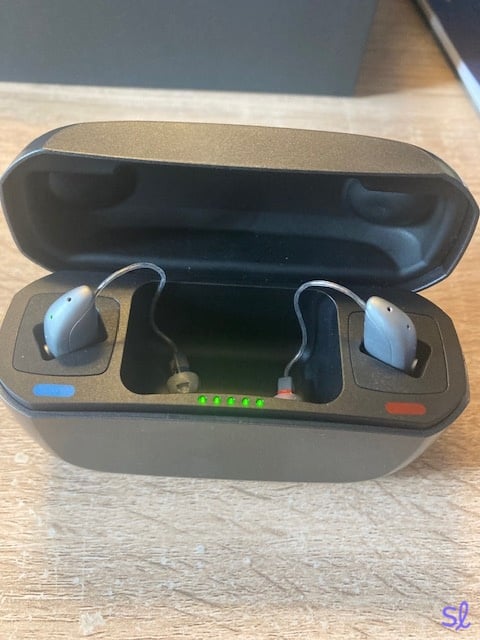
We received our Jabra Enhance Select 300 hearing aids fully charged, so we didn’t need to test the charging case for the first day of use. Once we had charged the devices, we discovered that the case had five green lights to indicate the charge level (one light meant a low battery, and five meant a full charge). That makes it easy to estimate how much time is left until your hearing aids fully charge or how much battery life they have if you don’t have time to charge them completely.
» Learn More: Jabra Enhance Select 300 Review
A full charge took about three hours, an hour slower than what we experienced with MDHearing’s NEO XS hearing aids. Fortunately, Jabra Enhance has a fast-charging option if you’re running short on time. Let’s say you’re getting ready to leave to catch your grandkid’s soccer game and realize you forgot to charge your hearing aids the night before. You can set them on the charger for half an hour to quickly give them six hours of power.

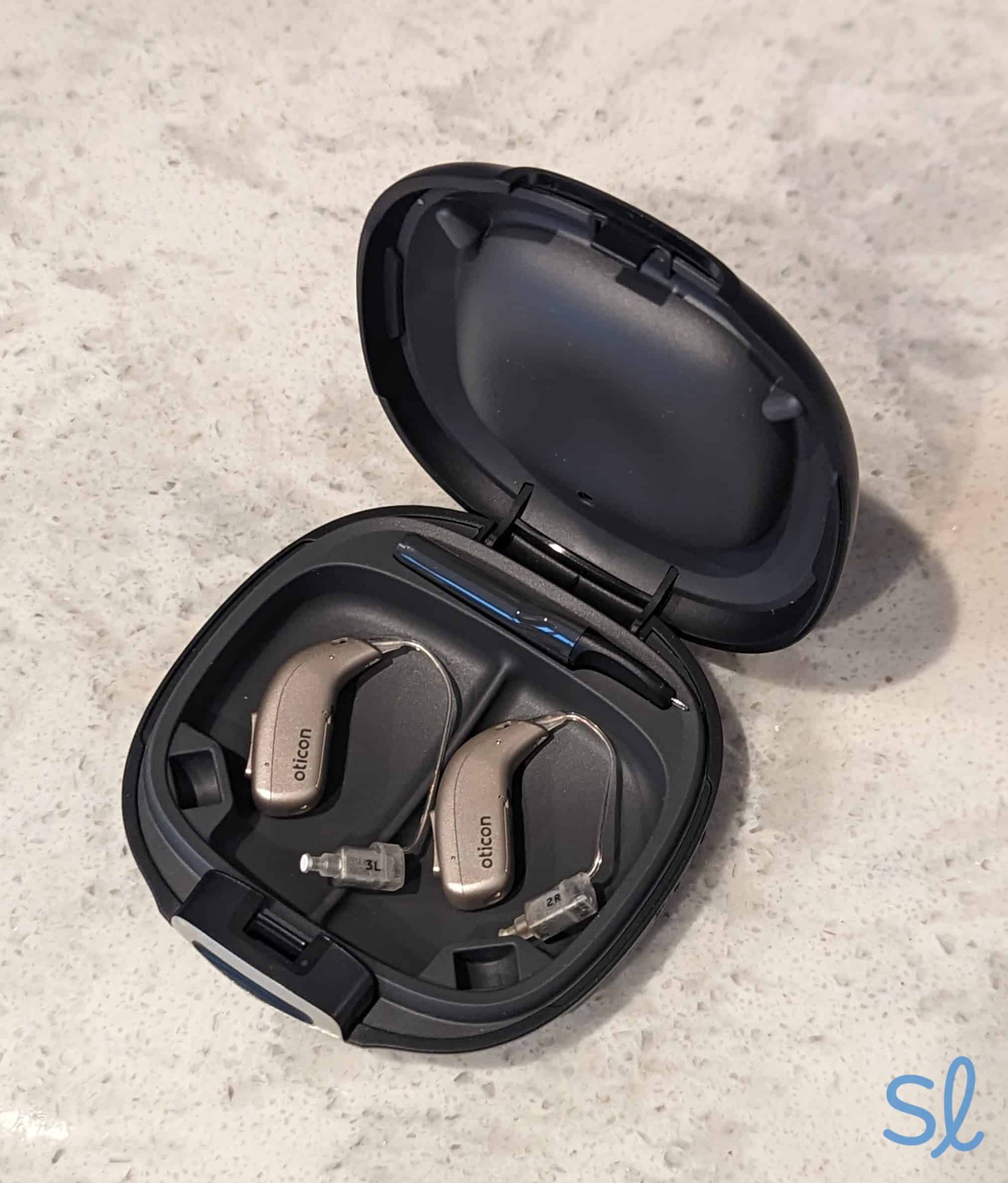
Charging Jabra Enhance Select 300 hearing aids
A full charge lasted about 24 hours with the Select 300, nearly twice as long as the LINK by Eargo. Plus, the charging case for the Select 300 and 500 holds up to three charges (like MDHearing's VOLT and VOLT MAX). We could charge the case and use it on the go to charge our hearing aids without needing an outlet.
» Our Full Review: Jabra Enhance Hearing Aids Review 2026
Want a closer look at MDHearing’s VOLT devices? Watch our video review below.
Audiologist Brad Ingrao unboxes the MDHearingAid Volt Hearing Aid so you can make an informed decision whether to try this well-regarded device Pricing
Jabra Enhance hearing aids aren’t the cheapest on the market. They are still thousands of dollars less than the national average and more affordable than comparable models from prescription providers like ReSound and Signia. With a Jabra Enhance Premium package, the Enhance Select 500 costs $1,995 per pair, the Enhance Select 300 costs $1,695 per pair, and the Enhance Select 50R costs $1,195 per pair. But these prices include more than just the device.
The Jabra Enhance Premium package includes follow-up remote care with an audiologist for three years, the Jabra Enhance Select mobile app, a charging case, shipping, a three-year warranty, and loss and damage protection.
-
2. MDHearing - Most budget-friendly
See Pricing Links to MDHearingWhat we like most
- Resistant to water, dust, and debris
- 20 hours per charge
- Affordable pricing
MDHearingSee Pricing Links to MDHearingOverview:
Testing out MDHearing's VOLT devices, which are small and sit behind the ear.
Product highlights
- Price: Starting at $297 per pair
- Battery life: Up to 20 hours
- Hearing aid type: BTE, ITE
- Bluetooth: Yes, with one model
- Designed for: Mild to moderate hearing loss
MDHearing offers five rechargeable models, including two in-ear and three BTE options. MDHearing’s VOLT model is one of our favorites. It’s durable, rechargeable, and affordable. The hearing aid is water-resistant, dust-resistant, and debris-resistant. The rechargeable devices delivered 20 hours of sound per charge when we tested them, and they came with a magnetic charging case that could hold up to three charges at a time, similar to Jabra Enhance.
» Learn More: MDHearing VOLT Review
The VOLT is best for seniors with mild to moderate hearing loss who want affordable hearing aids. It’s very budget-friendly at $297 per pair. The hearing aids lack some features available with more advanced hearing aids from Jabra Enhance, Signia, and ReSound, such as Bluetooth connectivity and environment-adaptive technology (though you can get Bluetooth with the VOLT MAX). Like Jabra Enhance and Eargo, MDHearing sells its devices online, so you won’t need to get a prescription or visit a hearing center.
» Our Full Review: MDHearing 2026 Review
Pros & Cons:Pros About MDHearing
- Affordable prices
- Up to 20 hours of power per charge
- Water-, dust-, and debris-resistant
- BTE and ITE models
- 45-day risk-free trial
- No prescription needed
- Available in singles or pairs
Cons About MDHearing
- Only one model with Bluetooth connectivity and companion app
- No tinnitus therapy
Our Hands-on Experience:Our Experience With MDHearing
MDHearing claims that you can get upward of 20 hours (roughly 24 hours) on a single charge, but after testing the VOLT and NEO XS, a single charge typically maxed out around 20 hours for us. That is substantially less than models from Jabra Enhance, Eargo, and Signia, but still sufficient for older adults who want to charge their hearing aids at night and enjoy a full day of use the next day.
Did You Know? According to the National Institute on Deafness and Other Communication Disorders (NIDCD), approximately 15 percent of American adults ages 18 and over (roughly 37.5 million) report some trouble hearing.1
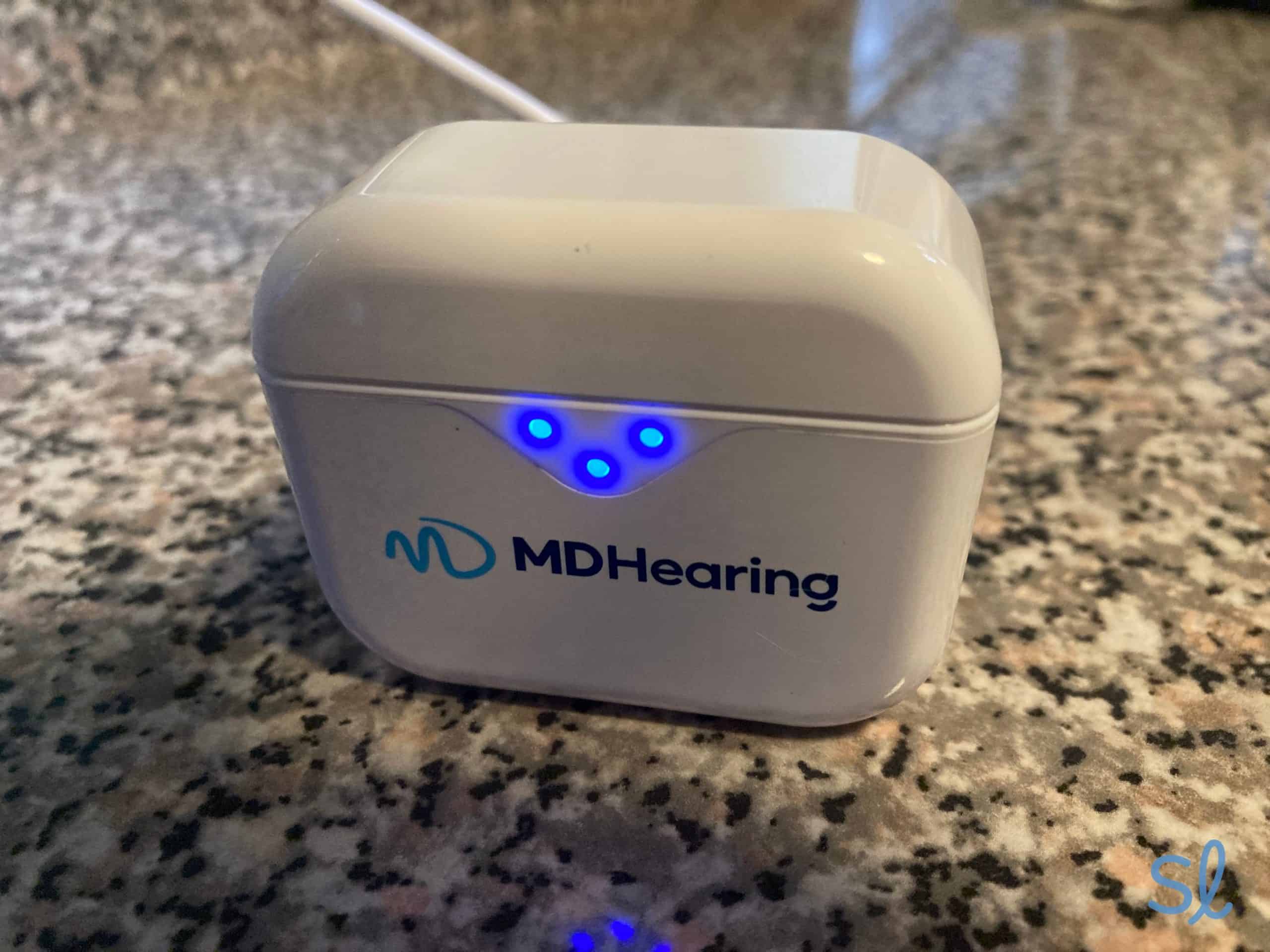
The three blue lights on the charging case turn green one by one, indicating your remaining charge. Once all three lights turn green, your hearing aids are fully charged. This process only took two hours, which is relatively fast, especially since each charge lasts a whole day.
The portable charger also offers three charges before needing to be charged again. Charging is speedy and easy, but remember that most MDHearing products don’t have all the bells and whistles offered by providers like Jabra Enhance or ReSound. You may want to look elsewhere if state-of-the-art features are crucial to you.

Charging my NEO XS devices from MDHearing
Pricing
MDHearing offers OTC hearing support at affordable prices. With their least expensive hearing aids priced at $297 per pair and their most expensive priced at $597 per pair, this manufacturer is more affordable than top-tier providers like Signia and ReSound. The latter two can cost $6,000 or more per pair. MDHearing’s low prices don’t come without drawbacks. All devices except for the VOLT MAX lack features such as a mobile app or Bluetooth streaming, and they are only available in five styles.
Dr. Reisman also notes that the brand’s BTE options can over-amplify sounds, so be very careful with volume control. If you have mild to moderate hearing loss and need a simple hearing aid at an affordable price, MDHearing is a fantastic option.
-
3. Eargo - Most discreet
See Pricing Links to EargoWhat we like most
- Discreet in-ear designs
- Lifetime product support available
- Eargo app makes it easier to customize your experience
EargoSee Pricing Links to EargoOverview:
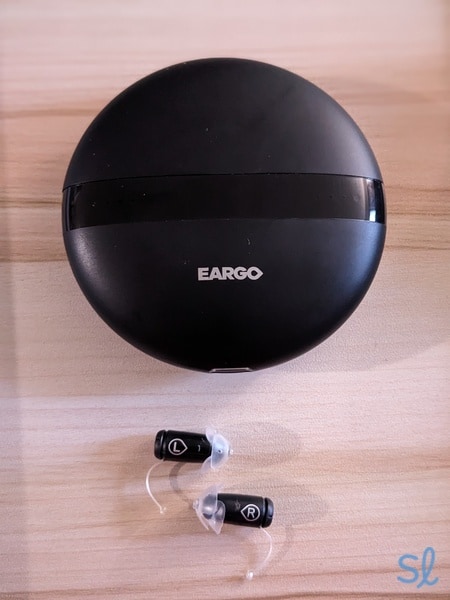
Testing out Eargo 7 hearing aids
Product highlights
- Price: Starting at $799 per pair
- Battery life: Up to 16 hours
- Hearing aid type: IIC, earbud
- Bluetooth: Yes, with some models
- Designed for: Mild to moderate hearing loss
Similar to Jabra Enhance and MDHearing, Eargo offers various rechargeable OTC hearing aids. Eargo's lineup includes invisible-in-the-canal (IIC) rechargeable models, including Eargo SE and Eargo 8, plus an earbud-style model called LINK by Eargo, all designed for mild to moderate hearing loss.
FYI: If you’re looking for a more discreet hearing aid, check out our guide to the best invisible hearing aids for seniors!
The company’s IIC devices fit snugly in the ear canal and are nearly invisible, making them very discreet and more comfortable to wear with glasses than BTE models. The medical-grade replaceable tips are silicone, allowing air to flow into the ear canal for a natural and comfortable fit. If you have small ear canals, the in-ear devices may not fit very comfortably. One of our team members noticed this during testing, but luckily, Eargo has a 45-day return window if you don’t care for your devices.
Expert InsightsFrom Dr. Ruth Reisman, AuD MBA CCC-ARechargeable IIC devices, like Eargo, are quickly becoming the most popular hearing aid style on the market.Pros & Cons:Pros About Eargo
- Up to 16 hours of power per charge
- Lifetime unlimited support available
- Eargo app to help customize the user experience
- Formal hearing aid prescription not required
- Noise reduction and superior sound quality
- Enhanced moisture resistance
Cons About Eargo
- Best for seniors with mild to moderate hearing loss only
- Required to purchase in pairs
- Most models don’t have direct Bluetooth streaming
Our Hands-on Experience:Our Experience With Eargo
During testing, Eargo’s hearing aids lasted up to 16 hours per charge, depending on the model and use. If we were running short on time, the cases also include a fast-charging option, allowing for hours of sound with a quick 30-minute charge. We found that understanding the red, green, and yellow charging lights could be a bit confusing, especially compared to similar systems provided by Jabra Enhance and MDHearing.
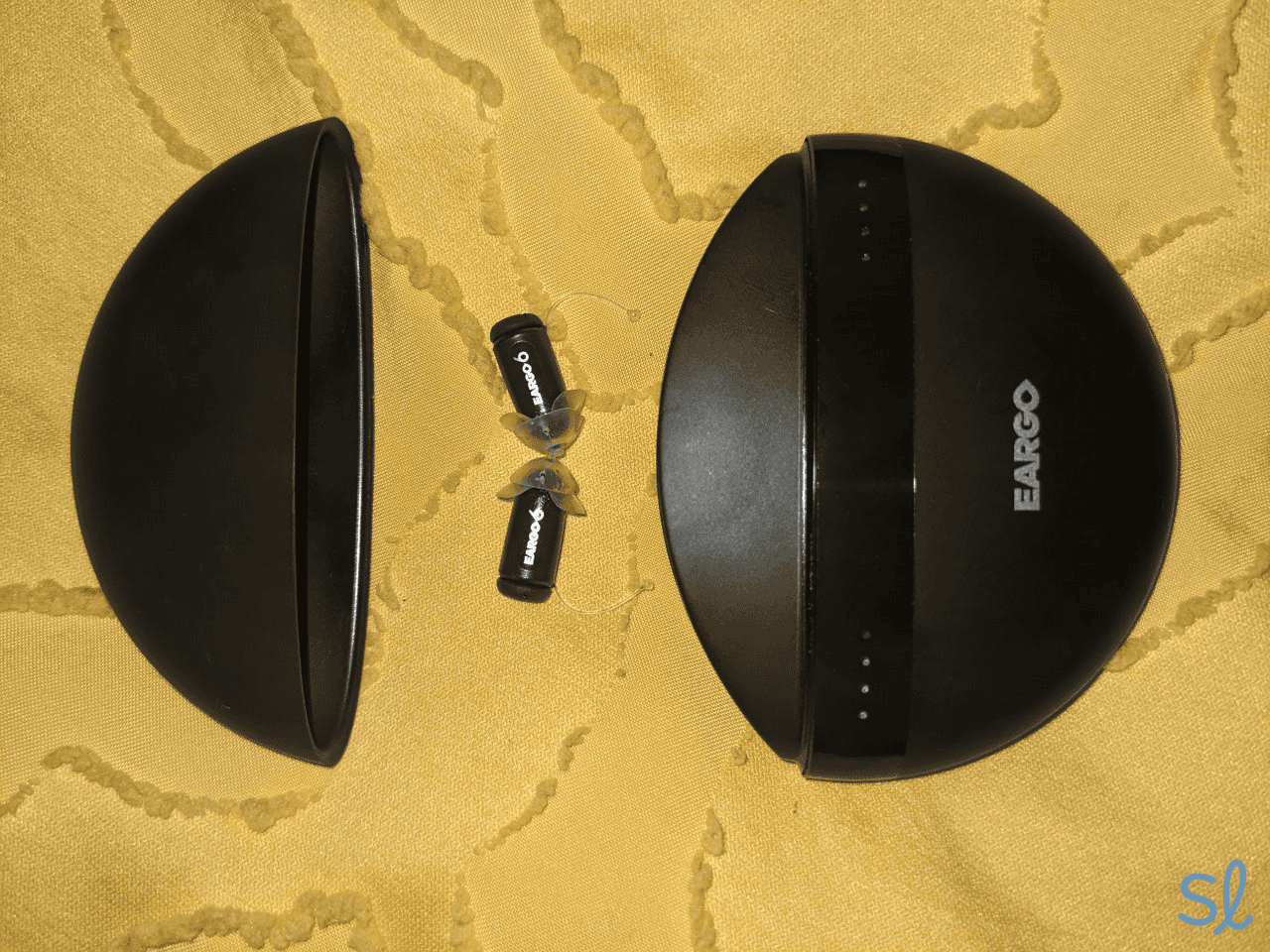
Testing out the Eargo 6 with its charging case
The Eargo SE, the provider’s mid-tier model, includes a charging case that holds up to five charges. When fully charged, the case can power your hearing aids for up to three days. We took our hearing aids on a weekend getaway and had hearing aid power all weekend — we never had to recharge the case! If you opt for a less expensive model (LINK by Eargo), however, the case only holds up to four charges, but the charging case for the Eargo 8 holds up to 14 charges. That means your mileage will vary based on the model.
» Our Full Review: Eargo Hearing Aid Review
Pricing
Unlike prescription hearing aid brands like Signia and ReSound, Eargo is transparent with its pricing. Eargo’s Bluetooth model, LINK by Eargo, starts at $799 per pair, and prices range up to $2,699 per pair for the Eargo 8.
That’s about half the cost of custom prescription hearing aids with similar features. Even the LINK by Eargo is about twice as much as MDHearing’s VOLT model, though, making it a middle-of-the-road option in terms of price.
» Compare Providers: MDHearing vs. Eargo
-
4. ReSound - Most discreet
 See Pricing Links to ZipHearing.com
What we like most
- Options for all levels of hearing loss
- State-of-the-art devices and features
- Custom hearing aids
ReSoundSee Pricing Links to ZipHearing.comOverview:
Testing out ReSound BTE hearing aids
Product highlights
- Price: $2,000 to $6,000+ per pair (varies by model and provider)
- Battery life: Up to 30 hours
- Hearing aid type: BTE, mini BTE, ITE
- Bluetooth: Yes
- Designed for: Mild to profound hearing loss
ReSound offers several rechargeable prescription hearing aids. The ReSound Nexia, ReSound Omnia, and ReSound Key deliver all-day power on a single charge. Simply set the hearing aids in the charger overnight, and you're prepared for the next day when you wake up. You can also use the ReSound Smart 3D app to track your battery level.
If you have severe to profound hearing loss, ReSound has multiple hearing solutions not available with Jabra Enhance, MDHearing, or Eargo. That makes it a fantastic choice for older adults with a wide range of hearing conditions. ReSound hearing aids aren’t cheap, but they come with a custom, in-person fitting and advanced models with multichannel compression technology, which offer better speech recognition.
Pros & Cons:Pros About ReSound
- Bluetooth streaming for both iPhones and Android devices
- Options for mild to profound hearing loss
- Tinnitus management
- Many models to choose from
- Rechargeable case
- One-year loss or damage warranty
Cons About ReSound
- Pricier than other options
- You must visit an audiologist for setup
Our Hands-on Experience:Our Experience With ReSound
ReSound offers impressive rechargeable hearing aid options for mild to profound hearing loss. That makes it easy to find one that suits your needs and lasts all day. With ReSound, you also have the option of a custom ear mold, which can change the comfort and performance of your hearing aids.
It’s also important to remember ReSound’s two smartphone apps: the Smart 3D app, which lets you adjust your hearing aids and track your battery life, and the Relief app, which helps you manage tinnitus. The ReSound Relief app is Dr. Reisman’s favorite app for tinnitus management, soso it’s something to consider if you struggle with ringing in your ears.
FYI: Want to see how some of the top prescription hearing aid providers stack up? Check out our review of ReSound vs. Signia.
The Nexia goes further than many other hearing aids in ReSound’s lineup. The receiver-in-ear (RIE) hearing aids last for 30 hours on a single charge, half as long as the Signia Motion Charge&Go X but nearly twice as long as the Eargo 8. Additionally, the portable case features a built-in battery that holds three full charges, allowing you to keep your hearing aids powered for up to 90 hours without an outlet.
» Our Full Review: ReSound Hearing Aid Review From an Audiologist
Dr. Reisman notes that ReSound offers great rechargeable devices with enhanced natural hearing and easier listening in noisy environments. Their connectivity options are also among the most expansive of hearing aid providers.

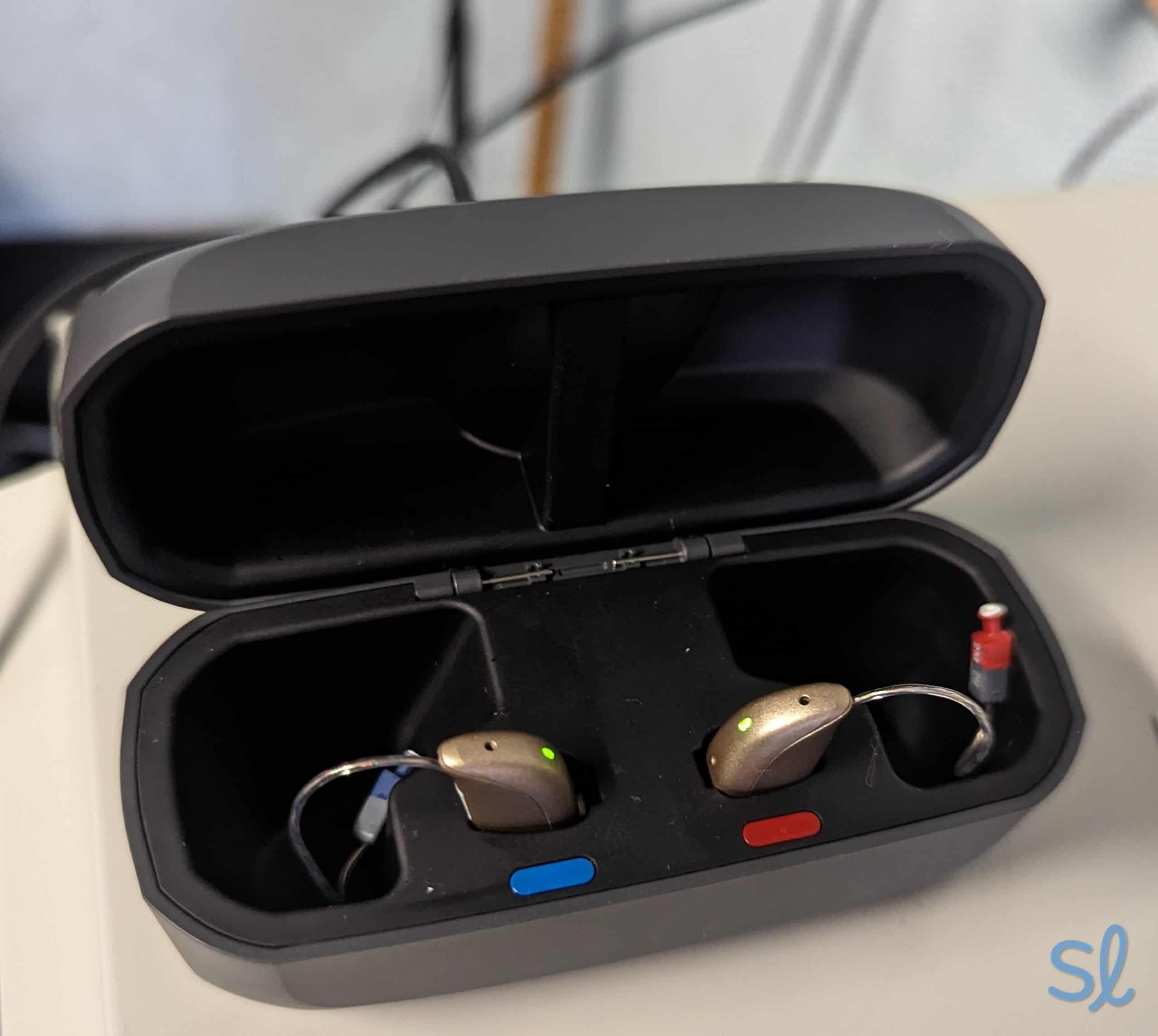
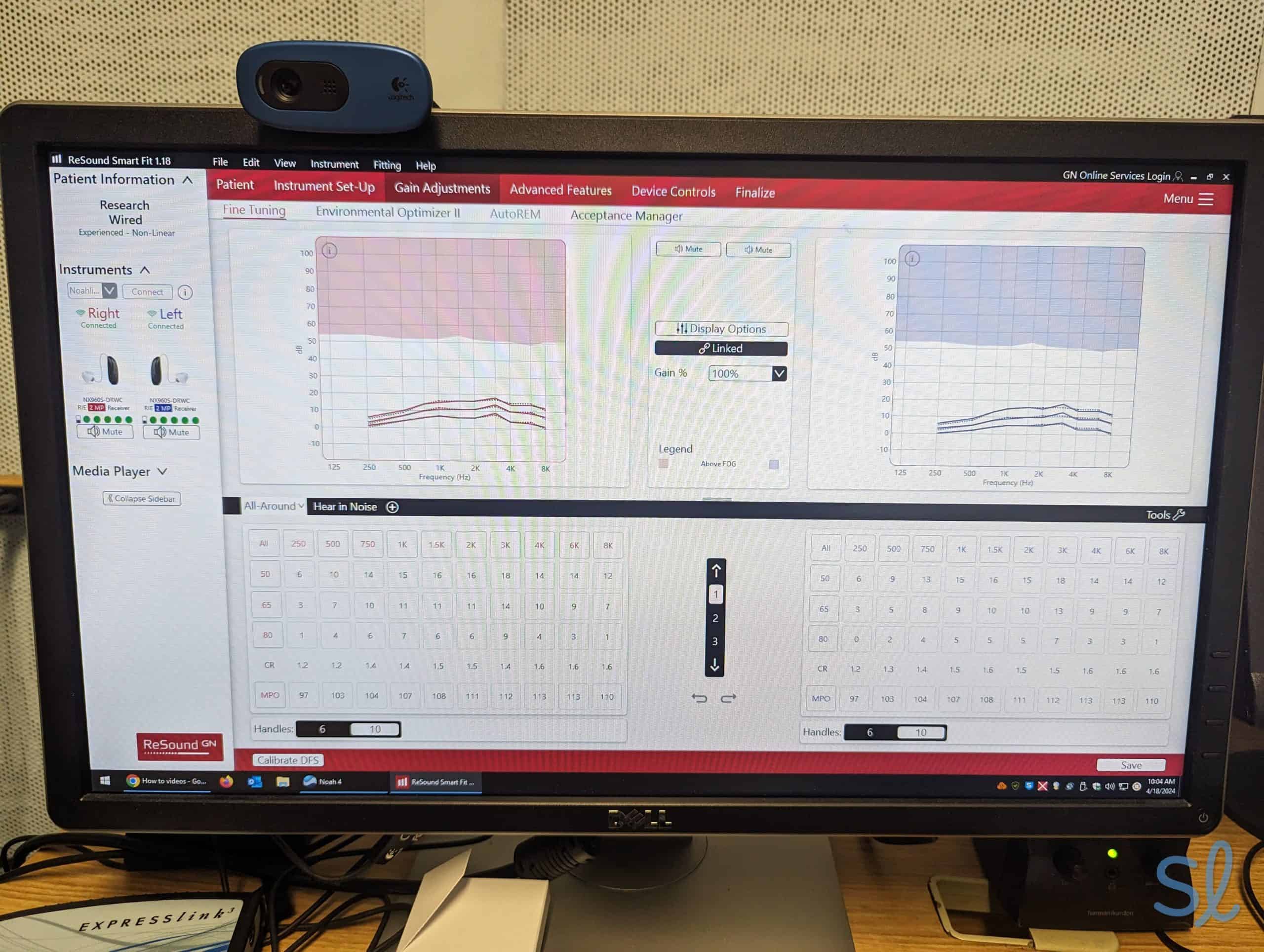
Dr. Reisman can make adjustments to ReSound hearing aids to best suit her patient's needs
Pricing
ReSound doesn’t publish their hearing aid prices online because they must be purchased directly from a provider, such as an audiologist. Prices for ReSound hearing aids vary depending on the model you choose and where you buy them.
Prescription hearing aids like these cost somewhere between $1,000 and $3,750 per device, according to Dr. Reisman’s estimates. The cost of your hearing test, fitting, accessories, and follow-up appointments is often included in the price. Even though you’ll receive high-quality devices and care, you’ll pay substantially more than you would for OTC-focused brands like MDHearing and Eargo.
-
5. Signia - Longest battery life
 See Pricing Links to ZipHearing.com
What we like most
- Notch Therapy (NT) for tonal tinnitus
- Excellent styles and aesthetic appeal
- In-ear and BTE models
SigniaSee Pricing Links to ZipHearing.comOverview:
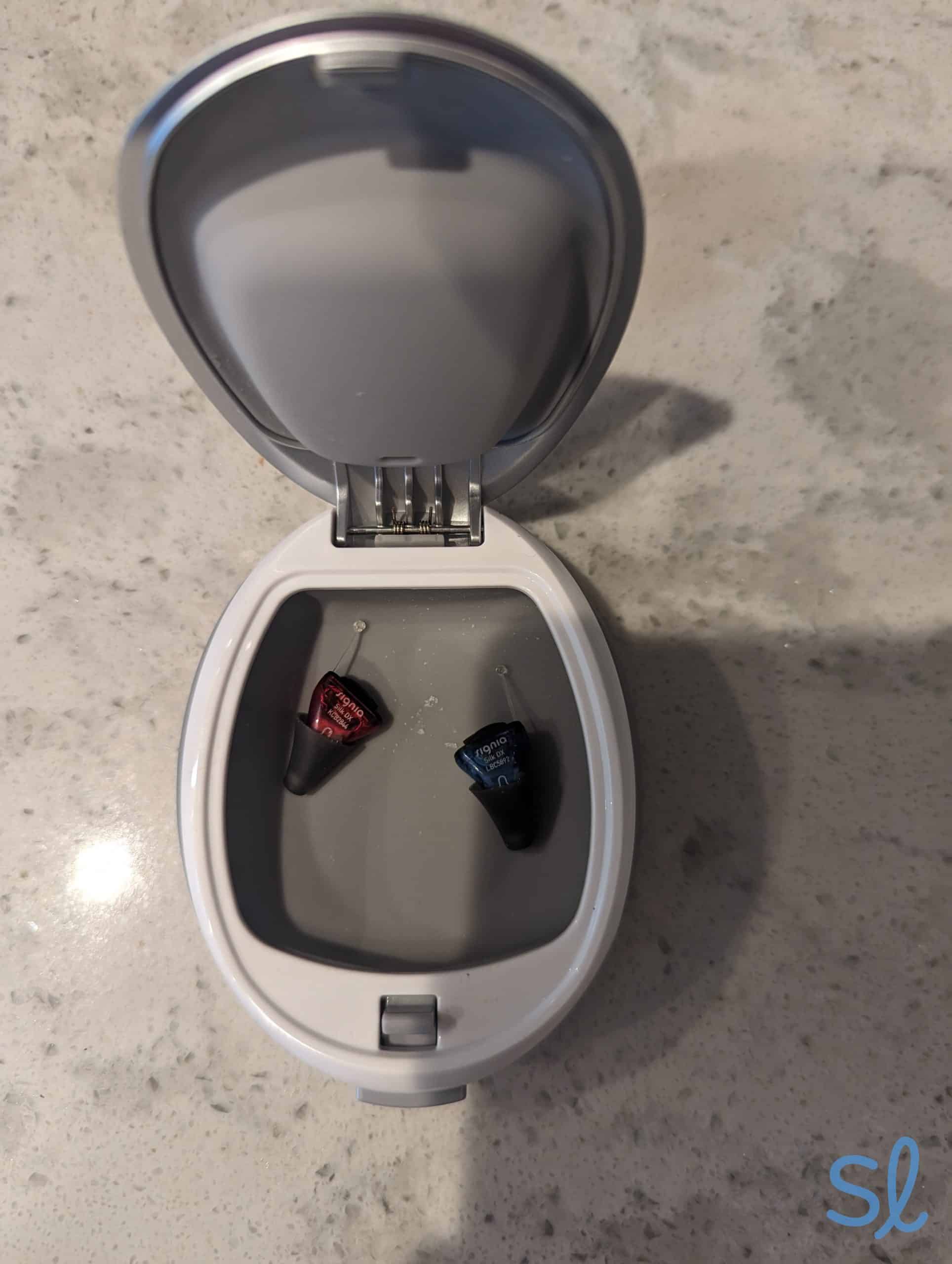
Trying out Signia's Silk hearing aids
Product highlights
- Price: Starting at approximately $2,000 per pair (varies by provider)
- Battery life: Up to 61 hours
- Hearing aid type: BTE, mini BTE, ITE
- Bluetooth: Yes
- Designed for: Mild to profound hearing loss
Signia made our list thanks to their power prescription hearing aids, which offer up to about 61 hours of use on a single charge on certain models. The company's current rechargeable hearing aid collection includes the Pure Charge&Go IX, Styletto IX, Silk Charge&Go IX, and the powerful Motion Charge&Go SP X.
Did You Know?Research from the NIDCD shows that fewer than 30% of adults aged 70 and older with hearing loss who could benefit from hearing aids has ever used them.3
Signia has rechargeable hearing aids for all levels of hearing loss, making it a solid option for those with severe to profound losses. Signia has its own app, which you can use to make easy and quick adjustments and personalize your hearing experience. Among many other features, the app encourages people to be proactive about their hearing health by displaying voice activity and noise exposure.
Pros & Cons:Pros About Signia
- Up to 61 hours of power on select devices
- Wireless charging
- Discreet and sophisticated design
- Ideal for most levels of hearing loss
- Most natural own-voice
- Best for understanding speech in noisy settings
Cons About Signia
- Pricing information is unavailable on the website
- Can’t be purchased online
Our Hands-on Experience:Our Experience With Signia
The first to offer contactless inductive charging, Signia's rechargeable hearing aids provide a full day of use with an overnight charge (even with moderate Bluetooth streaming!). The Signia Motion Charge&Go SP X delivers even more. Users can enjoy up to about 61 hours of use on a single charge, which is excellent news if you're not the best at remembering to charge your devices. Plus, the Integrated Xperience (IX) platform detects when you're moving to ensure you don't miss a single sound around you.
» Our Full Review: Signia Hearing Aid Reviews
Signia is one of Dr. Reisman’s top picks for prescription hearing aids because they offer a wide range of styles and designs, ample listening time on a single charge, and advanced tools for tinnitus management.

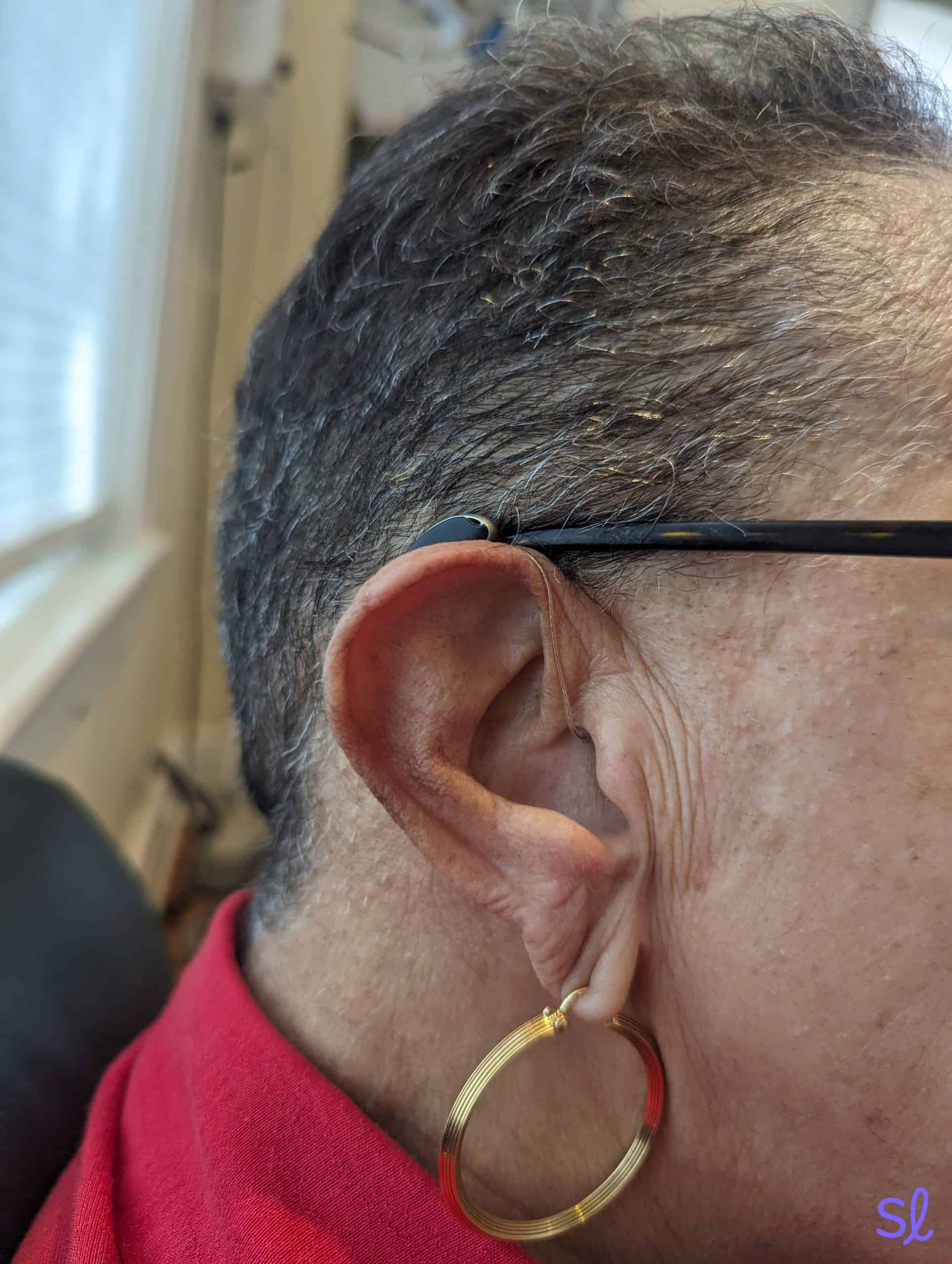
One of Dr. Reisman's patients wearing Signia Styletto hearing aids
Pricing
Signia products are only available through licensed audiologists and hearing aid professionals. You will not find the price of Signia hearing aids on their website. However, you can expect similar prices to other prescription providers like ReSound — roughly $1,000 to $3,750 per hearing aid device. Visit your nearest hearing center to inquire about pricing on a specific product.
Did You Know? The World Health Organization reports that the annual cost of unaddressed hearing loss globally is estimated to be about $980 billion.2
How Long Do Rechargeable Hearing Aids Last?
Rechargeable hearing aids vary in battery life depending on the brand and model. Among today's top options, some devices offer around 16 hours of listening time per charge, while others deliver up to 30 hours or more, enough to last well beyond a full day of continuous use without needing a recharge.
Pro Tip: Hearing aids with long-lasting batteries are ideal for adults with Alzheimer’s disease because they may not always remember to charge their hearing aids.
What about the overall lifespan of rechargeable hearing aids? Most rechargeable hearing aid batteries are designed to last approximately four to five years before needing replacement. [FDA] Your experience may vary, however, since each manufacturer uses different battery technologies.
The longevity of rechargeable batteries depends on how frequently you recharge them and how you care for them. Budget-friendly rechargeable hearing aids typically last between 300 and 500 charging cycles, which means you might need a replacement battery every one to two years.
Features to Look For in Rechargeable Hearing Aids
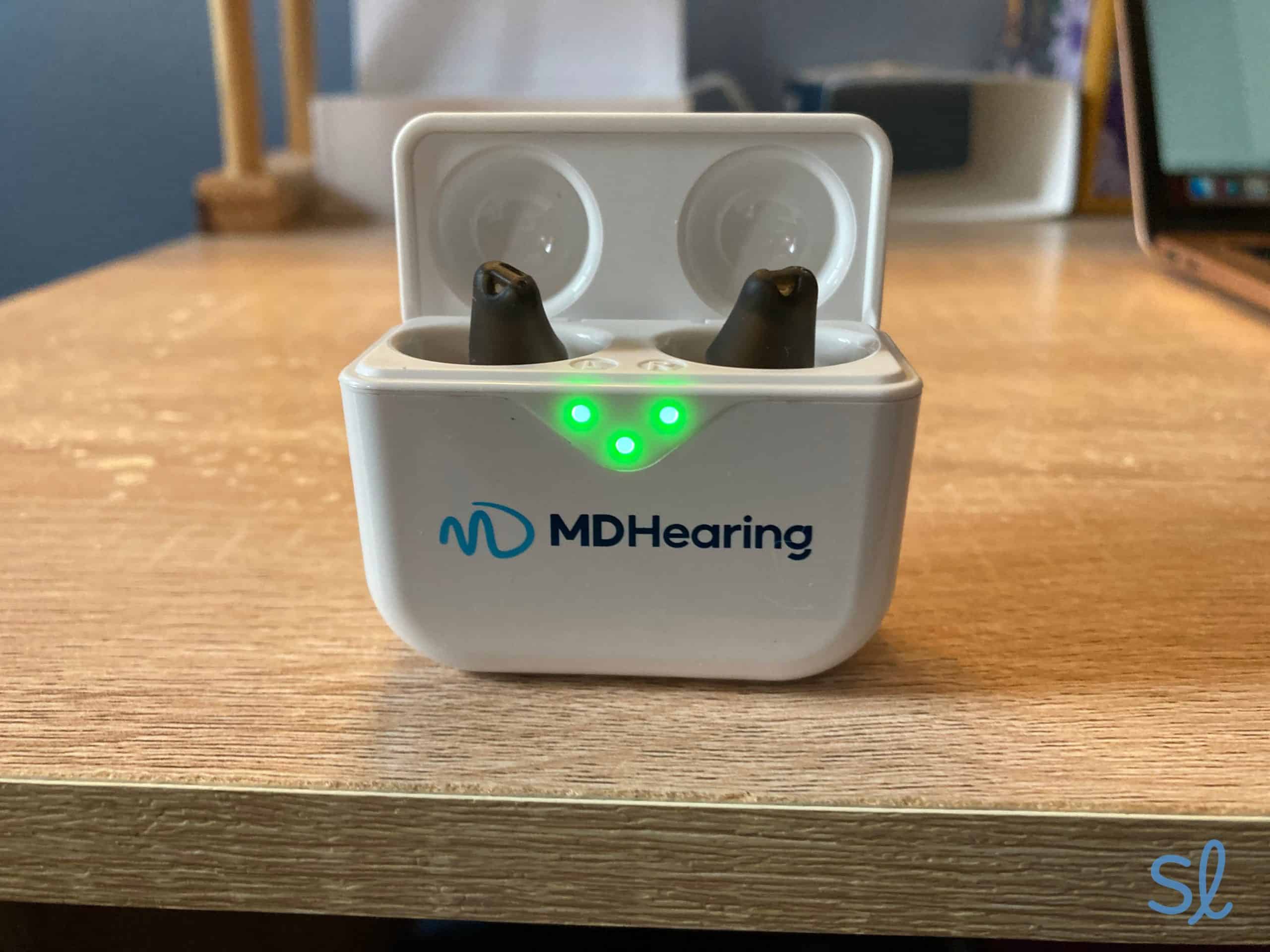
MDHearing's rechargeable devices offer many of the features we look for, including a portable charging case ,long battery life, visual charging indicators, and short charging times.
Many providers offer models with vastly different features, so it’s important to know what you want in your next pair. Here are a few features we recommend.
- Portable charging case: A portable charging case allows you to take your hearing aids on the go and store multiple charges when you don’t have access to an outlet.
- Short charging times: The less time you must spend charging your hearing aids, the better. You should generally expect to reach a full charge in two to four hours, depending on the brand and model.
- Long battery life: In addition to short charging times, you’ll want each charge to last for as long as possible. Quality hearing aids will generally last at least a day (16 to 24 hours), but some models can last longer between charges.
- Visual charging indicators: Since you can’t wear and charge your hearing aids simultaneously, the hearing aids or charging case must have visual indicators to know when the battery is low, actively charging, or fully charged.
- Fast charging option: A quick charging option is ideal if you just need a few hours of power but don’t have time to wait for your devices to charge fully. This feature can help get you an afternoon of listening (or more) with less than an hour of charging.
Rechargeable vs. Disposable Batteries
Hearing aids with rechargeable or disposable batteries come with both advantages and drawbacks. If you’re not sure which type of battery is right for you, here are a few important things to consider:
- Rechargeable batteries need to be charged every day (or almost every day), while disposable batteries need to be physically replaced every few days.
- Rechargeable hearing aids are ideal for active older adults who struggle with fine motor skills because they only need to be placed in their charging cases and plugged in.
- Disposable hearing aid batteries often end up in landfills, making rechargeable batteries a more environmentally friendly option.
- Disposable batteries are cheaper to replace, but must be replaced much more often than rechargeable batteries (every few days versus every few years), which can add up over time.
Hearing Aids: Advantages of Going the Rechargeable Route
From cell phones and laptops to smartwatches and tablets, we have found a way to recharge everything these days. If you are still considering purchasing rechargeable hearing aids, here are three reasons it could be a rewarding investment.
Convenience
Having to replace batteries every few days can quickly become a hassle. For seniors with poor vision, limited hand-eye coordination, or arthritis, the task can be especially problematic. It is much easier to place your hearing aids in the charging case at night and wake up in the morning with a fully charged pair!
Environmentally Friendly
It’s time to ditch the disposables. Rechargeable devices use lithium-ion batteries, so you don’t have to switch out batteries every week. Because hearing aid batteries are so small, they can pose a hazard to animals if accidentally consumed. Going the rechargeable route eliminates that issue.
No Recurring Expenses
Paying out of pocket for new batteries every few weeks can add up over time. Rechargeable hearing aids may be more expensive initially, but the overall savings will be evident.
Additional Hearing Aid Resources
- Best Hearing Aids for Single-Sided Hearing Loss
- Best Made-for-iPhone Hearing Aids
- Best Android-Compatible Hearing Aids
- Best Hearing Aids for Severe Hearing Loss
- Best Behind-the-Ear Hearing Aids
- Best Cheap Hearing Aids
- Best Hearing Aids for Active Seniors
Take Our Free Online Hearing Test
Wondering if you have hearing loss? Grab your headphones and get an evaluation in minutes.
FAQs
-
What is the average cost of rechargeable hearing aids?
The cost of rechargeable hearing aids depends on the brand, style, and type (prescription or OTC). On average, OTC rechargeable hearing aids cost between $300 and $3,000 per pair, while prescription options typically cost between $2,000 and $8,000 per pair.
-
Should rechargeable hearing aids be charged every night?
Yes, most rechargeable hearing aids are designed to be charged once daily (typically at night). Some models can last more than 24 hours, but most last for a day or less on a single charge.
-
How often do rechargeable hearing aid batteries need to be replaced?
Rechargeable hearing aids are designed to last for years without replacement, but you can generally expect rechargeable hearing aids to deteriorate over time. They may need to be replaced every five years (on average).
-
Why are my rechargeable hearing aids dying so fast?
There are many reasons rechargeable hearing aids lose their lifespan faster than usual. It could be due to water damage, defective batteries, the device’s age, or features such as Bluetooth streaming that use extra battery power.
-
National Institute on Deafness and Other Communication Disorders. (2024). Quick Statistics About Hearing, Balance, & Dizziness.
-
National Institute on Deafness and Other Communication Disorders. (2024). Quick Facts About Hearing, Balance, & Dizziness.
-
National Institute on Deafness and Other Communication Disorders. (2024). Hearing Aids.
-
ReSound. (n.d.). Frequently Asked Questions.