Best Over-the-Counter Hearing Aids
Jabra Enhance is our top choice for the best OTC hearing aids in 2026, thanks to excellent follow-up care, exceptional sound quality, and outstanding value.


Our audiologists and senior tech experts tested the best OTC hearing aids and narrowed down the list to our recommendations.
SeniorLiving.org is supported by commissions from providers listed on our site. Read our Editorial Guidelines

- Prices starting at $1,995 per pair
- Behind-the-ear hearing aids
- 100-day free trial

- Prices starting at $2,699 per pair
- Nearly invisible, CIC-style hearing aids
- 45-day free trial

- Prices starting at $999 per pair
- CIC-style hearing aids
- 45-day free trial

- Prices starting at $297 per pair
- CIC-style hearing aids
- 45-day free trial

- Prices starting at $249 per pair
- Earbud-style hearing aids
- No free trial

- Prices starting at $999 per pair
- BTE-style hearing aids
- 45-day free trial
Contents
Since October 17, 2022, the FDA made OTC hearing aids available directly to consumers,1 creating potential cost savings for individuals with mild to moderate hearing loss. OTC hearing aids don't require professional fitting or maintenance, ensuring Americans without access to professional hearing care can still improve their quality of life.
Our team of experts has consistently tested and reviewed OTC hearing aids since they hit the market, evaluating each for factors like cost, battery life, features, and remote care. We also consulted with audiologist Dr. Ruth Reisman and built this list based on her expertise. We found that Jabra Enhance offers the best value, thanks to their follow-up care, advanced features, and 100-day money-back guarantee.
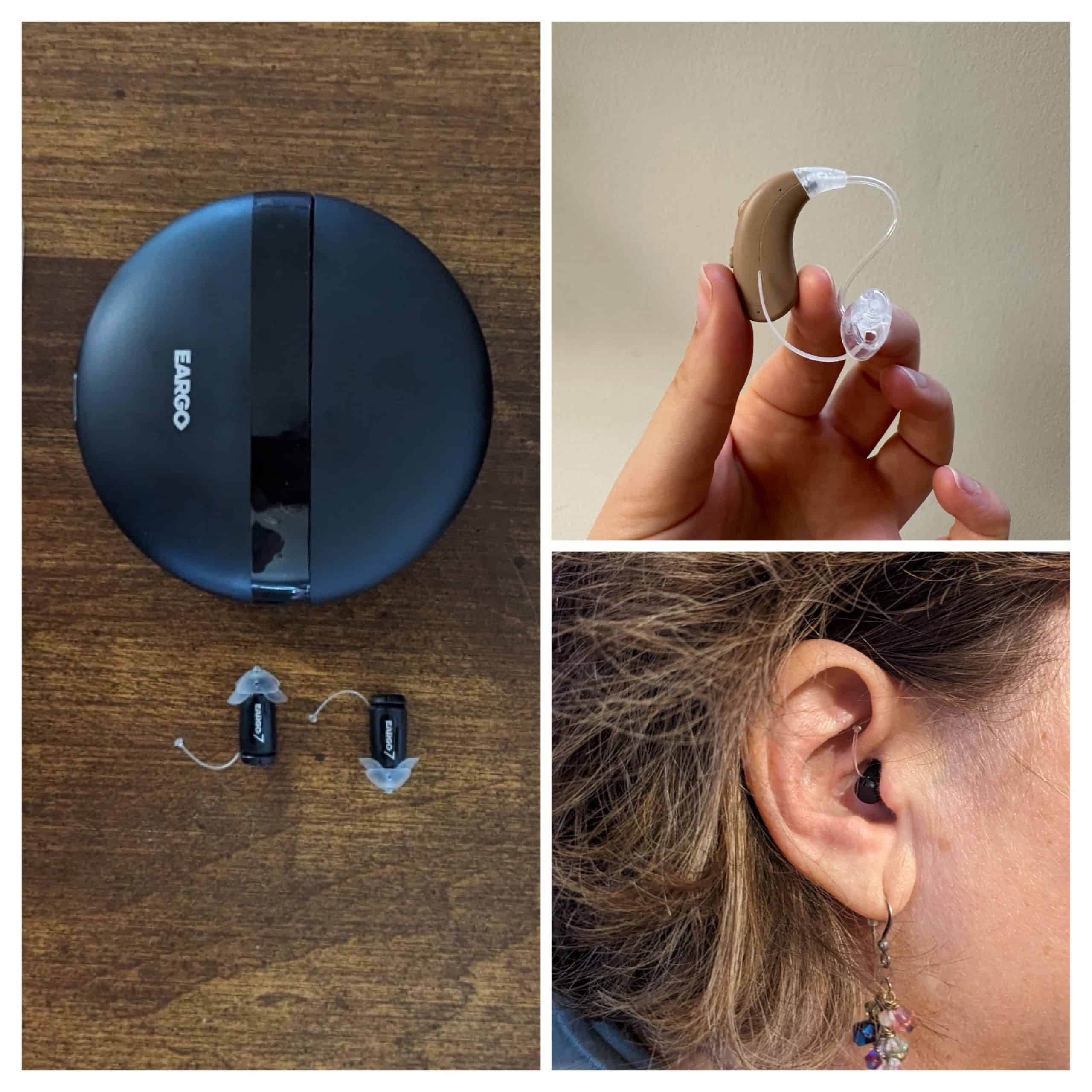
Our team testing out different hearing aids

Our Methodology: How We Chose the Best OTC Hearing Aids
How We Tested the Hearing Aids
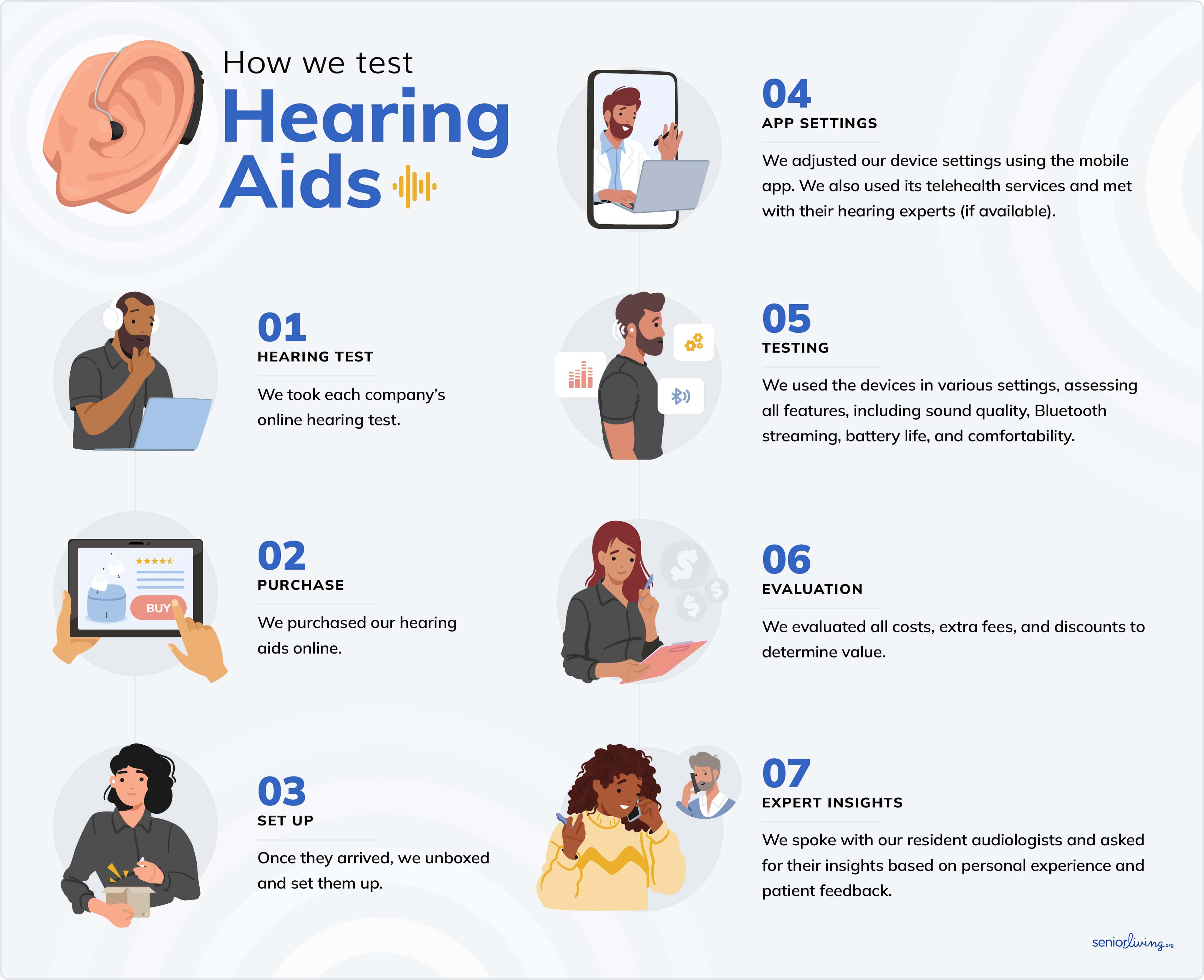
Our tech team conducted over 100 hours of hands-on testing to compare the top OTC hearing aids in 2026. We followed these steps to test each provider:
- We tried each brand's online hearing test, comparing our results to in-person evaluations from an audiologist.
- We selected our hearing aids and made our purchase, evaluating the overall shopping process. We considered price, value, seasonal promotions, and upfront costs.
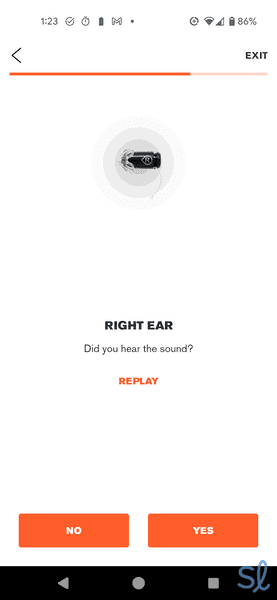
- Once we had the devices in hand, we followed the instructions to set them up. If the brand had a mobile app, we downloaded it and completed setup. We evaluated the ease of use and the steps required to get them up and running.
- We contacted customer service multiple times to evaluate care quality by phone, mobile app (if applicable), and online chat.
- Our team tested each hearing aid for a week at home, in noisy environments, and in quiet settings. We evaluated features, sound quality, and ease of use.
We also spoke with Dr. Reisman about her expertise with each brand. We used her experience testing these hearing aids, along with feedback from her patients, to evaluate and rank them.
How We Chose the Best OTC Hearing Aids
After narrowing down the list to four OTC providers, we tested each one. Our team of tech experts and audiologists evaluated several criteria, including:
- Cost: We compared providers to find the best prices and value. Our list includes budget-friendly options starting at $297 per pair and more advanced models at $1,195 per pair.
- Functionality: We tested models from each provider to ensure they offer top-notch functionality for seniors with mild to moderate hearing loss.
- Remote care: Remote care is not offered by every OTC hearing aid provider, but many do. Some include video or phone follow-up care at no extra charge, while others offer it as a paid add-on. Either way, every provider on this list has some form of remote care.
- Battery life: Each provider offers hearing aids lasting 16 hours or more on one charge.
- Features: Top features include discreet designs, Bluetooth connectivity, mobile apps, and adaptive volume. Each provider offers at least one of these features; some offer all of the above.
- Warranty: These hearing aids offer manufacturer warranties ranging from one to three years.
Why Trust Us
Our team of tech experts tests the latest devices for seniors each year. We've logged hundreds of hours researching, testing, and reviewing hearing aids from dozens of providers.
Our resident audiologist, Dr. Ruth Reisman, provided feedback on each brand and essential insight into each provider. Dr. Reisman has over a decade of experience helping patients with hearing loss.
The Best OTC Hearing Aids at a Glance in 2026
|
Jabra Enhance Select 700
|
Eargo 8
|
Sony CRE-C20
|
MDHearing NEO XS
|
Apple AirPods Pro 3
|
Lexie B2 Plus
|
|
|---|---|---|---|---|---|---|
| Rating | 4.8 | 4.5 | 4.5 | 4.4 | 4.4 | 4.4 |
| Starting price | From $1,995 per pair | From $2,699 per pair | From $999 per pair | From $297 per pair | From $249 per pair | From $999 per pair |
| Battery Life | Up to 24 hours | Up to 16 hours (up to 220 hours with charging case) | Up to 28 hours | Up to 18 hours (up to 100 hours with charging case) | Up to 8 hours (up to 24 hours with charging case) | Up to 18 hours (up to 36 hours with charging case) |
| Battery type | Rechargeable | Rechargeable | Rechargeable and disposable | Rechargeable | Rechargeable | Rechargeable |
| Follow-up care | 3 years | Lifetime remote support | Lifetime remote support | Lifetime remote support | 2 years of technical support (with AppleCare+) | Lifetime remote support |
| Warranty | 3 years (with Premium package) | 2 years | 1 year | 1 year | 1 year (2 years with AppleCare+) | 1 year |
| Style | BTE (Micro RIE) | CIC | CIC | CIC | Earbuds | CIC |
-
1. Jabra Enhance Select 700 - Best value
See Pricing Links to Jabra EnhanceWhat we like most
- Prices starting at $1,995 per pair
- Behind-the-ear hearing aids
- 100-day free trial
Jabra Enhance Select 700See Pricing Links to Jabra EnhanceOverview:
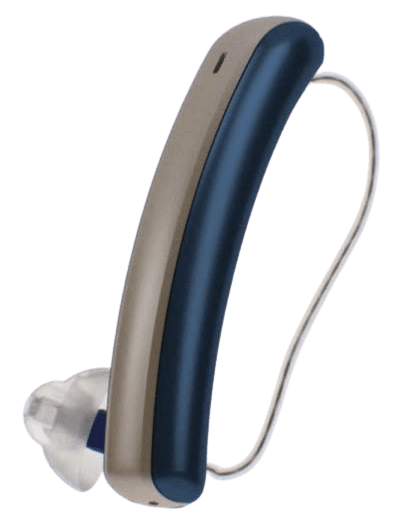
Jabra Enhance Select 700 hearing aids are small and discrete
Jabra Enhance's product lineup, pricing, features, and customer support make it a standout in the OTC hearing aid industry. The company's premium BTE, micro receiver-in-ear model, the Select 700, offers excellent value, which is why they earned the No. 1 spot on our best hearing aids list!
The Jabra Enhance Select 700 are Bluetooth-enabled, with noise-canceling technology, tinnitus management, and a mobile app for easy adjustments. All Jabra Enhance hearing aid models (Select 50R, Select 300, and Select 700) come with a three-year warranty and three years of follow-up care, so you can chat with an audiologist and make remote adjustments from home.
With free shipping and a 100-day risk-free trial, Jabra Enhance makes it easy to test their devices. Most OTC hearing aid brands, such as MDHearing and Eargo, have shorter 45-day free trial periods, so we appreciate the extended trial. The one downside is that Jabra Enhance only offers behind-the-ear (BTE) and micro receiver-in-ear (RIE) hearing aids. Consider MDHearing's NEO XS models if you want something less visible.
Pros & Cons:Pros About Jabra Enhance Select 700
- Soundscape with Auto Focus for better listening in noisy environments
- Remote adjustments
- Direct streaming
- Three years of follow-up care
- 100-day money-back guarantee
- Affordable monthly payment plans available
- Rechargeable devices
Cons About Jabra Enhance Select 700
- Only BTE and RIE options available
- Not available as singles (only pairs)
- Higher starting price than some competitors
Our Hands-on Experience:We tested the Enhance Select 700 and found its sound quality to be superior to the Select 300, which already offered better-than-average sound. The sound from both models was crisper and richer than MDHearing's NEO XS model. The Select 700 is particularly well-designed for noisy or unpredictable sound environments, making it worth the higher price tag in our book.
There wasn't any feedback or humming, and we could fine-tune our settings in the mobile app. The rechargeable devices lasted about 24 hours, about eight hours longer than Eargo 8, perfect for all-day wear.

All three Jabra Enhance models provide great value. The Select 50R is the most budget-friendly option, ideal for everyday listening, but it lacks advanced features. We recommend the Select 300 for users with active lifestyles and the Select 700 for those wanting the best sound clarity and features, such as enhanced noise reduction, beneficial on windy days.
Read our Jabra Enhance review to learn more.
 Expert InsightsFrom Audiologist Dr. Ruth Reisman,The clear sound quality is likely due to Jabra Enhance Select 700's ability to meet research-based targets for those adults with mild to moderate hearing loss. These targets are in place to enhance audibility and enhance speech understanding for those with hearing loss.
Pricing
The Select 700 is Jabra Enhance’s most expensive model at $1,995 per pair, but it also comes with the best sound and the most features. Users on a tighter budget can also opt for the Select 300 ($1,695 per pair), or the Select 50R ($1,195 per pair).
Jabra Enhance is certainly not the cheapest devices on our list (that honor goes to Apple’s Airpods Pro 3), but they’re less expensive than other premium brands, such as Phonak and ReSound.
Jabra Enhance also offers financing starting at $34 per month, so you can still access these quality hearing aids on a budget.
» Pricing Guide: Jabra Enhance hearing aid cost and pricing
In the past, Jabra Enhance offered Basic and Premium packages for all of their hearing aids. Now, they’ve done away with the Basic packages, so all their hearing aids come with the higher costs and superior benefits of the Premium package.
All Jabra Enhance hearing aids now provide three years of follow-up care, three years of loss and damage protection, and hearing aids customized to your needs. During testing, we spoke with an audiologist who answered our questions and helped us adjust our settings and equipment.
Expert InsightsFrom Audiologist Dr. Ruth Reisman,Jabra devices provide an array of benefits, including tinnitus management and hearing-loss treatment. With superior sound quality, seamless connectivity, innovative design, advanced noise cancellation, and versatile applications, Jabra consistently delivers exceptional audio solutions; they enhance productivity, entertainment, and communication clarity. -
2. Eargo 8 - Most discreet
See Pricing Links to EargoWhat we like most
- Prices starting at $2,699 per pair
- Nearly invisible, CIC-style hearing aids
- 45-day free trial
Eargo 8See Pricing Links to EargoOverview:
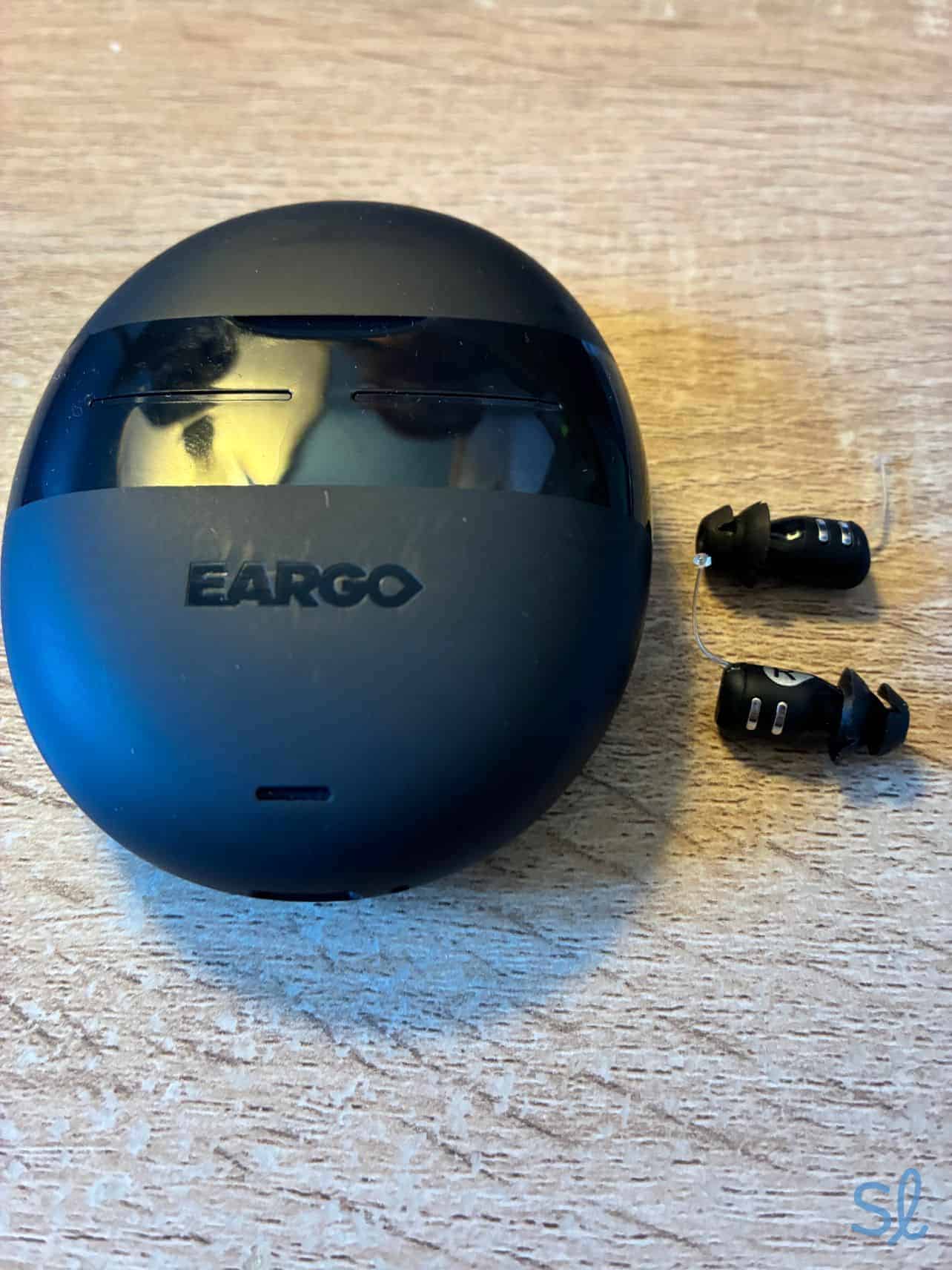
Eargo 8 device
Eargo designs their hearing aids with discretion in mind. The company offers two completely-in-canal (CIC) models for mild to moderate hearing loss, including their top-rated hearing aid (and our personal favorite), Eargo 8. Plus, they offer a unique earbud-style hearing aid called the LINK by Eargo that offers seniors a more budget-friendly alternative. Eargo 8 earned high marks as CIC hearing aids that are highly water-resistant (IP68) and offer plenty of ways to customize your listening experience.
All of Eargo's models are rechargeable, and Eargo 8 stands out for its discreet design and sound-customization options. Packed with features like automatic sound adjustment, noise reduction, and voice and tone indicators, Eargo 8 offers top-notch technology at a competitive price point. And while you’ll only get about 16 hours on one charge, the portable charging case can hold up to 14 charges. That means you could go two weeks without needing an outlet!
After purchasing your Eargo hearing aids online or by phone, you'll receive a personalized consultation from a licensed hearing professional via phone, text, email, or video chat. Eargo also offers lifetime remote support for your devices.
Did You Know? Active military members and veterans can save 20 percent on the Eargo 8 and up to 10 percent on the Eargo SE.
After purchasing your Eargo hearing aids online or by phone, you'll receive a personalized consultation from a licensed hearing professional via phone, text, email, or video chat. This makes it easy to get your questions answered or adjust your hearing aids. Eargo also offers lifetime remote support for your devices.
» Our Full Review: Eargo hearing aid review
Pros & Cons:Pros About Eargo 8
- Small, discreet design
- Up to 14 days battery life with charging case
- Rechargeable devices
- Lifetime support from licensed hearing professionals
- Two-year warranty
- Remote adjustments
- Easy returns and 45-day return policy
Cons About Eargo 8
- Must purchase in pairs
- Limited Bluetooth capabilities
- Not suitable for severe hearing loss
Our Hands-on Experience:We've tested Eargo's in-ear models: Eargo 8 and Eargo SE, as well as their discontinued predecessors, Eargo 6 and Eargo 7. One of the first things we noticed was that they may be uncomfortable for smaller ears, so keep that in mind. Other than that, we had a great experience with their devices and found the sound quality superb for an OTC hearing aid.
Expert InsightsFrom Audiologist Dr. Ruth Reisman,Eargo hearing aids are certainly an innovation in the hearing aid arena. Their unique design, features, and customer-service model have allowed for true evolution in the fitting of direct-to-consumer hearing aids.Like MDHearing, Eargo offers a mobile app. We self-fit our Eargo 8s using the Sound Match hearing test, which took about 20 minutes. The test customizes the hearing aid settings to your needs. We noticed the hearing aids were more effective after using Sound Match.
If we were unsatisfied with the mobile hearing test results, we could arrange a telehealth-style meeting with an audiologist for a more comprehensive evaluation. We appreciated having both options, especially using the app to have an audiologist remotely adjust the hearing aids.

We took Eargo's Sound Match test, which adjusts your hearing aids to your unique needs and hearing loss.
Pricing
Eargo’s pricing varies widely based on the model you choose. Our top pick, Eargo 8, is the most expensive Eargo model at $2,950 per pair. The Eargo SE offers a big drop in price ($1,950), but its sound quality is not quite as good as the Eargo 8, and its charging case only offers up to five days of battery life.
If you like Eargo but you really want to save, the earbud-style LINK by Eargo ($799 per pair) is also an option. While previously available for online order, LINK by Eargo now must be ordered over the phone. It’s important to note that LINK is the only Eargo model that offers Bluetooth streaming, while the Eargo 8 and SE only offer Bluetooth connectivity between their charging cases and a smartphone for sound customization.
Like Jabra Enhance, you don't have the option to buy single devices. Fortunately, Eargo offers financing terms for 12 to 24 months to make its hearing aids more affordable.
» Pricing Guide: Eargo Hearing Aid Cost and Pricing
-
3. Sony CRE-C20 - Best Speech Recognition
View on Amazon Links to Amazon.comWhat we like most
- Prices starting at $999 per pair
- CIC-style hearing aids
- 45-day free trial
Sony CRE-C20View on Amazon Links to Amazon.comOverview:
Testing out Sony s CRE-E10 hearing aids
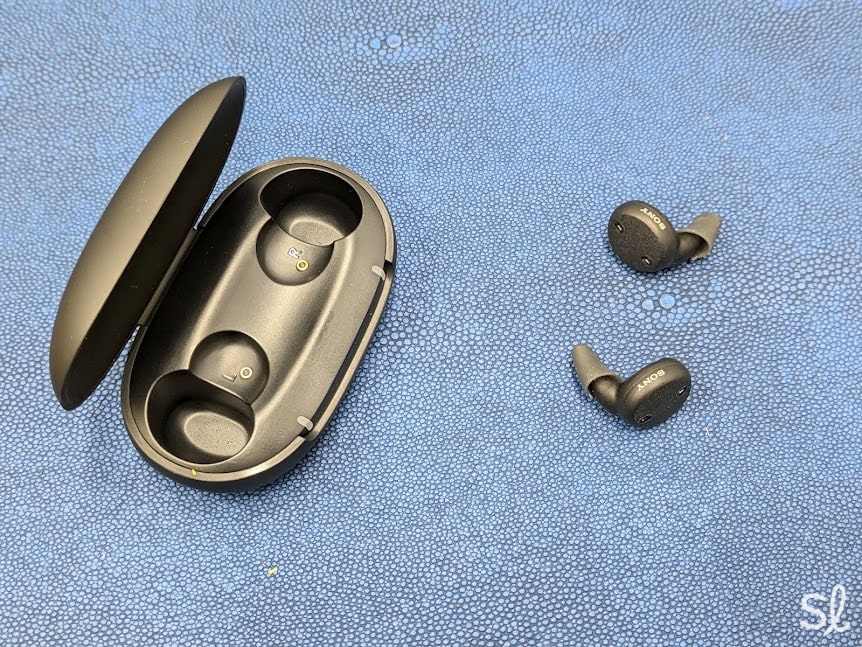
Sony is one of the most trusted names in the tech industry. In 2022, the company started making OTC hearing aids with the CRE-C10 (now the rechargeable C20) and rechargeable CRE-E10 models. With either model, setup and audio settings are managed through the Sony Hearing Control App. You'll need an iPhone or Android smartphone with the app installed to use them.
Pro Tip: Looking for made-for-iPhone (MFI) hearing aids? Check out our list of the best hearing aids for iPhones!
The C20’s noise reduction technology and automatic sound adjustment tools make recognizing and understanding speech easier, even in noisy or changing environments. Like Eargo, Sony offers the option to schedule a consultation with a hearing aid expert to help you get your C20s set up properly. This might be helpful, as even a minor error during in-app setup could mean starting over, as some customers have noted.
» Also Check Out: A guide to dementia care
Pros & Cons:Pros About Sony CRE-C20
- Outstanding sound clarity and speech recognition
- Small, discreet design
- Customization options in the Sony Hearing Control App
- Rechargeable
- 45-day trial period
- One-on-one consultations with hearing aid experts
Cons About Sony CRE-C20
- Setup might be complicated for less tech-savvy seniors
- iPhone or Android smartphone required (iOS 15 or higher; Android 10 or higher)
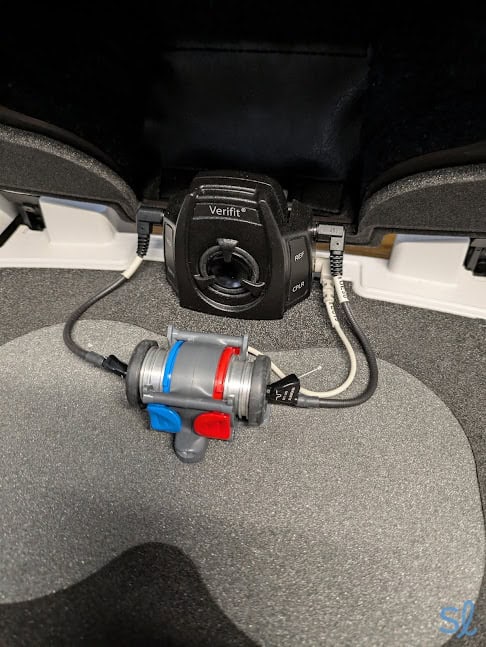
Our Hands-on Experience:After performing a study in her university lab, Dr. Reisman found that Sony offers some of the best OTC hearing aids on the market.
From her experience, she notes, “Sony OTC hearing aids are a great in-ear option for patients with mild to moderate hearing loss. You can customize their options to your hearing levels using the smartphone application. If you need extra support in noisy environments, the E10 and C20 offer the ability to adjust the directional microphones to enhance the speaker's voice over the background noise. The Bluetooth feature allows for direct streaming from your smartphone. If your biggest concern is discretion, the C20 is the way to go, as most patients find that it just looks like a shadow in the ear.”

Dr. Reisman testing the sound quality of Sony s CRE-C10 hearing aids
Pricing
Sony C20 hearing aids cost $999, the E10 model is $899, and the C10 model is $699. They can't compete with MDHearing's prices, but they're comparable to Eargo and cheaper than Jabra Enhance. Plus, Sony frequently runs sales that can knock as much as $200 off the purchase price!
We believe Sony's hearing aids offer a good middle ground for individuals willing to spend more on discreet hearing aids with enhanced speech recognition technology, without spending over $1,000 per pair.
-
4. MDHearing NEO XS - Most Affordable CIC
 See Pricing Links to MDHearing NEO XS
What we like most
- Prices starting at $297 per pair
- CIC-style hearing aids
- 45-day free trial
MDHearing NEO XSSee Pricing Links to MDHearing NEO XSOverview:
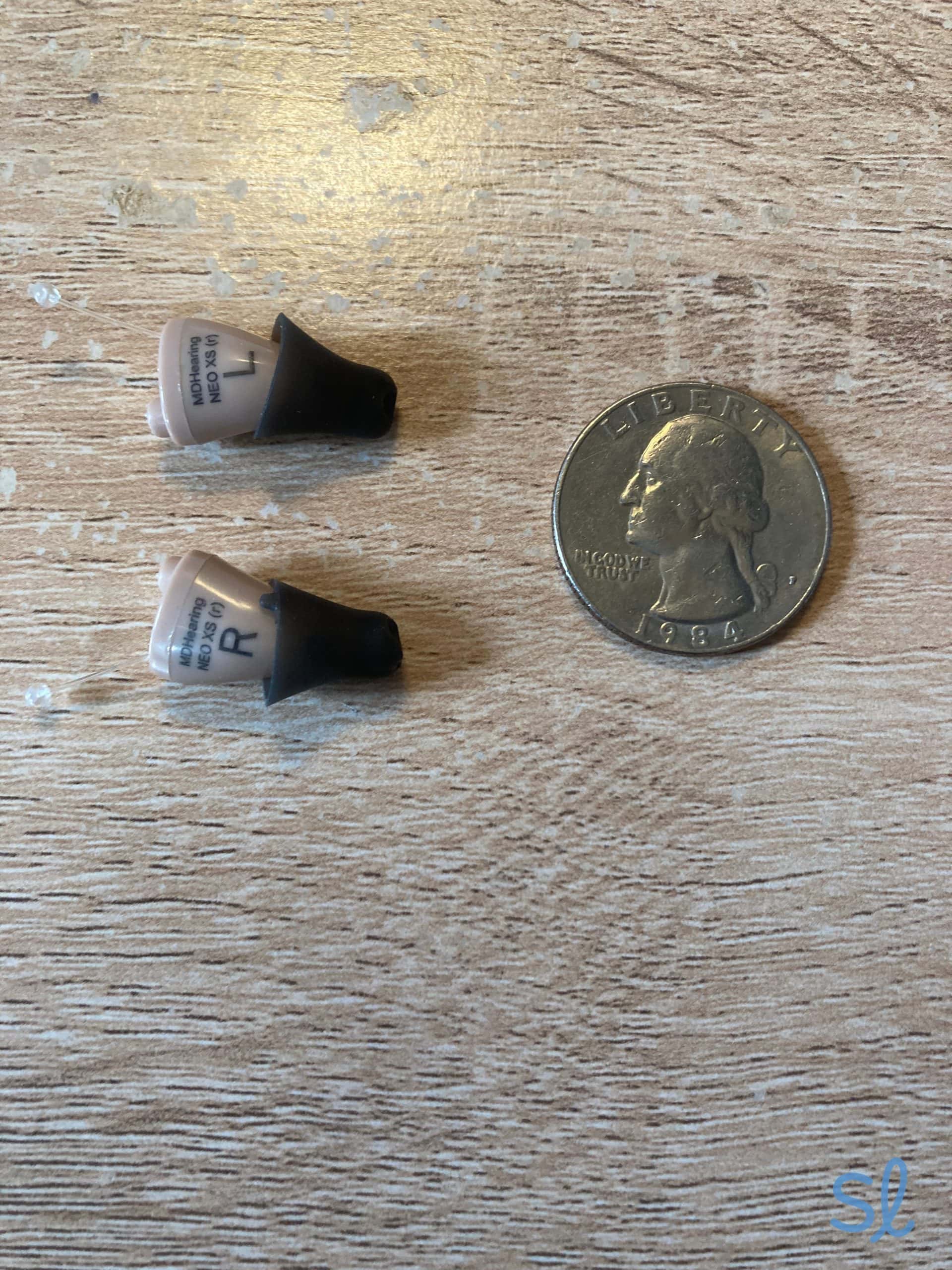
Testing out the NEO XS from MDHearing
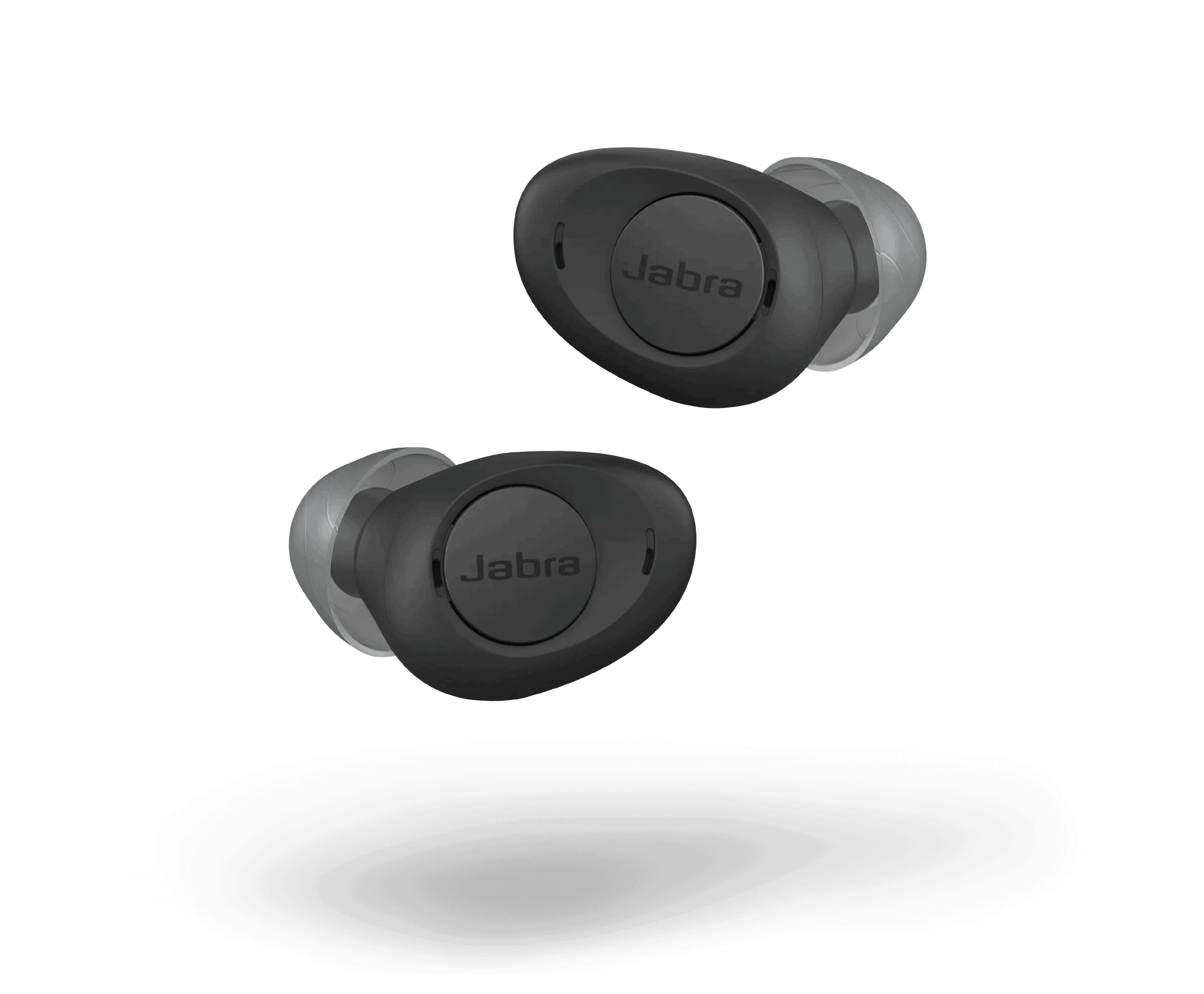
MDHearing offers several OTC hearing aids for mild to moderate hearing loss, but the NEO XS is our favorite for its affordability and discreet design. The brand offers more style options than Jabra Enhance, including BTE and in-the-ear (ITE) hearing aids with features like noise reduction and feedback cancellation. For those who might not like the small design of the NEO XS, the VOLT 4 is a popular BTE alternative from MDHearing.
MDHearing's hearing instrument specialists guide you through setup and customization, and every hearing aid comes with free shipping and a 45-day risk-free trial. Even when we encountered difficulty inserting the NEO XS comfortably, we were able to hop on a call with a specialist in a matter of minutes.
» You Might Like: The Best Rechargeable Hearing Aids in 2026
Pros & Cons:Pros About MDHearing NEO XS
- Highly affordable CIC hearing aids
- ITE and BTE models available
- 45-day risk-free trial
- Free U.S.-based lifetime support available 24/7
- Devices available as singles and in pairs
- 12-month financing available
Cons About MDHearing NEO XS
- One color option
- Only has a one-year warranty
Our Hands-on Experience:We tested MDHearing's NEO XS and VOLT 4 models. We were impressed with the feedback cancellation and noise reduction, especially considering their size and pricing. While the VOLT 4 offers some advanced features like smart sound reduction and dual microphones, it costs $100 more than the comparably discreet NEO XS.
Regardless of the model, MDHearing's devices don't offer the same advanced audio programming as Jabra Enhance, but they offer sleek designs at lower prices.

MDHearing, one of our favorite OTC brands, is a runner-up on our list of the best hearing aids for tinnitus.
We liked that, unlike Eargo, MDHearing makes it possible to adjust settings without using a smartphone. The downside is that MDHearing doesn't have a mobile app, so you'll only have the option to change settings and volume on the device itself. Since the NEO XS hearing aids are quite small, making manual adjustments could prove difficult for older fingers.
MDHearing offers follow-up care via phone, email, and online chat, but Dr. Reisman notes that some patients have had difficulty finding support, especially outside the U.S.
In our experience, we always got our questions answered quickly using MDHearing's online chat feature. Read our full MDHearing review to learn more.
Expert InsightsFrom Audiologist Dr. Ruth Reisman,Of concern, some of MDHearing’s BTE models significantly surpass uncomfortable loudness levels; this can put the hearing-loss patient at significant risk for further nerve-related damage. However, the in-ear options produced results that were closer to targets and provided less risk of overamplification.Pricing
Compared to Eargo and Jabra Enhance, MDHearing offers some of the most affordable hearing aids available over the counter (aside from Apple’s latest offerings). The NEO XS model is the most affordable completely-in-canal (CIC) hearing aid we could find anywhere, while also offering excellent noise reduction and minimal feedback.
MDHearing's prices range from $297 to $597 per pair, thanks to promotions. That's around $200 to $500 less than Eargo's least expensive model.
Ongoing sales can save you hundreds of dollars. Unlike Jabra Enhance, MDHearing allows you to buy a single hearing aid, but you may not get the same sale price as purchasing a pair.
» Pricing Guide: MDHearing hearing aids cost and pricing
-
5. Apple AirPods Pro 3 - Best Earbud Hearing Aids

What we like most
- Prices starting at $249 per pair
- Earbud-style hearing aids
- No free trial
Overview:
Apple AirPods Pro 3
Apple isn’t a name people associate with hearing aids, but the Apple AirPods Pro 3 earned a spot on our list because they can function as entry-level hearing aids for seniors with mild-to-moderate hearing loss. They’re especially good for older adults who already use iPhones, iPads, or are familiar with Apple products.
Apple’s Hearing health experience includes a hearing test and a regulated hearing aid feature that can apply personalized audio adjustments, plus tools like Conversation Boost that help bring the person in front of you into clearer focus.
Pros & Cons:Pros About Apple AirPods Pro 3
- Lowest starting price on this list
- Quick, familiar setup for iPhone/iPad users
- Helpful speech-forward features like Conversation Boost
- Six-month financing available
Cons About Apple AirPods Pro 3
- No professional follow-up care
- No free trial
- Extended warranty requires AppleCare+ purchase
Our Hands-On Experience:We tested our pair of AirPods Pro 3 specifically in common “hearing aid” scenarios. We wore them in quiet, one-on-one conversations, louder environments like cafés, and on-the-go errands with ample background noise. In every environment, we found Apple’s latest AirPods to perform surprisingly well, not just increasing volume, but adjusting to prioritize speech and conversation.
The setup couldn’t have been easier (partly because we are very familiar with Apple products). Once paired to our phone, we found the Hearing Health settings easily, ran the guided hearing flow, and then toggled “Conversation Boost” on and off to see how much it helps speech happening right in front of us.
Conversation Boost made the biggest difference in face-to-face conversations (even across a large kitchen table), and it was easy to fine-tune the intensity when a voice sounded either too sharp or a little muffled.
In noisy spaces, we found the AirPods Pro3 could help reduce the “wash” of background sound enough to make conversations less tiring, but they couldn’t replace what a dedicated hearing aid can do when it comes to consistent speech clarity, especially when you have speakers coming at you from all directions.
Comfort-wise, these still feel like premium earbuds. They’re not super lightweight, and they’re definitely very visible (unlike the Eargo 8 or Sony C20). However, millions of people of all ages and hearing capabilities use Apple AirPods every day, so it’s easy to use them and blend right in!
That said, you can definitely feel when you’re wearing them. They don’t sit quite as comfortably as traditional hearing aids, so they might be best for shorter periods or as a backup option when your primary hearing aids are charging.
We also noticed a practical trade-off: AirPods are earbuds first. If you’re buying them primarily as hearing aids, you’ll want to be realistic about battery management and how often you’re willing to pop them into the case. This is even more important if you plan to use them to stream music or TV. AirPods are great for streaming, but the battery may drain even faster if you stream daily.
Pricing
Apple offers their latest AirPods for just $249 per pair. That’s even less than MDHearing’s NEO XS. You can even finance your purchase through Apple to pay as little as $41.50 per month for six months.
Just keep in mind that, while Apple AirPods Pro 2 and 3 are recognized by the FDA as clinical-grade, OTC hearing aids, they don’t come with the support of hearing professionals. Additionally, they only come with one year of warranty by default. If you want to extend your warranty to two years, you’ll need to pay $1.99 per month (or $19.99 annually) for AppleCare+ coverage.
-
6. Lexie B2 Plus - Best Customization

What we like most
- Prices starting at $999 per pair
- BTE-style hearing aids
- 45-day free trial
Overview:
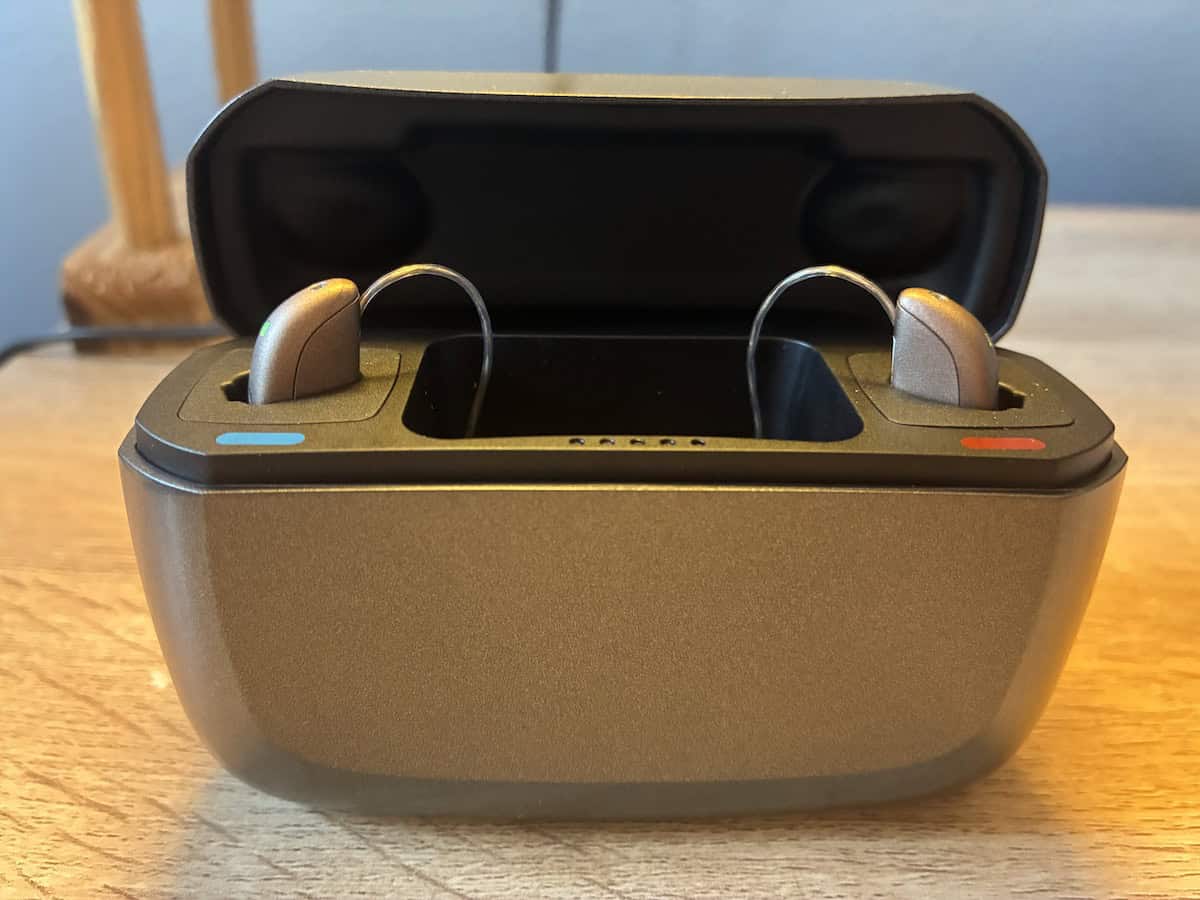
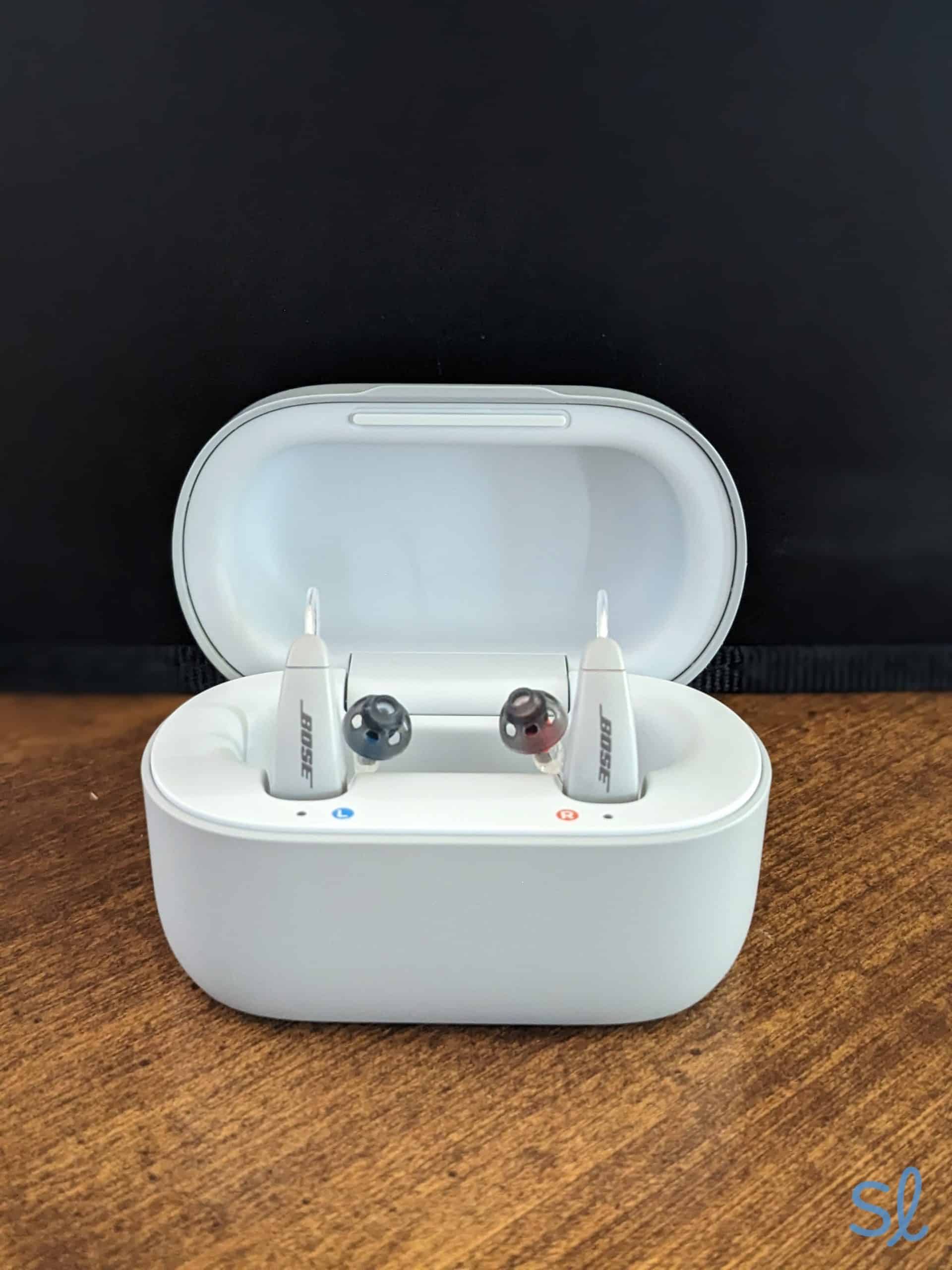
Lexie B2 hearing aids sitting in their charging case.
Lexie B2 Plus is our top pick for customization because they give users a lot of control without making the setup a pain. These are self-fitting OTC hearing aids powered by Bose, and most of the magic happens inside the Lexie app where you can run a hearing test, apply recommended settings, and then fine-tune your sound profile over time.
The result is a “set it and forget it” option if you want simplicity, but with enough ways to change things and keep improving comfort and clarity as you adapt to the devices.
Pros & Cons:Pros About Lexie B2 Plus
- Excellent customization through the Lexie app
- Strong battery life for a full day of usage
- Lifetime remote support from Lexie Experts
- Bluetooth features for phone calls
Cons About Lexie B2 Plus
- Requires a smartphone for the best experience
- Bluetooth streaming is a bit limited
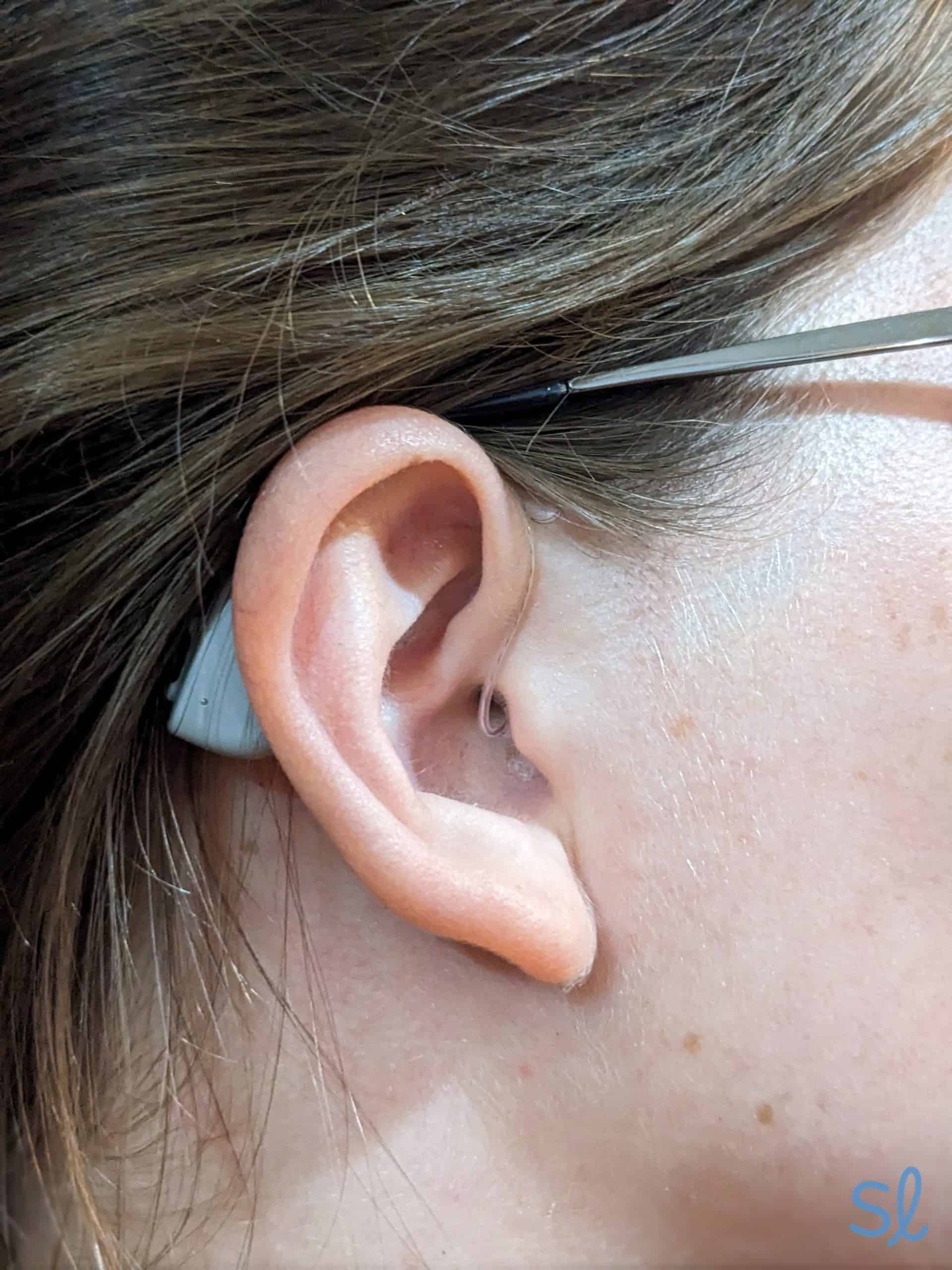
- BTE is less discreet than CIC alternatives
Summary:
Wearing the Lexie B2 hearing aid. It fits comfortably even with glasses!
When we tried out the Lexie B2 Plus, they stood out for one reason: the hearing devices let us dial in the sound without the need for an instruction manual.
We started with the in-app hearing test and applied the recommended settings, then wore the devices in a mix of quiet rooms, conversational settings, and noisier public spaces. In quieter settings, it didn’t take much adjustment to get natural speech clarity. We just had to make small changes to reduce “sharpness” with certain voice types.
Where the B2 Plus really earned its keep was the day-to-day fine-tuning. We liked being able to make small, incremental changes and immediately hear the difference, rather than picking from a few rigid presets.
In noisy environments, we found the best results came from combining the app adjustments with realistic expectations: these improved speech focus and reduced listening fatigue, but they didn’t completely erase background noise.
Still, the B2 Plus gave us more room to “shape” the sound than budget-friendly models from MDHearing or even Apple. That’s exactly what you want if you’re particular about how voices should sound.
We also appreciated the high level of support. When we had questions during setup and early wear, Lexie’s remote support model made it easy to troubleshoot and keep moving forward. This is a great perk for seniors who might otherwise get frustrated and give up on their new devices early.
Pricing
Lexie B2 Plus starts at $999 per pair, which puts it in the mid-range for OTC hearing aids. It’s not nearly as affordable as MDHearing or Apple, but it’s about half as much as top-tier models from Eargo or Jabra Enhance. You also get a 45-day trial period and a one-year warranty, which we consider solid baseline protection at this price point.
If customization is your top priority, the value here is less about being cheap and more about being in control. You’re paying for a better self-fitting experience, stronger day-to-day adjustability, and a support system that helps you stick with your devices long enough to benefit from them.


The Runners-Up
Our top picks are not the only OTC hearing aids on the market. Below are some providers who didn't make our list but may be a good option for some users.
- Otofonix: Otofonix offers several budget-friendly BTE hearing aids, starting as low as $149 per ear. Learn more in our Otofonix review.
- Lucid Hearing: Lucid Hearing offers several affordable choices ranging from $199 per pair for entry-level models to around $1,300 per pair for premium rechargeable models.
- Go Hearing: Go Hearing offers two budget-friendly OTC solutions. Priced at $299 per pair, Go Hearing's Go Prime is among the most affordable OTC hearing aids.
What Are OTC Hearing Aids?
Hearing aids can make a world of difference for people with hearing loss. Untreated hearing loss can lead to isolation and has been associated with conditions such as depression, anxiety, low self-esteem, dementia, reduced mobility, and falls.2 Check out our hearing aid buying guide to learn more.
Unfortunately, conventional hearing aids can be costly. Not everyone can afford a doctor's visit, let alone the devices. That's where OTC hearing aids come in.
OTC hearing aids are for individuals ages 18 and older with mild to moderate hearing loss. The self-fitting hearing aids don't require a hearing exam, audiologist's review, or approval from a medical practitioner, resulting in more affordable pricing. Some OTC brands offer online hearing tests and follow-up care, though it's not required.
The FDA's OTC hearing aid category aims to make hearing aids more accessible and affordable. Here are a few key considerations, since you may be responsible for:
- Determining the level of your hearing loss and your hearing needs
- Selecting and purchasing your hearing aids
- Setting up and programming your hearing aids
- Troubleshooting your hearing aids if they malfunction
In the video below, Jeff Hoyt, editor-in-chief of SeniorLiving.org, speaks with Dr. Ruth Reisman, a licensed audiologist and hearing aid dispenser, about the Over-the-Counter Hearing Aid Act and how it could help millions of Americans.
How Much Do OTC Hearing Aids Cost?
Over-the-counter hearing aids were introduced to make hearing devices more accessible to Americans. They typically cost far less than prescription hearing aids. A growing number of OTC providers has helped keep prices low.
Did You Know? High costs are one of the top reasons why roughly 20 million Americans with hearing loss have not purchased hearing aids.
You can expect to pay between $200 and $3,000 for a pair of OTC hearing aids, with most models priced around $800 to $1,500. That might still be pricey for some, but considering most prescription hearing aids start at $1,000 per ear (not always including fittings and appointments), OTC hearing aids are a much more affordable option.
Does Medicare Cover Over-the-Counter Hearing Aids?
No, Original Medicare does not cover hearing aids — OTC or prescription models. However, you may get some coverage through a Medicare Advantage plan with hearing benefits. These plans often cover annual hearing exams and, in some cases, partial coverage for hearing aids and related devices.
Pro Tip: Want a Medicare Advantage plan with hearing benefits? Check out our guide to the best Medicare Advantage plans to learn more!
Pros and Cons of OTC Hearing Aids
Unsure whether OTC hearing aids for mild to moderate hearing loss are right for you? Let's weigh the pros and cons.
Pros About OTC Hearing Aids
- Affordability: The FDA's OTC hearing aid ruling has helped deliver significant savings to American families, with OTC models typically costing $1,500 to $3,000 less than prescription alternatives for a pair of hearing aids.
- Ready availability: OTC hearing aids are available directly to consumers without waiting for a doctor's approval or fitting appointment.
- Simplicity: Some OTC hearing aids have limited features, making them viable for individuals who aren't interested in complex devices.
- Smart choice for new users: OTC hearing aids offer a quick solution to help you become familiar with your hearing needs.
Cons About OTC Hearing Aids
- Not for all levels of hearing loss: According to the FDA, OTC hearing aids are for individuals with mild to moderate hearing loss. If your hearing loss is more profound, you'll need prescription hearing aids with more functions and features.
- Not custom-fit: Brands like ReSound and Starkey offer custom hearing aids based on ear size and shape, but over-the-counter hearing aids are typically not professionally molded to your ears. This one-size-fits-all approach may result in an uncomfortable or incorrect fit.
- Quality may not meet expectations: Lower-quality OTC hearing aids may not deliver a seamless experience. OTC hearing aids don't always include assistance from an audiologist, making it challenging to troubleshoot malfunctions.
OTC vs. Prescription Hearing Aids
The biggest differences between over-the-counter and prescription hearing aids come down to price, accessibility, and the level of professional support. OTC hearing aids are typically available online and delivered to your door. There's no need to schedule an appointment with a hearing professional.
Prescription hearing aids must be acquired through a licensed prescriber. Prescription devices often cost two or three times more than OTC models and may require multiple in-person fittings or adjustments.
While this might make OTC hearing aids seem like the clear winner for those on a budget, consider several important factors first. An in-person fitting can help ensure you get the best hearing aids and have professional help to set them up. With OTC hearing aids, you can often get remote support (especially for the initial fitting), but in-person care is rarely available.
OTC hearing aids are designed for adults with mild to moderate hearing loss. So, if you have severe or profound hearing loss, you'll need prescription hearing aids. Prescription hearing aids cost more because they offer advanced features and superior performance.
Generally speaking, they offer more advanced technology for better speech recognition or more intuitive adjustments when switching between environments. Prescription hearing aids also have more customization options for your listening experience, with or without professional assistance.
Things to Keep in Mind When Purchasing an OTC Hearing Aid
Since 2022, purchasing OTC hearing aids can be as simple as stopping by your local drugstore. Shopping can be tricky, however, if you don't know what to look for. Our team put together a few critical criteria to consider as you evaluate OTC and prescription hearing aid options.
Battery Life
Whether you prefer traditional battery-powered hearing aids or a rechargeable model, your hearing aids are only as good as their battery life. No one wants their hearing aids to lose power in the middle of a conversation!
The outer packaging for all OTC hearing aids will note if the battery is rechargeable or replaceable. If the battery is replaceable, the packaging will include how many batteries are needed (and whether they are included).
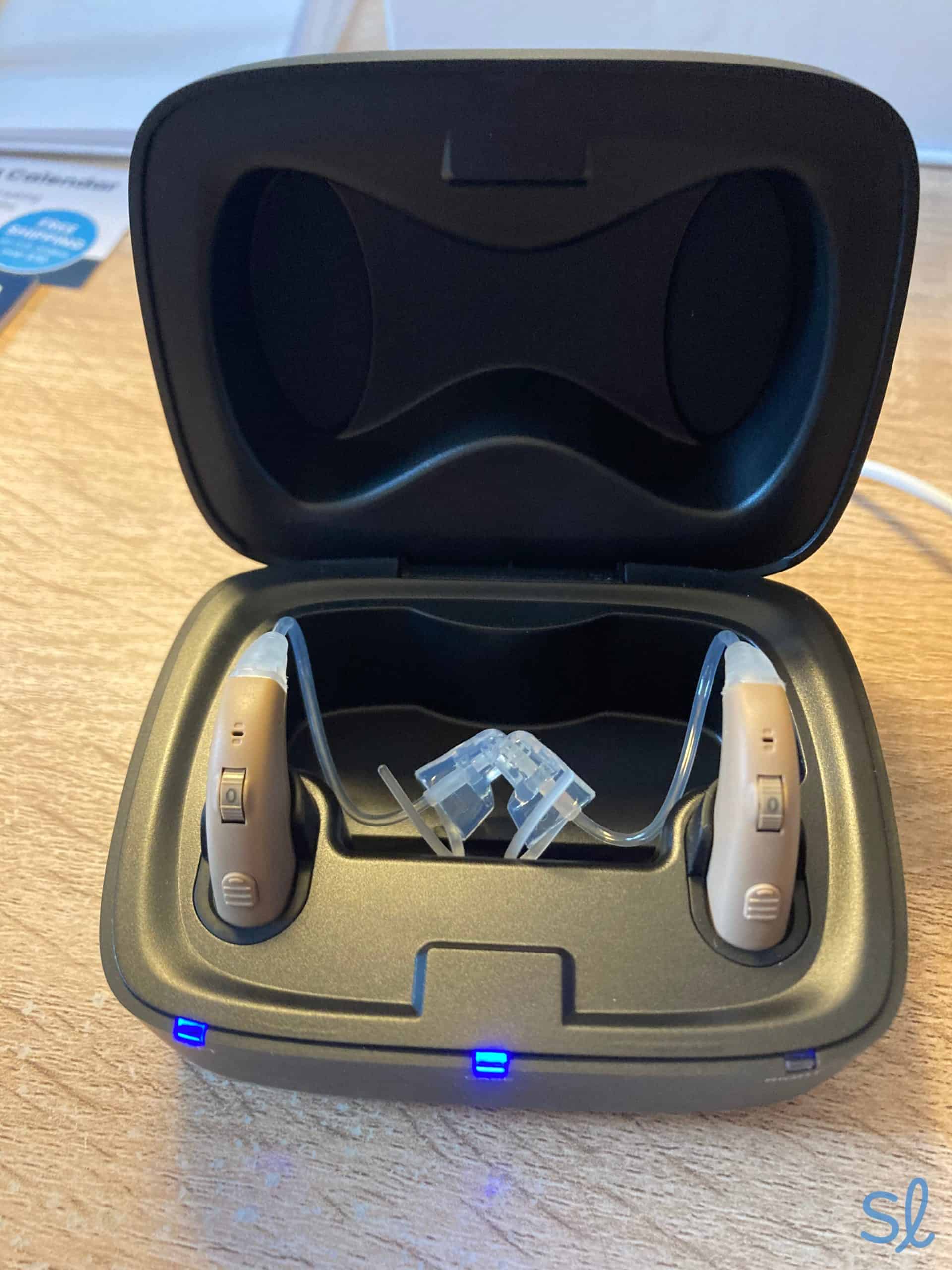
MDHearing offers rechargeable hearing aids, including the VOLT model
Return Policy
It's essential to allow yourself time to adjust to new hearing aids. That's why a generous return policy is crucial. Before purchasing, check the return policy. The policy is set by retailers and manufacturers, not the FDA. The length will vary.
Warranty
Small but mighty, hearing aids are built with tiny electrical parts. What happens if your hearing aids stop working? A solid warranty ensures the manufacturer can repair or replace your hearing aids at no additional cost within a specific time frame.
Size and Weight
You'll spend many hours wearing your hearing aids, so choose a lightweight device for optimal comfort. It's also critical to consider how your hearing aids will fit, feel, and look. Are you looking for discreet, practically invisible hearing aids, or would you prefer devices that are larger but easier to operate? Consider those questions as you explore your options.
Pro Tip: Wondering if you’re wearing your hearing aids correctly? We have you covered with an in-depth look at how to properly put in and remove your hearing aids.
Volume Control
All OTC hearing aids must be self-adjusting with user-adjustable volume control. This key feature allows you to tune the volume to fit your situation (e.g., louder in noisy environments, softer in quiet environments). Advanced customizations for OTC hearing aids are not required by the FDA.
Smart Device
Are you tech-savvy or do you prefer a more hands-on approach to hearing aids? Some OTC hearing aids utilize wireless technology via a smartphone or computer. You can use the device to program and adjust them. Think about what type of OTC hearing aid will work best for you, and look for those specifications on the packaging.
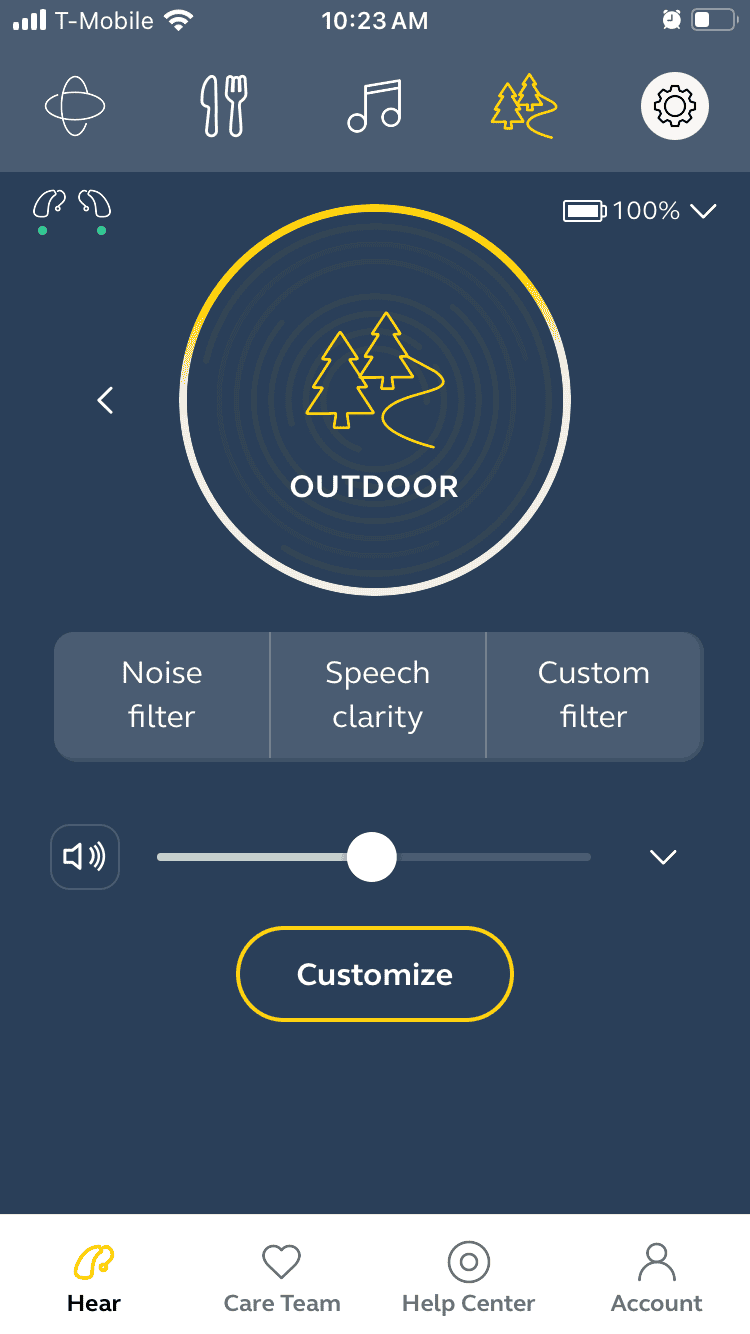
Making adjustments using the Jabra Enhance mobile app
Additional Hearing Aid Resources
Want to compare all of your options? We’ve tested and reviewed dozens of OTC and prescription hearing aids for various categories that could help you find the right fit:
FAQ
-
Are OTC hearing aids as good as prescriptions?
Prescription hearing aids often have more advanced technology than OTC hearing aids for an improved listening experience. They also have options for severe and profound hearing loss. They require in-person fittings with an audiologist, which can help personalize the devices to fit your specific needs.
-
Are OTC hearing aids just amplifiers?
No. Hearing amplifiers simply increase the loudness of all sound input. OTC hearing aids can target specific sounds like speech or music. They can be adjusted to work better in variable sound environments, such as restaurants or busy streets.
-
Are over-the-counter hearing aids effective?
Yes, OTC hearing aids can be effective for adults with mild to moderate hearing loss. Certain models can even help patients struggling with specific issues, such as tinnitus. However, if you have severe or profound hearing loss, OTC hearing aids are not an effective option.
-
Does Costco sell OTC hearing aids?
Yes, Costco sells both OTC and prescription hearing aids.
Take Our Free Online Hearing Test
Are you wondering if you have hearing loss? Grab your headphones and get a free hearing evaluation in minutes.
-
FDA. (2023). OTC Hearing Aids: What You Should Know.
-
National Institute on Deafness and Other Communication Disorders. (2022). Over-the-Counter Hearing Aids.
-
The White House. (2022). FACT SHEET: Cheaper Hearing Aids Now in Stores Thanks to Biden-Harris Administration Competition Agenda.