Best Cell Phones for Seniors With Hearing Loss, Tested and Reviewed in 2026
The best cell phones for hearing loss scored well in our testing categories, including hearing-aid compatibility, loud speakers, and accessibility features.


Our tech experts created a list of the best cell phones for seniors with hearing loss based on extensive research and hands-on testing.
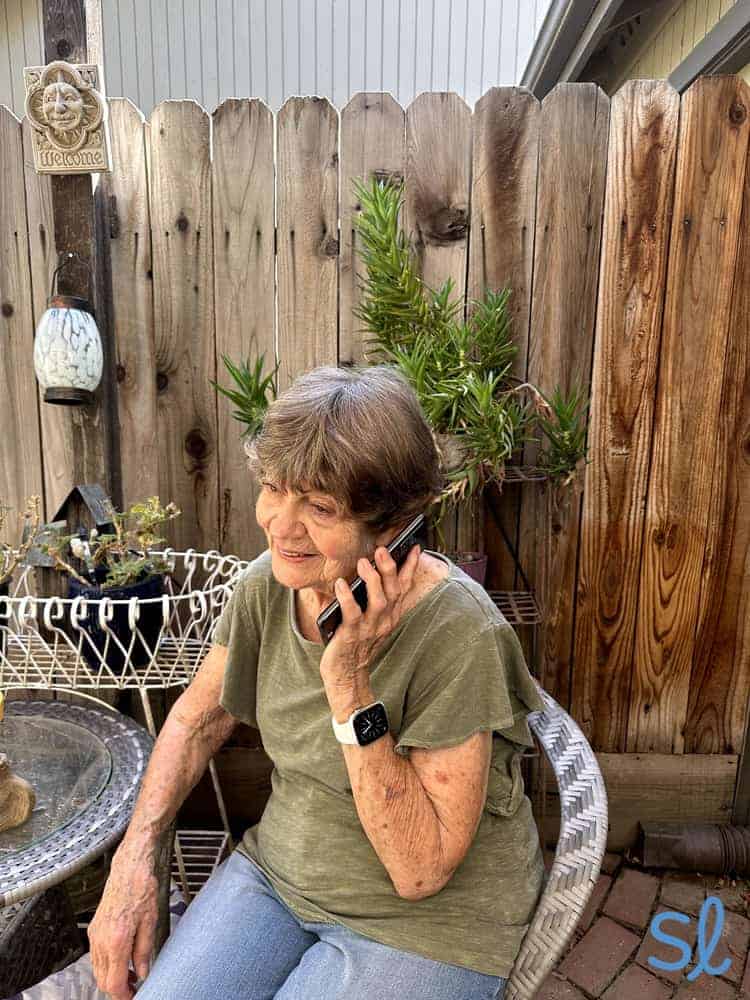
Making a call on the Jitterbug Smart4
How We Tested the Phones
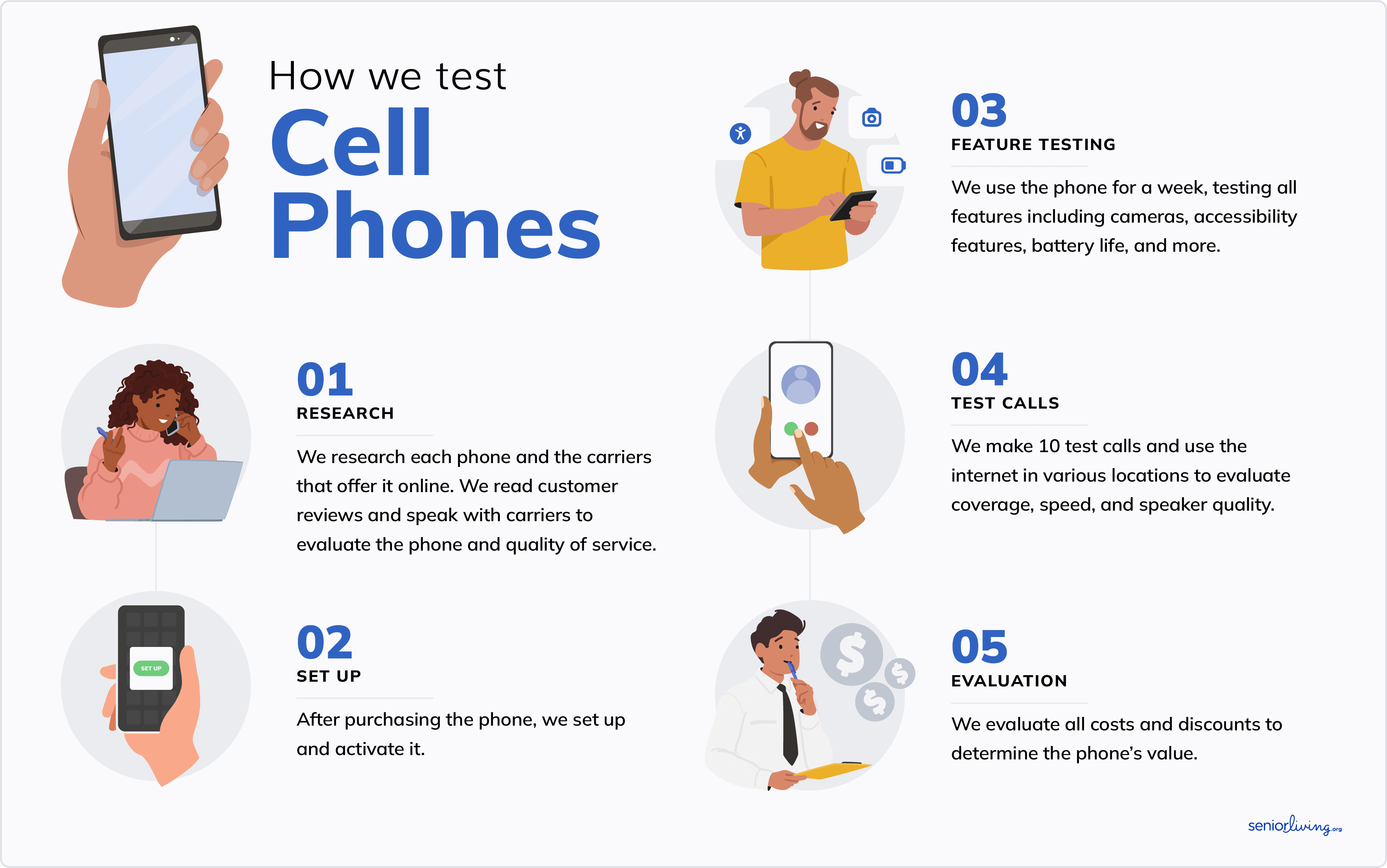
Like roughly one-third of seniors, my grandma has hearing loss. She uses hearing aids, so I understand the importance of finding a phone with features for seniors with hearing loss. My tech team and I researched and tested multiple cell phones to find the best options for older adults with different needs, preferences, and budgets. We spent over 100 hours testing the phones, following the same steps for each model:
- Talking on the phone while wearing hearing aids can cause an annoying buzzing sound. With that in mind, we researched the top phones for seniors, focusing on those with specific features for hearing loss. We looked through websites, spoke with customer service reps, and ordered our top picks.
- After we received each phone, we tested it and took notes on the experience over a weeklong period. I recruited my grandma to help me with testing whenever possible, which provided insight into the pros and cons of each phone for seniors, especially since we could test the phones with and without her hearing aids.
- We evaluated each phone’s call quality, hearing-aid compatibility, accessibility features, haptic feedback, general usability, size, battery life, plan options, and other senior-friendly features to create our ranked results.
How We Chose the Best Phones for Seniors With Hearing Loss
We looked for phones that provide all of the following:
- Hearing-aid compatibility: Most modern phones have some degree of compatibility with hearing aids via Bluetooth connection, but each phone has different capabilities. Not all phones that are “hearing-aid compatible” will work with every hearing-aid model on the market.
- Loud speaker: Whether or not you use hearing aids, having a strong, loud speaker is a great way to ensure you can hear calls, watch videos, and listen to music clearly.
- Haptic notifications: Haptic notifications allow your phone to buzz or vibrate so you can feel calls, texts, and other notifications even if you can’t hear them.
We also looked for phones that offer one or more advanced features for hearing-impaired seniors.
- Customizable audio: This feature that’s available with many modern phones. It allows you to customize how you hear things through your phone. Mono audio, for example, will ensure that the left and right speakers play the same content, while background noise control can help you mask unwanted noise in your environment.
- Teletypewriter (TTY) support: TTY devices can turn voice calls and messages into live text, and vice versa.
- Real-time text (RTT) support: RTT lets the user text with a person on the other end of a call. That allows them to take advantage of speech and text communication simultaneously. Essentially, it means you can use voice-to-text and text-to-voice while you’re on a phone call.
- Live captions and transcriptions: Live captions and transcriptions automatically provide text for audio emitted from the device. Transcriptions do the same thing for audio that originates from the environment around your phone.
Why Trust Us
Our senior tech experts (including myself) try out the latest products for older adults. We’ve spent hundreds of hours testing and reviewing cell phones and plans for seniors. We consult with older adults to learn about their personal experiences with different phone models, including what they liked, what they disliked, and features they think could make the phone better for older adults with hearing loss.
SeniorLiving.org is supported by commissions from providers listed on our site. Read our Editorial Guidelines

- Starts at $599
- M3/T4 compatibility rating
- High-volume speakers

- Retails for $79.99 (often on sale)
- M4/T4 compatibility rating
- Crisp, clear speaker
- Costs $119.99
- M3/T4 compatibility rating
- Crisp, clear speaker

- M4/T4 compatibility rating
- Flip phone design with smartphone features
- Affordable price
- Extensive accessibility features
- M3/T4 hearing aid compatibility
- Large screen
Contents
If you have hearing loss, accessibility features are top of mind when shopping for a cell phone. These features might include hearing-aid compatibility, voice-activation, and vibration alert settings. As SeniorLiving.org's resident tech expert, I've tested dozens of phones and hearing aids, and I know not all phones are created equal when it comes to accessibility for people with hearing loss. That's why we created this guide.
My tech team and I spent over 100 hours testing some of the best cell phones for seniors to find our top picks. We evaluated each phone for important criteria such as hearing aid compatibility, loud speakers, haptic notifications, and value. Ultimately, we chose the iPhone 16e from Consumer Cellular as the top phone for seniors with hearing loss, thanks to its affordability, powerful A18 chip, hearing aid compatibility, and extensive accessibility features for hearing loss.
The Best Cell Phones for Seniors With Hearing Loss
-
 iPhone 16e from Consumer Cellular - Best simple iPhone for hearing-impaired seniors
 -
 Jitterbug Flip2 from Lively - Best flip phone for hearing-impaired seniors
 -
Jitterbug Smart4 from Lively - Best smartphone for hearing-impaired seniors
-
 TCL Classic from AT&T - Most affordable cell phone for hearing-impaired users
 -
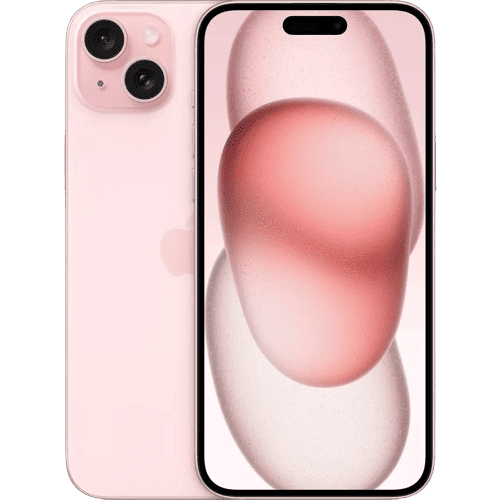
 Apple iPhone 15 (Multiple Carriers) - Best Apple phone for hearing-impaired seniors
-
1. iPhone 16e from Consumer Cellular - Best simple iPhone for hearing-impaired seniors
See Pricing Links to Consumercellularplan.comWhat we like most
- Starts at $599
- M3/T4 compatibility rating
- High-volume speakers
iPhone 16e from Consumer CellularSee Pricing Links to Consumercellularplan.comOverview:
Testing the iPhone 16e on Consumer Cellular's network
The iPhone 16e has become one of the most dependable and loved iPhone models. It has a host of advanced features, but I've found that navigating the 16e is intuitive, thanks to its gesture-based (intuitive screen swipes and taps) navigation and Face ID. With a 6.1-inch screen, it is one of the most compact smartphones on the market. I enjoyed surfing the web, watching videos, and using my favorite apps without the hassle of carrying a big, bulky phone.I also love to use my phone for checking my bank balance, and making account transfers. Since this phone uses face ID rather than passwords, I feel confident and secure using it for banking.
The 16e has a solid 48 MP Fusion camera and voice-assistant features, but it made this list because it's very easy to use for people with hearing loss. Not only does it have great sound quality, but it's also compatible with large hearing aid manufacturers. The iPhone 16e is compatible with any Made for iPhone (MFi) hearing aids. Plus, the iOS app store offers several hearing-aid apps that allow you to adjust your hearing aids directly from your iPhone.
» You Might Like: Best 5G Phones for Seniors
Pros & Cons:Pros About iPhone 16e from Consumer Cellular
- Ample audio customization and accessibility features
- Clear and loud audio speakers
- M3/T4 hearing-aid compatibility
- RTT/TTY support
- Face ID for secure and easy unlocking
- 5G ready
- Water- and dust-resistant
Cons About iPhone 16e from Consumer Cellular
- No headphone jack
- Doesn’t have MagSafe for wireless charging
- No physical Home button may require adjustment for some users
Our Hands-on Experience:Hearing-Aid Compatibility
The iPhone 16e has an M3/T4 hearing-aid compatibility. That means it's compatible with most hearing aids in microphone mode, and most industry-standard, prescription hearing aids in telecoil mode. The iPhone 16e is designed to work with the majority of hearing aids with minimal interference.
» Useful Resource: Best Hearing Aids in 2026
I tested the iPhone 16e with a pair of Jabra Enhance hearing aids. The entire Jabra Enhance line of hearing aids is MFi. I found the devices easy to set up with the iPhone, and the sound was crystal clear. I tried the phone's Hearing Aid Compatibility feature with the hearing aids. The feature improves sound quality when connected to MFi devices, but I didn't notice a major difference when the setting was turned on.
Speaker Quality and Sound Customization
My grandma was happy with the sound quality of the iPhone 16e. She initially assumed the speaker wouldn't be powerful, because the device was more affordable than other iPhones she'd used (like the iPhone 15 Pro Max). She was pleasantly surprised at how loud the speaker was when we did a test call with the speaker mode enabled.
We noticed some minor “clipping” when I spoke loudly into the phone. Clipping happens when the sound input is too loud for the receiving phone’s speaker and ends up getting distorted. We didn’t have that issue with the more robust iPhone 15.
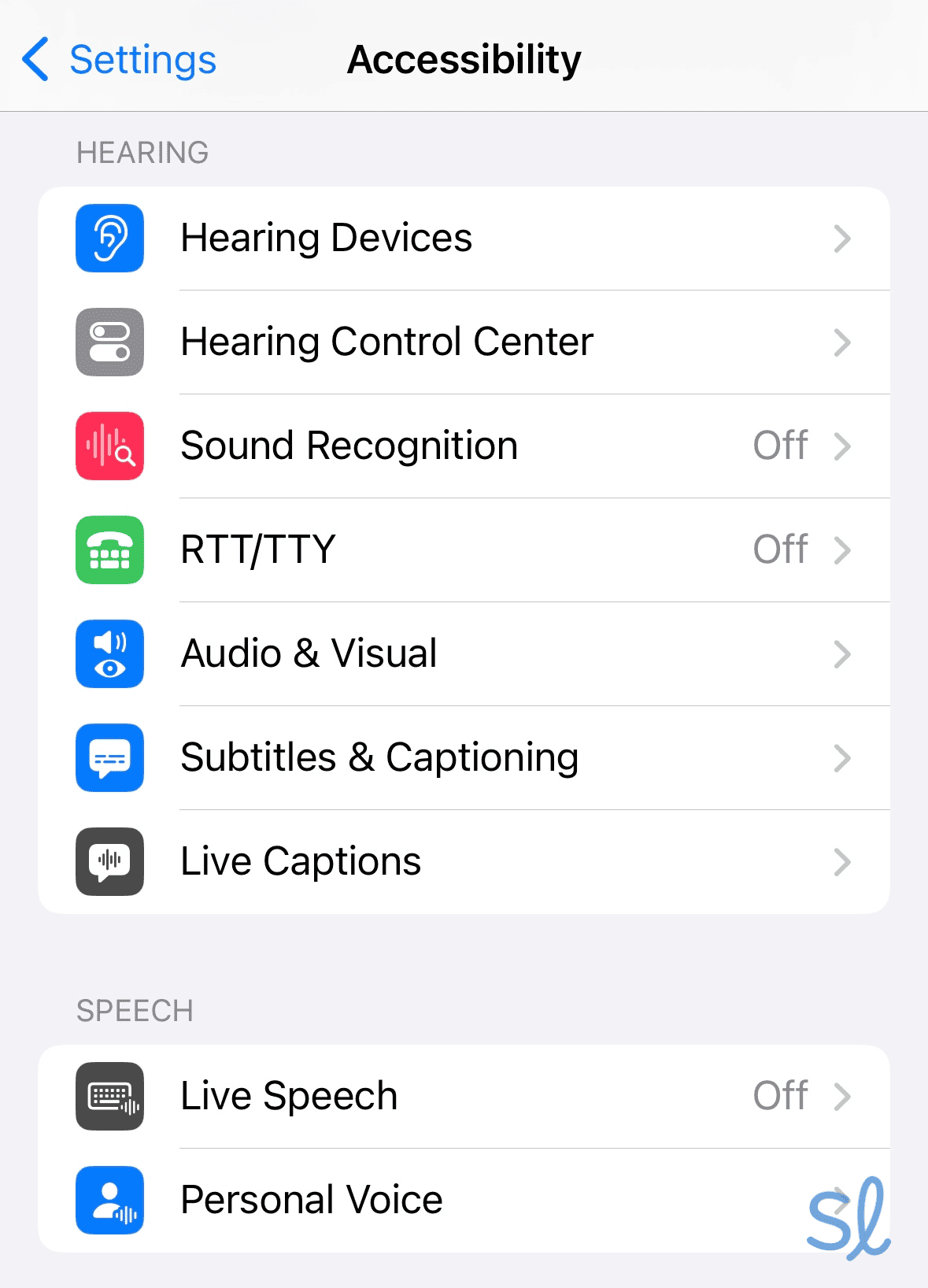
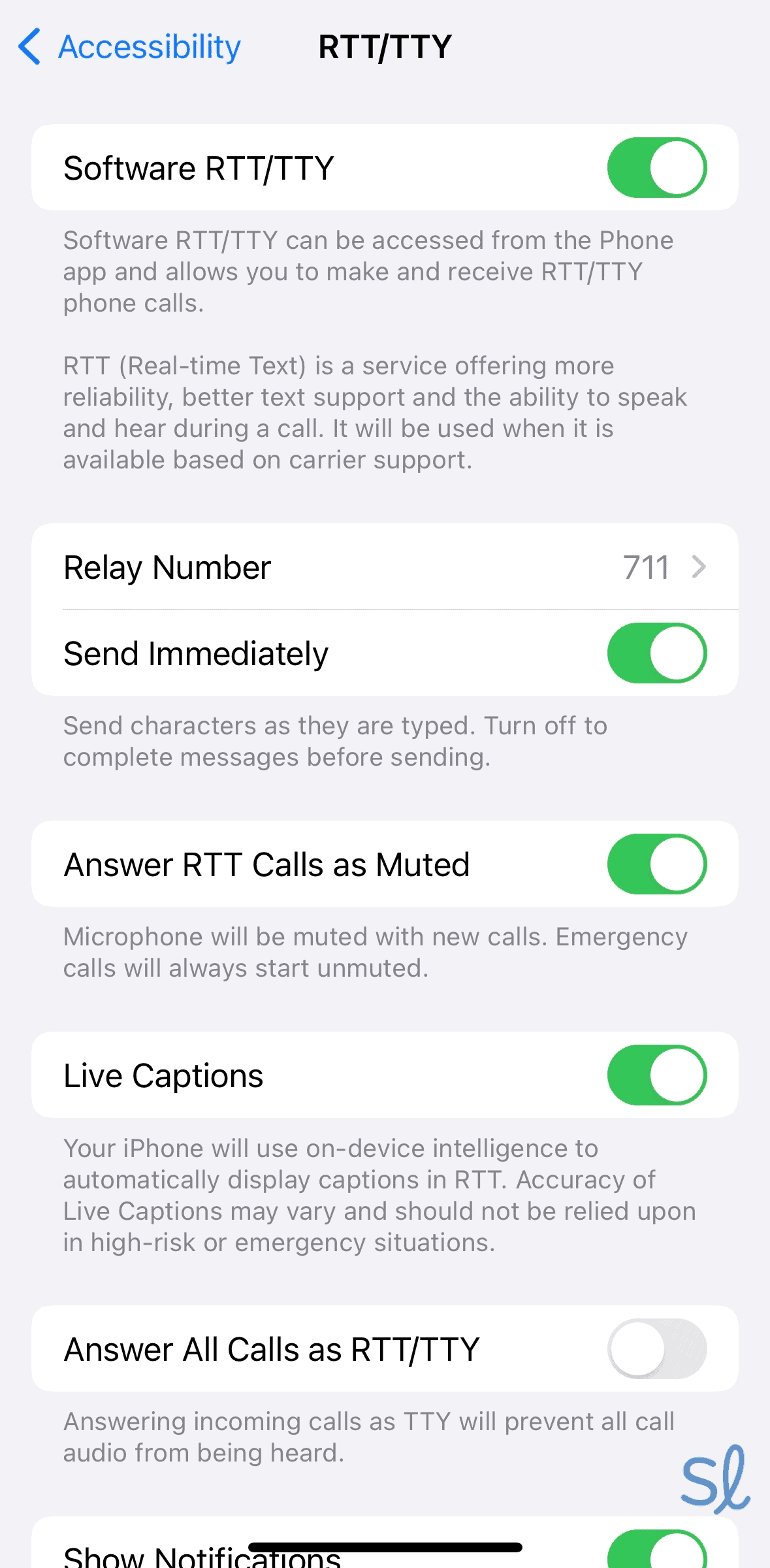
The iPhone 16e has many built-in features for optimizing audio. Some of the most useful accessibility features for the hearing impaired include RTT/TTY (realtime text /teletyper) support and live captions. To enable those features, I clicked the Settings icon, selected Accessibility, and scrolled down to the Hearing section for various options.
One feature I really liked was Sound Recognition. It enables the iPhone 16e to constantly listen for recognizable sounds in your environment, such as a person speaking or an alarm going off. The only downside is that it drains the battery pretty quickly, since it constantly runs in the background when enabled.

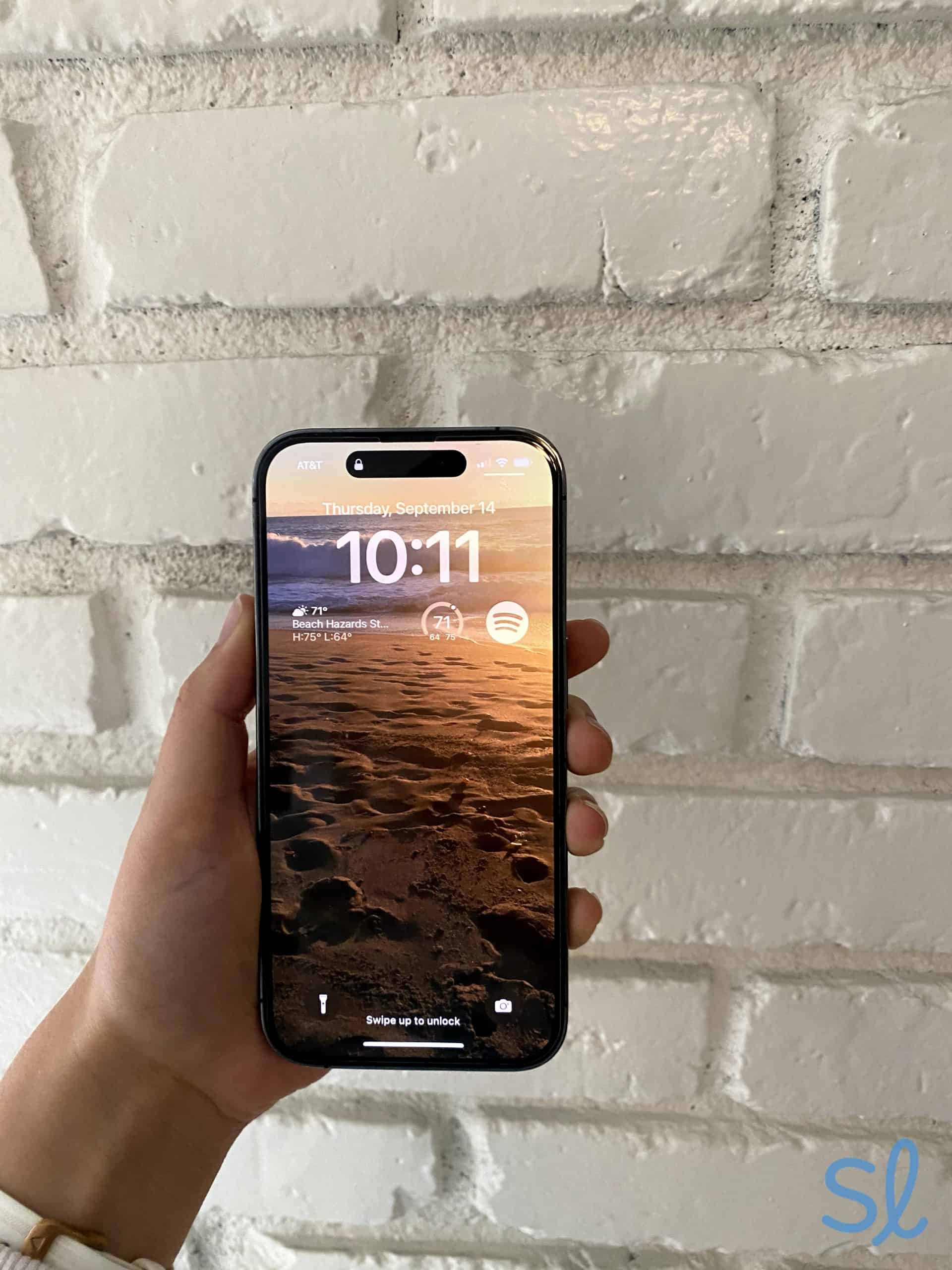
Using the iPhone's accessibility features for those with hearing impairments
Those features are not unique to the iPhone 16e, since any iPhone that can run iOS 16 or later has live captions, RTT/TTY support, and various sound-control features for the hearing impaired. Still, the features were easy to use and helpful!
» You Might Like: Easiest cell phones for seniors to use
Pricing
Consumer Cellular's plans and iPhone prices are flexible and affordable. A new 128 GB iPhone 16e starts at $599. You can also spread your costs over two years with easy monthly installments. Most Consumer Cellular plans are cheaper than the country's largest providers, T-Mobile, Verizon, AT&T, and Mint Mobile.
Consumer Cellular’s plans are affordable, starting at $20 for 1 GB of data and unlimited talk and text. Plans range up to $50 for an unlimited talk, text, and data plan. Keep in mind that if you want a single-line unlimited plan with Consumer Cellular, you’ll need to be aged 50 or older. But if you want multiple unlimited lines, there is no age restriction.
For comparison, Lively’s Basic unlimited plan costs $49.99 with the Jitterbug Smart4, so the two carriers are pretty comparable. There are four data plans to choose from (plus unlimited), so you can find one that meets your needs and budget. I appreciate this variety of options!
» Learn More: Consumer Cellular Review
-
2. Jitterbug Flip2 from Lively - Best flip phone for hearing-impaired seniors
What we like most
- Retails for $79.99 (often on sale)
- M4/T4 compatibility rating
- Crisp, clear speaker
Overview:
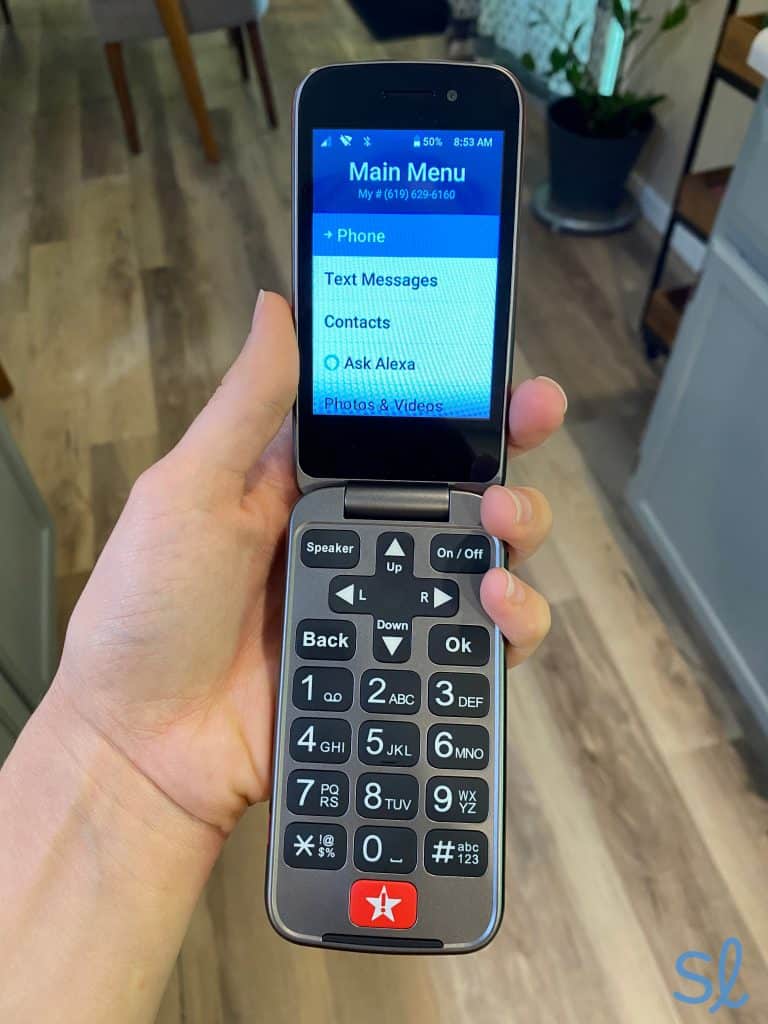
One of our writers testing out the Jitterbug Flip2
Want to stay in touch with your loved ones without worrying about complicated smartphone technology? The Jitterbug Flip2 is a great option to consider! It's reasonably priced, easy to use, and comes with many health and safety features.
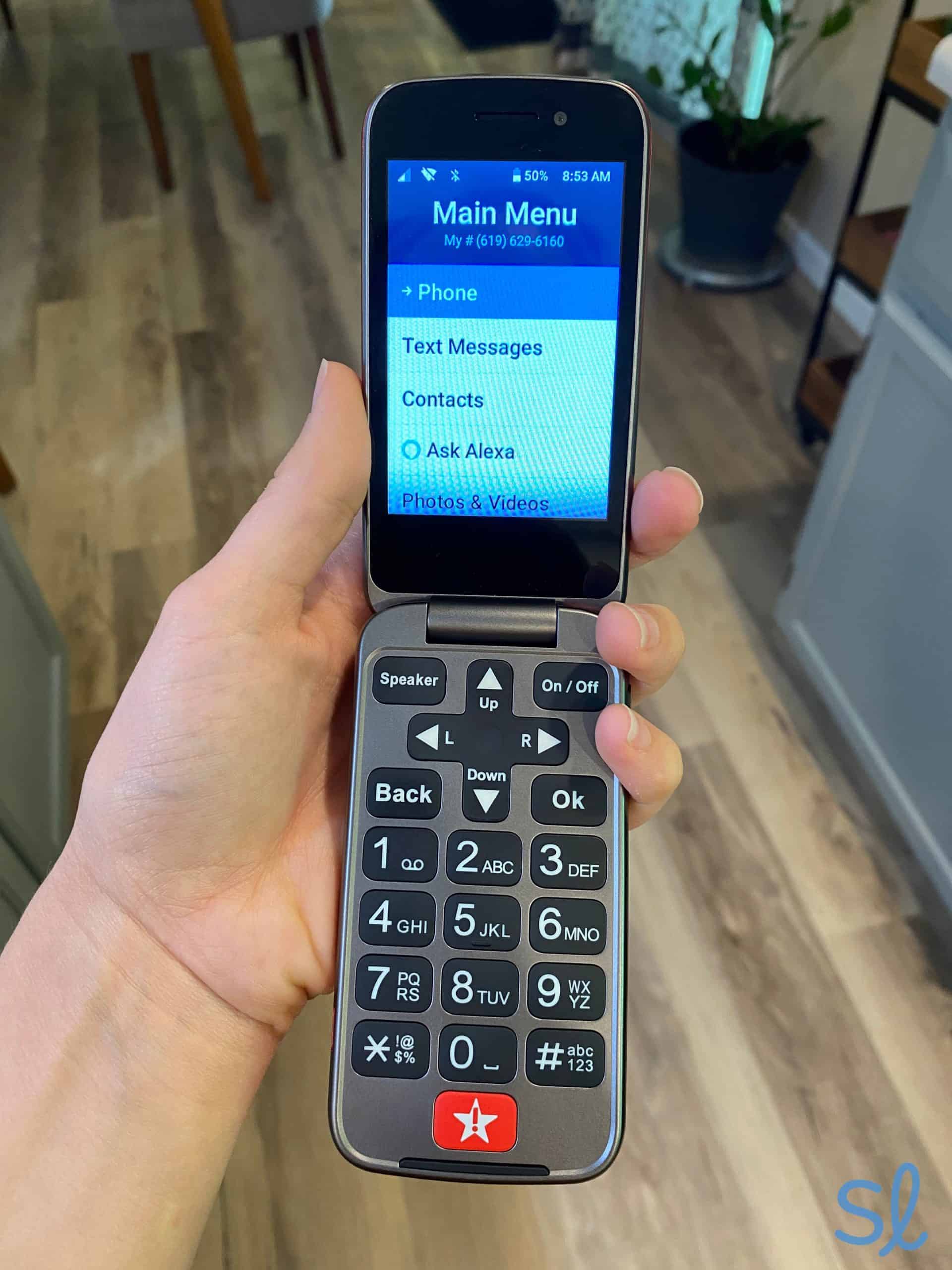
I found that the Jitterbug Flip2’s design is simple and practical. Along with its useful features, the flip phone doubles as a medical alert device. Lively has a team of agents who can send help after a fall or emergency 24/7.
» Dive Deeper: Jitterbug Flip2 Review
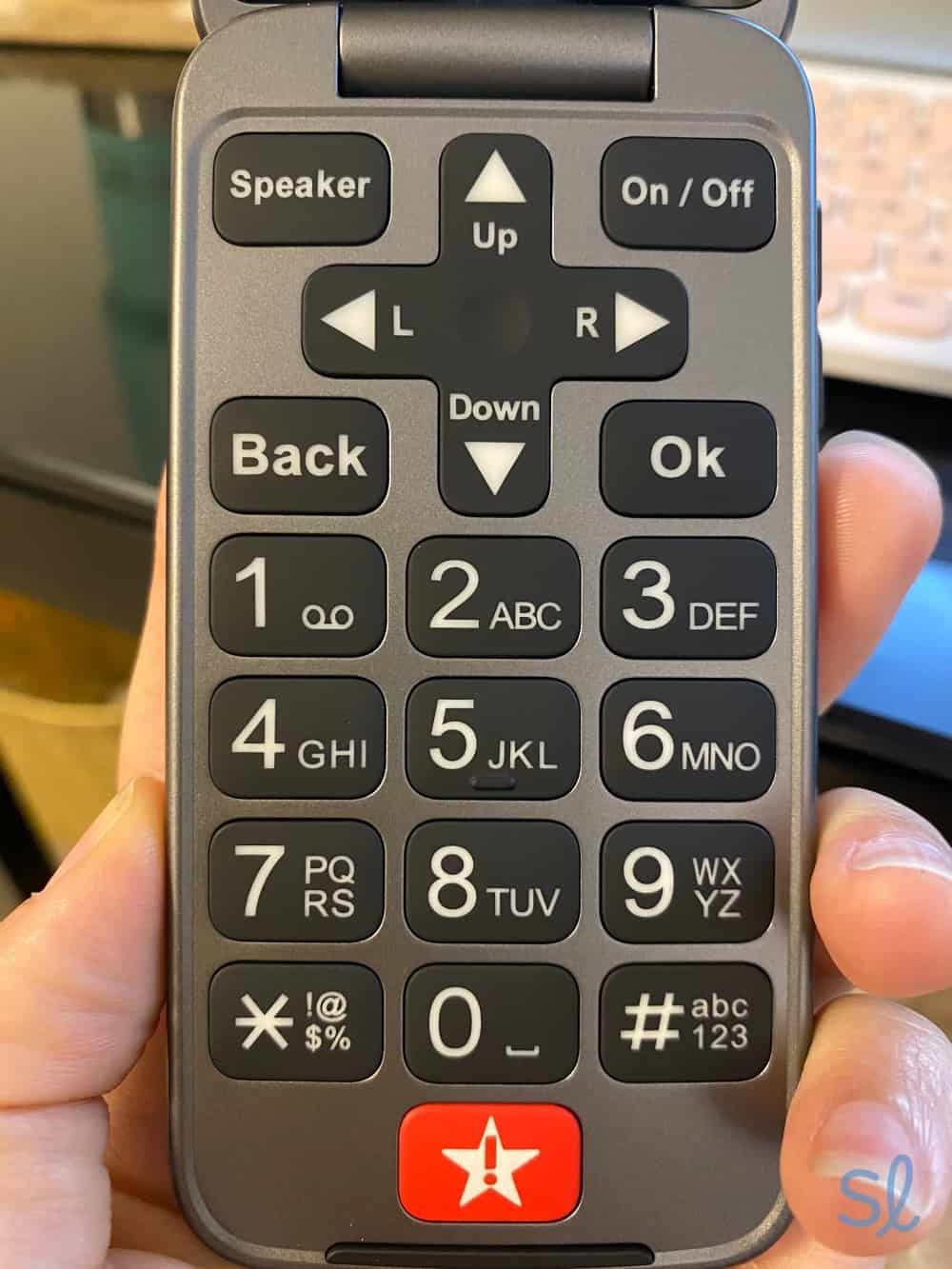
I pressed the large Urgent Response button on the keyboard. After 15 seconds, I was connected to a helpful agent. People with hearing loss are at higher risk of falling, so medical alert features like this are important.2
That’s just one of the many health and safety features the Jitterbug Flip2 offers. There are also on-call nurses, concierge services, and caregiver tracking through the Lively mobile app. The features are unique; you won’t find them with the other carriers on our list. You’ll also find them only with Lively’s Preferred and Premium phone plans.

The Lively Flip keypad and Urgent Response button
The Jitterbug Flip2 is very easy to use for most older adults. It may not have all the bells and whistles of a smartphone like the iPhone 15, but that's kind of the point. Unlike the TCL FLIP Go, the Jitterbug Flip2 is specifically designed to meet the needs of seniors.
Pros & Cons:Pros About Jitterbug Flip2 from Lively
- Loud speaker
- Hearing aid compatibility rating M4/T4
- Standard headphone jack
- Doubles as a medical alert device with certain plans
- Large buttons
- Intuitive menus
Cons About Jitterbug Flip2 from Lively
- Speaker quality could be improved
- Cannot use apps to control hearing-aid settings
- Relatively few sound-customization options
Our Hands-on Experience:Hearing-Aid Compatibility
The Jitterbug Flip2 has M4/T4 hearing-aid compatibility, which is the highest possible rating. That means you can use virtually any Bluetooth-ready hearing aid with the device. The Jitterbug Flip2 is one of the only phones with an M4/T4 rating on our list (along with the TCL FLIP Go). That makes it an excellent choice for people who use the telecoil settings on their hearing aids or prefer using their phone in microphone mode.
Pro Tip: Find out why the Lively Flip2 made our list of the best flip phones for seniors!
I tested the Jitterbug Flip2 with MDHearing’s Neo XS hearing aids, and it performed admirably. The simple list-style menu made it easy to set up the hearing aids via Bluetooth. My grandma was impressed that the sound came through without any problems.
I liked that, unlike the iPhone 16e and iPhone 15, the Jitterbug Flip2 has a standard 3.5-millimeter headphone jack, which means I could listen to music using wireless hearing aids or wired headphones.
» Related Reading: MDHearing Review
Speaker Quality and Sound Customization
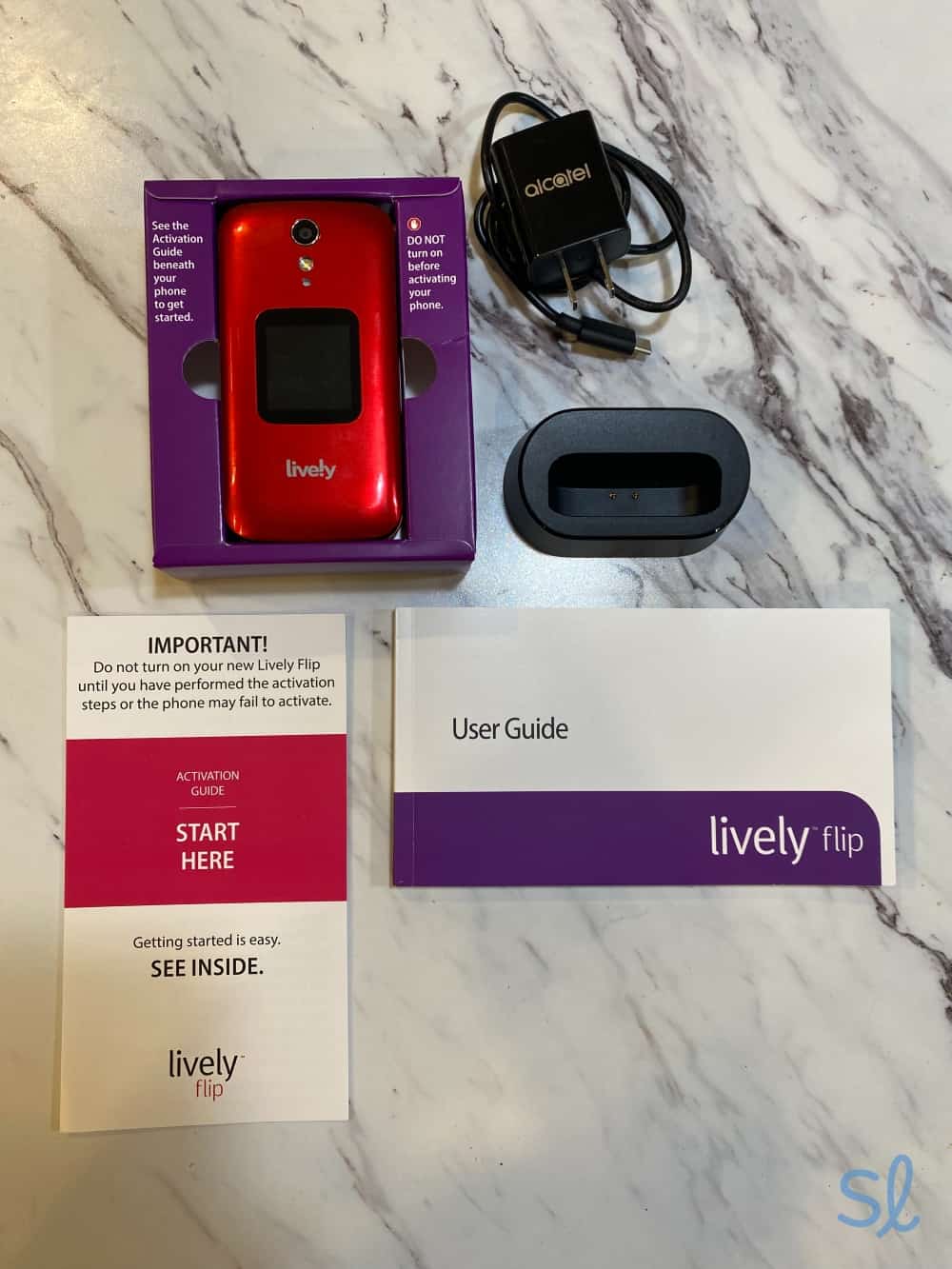
The Lively Flip arrives in simple, easy-to-open packaging
The speaker on the Jitterbug Flip2 is loud, but we experienced issues with clipping. My grandma complained that the audio would often sound muffled or distorted when things got too loud. She had to adjust the volume level constantly to hear things clearly.
Fortunately, adjusting the volume is as easy as clicking the up and down arrows on the keypad. The sound distortion usually occurred when there was background noise or when I tried to speak more loudly on the call.
The Jitterbug Flip2 has built-in RTT support, but you’ll need a separate device if you want to enjoy TTY features. I could easily use voice-to-text and text-to-voice communication, but I couldn’t enjoy live captions, transcriptions, or other features that can be extremely useful for hearing-impaired seniors.
Pricing
The Jitterbug Flip2 retails for $79.99, plus shipping and activation fees. Lively's talk and text plans start at $19.99 for unlimited minutes and texts, or $14.99 per month for 300 minutes of talk and 300 texts. You can upgrade to a plan with more health and safety features, with prices ranging from $39.99 to $49.99 per month.
Lively highly recommends adding one of those plans because it allows older adults to use the medical alert feature, which covers you in emergencies when you may need to call for medical help. The health and safety features gave me peace of mind knowing my grandma would quickly receive help after a fall or other emergency, even if she was by herself.
» For More Data: Best Senior Unlimited Cell Phone Plans
Check out the video below to learn more about our experience with the Jitterbug Flip2.
-
3. Jitterbug Smart4 from Lively - Best smartphone for hearing-impaired seniors
What we like most
- Costs $119.99
- M3/T4 compatibility rating
- Crisp, clear speaker
Overview:
Trying out the Jitterbug Smart4 smartphone
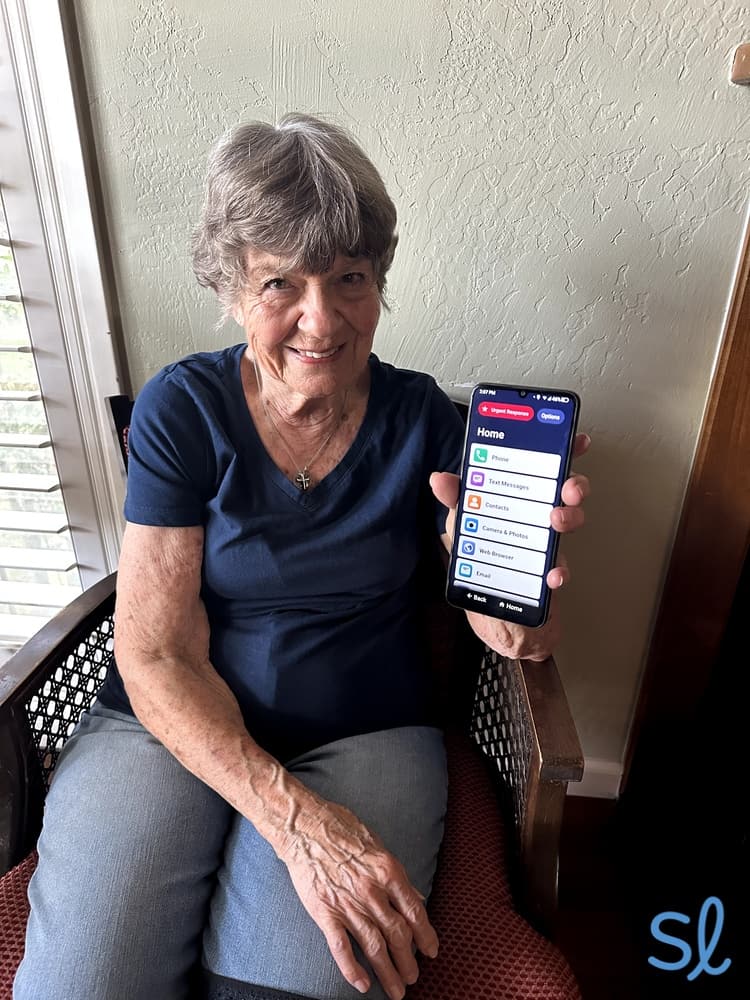
The Jitterbug Smart4 is a smartphone designed specifically for older adults. With a large display, front-facing speakers, and an affordable price tag, seniors with hearing loss can get everything they need without breaking the bank. Similar to the Jitterbug Flip2, I could use the phone as a medical alert device, thanks to the Urgent Response button.
The Jitterbug Smart4 is a simple yet powerful device packed with health and safety services. If you’re looking for some added protection and you don’t want a traditional medical alert system, the Smart4 is a great alternative. The phone offers a list-style menu and simple interface that make staying connected a breeze. My grandma could navigate the phone without any instruction.
» Learn About: Best Medical Alert Systems in 2026
Pros & Cons:Pros About Jitterbug Smart4 from Lively
- M3/T4 hearing-aid compatibility rating
- Headphone jack
- Voice typing
- Large 6.75-inch screen
- Reasonably priced talk, text, and data plans
- Video chat
Cons About Jitterbug Smart4 from Lively
- Internet connection may be a bit slow
- Limited sound-customization options
Our Hands-on Experience:Hearing-Aid Compatibility
The Jitterbug Smart4 has M3/T4 hearing-aid compatibility, which is a small step down from the Jitterbug Flip2's M4/T4 rating. Nonetheless, as long as your hearing aids are Bluetooth-ready, they will likely work with the Jitterbug Smart4.
Even if you have basic hearing aids that are not Bluetooth-enabled, there's a chance you can connect them to the Smart4 and other smartphones. You'll just need to contact the manufacturer to learn how.
My grandma and I tested the Jitterbug Smart4’s hearing-aid compatibility with Jabra Enhance and MDHearing devices. Since the Jitterbug Smart4 runs on Android operating systems, you can download apps to help you connect your hearing aids via the Google Play Store. You can also try to connect your hearing aids directly via the Bluetooth settings. We found both options pretty straightforward, and the sound quality was great with both hearing-aid models.
» Also Check Out: Best Android-Compatible Hearing Aids
Speaker Quality and Sound Customization
The front-facing speaker on the Jitterbug Smart4 is loud and clear. The sound isn't quite as clear as the iPhone's speakers, but it still has ample volume and crisp audio. That made it easier for my grandma to enjoy calls and music, with or without her hearing aids.
One downside to the Jitterbug Smart4 is the lack of audio-customization options. Unlike the iPhones on this list, the Jitterbug Smart4 doesn't have the option to identify familiar sounds in your environment or ensure the right and left speakers deliver the same sound.
Like the Jitterbug Flip2, it also lacks built-in TTY support. It has live captioning, however, which is a great way for deaf or hearing-impaired seniors to get audio-to-text captioning while making calls or watching videos.
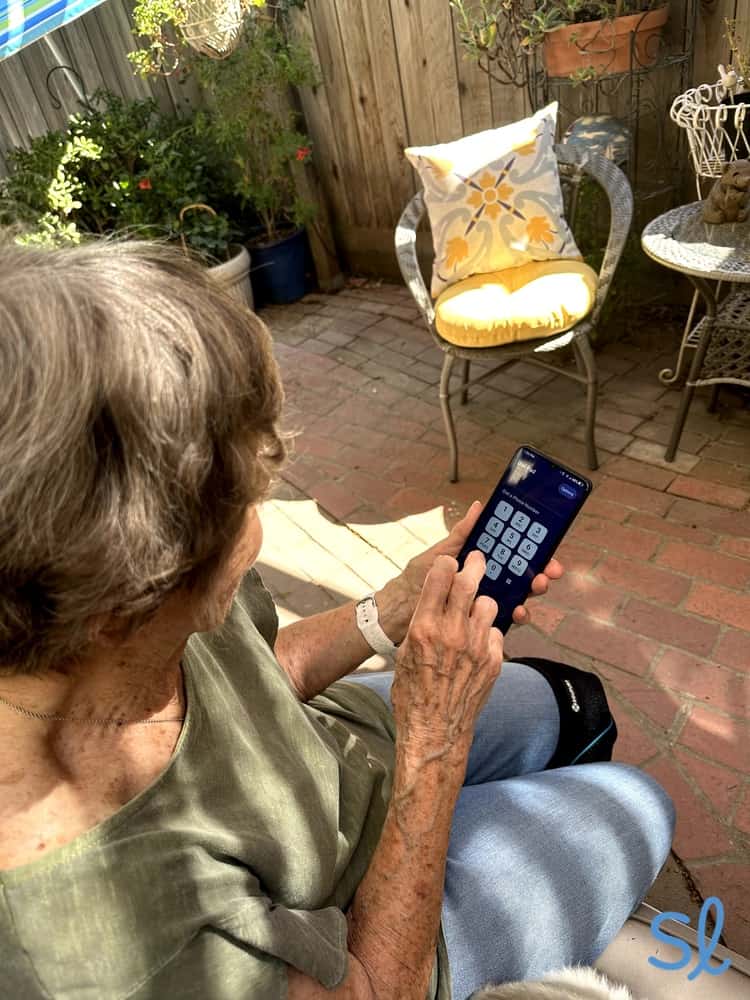
Making a call on the Jitterbug Smart4
Pricing
The Jitterbug Smart4 costs $119.99, plus monthly plan and activation fees. Monthly costs will vary depending on the plan you choose. Lively's phone plans range from $19.99 to $49.99 per month. You must also add a data plan, which starts at $5 for 5 GB and goes up to $30 per month for unlimited data. (You can get 1 GB of data for free.) All in all, Lively's plan pricing is pretty budget-friendly.
If you want all the features the Smart4 has to offer plus unlimited data, things get pricey at $79.99 per month. For comparison, AT&T’s Unlimited 55+ plan starts at $40 for one line (with Auto Pay and paperless billing) or $70 for two lines. You’ll receive unlimited talk, text, and data with AT&T’s plan, but it doesn’t offer any health and safety features like Lively does. Along with assessing your budget, you’ll need to decide which features are most important to you.
» For Couples: Best two-line cell phone plans for seniors
-
4. TCL Classic from AT&T - Most affordable cell phone for hearing-impaired users
See Pricing Links to Att-promotions.comWhat we like most
- M4/T4 compatibility rating
- Flip phone design with smartphone features
- Affordable price
TCL Classic from AT&TSee Pricing Links to Att-promotions.comOverview:
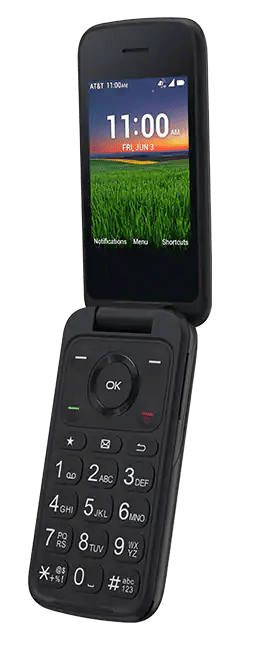
TCL Classic
The TCL Classic 4G flip phone from AT&T is one of my top picks for people with hearing loss who want an affordable, easy-to-use cell phone. At $74.99, it's one of the most inexpensive phones with an M4/T4 rating. It also has minimal extra fees and affordable monthly financing options.
Along with the budget-friendly price, the TCL Classic is easy to use. It has a large keypad, a simple menu, and shortcuts to your favorite mobile apps. It's also Bluetooth-compatible if you use Bluetooth hearing aids. Overall, the TCL Classic from AT&T is a good option for people with hearing loss who are on a budget.
» Related Reading: The Best Bluetooth Hearing Aids
Pros & Cons:Pros About TCL Classic from AT&T
- M4/T4 Rating
- RTT support
- Inexpensive phone
- Large keypad
- Affordable talk, text, and data plans with T-Mobile
Cons About TCL Classic from AT&T
- Speaker could be better
- 2MP camera won’t be as high quality as other options
Our Hands-on Experience:Hearing-Aid Compatibility
I’m a big fan of the TCL Classic’s M4/T4 rating. It’s the highest possible rating for hearing aid–compatible phones. The only other phone on our list with that rating is the Jitterbug Flip2. Whether you have mild or severe hearing loss, the phone should suit your needs.
I tested it with compatible hearing aids and had zero problems with the setup or overall sound quality. Like the Flip2, the TCL Classic has a 3.5-millimeter headphone jack, making it easier for seniors with hearing issues (but not necessarily hearing aids) to enjoy clearer audio through wired headphones.
Speaker Quality and Sound Customization
When it comes to budget-friendly phones, you often have to make some sacrifices. The TCL Classic is a great all-around phone. It’s perfect for seniors with hearing aids, but the speaker quality is not stellar. You can turn up the volume very high in the settings (not as convenient as the up and down arrows on the Jitterbug Flip2), but I experienced issues with clipping while testing the speaker.
It’s a pretty basic flip phone, so you don’t get much in the way of sound customization. You can change the volume, and that’s about it. The TCL Classic has built-in RTT support, however, so you can enjoy text communications during calls. If you need TTY or more enhanced audio capabilities, it may not be the best phone for you.
Pricing
The TCL Classic costs just $74.99, and with AT&T, you won’t pay a ton of extra fees. AT&T’s plan pricing is competitive with simple, affordable 55-plus Unlimited plans that are packed with perks such as 5G accessibility and 10 GB of hotspot data per line per month. Prices start at $40 per month for one line, which is a little cheaper than Consumer Cellular’s Unlimited for Ages 50+ plan.
» You Might Like: T-Mobile 55+ Plan Review
-
5. Apple iPhone 15 (Multiple Carriers) - Best Apple phone for hearing-impaired seniors
See Phone Links to Att-promotions.comWhat we like most
- Extensive accessibility features
- M3/T4 hearing aid compatibility
- Large screen
Apple iPhone 15 (Multiple Carriers)See Phone Links to Att-promotions.comOverview:
Testing the iPhone 15's accessibility features for hearing loss
As a long-term iPhone user, I know Apple makes it a breeze for people to stay connected even if they have hearing loss. The iPhone 15 supports RTT and TTY phone calls without the need for TTY hardware. If you have MFi hearing aids, you can easily personalize sound settings and have great conversations, even in loud places.
In addition to seeing alerts on the phone’s screen, Apple allows users to feel (via haptic vibration) whenever a call, text, email, calendar event, or other notification arrives. I could even turn on a bright LED light flash for my alerts in the phone’s accessibility settings. Those features are excellent for seniors with hearing loss who may not hear the phone ring or make an alert sound.
Pros & Cons:Pros About Apple iPhone 15 (Multiple Carriers)
- Hearing aid compatibility rated M3/T4
- Enhanced sound customization
- RTT/TTY support
- Easy-to-navigate interface
- 6.1-inch display
- Excellent sound and camera quality
Cons About Apple iPhone 15 (Multiple Carriers)
- No headphone jack
- On the pricey side
Our Hands-on Experience:Hearing-Aid Compatibility
The iPhone 15 has an M3/T4 hearing-aid compatibility rating, which is comparable to the iPhone 16e’s ANSI 2019 standard. You can connect your hearing aids via Bluetooth or, in some cases, via the manufacturer's mobile app. Either way, the iPhone 15 is a solid choice if you already have Bluetooth hearing aids and want a phone that will work with most models.
We tested the iPhone 15 with hearing aids from Jabra Enhance and MDHearing. My grandma and I were very pleased with the experience of setting up the hearing aids and testing the sound quality. The process was easy, since it can be done straight from the settings menu, just like with the iPhone 16e. My grandma never had any issues with the sound or connection quality.
» Related Reading: How to pair your hearing aids with your iPhone
Speaker Quality and Sound Customization
The iPhone 15’s speakers are excellent. It features two separate speakers — one on the top front and one on the side bottom. I could hear the speaker well from virtually every angle.
I could also do a lot of customization with the iPhone 15 by enabling RTT/TTY, live captions, headphone accommodations, background noise masking, mono audio, closed captions, and audio transcriptions. The features are all conveniently located in the iPhone’s Accessibility settings.

Using the iPhone's RTT/TTY settings
The one downside to the iPhone 15, iPhone 16e, or any recent iPhone model is the lack of a headphone jack. You can still connect headphones via Bluetooth, but there’s no option for wired headphones. If you’re a fan of traditional wired headphones or you use a separate TTY device, it’s something to consider.
Pricing
The iPhone 15 retails for $629 for 128 GB of storage from Apple and major carriers as of November 2025, so it’s only about $30 more than the iPhone 16e. Data and phone plan pricing will vary depending on which carrier you choose. You may find the iPhone 15 from your local Apple store or Apple's website, Best Buy, or carriers such as T-Mobile, Verizon, and AT&T. If you have an eligible phone to trade in, you may be able to get a reduced price on your new iPhone.
» Related Reading: Best senior cell phone plans
I appreciate the flexibility of being available from multiple carriers. The Jitterbug phones on our list, for comparison, are compatible only with Lively’s phone plans. That locks you into one carrier. If you already have a carrier you love, you can purchase an iPhone without switching plans.
Quick Tip: Shopping for a carrier? Don’t miss our cell phones for seniors buyer’s guide for a breakdown of the best cell phone carriers.
The iPhone 15 is a high-tech smartphone with a stunning design. I love that it has plenty of accessibility features, but it doesn’t come at the expense of usability. It’s easy to use and has a great speaker for people with hearing loss. Just keep in mind that it costs around $500 more than the Jitterbug Smart4 or iPhone 16e.
There are several newer iPhone models on the market, but I often recommend slightly older versions like the 16e or 15. They still offer all the accessibility features people with hearing loss need, but at a more affordable price point. The phone is still advanced, and it doesn’t feel outdated.
» Shop More iPhones: The best iPhones for seniors
What Should I Look For in a Cell Phone for Hearing-Impaired Seniors?
Seniors with hearing loss will need a cell phone that offers hearing-aid compatibility. That will ensure you won’t run into any issues with feedback and static when talking on the phone. If you only have mild hearing loss and you don’t wear hearing aids yet, still consider hearing-aid compatibility in case hearing aids become necessary in the future.
Below are a few other things to consider when shopping for a cell phone for people with hearing loss.
Loud Speaker
A quality, loud speaker will go a long way toward ensuring you can easily listen and chat with others on the phone. It’s very important if you are starting to have trouble hearing, but you don’t yet need hearing aids.
Large Screen With Bright Display
Not only is a larger screen easier on aging eyes, but it also provides a reliable way for seniors to communicate by text if they have difficulty hearing over the phone. If you or a loved one struggles with vision impairment, check out the best apps and resources for vision loss.
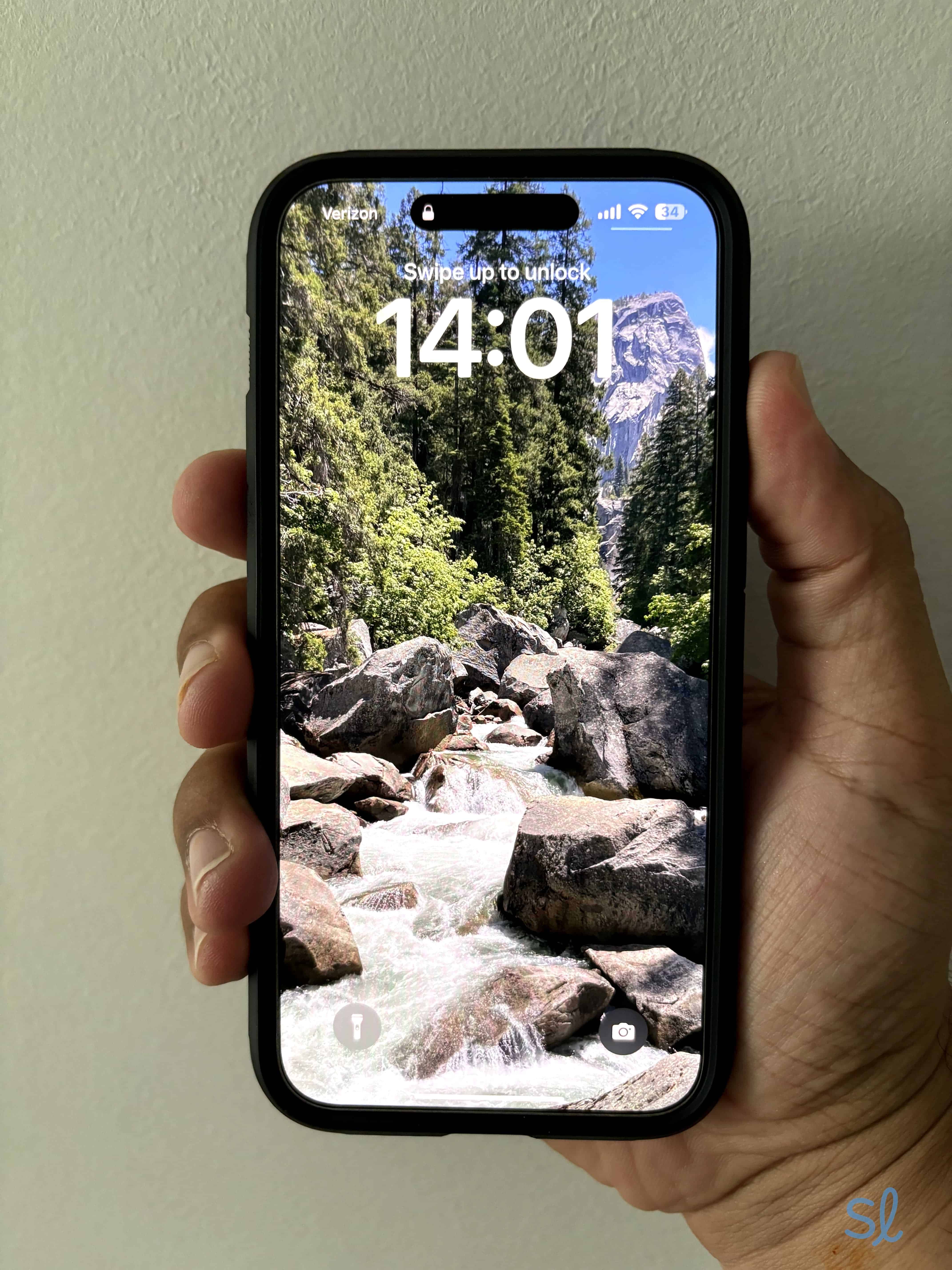
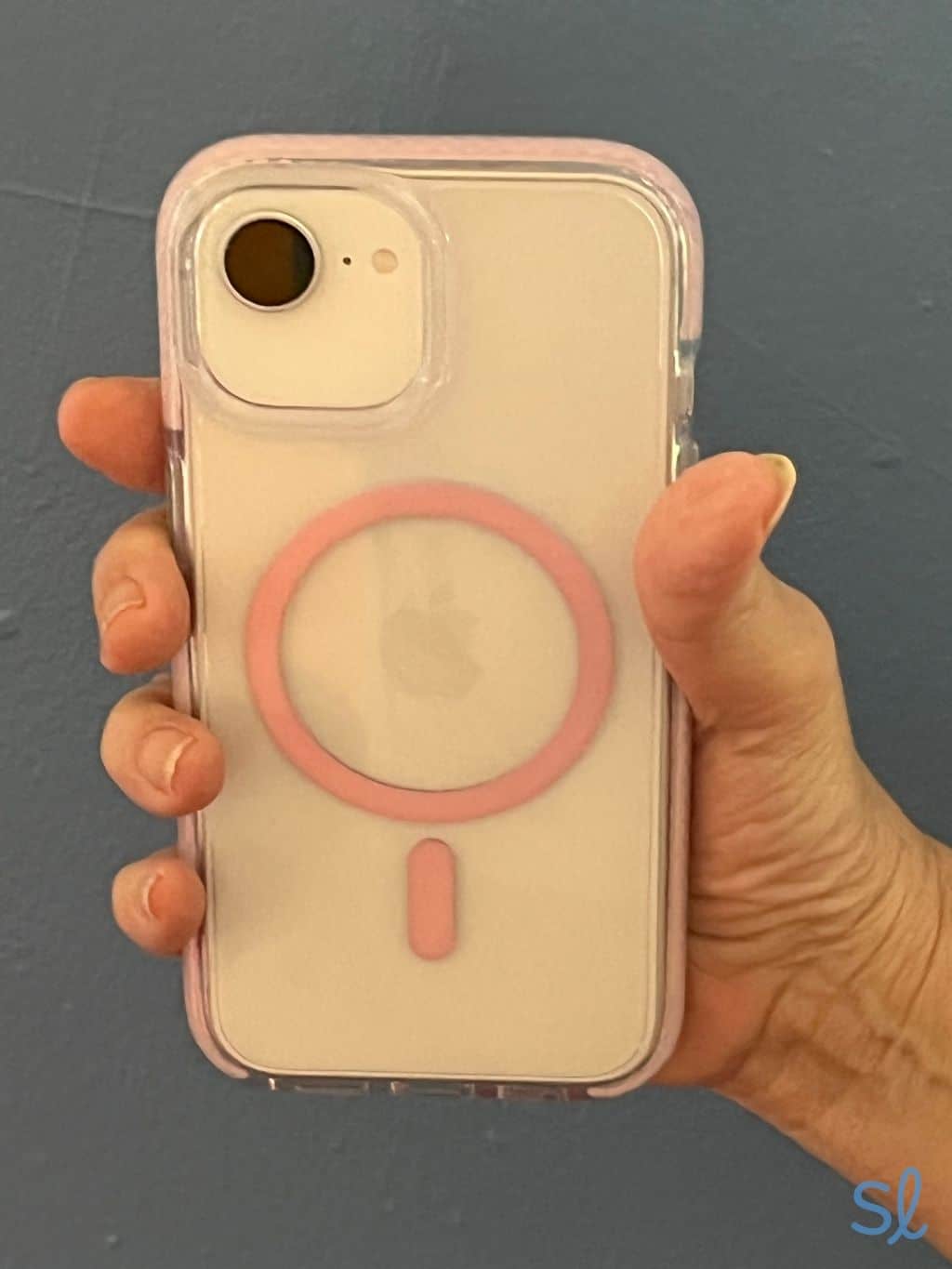
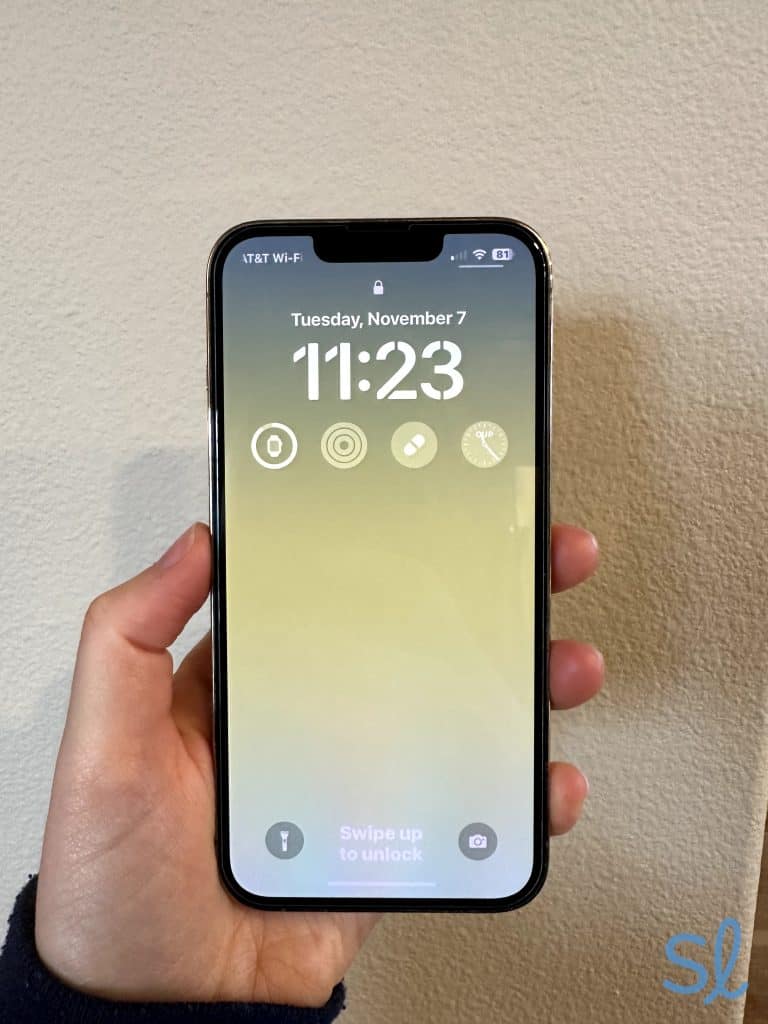
iPhones have bright, adjustable screens.
Long-Lasting Battery
Running out of power while you’re out and about should be the least of your worries. Using accessibility features can drain the battery faster, so a reliable battery is essential. Check out a phone’s estimated battery life before purchasing.
Durable Construction
Cell phones should be built to withstand everyday splashes and bumps so you can focus on more important things.
GPS Capability
If you frequently get disoriented or lost, GPS navigation will come in handy. It can provide turn-by-turn directions wherever you go.
Risk-Free Trial
When purchasing a cell phone, it’s a good idea to ask about the return policy and whether there is a free-trial period so you can test the phone without fully committing upfront.
Landline Phones for Seniors with Hearing Loss
Landlines are not nearly as common as they once were. Roughly 75 percent of American adults currently live in wireless-only households (i.e. no landlines)3 — this figure is up from about 41 percent in 20144 and 94 percent in 2004.5 However, landlines are still a simple and reliable option, particularly for seniors with hearing loss.
Landline phones typically have very loud speakers and compatibility with many hearing aid models. One of the biggest benefits of a landline is that it doesn’t depend on cellular service; the sound won’t cut in and out because you’re in a “dead zone.” Since the phone’s base unit is plugged into a phone jack in your home, the sound will remain much more consistent and is less likely to become distorted.
Did You Know? Nearly two-thirds of adults ages 71 and over have hearing loss, but less than one-third of these seniors use hearing aids.6
The downside is that you can’t take a landline anywhere. You might have a portable landline phone that will function as long as it’s within range of the base unit, but you can’t hop in the car and continue a conversation. For that, you’ll need a cell phone.
Additionally, landlines don’t offer texting, internet access, mobile apps, or the more advanced features that many older adults have become accustomed to with mobile phones, especially smartphones. It’s also important to consider that landlines require their phone plan, and prices and availability can vary by carrier.
In short, a landline may be a good option for seniors with hearing loss who are mostly or completely homebound, or those who simply want a reliable backup option while they’re at home. If you or a loved one are only interested in phone calls and don’t mind foregoing texting, apps, and all the features associated with mobile phones, a landline is a decent alternative.
More Cell Phone Resources for Seniors
If you’re looking for a certain type of cell phone or just want to compare all the options, check out our resources below. We’ve tested cell phones for many different needs:
- Best free phones for seniors
- Best cell phones for visually impaired seniors
- Best cell phones for seniors with dementia
- Best Android phones for seniors
- Best smartphones for seniors
- Best big-button cell phones for seniors
- Best cheap cell phones for seniors
- Best Samsung phones for seniors
- Best voice-activated cell phones for seniors
- Best unlocked phones for seniors
- Best VoIP phones for seniors
-
American Academy of Audiology. (2025). Seniors and Hearing Loss.
-
National Library of Medicine. (2023). Consistent hearing aid use is associated with lower fall prevalence and risk in older adults with hearing loss.
-
NCHS. (2022). Wireless Substitution
-
CDC. (2014). Two of every five U.S. households have only wireless phones
-
BLS. (2004). Household Telephone Service and Usage Patterns in the U.S. In 2004.
-
JAMA Network. (2023). Prevalence of Hearing Loss and Hearing Aid Use Among US Medicare Beneficiaries Aged 71 Years and Older.