Best Behind-the-Ear Hearing Aids, Tested and Evaluated by Audiologists
Jabra Enhance is our top pick for BTE hearing aids, thanks to their Bluetooth compatibility, solid value, and excellent follow-up care.


Our team of audiologists and tech experts tested the industry’s leading hearing aids to select our top picks for behind-the-ear models.
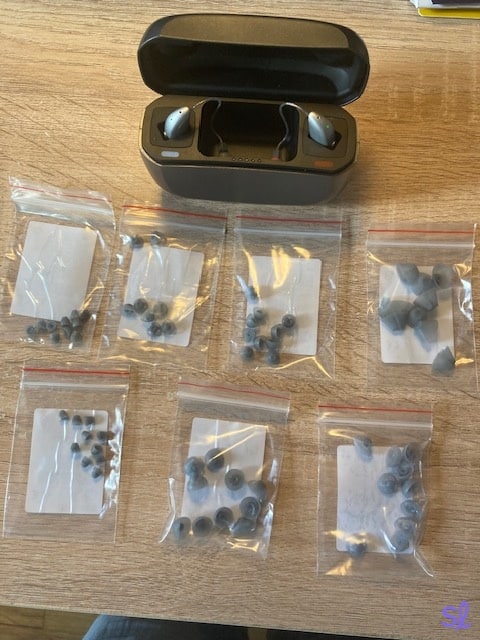
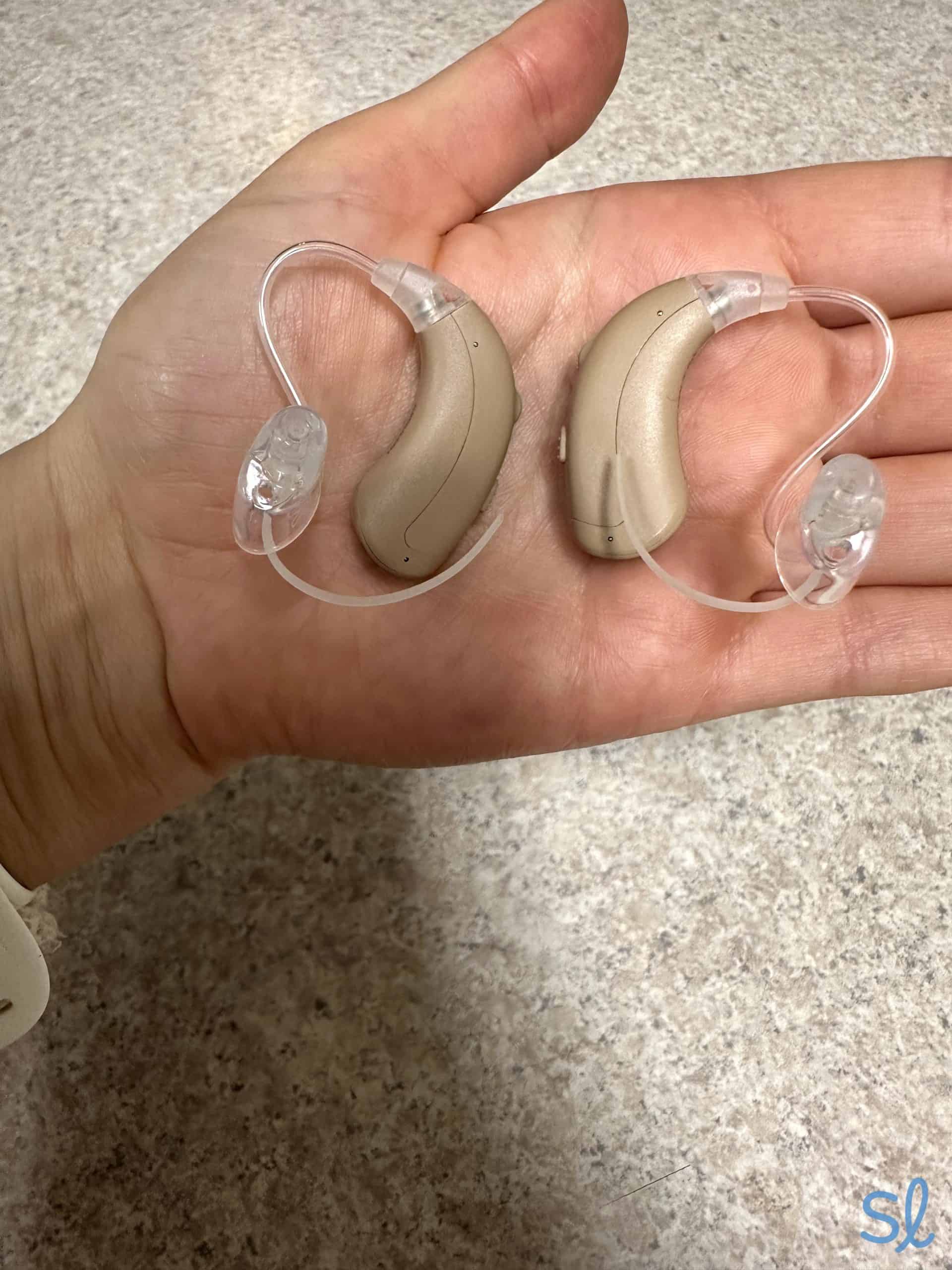
My Jabra Enhance Select 300 came with a wide variety of domes.
How We Tested the Hearing Aids
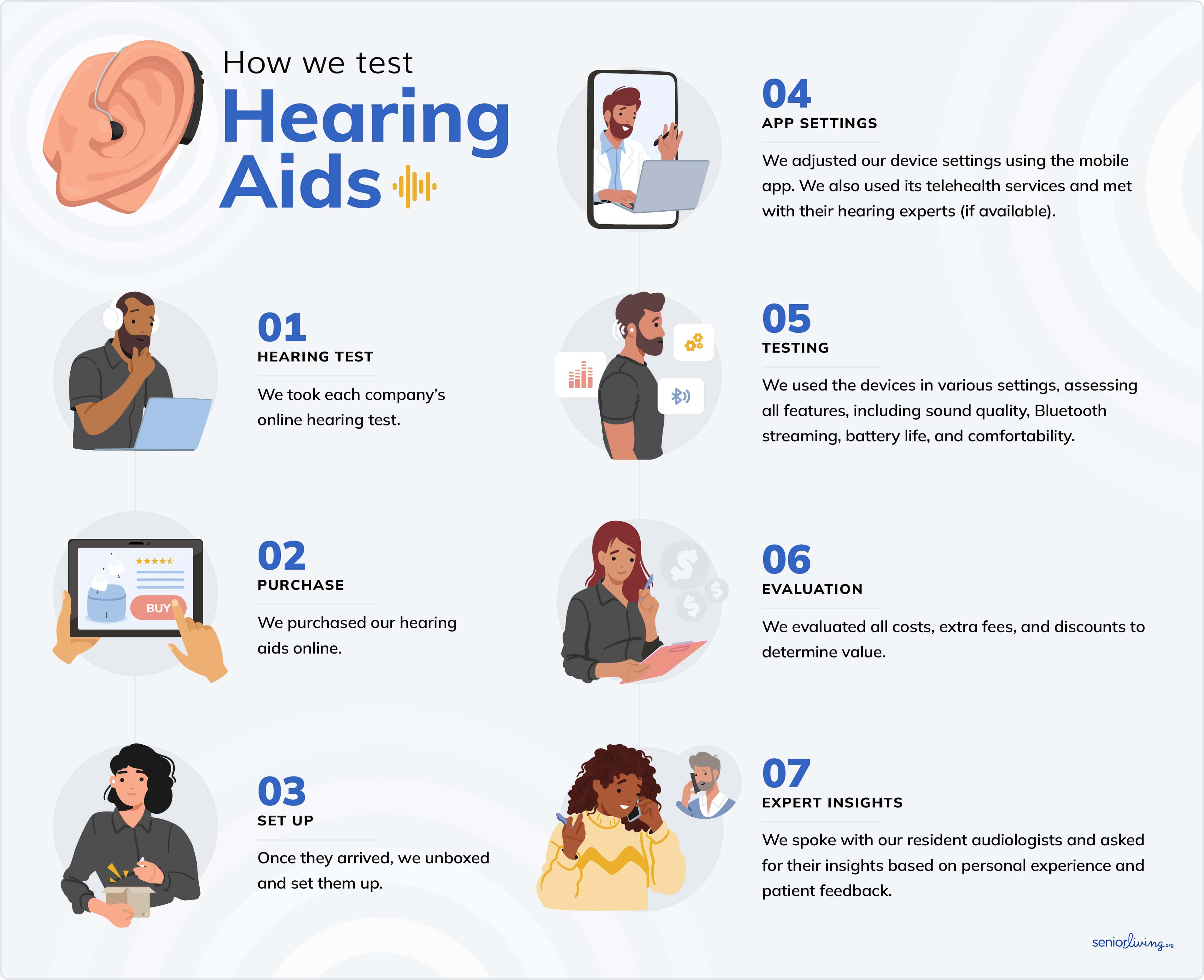
We spent over 150 hours conducting hands-on testing and research for popular BTE hearing aid providers. Here’s our testing process for the best OTC hearing aids ordered online without a prescription.
- We tried each brand’s online hearing test, comparing our results to in-person evaluations from an audiologist.
- We selected our hearing aids and bought a pair online, evaluating the purchasing process. We considered price, value, seasonal promotions, additional fees, and upfront costs.
- Once the devices arrived, we followed the instructions to set them up. If the brand had a mobile app, we downloaded it and set it up. We evaluated the ease of use and steps required to get our BTE hearing aids up and running.
- We contacted customer service several times to evaluate support quality by phone, mobile app (if applicable), and online chat.
- Our team tested each hearing aid for a week, using the devices at home, in noisy environments, and during one-on-one conversations (in person and over the phone). We evaluated features, sound quality, and ease of use in each location.
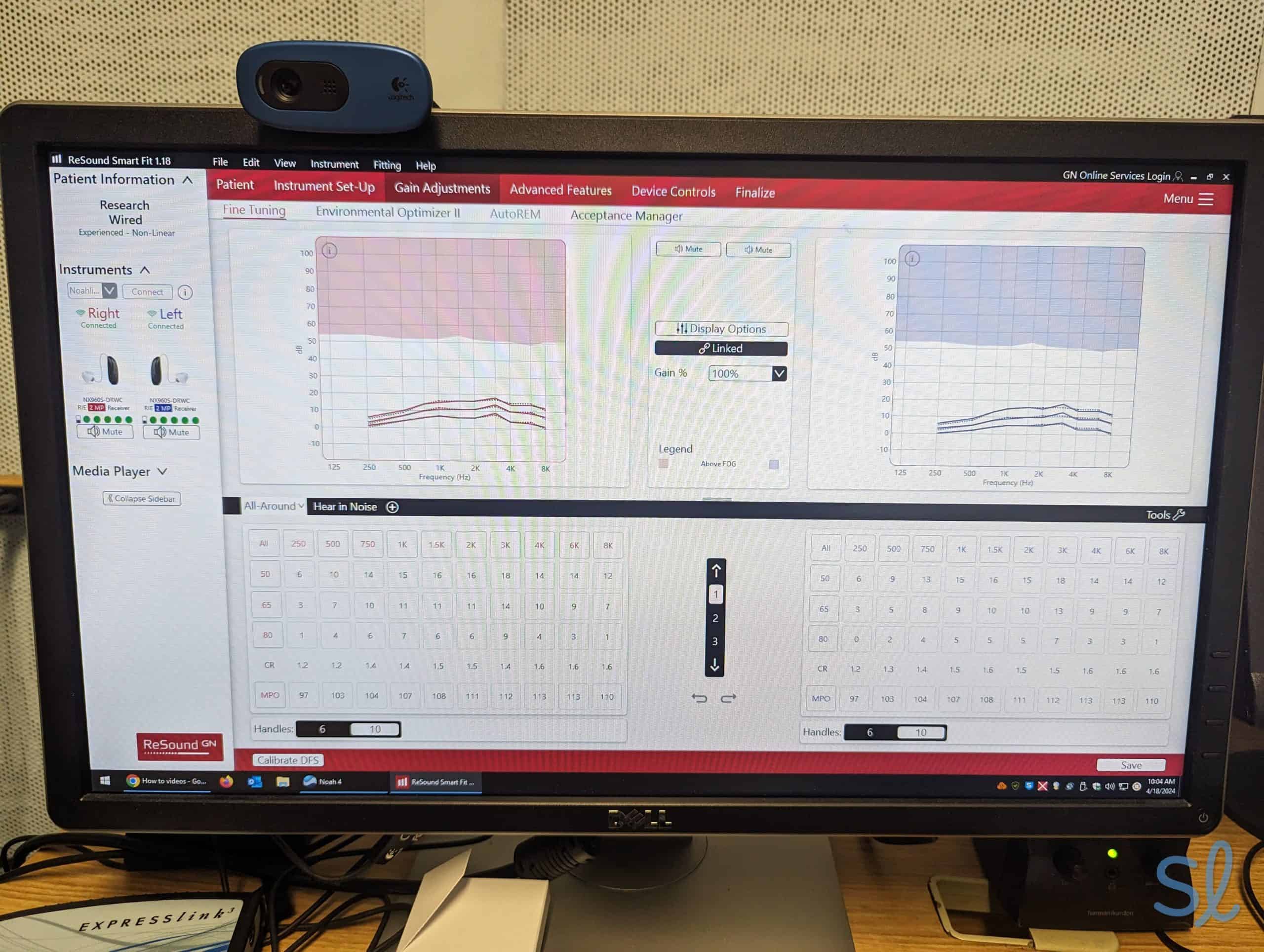
For prescription hearing aids that can’t be ordered online, such as Signia and ReSound, we spoke with Dr. Reisman about her expertise with each brand. We used her experience prescribing and testing hearing aids, as well as patient feedback, to evaluate and rank them.
How We Chose the Best Hearing Aids
Our tech team and resident audiologist, Dr. Ruth Reisman, narrowed the search by comparing popular BTE hearing aids side by side based on several criteria. We considered factors like:
- Comfort: Since BTE hearing aids rest behind the ears, with a tube that places the receiver in your ear, comfort matters for all-day wear. We tested dozens of hearing aids to find which providers and models offer the most comfortable fit.
- Size: BTE hearing aids tend to be larger and more noticeable than in-canal alternatives, but size can still be a deciding factor. Larger devices are less discreet, while smaller devices might be easier to misplace. We included top providers offering BTE hearing aids in multiple styles and sizes.
- Performance: Sound quality is critical. BTE hearing aids often include the best tech and microphones, though sound quality can vary substantially. Every provider on this list offers hearing aids with superior sound quality and performance.
- Price: While OTC hearing aids have lowered the barrier to entry, cost remains a major factor. Hearing aids can be an expensive investment, and budgets differ. Our team evaluated a wide range of BTE hearing aids — from budget models to top-of-the-line devices.
- Additional features: While some older adults prefer simple hearing aids for conversation, others want the latest features. We researched providers offering beneficial features, including Bluetooth streaming, rechargeable batteries, remote audiologist support, tinnitus management, and companion mobile apps.
Why Trust Us
Our team of tech experts tries the latest gadgets for older adults each year. We’ve logged hundreds of hours testing and reviewing hearing aids from dozens of providers.
We also worked extensively with our resident licensed audiologist, Dr. Ruth Reisman. She has personally tested and prescribed hearing aids from providers on this list. She helped us choose the best BTE hearing aids, offered feedback on specific providers and models, and approved our top picks. Dr. Reisman has over 15 years of experience working with seniors with hearing loss.
SeniorLiving.org is supported by commissions from providers listed on our site. Read our Editorial Guidelines

- Prices start at $1,195 per pair
- Multiple behind-the-ear models
- Three years of follow-up care

- Prices start at $297 per pair
- Behind-the-ear and in-ear models
- Lifetime support from hearing specialists

- Prices start at roughly $2,000 per pair
- Behind-the-ear and in-ear models
- Lifetime support from customer care team

- Options for all levels of hearing loss
- State-of-the-art devices and features
- Custom hearing aids
Contents
Key Takeaways
- We chose Jabra Enhance as our top behind-the-ear (BTE) hearing aid for their excellent Bluetooth streaming, user-friendly mobile app, and three years of audiologist support.
- The cost of BTE hearing aids varies substantially between OTC and prescription models. Expect to pay between $300 and $2,000 per pair for OTC hearing aids or about $2,000 to over $8,000 per pair for prescription hearing aids.
- Among adults ages 60 and older with hearing loss, approximately 84 percent pick BTE hearing aids as their preferred style.1
BTE, short for behind-the-ear, is one of the most common hearing aid designs on the market. It suits multiple levels of hearing loss. You can find BTE hearing aids at nearly any price point, making them accessible for most seniors. BTE models may not be as discreet as in-canal models, but they're often easier to adjust manually and may provide better sound quality and more advanced features.
Our team of senior tech experts and Dr. Ruth Reisman, a licensed audiologist and hearing aid dispenser, have tested and reviewed the best hearing aids to create our list of top BTE picks. We chose the hearing aids below based on comfort, size, performance, price, and additional useful features. After over 150 hours of research and testing, we selected Jabra Enhance as our top pick.
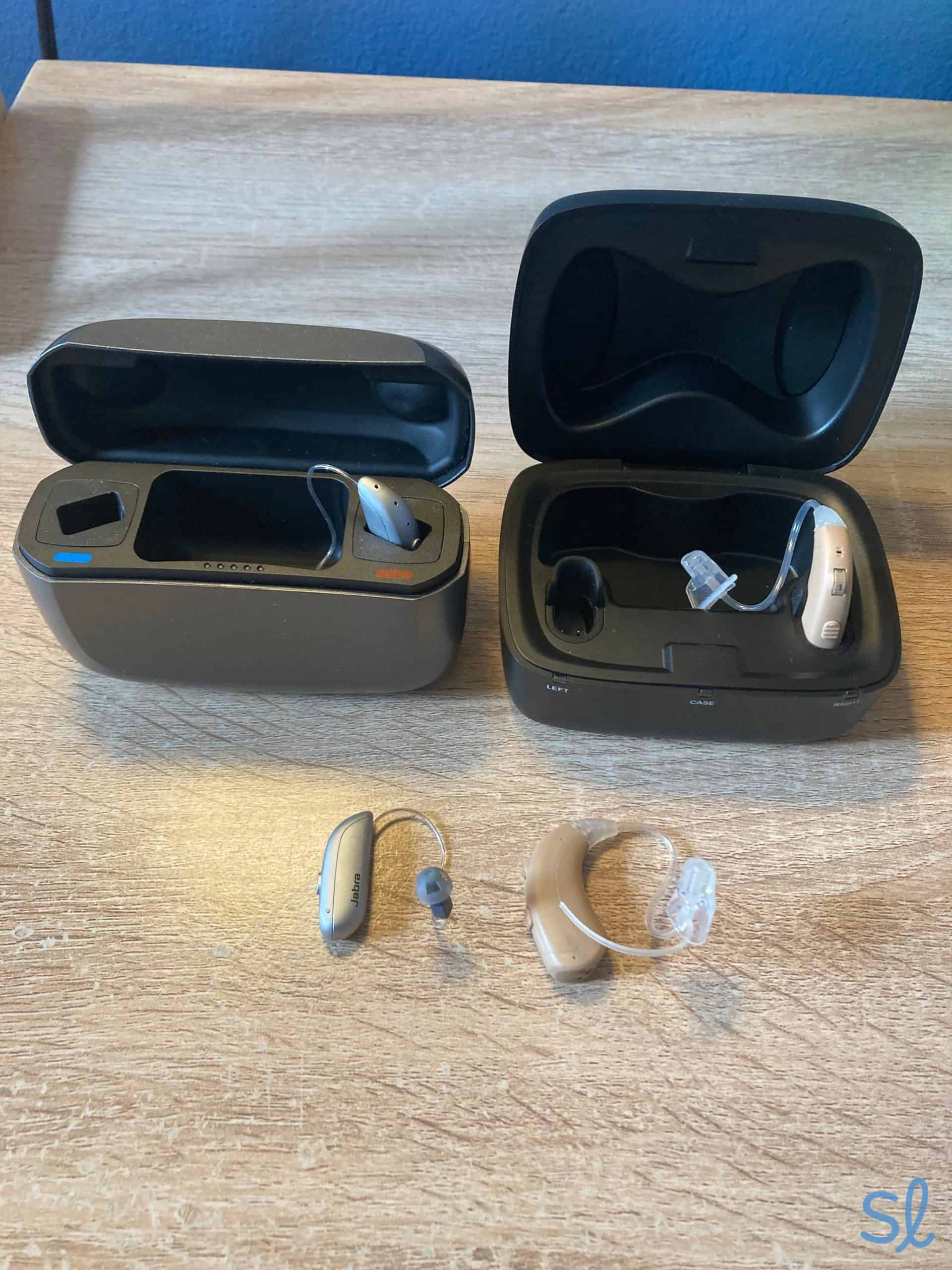
VOLT vs Jabra 300

Comparing the Best BTE Hearing Aids
|
Jabra Enhance
|
MDHearing
|
Signia
|
ReSound
|
|
|---|---|---|---|---|
| Rating | 4.8 | 4.4 | 4.4 | 4.4 |
| Starting price | Starting at about $1,195 per pair | $297 per pair | $2,000 per pair | $2,000 per pair |
| BTE models | 3 | 3 | 5 | 4 |
| Battery type | Rechargeable | Rechargeable | Rechargeable or disposable | Rechargeable or disposable |
| Rechargeable battery life | Up to 24 hours | Up to 20,hours | Up to 61 hours | Up to 30 hours |
| Warranty | 3 years | 1 year | 2 to 3 years (varies by model) | 1 to 4 years (varies by model) |
-
1. Jabra Enhance - Best for audio streaming
See Pricing Links to Jabra EnhanceWhat we like most
- Prices start at $1,195 per pair
- Multiple behind-the-ear models
- Three years of follow-up care
Jabra EnhanceSee Pricing Links to Jabra EnhanceOverview:
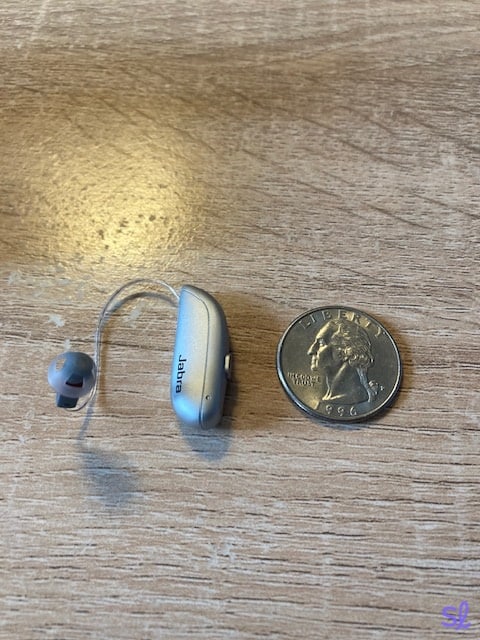
Jabra Enhance Select 300 hearing aids
All three of Jabra Enhance’s BTE hearing aid models offer direct Bluetooth streaming to compatible Apple and Android devices. We could stream music, videos, audiobooks, calls, and more from our phones directly to the hearing aids, even with the Enhance Select 50R, the brand’s most affordable model.
The Enhance Select 700 and Enhance Select 300 feature hands-free calling for iPhone 11 and newer models (and compatible Android devices for the Select 700). Not only could we hear the call in our hearing aids, but we could also speak to the caller through them. Jabra Enhance also sells a Phone Clip+ accessory for hands-free calling on other phone and hearing aid models. If you're a smartphone user, Jabra Enhance's lineup of BTE hearing aids offers better speech clarity and noise reduction, along with streaming phone audio.
» Related Reading: Best cheap hearing aids for seniors
Pros & Cons:Pros About Jabra Enhance
- Bluetooth streaming with all models
- Hands-free calling with some models
- Rechargeable batteries and high-tech accessories
- 100-day risk-free trial
- Three-year warranty and follow-up care
- Mobile app for easy adjustments
Cons About Jabra Enhance
- Not for severe or profound hearing loss
- Small product lineup
Our Hands-on Experience:Our Experience With Jabra Enhance
Our tech team tested the Enhance Select 300, the provider's mid-tier model. We found it a good option for seniors who want help in complex listening environments (restaurants, parties, etc.) without exceeding their budgets.
Jabra Enhance makes it easy for older adults new to hearing aids by offering them easy-to-follow instruction cards with its devices. Our tech team spoke with an audiologist to answer questions and remotely oversee the initial fitting.
We could also schedule unlimited audiologist appointments during the first three years of care. Those three years of audiologist support come in handy if you run into any issues. We found the audiology team knowledgeable, helpful, and patient.

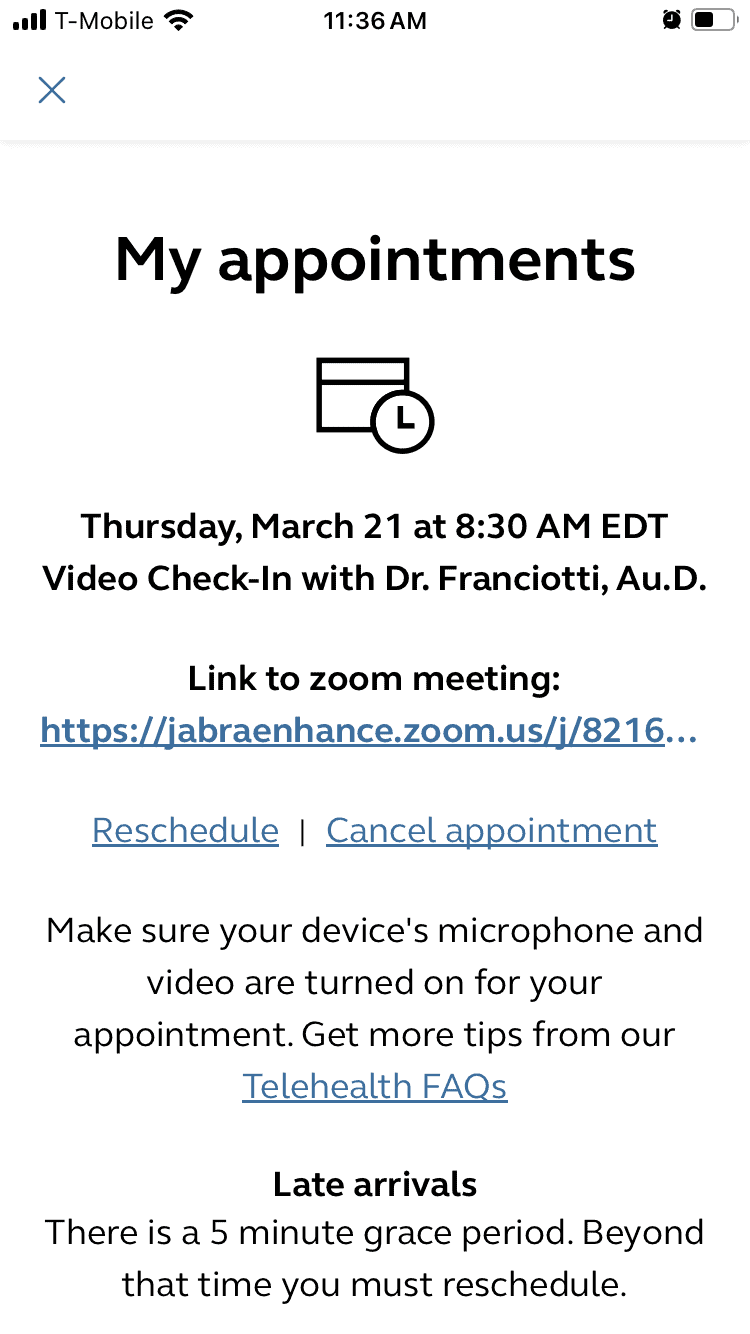
You can easily schedule an appointment with a Jabra Enhance audiologist through the mobile app.
Like MDHearing devices and many other BTE hearing aids, the Jabra Enhance Select 300 features buttons for direct adjustments. The right hearing aid can increase sound, and the left can decrease it.
However, our team thinks there’s a learning curve. You listen for the number of beeps the device makes as you press either button, allowing you to switch between programs such as “restaurants” and “outdoors.”
» Our Full Review: Jabra Enhance hearing aids review 2026
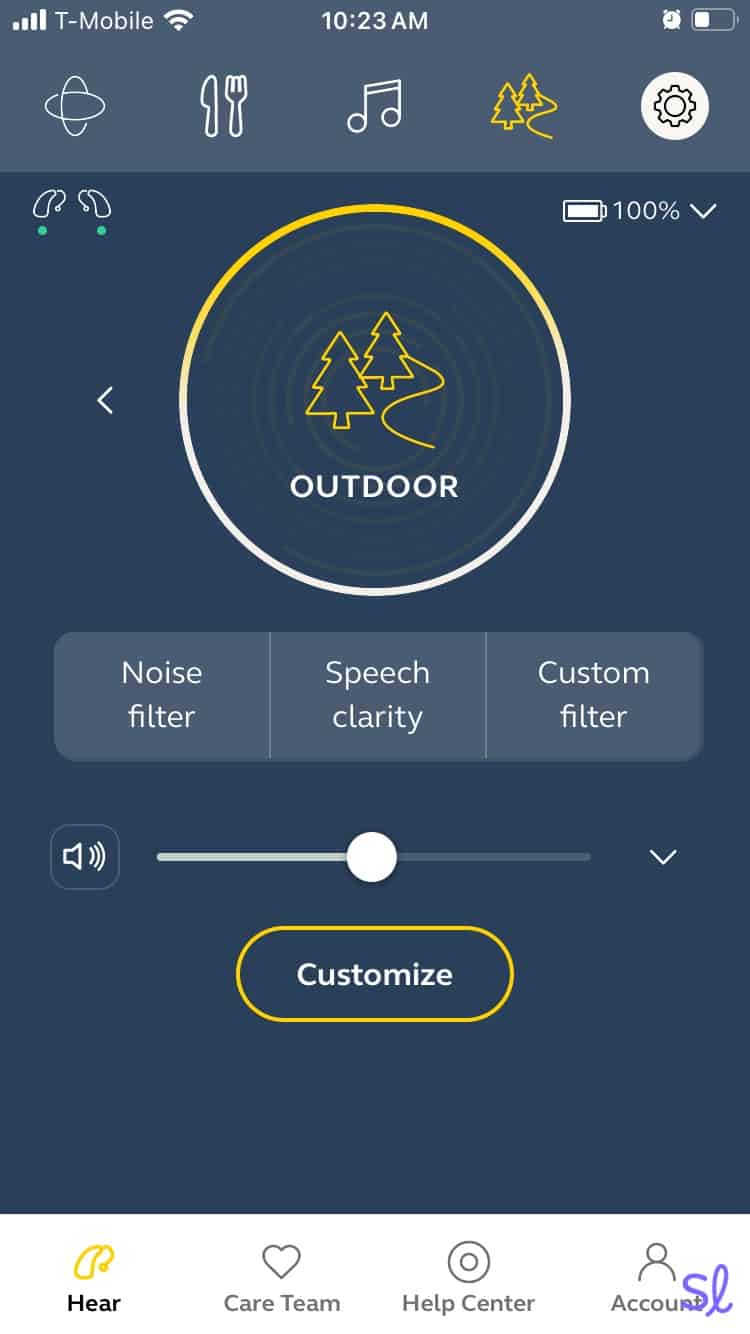
Fortunately, Jabra Enhance offers the Jabra Enhance mobile app. Users can make adjustments and connect the hearing aids via Bluetooth streaming. We found the Jabra Enhance app practical and easy to use, similar to Signia's.

Making adjustments using the Jabra Enhance mobile app
Pricing
You can get a pair of Jabra Enhance hearing aids for under $2,000 per pair. The Enhance Select 50R is $1,195 per pair, the Enhance Select 300 is $1,695 per pair with Premium, and the Enhance Select 700 is $1,995 per pair.
That puts Jabra Enhance, previously known as Lively, between premium in-office brands like Signia and budget online-only brands like MDHearing. Jabra Enhance hearing aids include three-year loss and damage protection and warranty, three years of follow-up care, and a free mobile app. Jabra Enhance also offers financing options.
-
2. MDHearing - Most affordable
See Pricing Links to MDHearingWhat we like most
- Prices start at $297 per pair
- Behind-the-ear and in-ear models
- Lifetime support from hearing specialists
MDHearingSee Pricing Links to MDHearingOverview:
Testing out MDHearing's VOLT devices
MDHearing offers three BTE and three in-the-ear (ITE) hearing aids. The BTE models include advanced features such as enhanced noise reduction and feedback cancellation. All models are available as singles or pairs, which other over-the-counter (OTC) providers (like Jabra Enhance) don't offer. Keep in mind that Dr. Reisman found that MDHearing's BTE options can over-amplify sounds. To avoid this, we turned the volume down as low as possible and slowly increased it until comfortable.
If you're unsure which model is best for you, MDHearing's customer service team can assist via phone, email, or online chat. Once you become a customer, you can access free lifetime support from licensed hearing professionals. If you're unsatisfied with your purchase, MDHearing has a 45-day risk-free trial.
» Our Full Review: MDHearing review in 2025
Pros & Cons:Pros About MDHearing
- Affordable prices
- 45-day risk-free trial
- Rechargeable devices
- Buy in singles or pairs
- Lifetime support from audiologists and hearing specialists
Cons About MDHearing
- No direct Bluetooth streaming
- BTE models can over-amplify sounds
- Not suitable for severe to profound hearing loss
Our Hands-on Experience:Our Experience With MDHearing
Our tech team tested the VOLT 4 model, the company's most popular (according to MDHearing) BTE hearing aid. To get started, we took MDHearing's free online hearing test, which can help determine if their hearing aids can accommodate your hearing loss level. Once we received the VOLT hearing aids, we were pleasantly surprised by the thorough instructions and tip cards for setup.
» A Deep Dive: MDHearing VOLT review
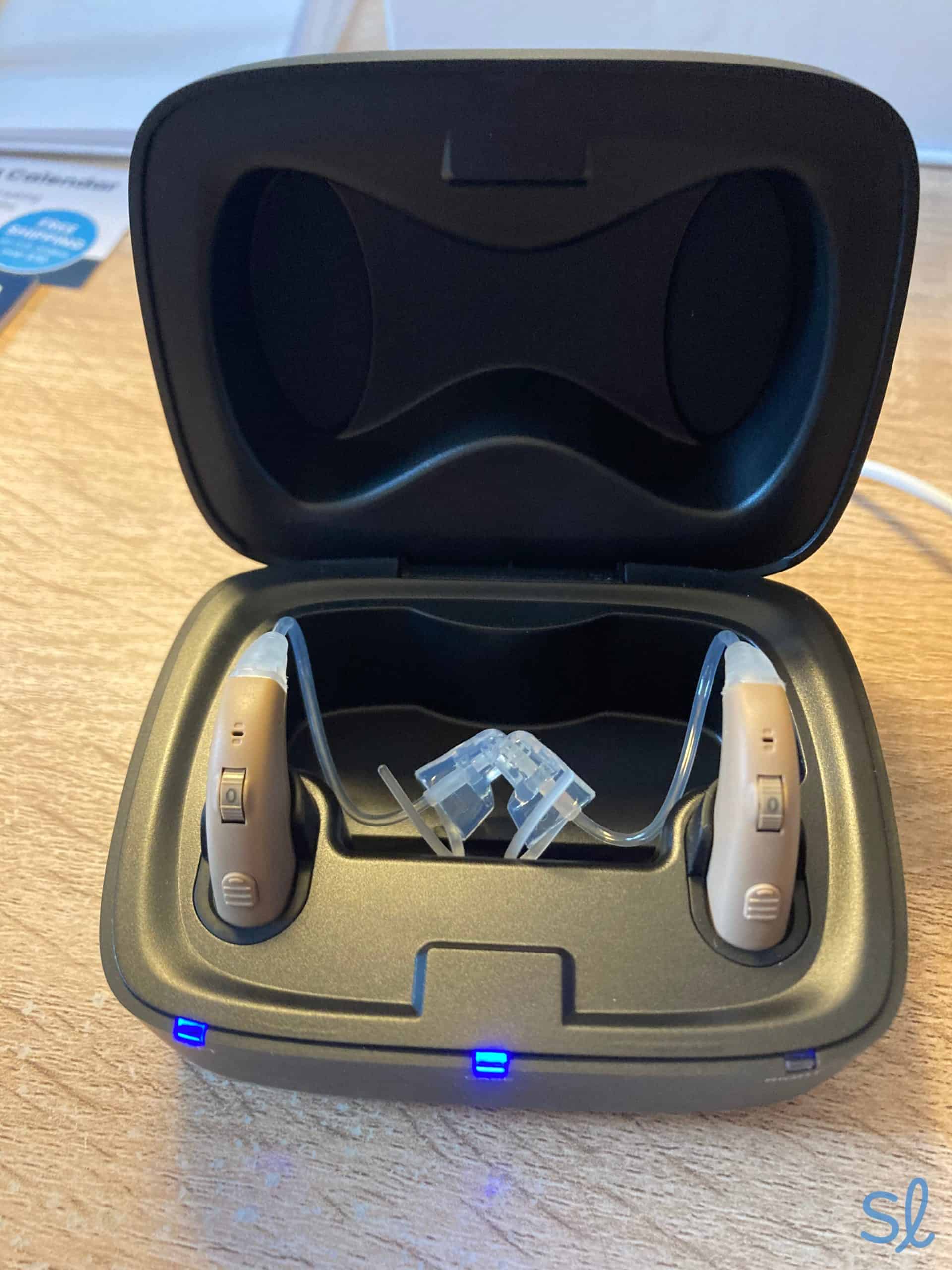
Charging the VOLT took less than two hours, and a single charge lasted about 20 hours. That isn’t quite as good as Jabra Enhance’s Select 300, which can last up to 24 hours on a single charge, but it's not bad for a pair of hearing aids costing less than $400.

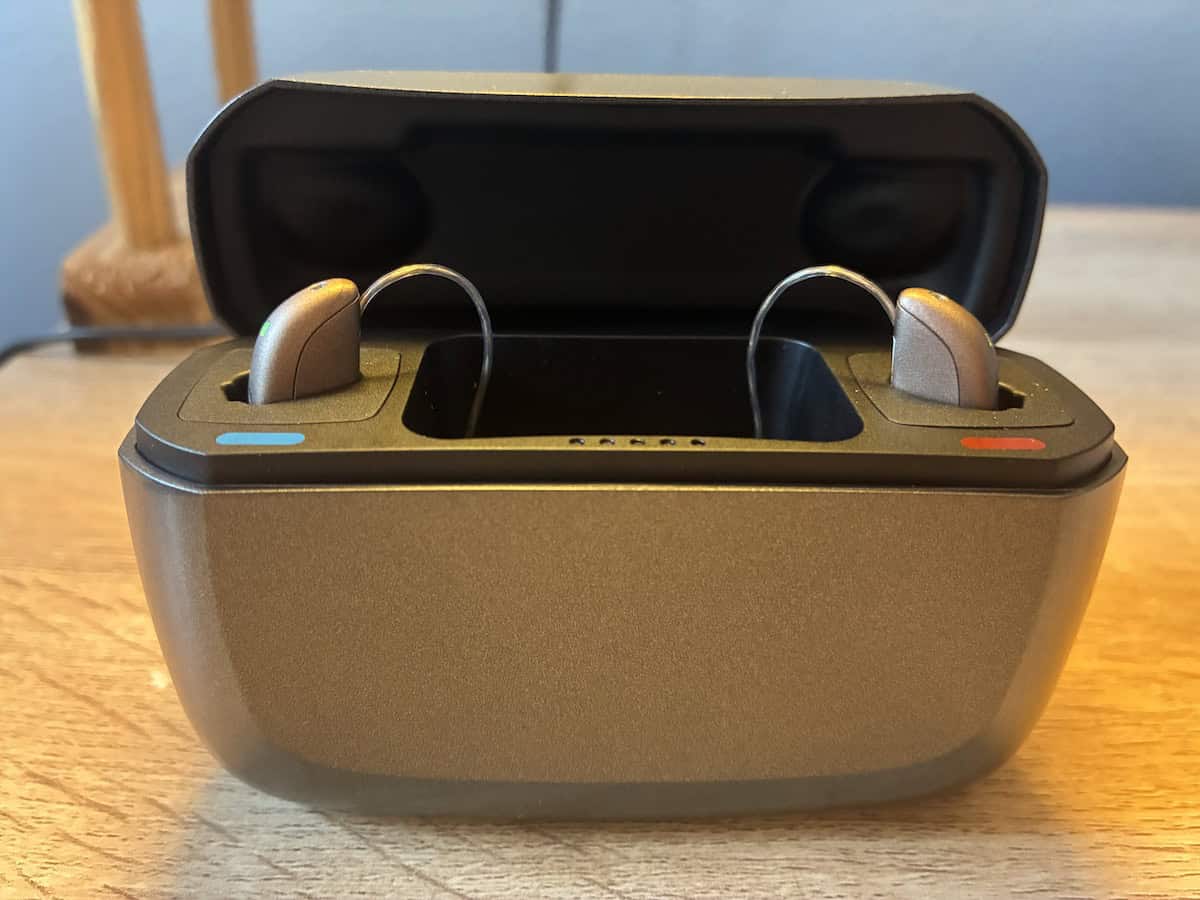
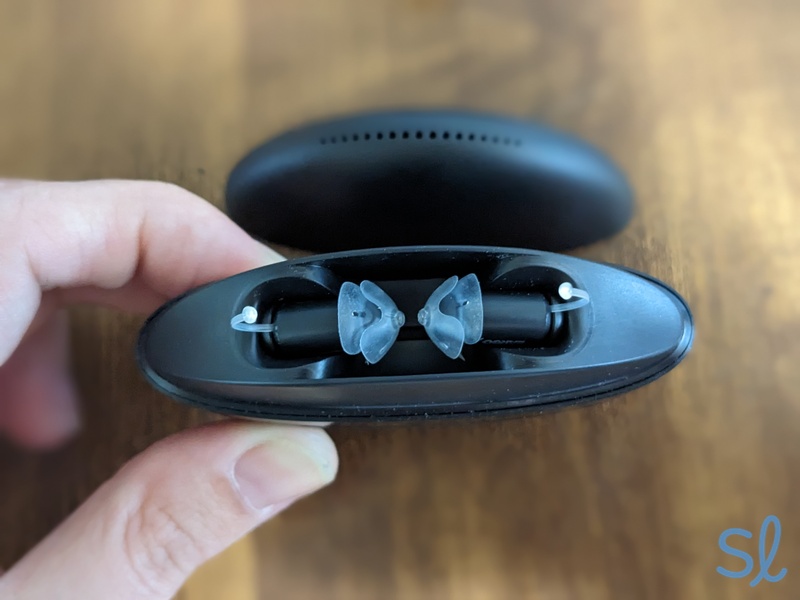
The MDHearing VOLT hearing aids are easy to charge, and a blue light indicates that they are charging.
Pricing
MDHearing's affordable prices are budget-friendly, and the hearing aids are always on sale. The NEO is typically $297 per pair, while the VOLT, VOLT MAX, and AIR models range from about $397 to $597 per pair, depending on promotions.
The company may not provide the same features and support as prescription hearing aids from Signia or ReSound, but they're a fantastic choice for older adults on a budget with mild to moderate hearing loss.
Did You Know? Of those aged 70 and above who could benefit from hearing aids, only 30 percent have ever used them.2
-
3. Signia - Most Innovative Designs
See Pricing Links to ZipHearing.comWhat we like most
- Prices start at roughly $2,000 per pair
- Behind-the-ear and in-ear models
- Lifetime support from customer care team
SigniaSee Pricing Links to ZipHearing.comOverview:
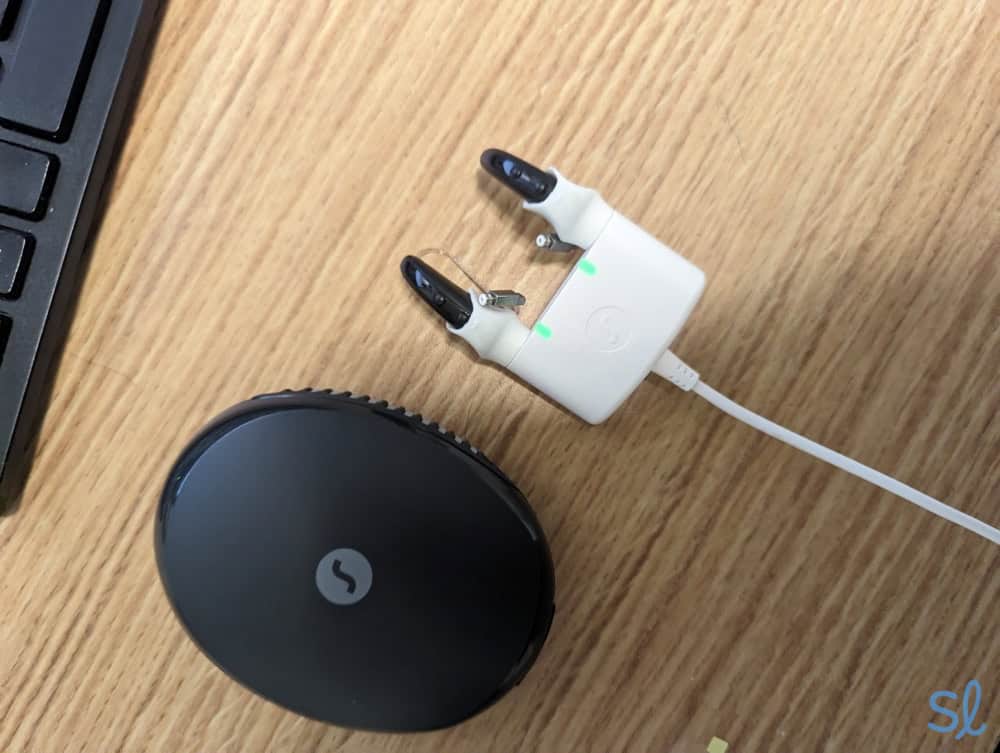
Charging a pair of BTE Signia hearing aids
Signia offers innovative prescription hearing solutions for all levels of hearing loss, including premium BTE options. Signia's recent Integrated Xperience (IX) line of BTE hearing aids delivers powerful performance on a single charge, direct audio streaming from iOS devices, and enhanced speech recognition. Like ReSound, Signia also offers excellent features to help manage tinnitus.
Signia hearing aids feature signature acoustic-motion sensor technology for better hearing while moving. This feature is ideal for older adults who love walking, running, biking, golfing, and staying active. Unlike MDHearing, Signia lets you choose from multiple colors to match your skin tone or hair color, ideal if you want a moderately discreet BTE model.
» For Tinnitus Management: Best hearing aids for tinnitus in 2026
Pros & Cons:Pros About Signia
- Several BTE models to choose from
- Integrated tinnitus therapy
- Fast charging
- Professionally fitted and programmed
- Bluetooth streaming to iOS
- Remote app control and wireless accessories
- Solutions for all levels of hearing loss
Cons About Signia
- On the pricier side
- Requires an in-office visit
Our Hands-on Experience:Our Experience With Signia
If you're in the market for an advanced BTE hearing aid with all the bells and whistles, you can't go wrong with Signia. Their BTE hearing aids are comfortable, easy to use, and feature noise cancellation and automatic environment detection. The Signia smartphone app allows you to make adjustments and access tinnitus management features from your phone.
 Expert InsightsFrom Audiologist Dr. Ruth Reisman,Signia is one of my favorite hearing aid brands due to their innovative styles, the tools they offer to patients for hearing loss and tinnitus, and the ability to control the hearing aid microphones.
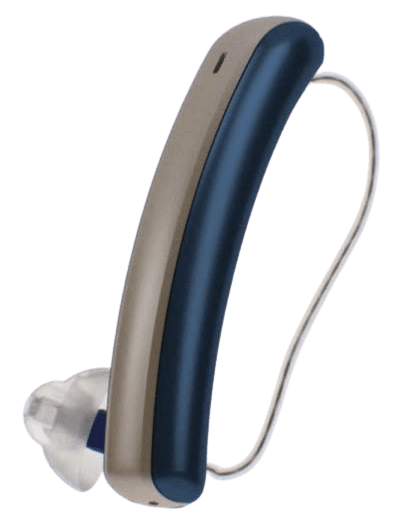
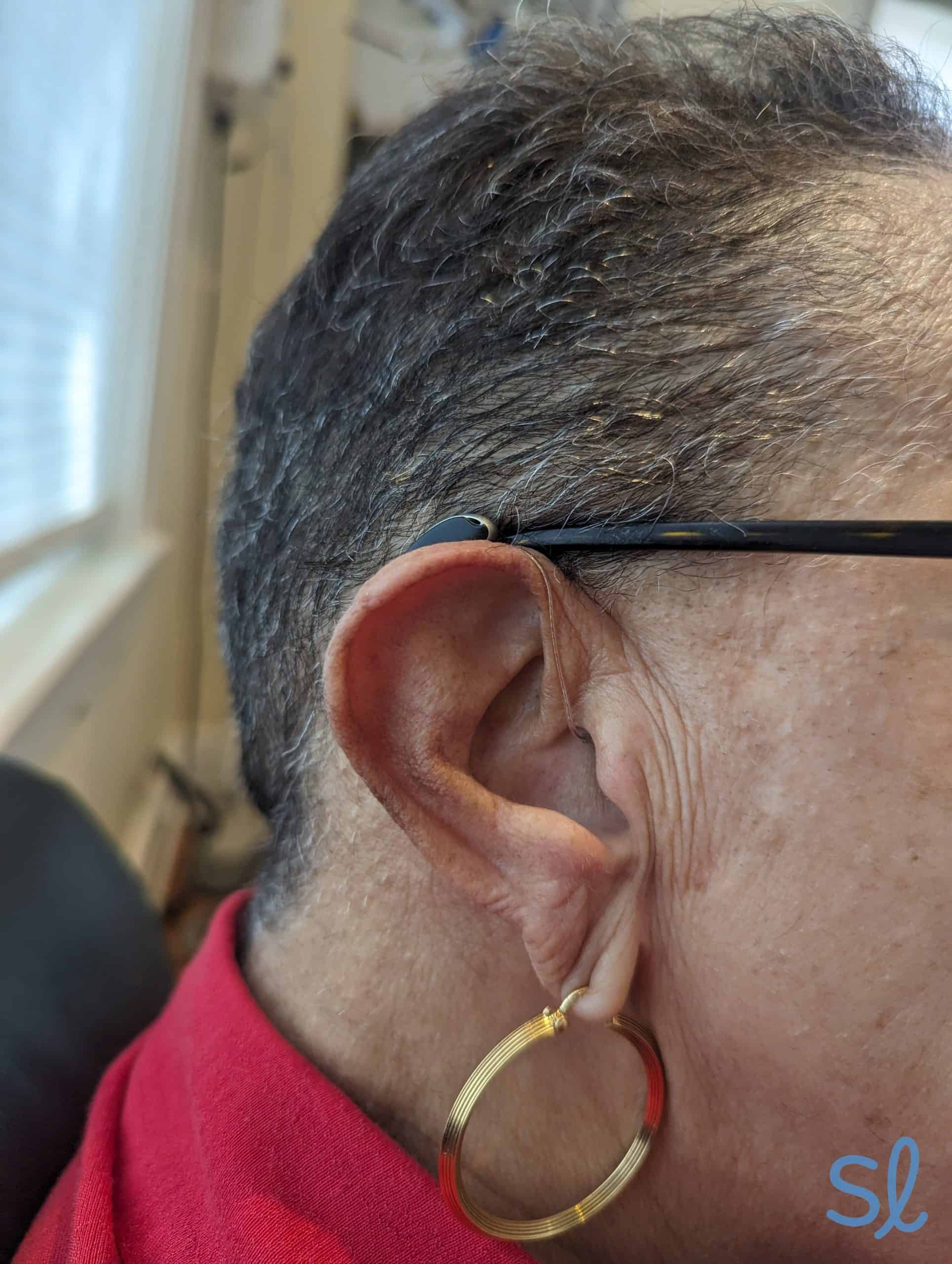
Wearing Signia Styletto hearing aids
The higher price of Signia hearing aids, however, may deter older adults on a tight budget. You'll also need to visit a hearing care professional, potentially returning for multiple sessions to get your custom-fit devices. That said, if you want the best tech in hearing aids and you struggle with tinnitus or more severe hearing loss, Signia may be a top option.
» Our Full Review: Signia hearing aid reviews
Pricing
Signia doesn't disclose its prices online. Instead, you'll need to visit a hearing care professional to learn about the costs. Dr. Reisman estimates about $1,000 to $3,750 per device, similar to ReSound's offerings. This price point is much more expensive than OTC hearing aids from Jabra Enhance or MDHearing.
So what comes with this higher price tag, and is it worth it? A hearing care professional can assess your hearing needs using in-depth hearing tests and evaluations. Then, they can suggest the Signia hearing aid that may work for you and share pricing information.
Audiologists, such as Dr. Reisman, also custom-fit these hearing aids and adjust settings for your unique hearing loss. Prescription hearing aids are available for severe to profound hearing loss, while OTC options are only suitable for mild to moderate losses.

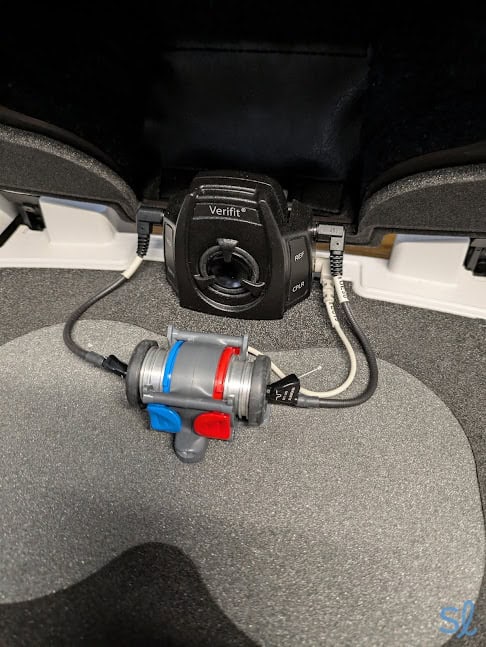
Dr. Reisman uses specialized equipment to test Signia hearing aids and ensure they are the right fit for her patients
-
4. ReSound - Best rechargeable models
 See Pricing Links to ZipHearing.com
What we like most
- Options for all levels of hearing loss
- State-of-the-art devices and features
- Custom hearing aids
ReSoundSee Pricing Links to ZipHearing.comOverview:
Testing out ReSound BTE hearing aids
ReSound has nearly 80 years of experience in manufacturing hearing solutions. Their current lineup includes some of the most advanced rechargeable BTE hearing aids on the market: the ReSound Nexia, ReSound OMNIA, ReSound ENZO Q, and ReSound Key.
The ReSound Nexia, one of the brand's latest premium collections, delivers rich sound, Bluetooth streaming, and impressive battery life. The Nexia lineup features a micro-RIE that ReSound reports is about 25 percent smaller than the standard OMNIA RIE. The portable charging case holds three full charges, and charging for one hour gets you up to 16 hours of battery life. It's the ideal solution for older adults who spend time off the grid or struggle to remember to charge their devices.
FYI: Check out our guide to the best hearing aids for severe hearing loss if you struggle with severe hearing loss that most OTC providers can't support.
Pros & Cons:Pros About ReSound
- Multiple BTE options with long battery lives
- Clear, natural sound quality
- Thin tube or personalized ear mold
- Direct streaming to iOS and Android devices
- Solutions for severe and profound hearing loss
- Remote care option
Cons About ReSound
- On the pricier side
- In-office visit required
Our Hands-on Experience:Our Experience With ReSound
ReSound is known for its innovation, quality, and value. They offer rechargeable BTE hearing solutions for all levels of hearing loss, delivering a full day's charge and then some. You also get the benefit of ReSound's smartphone apps, which let you make remote adjustments and manage your tinnitus.
ReSound's tinnitus relief app is Dr. Reisman's go-to app for her patients with tinnitus. When we tried Jabra Enhance hearing aids, the company's audiology team recommended the ReSound app. Just be prepared to pay more than you would for OTC brands like Jabra Enhance and MDHearing.
» Our Full Review: ReSound hearing aid reviews from an audiologist
Expert InsightsFrom Audiologist Dr. Ruth Reisman,ReSound’s top-tier hearing aids enhance natural sound quality, offer better hearing in noise, and enhanced connectivity options with Auracast technology.Pricing
Dr. Reisman estimates that ReSound hearing aids cost between $1,000 and $3,750 per device, much like Signia. ReSound’s products come at premium prices, but the customization, technology, and support you receive justify the cost. Exact prices vary by location and provider. You must visit a hearing professional for more information.
Like Signia, ReSound is ideal for individuals with severe to profound hearing loss, or who want more high-tech features or hands-on care. Dr. Reisman, along with other audiologists, can adjust hearing aids to suit their patients' needs and hearing loss levels.

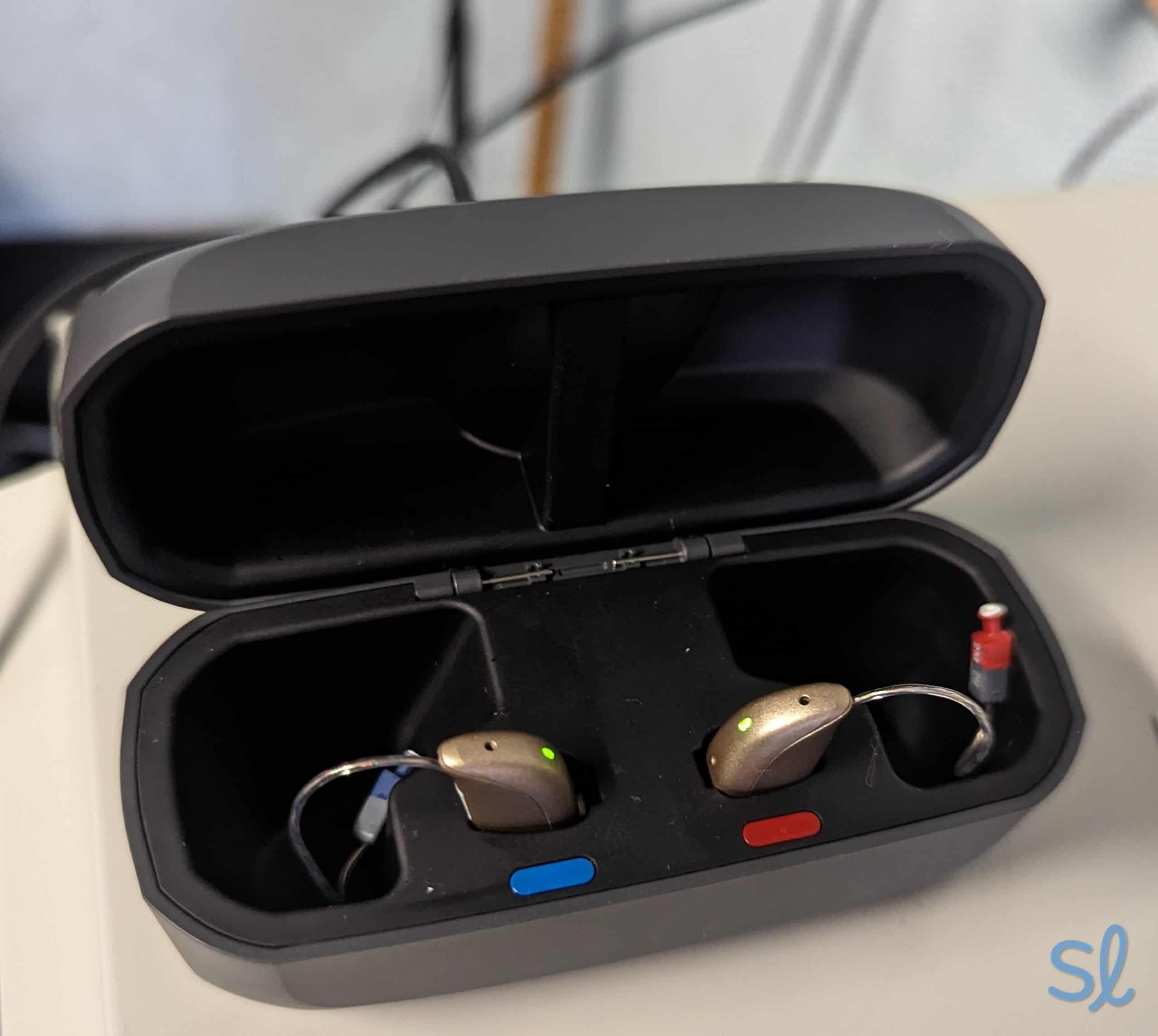
Dr. Reisman can make adjustments to ReSound hearing aids to best suit her patient's needs
The Runner-Up
A few runners-up for affordable BTE hearing aids didn't make the cut, but they may suit some users. You can learn more below.
- Lexie: Lexie makes the selection process easy by providing one simple BTE and two receiver-in-canal (RIC) solutions. Their B1 and B2 Plus models, powered by Bose, are strong OTC options. Check out our review of Lexie hearing aids for more details.
- Otofonix: Whether you need a battery-powered or rechargeable device, traditional or app-controlled, Otofonix has options. Otofonix is one of the industry’s most affordable OTC providers, and the company frequently runs promotions to help you save even more. Learn more in our Otofonix review.
What Are BTE Hearing Aids?
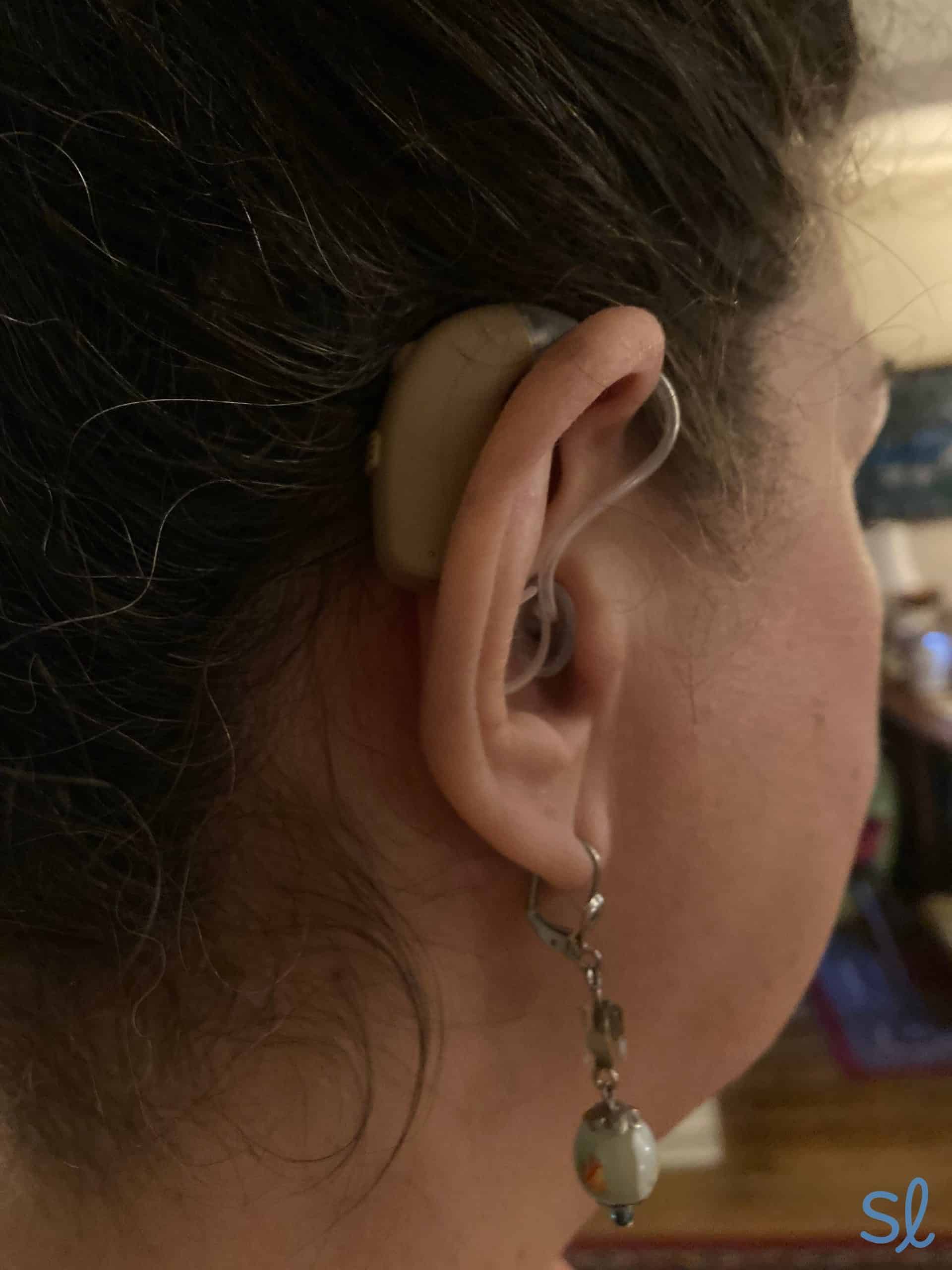
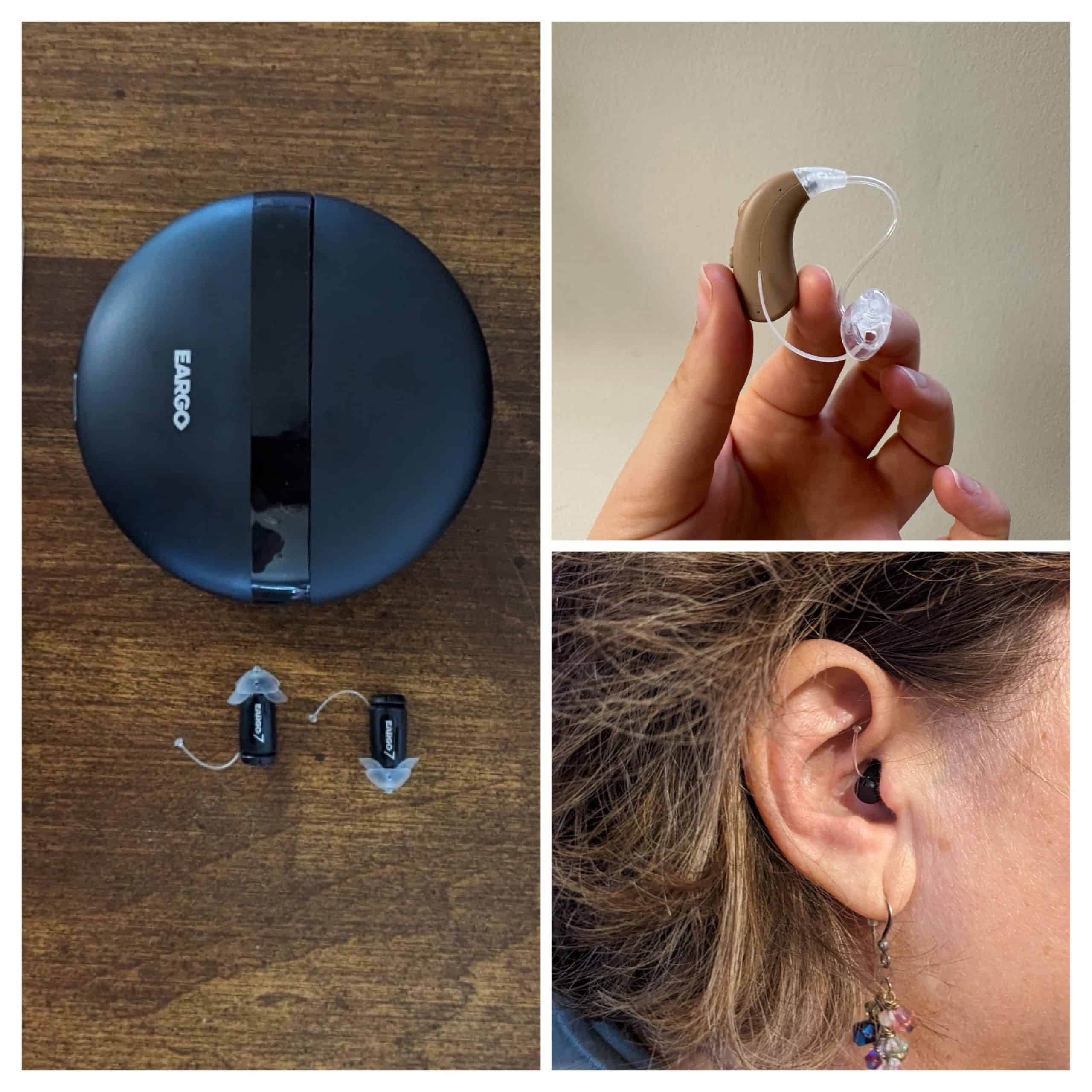
BTE hearing aids, like MDHearing's VOLT, may get in the way of certain types of exercise.
Behind-the-ear (BTE) hearing aids sit behind your ears. More specifically, the electrical components housed inside a case sit on your outer ear.
This includes the speaker, microphone, amplifier, battery, and other features such as a telecoil. A small tube (also called an ear hook) connects the hearing aid to a dome or earmold that sits in your ear canal. The tube delivers sound into your ear.
» For Extra Help: How to put in hearing aids
BTE hearing aids provide the best amplification, so they work great for people of all ages with mild, moderate, severe, or profound hearing loss (though this varies by provider and model). They're also larger than other hearing aid designs, meaning more room for electrical components. That's why many BTE hearing aids offer advanced features such as Bluetooth streaming. Most BTE hearing aids feature control buttons directly on the case for easy volume or program adjustments.
We'd recommend BTE hearing aids for:
- Seniors with severe to profound hearing loss
- Those with dexterity problems who would benefit from a larger device
- Older adults with caregivers, as they’re easier for caregivers to assist with
- Individuals who produce a lot of earwax
Pros About BTE Hearing Aids
- Available with personalized ear molds
- Provide the most amplification
- Easy to put on, take off, and clean
- On-device controls for simple volume adjustment
- Not as susceptible to earwax buildup as other styles
- More comfortable, as they don’t sit deep in the ear canal
- Tend to have longer battery life than other styles
Cons About BTE Hearing Aids
- May be awkward to use while on the phone; selecting a model with Bluetooth streaming can alleviate this concern
- More sensitive to wind than other styles
- Share ear space with glasses, sunglasses, and masks, which may be bothersome to some seniors
- Not as discreet as other styles
Important Considerations When Choosing a BTE Hearing Aid
Here are some tips for finding the right hearing aid.
- Price: If you live on a fixed income or don't have funds to invest thousands in hearing aids, set a budget and see which models work best for your wallet. OTC models tend to be less expensive but have less advanced tech and aren't suitable for severe or profound hearing loss.
- Comfort: BTE models may be larger, more visible, and more cumbersome than ITE or CIC hearing aids, but they're not all created equal. Some BTE models are smaller and more discreet than others. Ensure the device can fit comfortably behind your ear (that's where risk-free trial periods come in handy).
- Battery life: Multiple disposable-battery hearing aids exist, but most providers are shifting to rechargeable models. Rechargeable hearing aids can save you money long-term and help you avoid the hassle of replacing tiny batteries every few days or weeks. That said, consider how long a specific model lasts on a single charge so you don't have to stay close to a charger at all times.
- Bluetooth connectivity: Bluetooth makes it easier to enjoy your favorite media (movies, YouTube videos, music, podcasts, etc.) with your hearing aids. It enables you to stream audio directly from your phone, computer, TV, or smart-home device to your Bluetooth-ready hearing aids for a clearer listening experience. Bluetooth connectivity can also allow you to make remote adjustments to your hearing aid settings from your smartphone.
- Hearing loss level: This is important, especially if your hearing loss is severe or profound. OTC hearing aids generally work well for mild to moderate hearing loss. For severe or profound hearing loss, you'll need a prescription from a licensed hearing professional (and a higher-cost hearing aid).
How Much Do BTE Hearing Aids Cost?
The cost of BTE hearing aids can vary substantially by type and brand. Based on our research and discussions with Dr. Reisman, you can expect to pay between $300 and $2,000 for a pair of OTC BTE hearing aids and between $2,000 and $8,000 for a pair of prescription hearing aids. In short, you can find BTE hearing aids for just about any budget, but the look, sound quality, and features will vary with the price.
Money Tip: Need help setting a budget for your hearing aids? Here are the best budgeting apps for seniors.
BTE vs. ITE Hearing Aids
There are two main types of hearing aids: behind-the-ear (BTE) and in-the-ear (ITE). Understanding the difference can help you decide what may work best.
What Are ITE Hearing Aids?
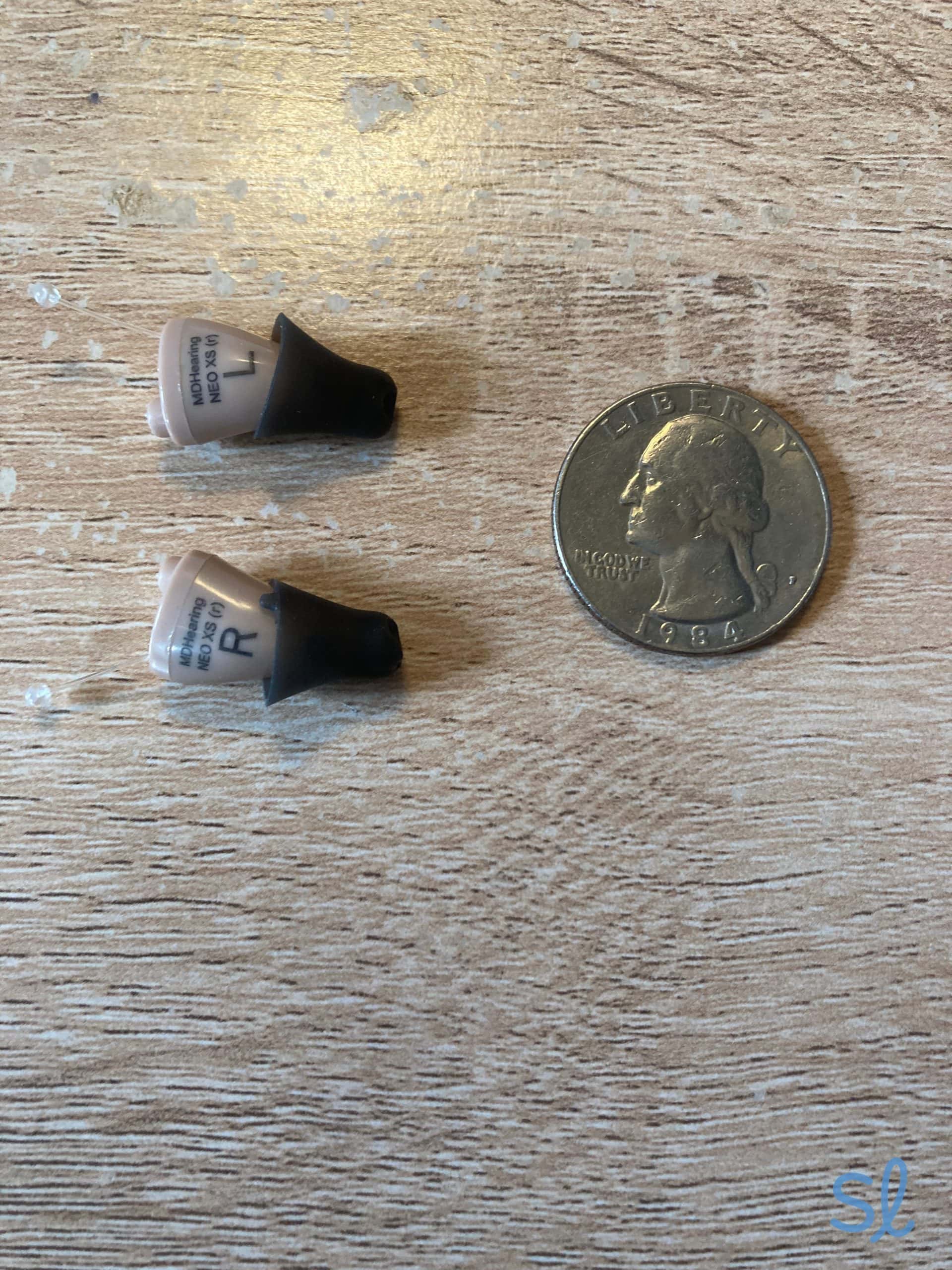
MDHearing, one of our favorite OTC brands, is a runner-up on our list of the best hearing aids for tinnitus.
ITE hearing aids sit fully in your ear, without using space on or behind your ear. For that reason, an ITE hearing aid is more comfortable than a BTE if you wear glasses or frequently wear a face mask. You can use a phone more naturally and wear over-ear headphones. Compared to BTE models, ITE hearing aids are more discreet. Most are custom-fit to your ear canal for a snug, comfortable fit. They’re even available in multiple skin tones to blend in with your ear.
Since they must sit in your ear, ITE hearing aids have limited space. They don't have the capacity for all the features you may find with BTE hearing aids, such as Bluetooth connectivity or large, long-lasting batteries. Some older adults might have trouble handling them due to their small size.
Pro Tip: Want to find hearing aids that won't draw attention? Check out our guide to the best invisible hearing aids.
Comparing Hearing Aid Styles
| BTE | ITE | |
|---|---|---|
| Type of hearing loss | For mild to profound hearing loss | For mild to severe hearing loss |
| Size | Bigger; can be clunky | Small; often custom fit |
| Visibility | Slightly visible | Nearly invisible |
| Durability | Tend to last longer | More susceptible to earwax damage |
| Battery life | Can accommodate larger, longer-lasting batteries | Less reliable; batteries need to be charged or replaced more frequently |
| Amplification | Better amplification | Less powerful |
| Features | Space for more electrical components and features, such as Bluetooth | Limited features |
Want to learn more about the different types of hearing aids? Check out our video below featuring audiologist Dr. Brad Ingrao.
Additional Hearing Aid Resources
Want to compare all your options? We’ve tested and reviewed hearing aids for several other categories that could help you find the right fit.
Frequently Asked Questions About BTE Hearing Aids
-
Can I wear BTE hearing aids with glasses?
Yes, you can wear BTE hearing aids and glasses simultaneously. In most cases, it’s best to put on your glasses or sunglasses first and then your BTE hearing aids.
-
How can I hide my BTE hearing aids?
BTE hearing aids are not discreet, so there’s no perfect way to hide them. You may consider wearing hats, scarves, or other accessories that can partially hide the area behind your ears. You can also choose hearing aid colors that match your skin tone to make them less visible.
-
Are BTE hearing aids better than ITE?
BTE and ITE hearing aids both have advantages and disadvantages. Generally speaking, BTE hearing aids are suitable for a larger range of hearing loss than ITE hearing aids.
-
How do you keep BTE hearing aids in place?
When fitted correctly, BTE hearing aids stay in place. Take care when putting them on and removing face masks, glasses, or sunglasses. You don’t want to pull or bump the hearing aids off your ears.
-
What is a mini BTE hearing aid?
Mini BTE hearing aids are the smallest style of BTE hearing aids. They are smaller, more discreet, and often lighter than standard BTE hearing aids.
-
National Library of Medicine. (2023). Change in the Characteristics of Patients Qualified for Hearing Aids over the Last 25 Years in Poland.
-
National Institute on Deafness and Other Communication Disorders. (2024). Quick Statistics About Hearing, Balance, & Dizziness.