Eargo vs. Jabra Enhance
Eargo is our pick for the most discreet styles, while Jabra Enhance’s access to on-demand audiology care can’t be beat.
SeniorLiving.org is supported by commissions from providers listed on our site. Read our Editorial Guidelines
NOTE: Eargo's parent company, LXE Hearing, began winding down the brand's U.S. operations in July 2026. If you already own a pair, your hearing aids and the companion app will keep working for now — but support and warranty claims are only guaranteed through September 15, 2026. We're leaving this page live for reference, since it's still useful for comparing features and pricing. Ready to look at brands that are actively supported? Visit our best hearing aids page for our current top picks.
Key Takeaways
- Jabra Enhance offers unlimited professional hearing care for three years.
- Jabra Enhance is currently offering three receiver-in-ear (RIE) hearing aids in their lineup
- Eargo hearing aids are no longer available for purchase, while their customer support and cloud connectivity for the Eargo app ends in late October 2026.
Eargo and Jabra Enhance are two trustworthy manufacturers of high-quality, over-the-counter (OTC) hearing aids. While Eargo is no longer in business, customer support is available for assistance until October 22, 2026. The mobile app will be removed from app stores and cloud connectivity will also be deactivated on this same day.
Each company offers multiple styles that come with a variety of features for those with mild to moderate hearing loss. Jabra Enhance is our top pick for quality follow-up care, while Eargo is best for those who want a discreet hearing aid. We tested models from Eargo and Jabra Enhance. Jabra Enhance is currently on our list of the best hearing aids in 2026.

Eargo vs. Jabra Enhance Product Lineup

|
|
|
|---|---|---|
| Suitable for | Mild to moderate hearing loss | Mild to moderate hearing loss |
| Price range | $799 to $2,699 per pair | $1,195 to $1,995 per pair |
| Styles | Completely-in-canal and earbud | Behind-the-ear in standard, micro and mini-sizes |
| Bluetooth streaming | Yes, in some styles | Yes |
| On-demand professional hearing care support | Yes, in some styles | Yes, for Premium package users |
| App connectivity and personalization | Yes, in some styles | Yes |
| Battery types | Rechargeable | Rechargeable |
| Trial period length | 45 days | 100 days |
| Manufacturer’s warranty length | 1 to 2 years | 1 to 3 years |
| Website |
See Pricing
Links to Jabra Enhance
|
Eargo
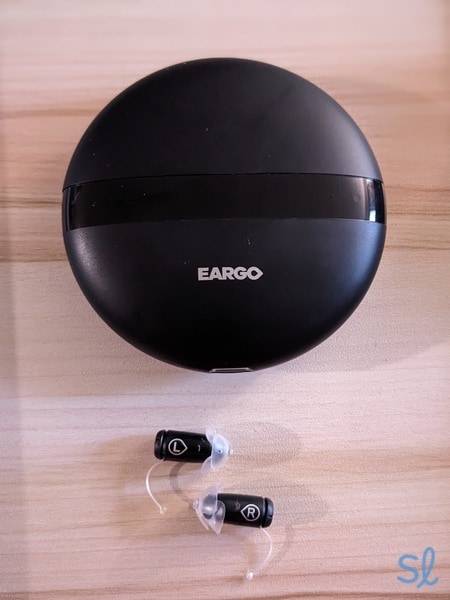
Testing out Eargo 7 hearing aids
Eargo’s current lineup includes four hearing aid models:
- Eargo 7: The company’s most advanced completely-in-canal (CIC) model
- Eargo SE: Eargo’s most budget-friendly CIC model designed for simplicity
- LINK by Eargo: A unique earbud-style hearing aid with Bluetooth streaming
We give Eargo high marks for sound quality, noise reduction and discretion. Eargo hearing aids come with a variety of petals or domed ear tips in multiple sizes. Most of our testers found a comfortable fit that accommodated the size and shape of their ear canal. One of our testers has small ears, however, and she found that the hearing aids felt a bit uncomfortable. If they feel uncomfortable, you can send them back for a full refund during the 45-day trial period.
» Related Reading: Eargo Hearing Aid Review
If you or someone you love has been hesitant to take the plunge because of how hearing aids look, Eargo may be a great choice. One of the things we love about Eargo is its discreet designs. Eargo 7 and Eargo SE are worn completely in the ear. They’re practically invisible. When testing them, we often forgot we had them in our ears.

You can hardly tell that one of our testers is wearing Eargo 7 hearing aids here1
Link by Eargo looks like an earbud, not a hearing aid. Since this style is enabled with Bluetooth 5.3 technology, we tried them on the noisy New York City subway to catch up on our favorite podcasts. The sound quality was excellent. Plus, they don’t look remotely like hearing aids, so no one knew we were wearing them!
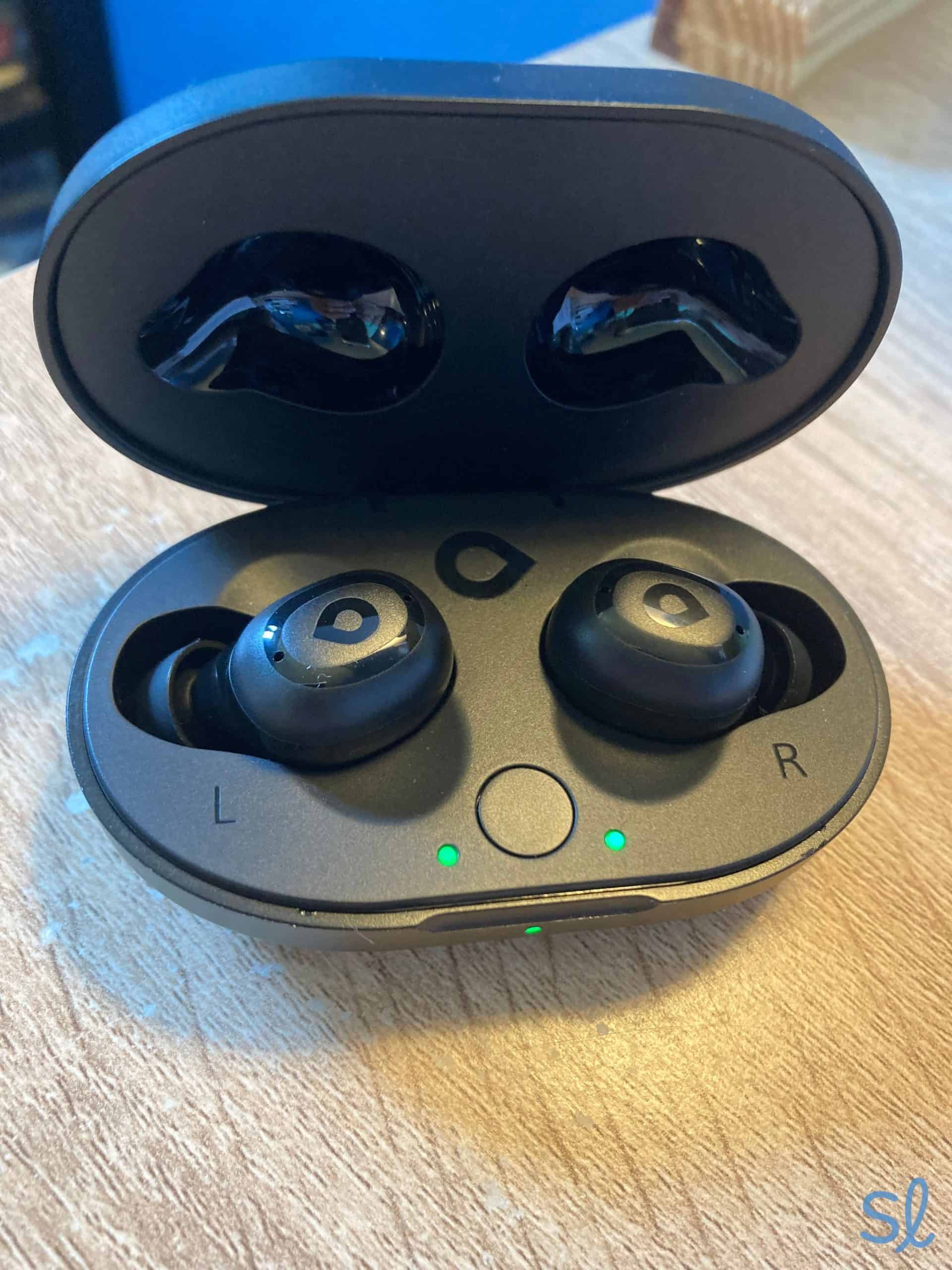
Testing out LINK by Eargo, the company's earbud-style hearing aids.
In addition to being discreet, Eargo’s sound quality is clear and crisp. Eargo 7 and SE both connect to the Eargo app, and can be adjusted remotely. Link doesn’t connect to the app, but an Eargo representative told us that eventually the style will have an app of its own (stay tuned!). Eargo also offers lifetime professional support, so you can connect to a hearing care pro at any time — for the life of your hearing aids.

Adjusting the Eargo hearing aid volume independently or simultaneously within the app
Pros About Eargo
- Cost-effective for people with mild to moderate hearing loss
- Discreet styles
- Come with multiple-sized petals
- Crisp, natural sound
- Preprogrammed with four listening environment options
- Access to hearing care for most styles
Cons About Eargo
- Eargo app syncs only to new model phones
- Link holds a charge for only up to 9 hours
- No tinnitus tools included
- Risk-free trial is only 45 days (much shorter than Jabra Enhance’s 100 days)
Jabra Enhance

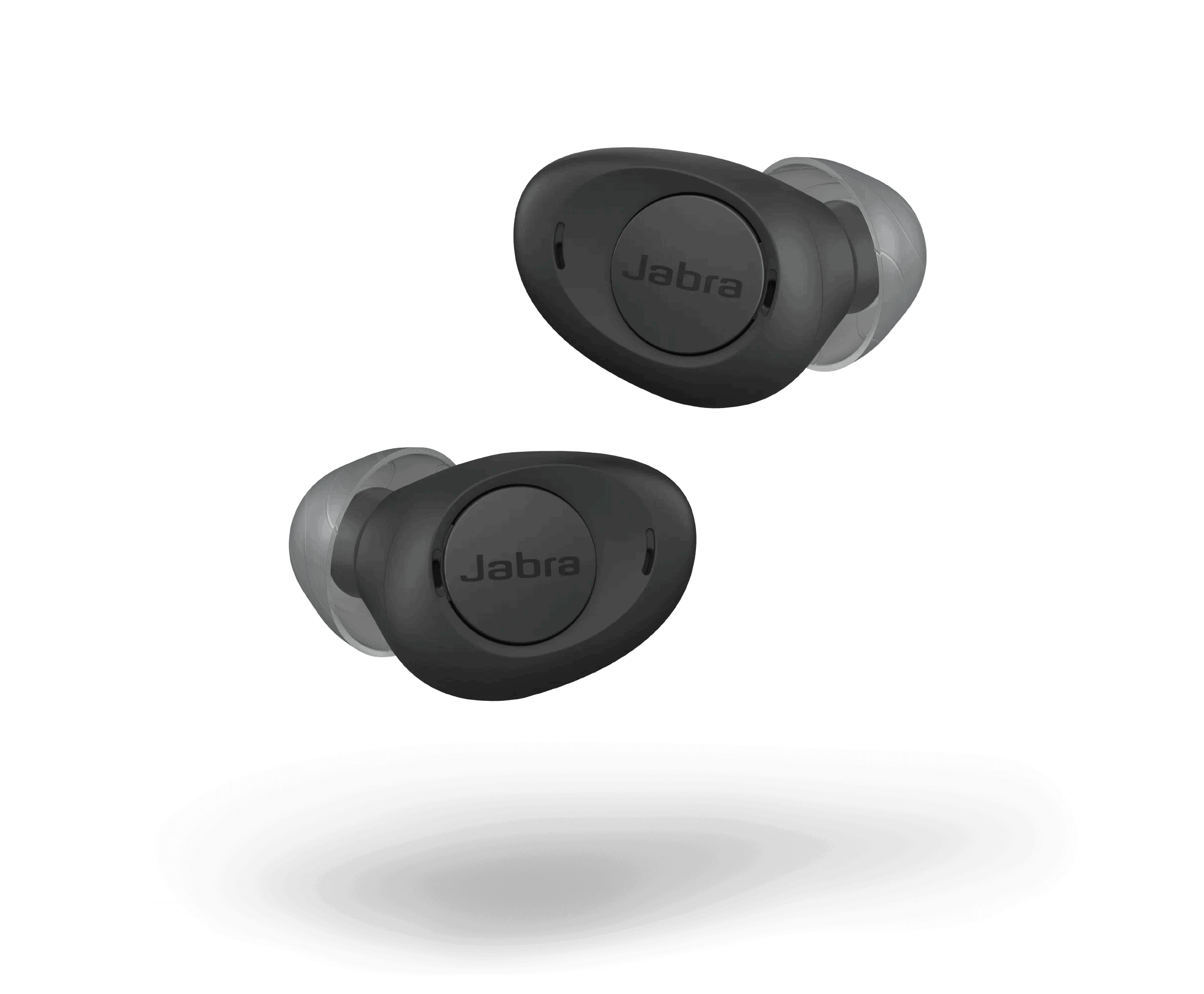
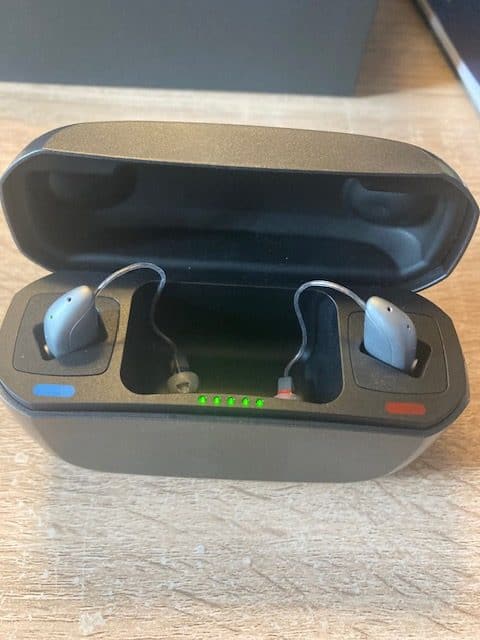
The Jabra Enhance M Series features the M1, M2 and M3 hearing aids
Jabra’s current lineup of hearing aids includes:
- Enhance Select M1: Jabra Enhance’s rechargeable, budget-friendly mini RIE hearing aid produces good hearing in noise
- Enhance Select M2: This mini RIE hearing aid is moderately priced, and generates better hearing in noise, plus immersive sound
- Enhance Select M3: These technologically advanced devices are micro RIE-sized, and produce the best noise reduction and sound quality of any Jabra Enhance hearing aid
Unlike Eargo’s in-ear designs, Jabra’s hearing aids are either mini or micro-sized RIE. This means they’re visible, but built for discretion. They also come in five neutral shades that make them hard to see behind the ear. M3 also comes in red, for a total of six colors.

The Jabra Enhance Select M2
RIE hearing aids can feel very secure and comfortable. Despite their visibility, many people prefer them over completely-in-ear styles. Our tester has long hair and wears glasses, but the hearing aids didn’t create any feedback noise or get in the way. They’re also compatible with mask straps.
» You Might Like: Best Behind-the-Ear Hearing Aids
All three of Jabra’s styles can be purchased online, or through select brick-and-morter retailers. They come with three years of audiological support, a 100-day risk-free trial, and three year warranty.
A real plus to Jabra Enhance is their easy-to-use app. You can use the app to self-fit and program your hearing aids. You can also use it to access audiological help.
Enhance Select M2 and M3 both provide richer sound quality than the M1. If you’re looking for a good balance between value and quality listening, the M2 may be your best option from Jabra Enhance.
» Save More: Best Cheap Hearing Aids for Seniors
The social stigma of hearing devices and not providing enough hearing benefit are the main reasons why people who purchase hearing aids stop wearing them.1 If you decide Jabra Enhance is right for you, we strongly recommend going for the better sound quality models. Plus, Jabra Enhance has a 100-day risk-free trial (55 days longer than Eargo), so you can test them for a few months and decide if they’re the best fit for your needs.
» Related Reading: Jabra Enhance Hearing Aid Review
Pros About Jabra Enhance
- Long trial period
- Crisp, realistic sound quality
- Bluetooth streaming in all models
- Hands-free calling
- Personalized hearing care is available
- Water-resistant
Cons About Jabra Enhance
- More expensive than some OTC competitors
- No in-the-ear styles
- No tinnitus tools
Pro Tip: More OTC hearing aid manufacturers are entering the market, which means more competitive prices and services. Check out our choices for best over-the-counter hearing aids to learn more.
Eargo vs. Jabra Enhance Pricing
Eargo
Eargo‘s pricing is competitive, especially when you compare their offerings to prescription hearing aids, which cost an estimated $1,000 to $4,000 per ear. However, Eargo is more expensive than some OTC hearing aids, such as MDHearing. But you get much more for the cost of Eargo devices.
» Compare Providers: MDHearing vs. Eargo
Eargo hearing aids ranged from $799 per pair for Link by Eargo, to $2,699 per pair for Eargo 7. Pricing may now vary, based on retailer and availability. Audiological support is phasing out, as is access to Eargo’s app, so keep that in mind if you buy.
Did You Know? Hearing aids can help reduce social isolation and improve communication in older adults with hearing loss.2
When you get your Eargo kit, you’ll have all the accessories needed to get started and to maintain your hearing aids. In addition to your hearing aids, multiple-sized petals, mic caps, cleaning tools and a charging case will be provided.
» Helpful Guide: How to Put in Hearing Aids
Jabra Enhance
Like Eargo, Jabra Enhance’s costs are competitive when compared with prescription hearing aids. Their hearing aid pairs start at $1,195 for Enhance Select M1. Their mid-tier model, the Enhance Select M2, costs $1,695. Their top-tier model, the Enhance Select M3, goes for $1,995 per pair.
Every Jabra Enhance Select hearing aid comes with three years of unlimited, on-demand, remote audiological care. Programming support and adjustments are also provided remotely through the app, as needed.
Pro Tip: If you’re wondering how to choose the best hearing aids for your specific needs, read our hearing aid buying guide to learn more.
They also come with a 100-day risk-free trial period and a three-year warranty. Like Eargo, Jabra Enhance hearing aids come with all of the accessories, cleaning tools and charging implements needed to get you up and running.
Follow-Up Care
Our experience with customer care from both brands has been overwhelmingly positive. The support staff and hearing professionals for both companies are knowledgeable, helpful, empathetic and friendly. In our opinion, you can’t go wrong with either one. There are, however, differences to note.
FYI:About 65 percent of older adults prefer customer service and follow-up care with a live person (over the phone or video chat), as opposed to digital chatbots or app-based support.3
Eargo
Since Eargo is no longer actively in business, we’re unable to recommend them going forward. However, their hearing aids are typically known for producing high-quality sound and optimal noise reduction.
Keep in mind that hearing aids can last for over 10 years, but the average lifespan is around five years.4 Your hearing needs may change during that time, so annual audiological exams or hearing tests should be done annually. Test your hearing more often if you notice your devices aren’t giving you the power they once did.
Just like time and its effects on our hearing, technology also has a way of marching on. You may wish to upgrade your hearing aids to the latest technology, even if they still work perfectly. The up-and-coming Bluetooth LE Audio technology (offered with Jabra Enhance’s Select 500 model) is a good example of how hearing aids are changing and adapting to the future. Keep all that in mind when you think about lifetime support for hearing aids.
» Related Reading: Best Bluetooth Hearing Aids
Jabra Enhance
Jabra Enhance Select hearing aids are all Bluetooth LE Audio & Auracast enabled, so you’ll be able to use them for optimal hearing ability in public places like airports and libraries. This technology also lets you stream television audio directly into your hearing aids.
Jabra Enhance hearing aids are also hands-free, and enabled for Bluetooth streaming.
They hold a charge for a full 24 hours, and charge quickly – in around three hours.
Eargo and Jabra Enhance vs. the Competition
Eargo and Jabra Enhance are two of the most popular OTC hearing aid brands you can find. They offer high-quality products at competitive prices, but they’re definitely not the only providers on the market — and it’s always important to consider all your options! Here’s a closer look at Eargo and Jabra Enhance compared to some of their biggest OTC hearing aid competitors.
| Eargo | Jabra Enhance | MDHearing | Sony | ELEHEAR | |
|---|---|---|---|---|---|
| Starting price | $799 per pair | $995 per pair | $297 per pair | $799 per pair | $299 per pair |
| Best for those who want | Discreet, nearly invisible devices with high sound quality and lifetime support | High-quality BTE hearing aids that are more affordable than prescription models | Ultra-low-cost BTE and ITE hearing aids with lifetime support | Affordable OTC hearing aids with enhanced speech recognition tech | Affordable, technologically-advanced OTC hearing aids |
| Free trial | Yes, 45 days | Yes, 100 days | Yes, 45 days | Yes, 45 days | Yes, 45 days |
| Hearing loss levels | Mild to moderate | Mild to moderate | Mild to moderate | Mild to moderate | Mild to moderate |
| Bluetooth | Yes, with some devices | Yes | No | Yes, with some models | Yes |
| Tinnitus solutions | No | No | No | No | Yes |
| Mobile apps | 1 app | 1 app | 1 app | 1 app | 1 app |
| Battery types | Rechargeable | Rechargeable and disposable | Rechargeable and disposable | Rechargeable and disposable | Rechargeable |
Our Methodology
How We Researched Eargo and Jabra Enhance Hearing Aids
Our tech team spent over 50 hours independently researching Eargo, Jabra Enhance and each of their offerings and services. We also discussed both brands with our resident audiologist, Dr. Ruth Reisman, who has ample experience with OTC hearing aids and helps give us further expertise on how they compare to prescription alternatives. Here’s what our research process looked like:
- We evaluated each provider’s website and determined if they offered a free hearing test. If so, we conducted a test and compared the results to in-person hearing evaluations from Dr. Reisman.
- Our tech team got hands-on experience testing different models and styles from Eargo and Jabra Enhance, taking diligent notes on our experiences.
- During our testing, we tried each provider’s mobile apps. More than anything, we wanted to ensure that the mobile apps were functional, accessible to most mobile devices and easy to use for older adults.
- Our team contacted customer-service representatives and, when available, hearing professionals from Eargo and Jabra Enhance to evaluate their overall quality of care.
The Factors We Used to Compare Eargo and Jabra Enhance
Eargo and Jabra Enhance both deliver high-quality sound and features, particularly for hearing aids that don’t require prescriptions. We consulted Dr. Reisman to narrow down the factors to help us find the most important differences between the brands. Here are the top factors we considered during our research and testing process:
- Product lineup: Most OTC hearing aid providers offer fewer models and styles than their prescription alternatives, and Eargo and Jabra Enhance are no exception. We evaluated their offerings to see how many unique models and styles are available through each provider.
- Hearing technology: Eargo and Jabra Enhance can go toe to toe when it comes to advanced hearing tech. We evaluated their underlying technology with Dr. Reisman’s assistance, understanding why each provider may be a better fit for seniors with specific needs.
- Mobile app: Both providers offer a primary mobile app to control volume and set the listening environment. We always test hearing aid mobile apps to make sure they’re senior-friendly, even for older adults who aren’t as tech-savvy.
- Bluetooth connectivity: Bluetooth isn’t guaranteed with every hearing aid, but we like to see it as a feature, since it can make hearing via Bluetooth-ready devices much easier and more natural. Both providers have Bluetooth hearing aid models.
- Brand reputation: We value brand reputation, because it indicates consistency, quality and consumer trust. Fortunately, both Eargo and Jabra Enhance are respected brands that offer quality hearing products.
Why Trust Us?
Our team of tech experts tries the latest gadgets and devices for older adults each year. We’ve logged hundreds of hours testing and reviewing hearing aids from dozens of OTC brands.
In addition to our hands-on research, we work alongside experts with decades of experience prescribing hearing aids and helping older adults with hearing loss. Dr. Reisman has firsthand experience with the brands we discuss, including Eargo and Jabra Enhance.
Eargo vs. Jabra Enhance: The Bottom Line
Eargo were best for: While the company is discontinuing their models, their hearing aids offered great sound quality in a discreet device.
Jabra Enhance is best for: Those who want deep, resonant sound and unlimited face-to-face audiological support.
Jabra Enhance and Eargo are two well-established manufacturers of OTC hearing aids. Both brands offer cost-effective hearing aids, sold in pairs, for people with mild to moderate hearing loss.
Jabra Enhance offers face-to-face online interaction with their audiological team, as well as remote app access. Eargo gives you unlimited audiological support primarily through their app and over the phone.
The style offerings are among the main differences between these companies. Eargo hearing aids are either invisible in-the-ear or discreetly designed earbuds, while Jabra Enhance hearing aids are all RIE in varying sizes.
Overall, you can’t go wrong with either provider. The choice will ultimately come down to your preferred style and budget.
-
University of Alberta. (2018). Why Most People With Hearing Loss Don’t Use Hearing Aids.
-
Audibel. (2024). How Does Age-Related Hearing Loss Affect Social Life?
-
EMarketer. (2023). Older Adults Prefer Phone Calls to Digital Customer Service.
-
Oticon. (2025). How Do I Know It’s Time to Update My Hearing Aids?