Best iPhone Hearing Aids, Tested by Audiologists in 2026
Our tech experts and audiologists tested the best iPhone hearing aids on the market. We narrowed the list to our top picks, including Jabra Enhance, Eargo, and Widex.

Our resident audiologists and senior tech experts tested the best made-for-iPhone (MFI) hearing aids to select our top picks.
Our team testing out different hearing aids
How We Tested the Hearing Aids
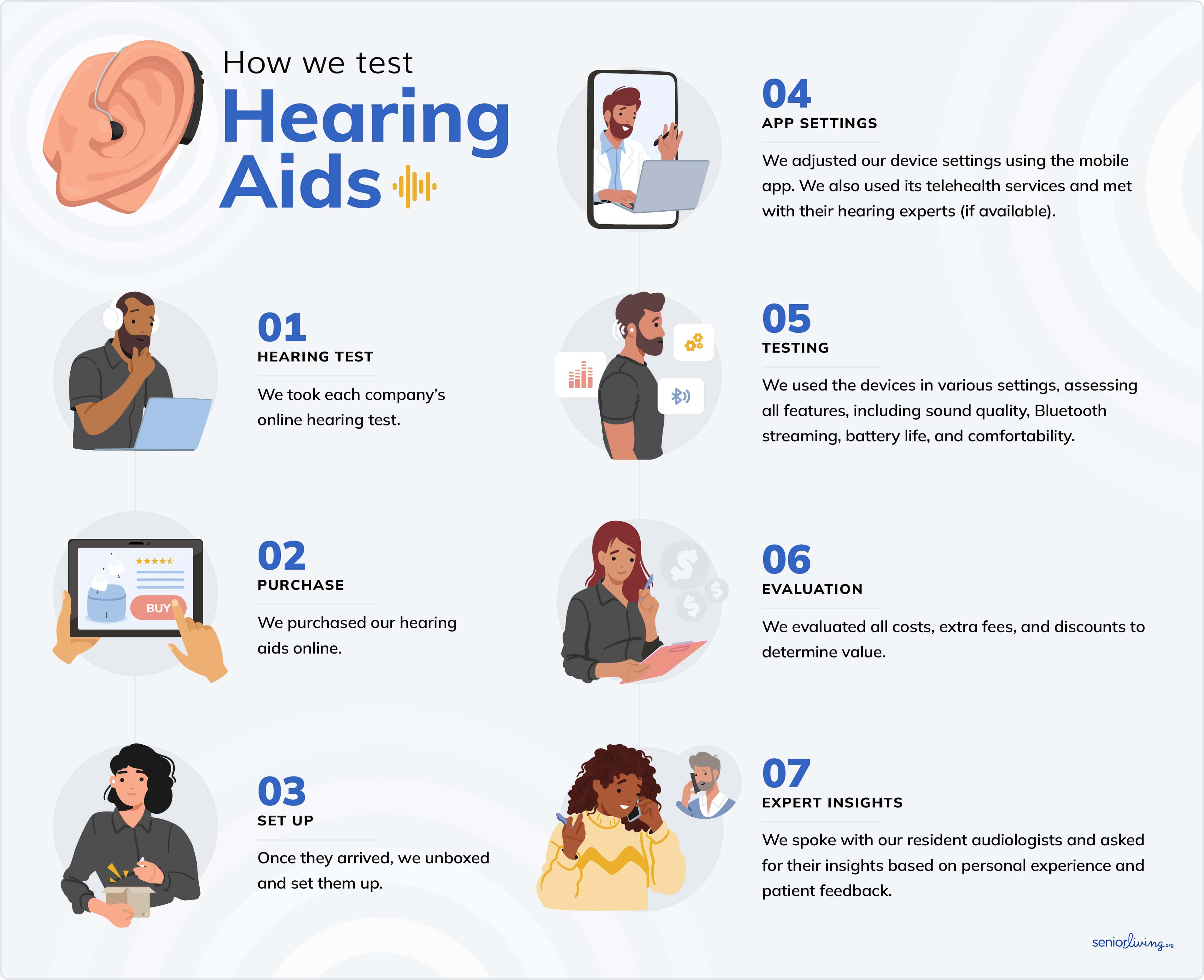
Our tech team conducted over 100 hours of testing to compare the top iPhone-compatible hearing aids on the market. Here’s what our testing process looked like for OTC hearing aids that are available online:
- We completed each brand’s online hearing test, comparing our results to in-person evaluations from an audiologist.
- Then, we purchased a pair of iPhone-compatible hearing aids, evaluating the overall purchasing process and how easy (or difficult) it was. We considered the price and value of each model, keeping in mind that seasonal promotions, extra fees, and up-front costs can vary.
- Once we got our hearing aids, we followed the instructions to set them up. If the brand had a mobile app, we downloaded it from the iOS App Store. We evaluated the ease of use and the steps required to get our hearing aids out of the box, working, and connected to our iPhones.
- We contacted customer service several times to evaluate the quality of care by phone, mobile app (when applicable), and online chat features.
- Our team tested each hearing aid for a week, using the devices at home, in noisy environments, and in conversational settings. We evaluated the hearing aid’s features, sound quality, and ease of use in various locations and sound environments.
For prescription hearing aids that aren’t available online, we spoke with Dr. Reisman about her expertise with each brand. We used her experience prescribing and testing these brands (plus patient feedback) to evaluate and rank them.
How We Chose the Best Hearing Aids
Since iPhones are among the most popular smartphones worldwide, multiple iPhone-compatible hearing aids are available. We narrowed the choices with over 100 hours of hands-on testing, feedback from audiologist Dr. Ruth Reisman, and conversations with each provider’s customer support staff. All hearing aids on our list have been tested by our tech team and/or prescribed by Dr. Reisman. We evaluated each device using the following criteria:
- Made-For-iPhone certification: Many devices, including hearing aids, can be MFi or “Made for iPhone.” Hearing aids with MFi certification are specifically designed to connect and work with iPhones and other Apple products. They’ve also been tested and certified by the developer to meet Apple’s performance standards. All of the brands on this list offer MFi hearing aids.
- Bluetooth connectivity: Bluetooth streaming allows you to hear calls, videos, or other audio from your iPhone through your hearing aids. All of our top picks offer some form of Bluetooth connectivity. Having Bluetooth is particularly important for seniors with spotty Wi-Fi or cellular connectivity, as Bluetooth doesn’t require an internet connection to connect devices.
- Price: We included more affordable over-the-counter (OTC) hearing aids, plus high-end (and expensive) prescription options. OTC hearing aids are best for older adults with mild to moderate hearing loss and those shopping on a budget. Alternatively, prescription hearing aids may offer options for individuals with severe and profound hearing loss and are best suited for those who are willing to budget for in-person fittings and care.
- Mobile app: An iPhone app allows users to adjust the volume, program settings for particular sound environments, and even connect with hearing care professionals (depending on the brand). Providers that offer user-friendly apps get extra points from us!
- Brand reputation: Name recognition and brand reputation are vital as they indicate that a hearing aid provider delivers high-quality products to consumers. Our tech team consulted with our resident audiologist, Dr. Reisman, to discuss the finalists and ensure we recommend the best products.
Why Trust Us?
Our team of tech experts tries out the latest gadgets and devices for seniors each year. We’ve logged hundreds of hours testing and reviewing hearing aids from dozens of providers. In addition to our hands-on research, we collaborate with experts who have decades of experience prescribing hearing aids and assisting seniors with hearing loss.
Our resident licensed audiologist, Dr. Ruth Reisman, helped us craft this list and has firsthand experience with all the brands and models discussed. She has helped many seniors learn to set up hearing aids to work seamlessly with their iPhones, and she gave her seal of approval to each entry on this list.
SeniorLiving.org is supported by commissions from providers listed on our site. Read our Editorial Guidelines

- Direct Bluetooth streaming to Apple devices
- Free Jabra Enhance mobile app
- Three years of audiologist support with premium package

- Bluetooth connectivity via the Eargo case
- Most models work with the Eargo iOS app
- Access to lifetime telecare support

- Bluetooth streaming available with most models
- Free companion iPhone app for easy streaming
- Support and telehealth will vary by location

- Options for all levels of hearing loss
- Personalized listening experience
- BrainHearing technology
Contents
When choosing which hearing aids to purchase, older adults should consider factors such as price, style, and the level of hearing support. Additionally, you can factor in smartphone compatibility if you’re a senior with an iPhone. Connecting your hearing aids to your iPhone enhances your hearing experience, granting access to Bluetooth streaming, mobile app adjustments, and more.
That’s not to say that seniors with Android devices will be left out of the conversation (quite literally, in this case). There is no shortage of hearing aids with Android compatibility. However, it’s nowhere near as inclusive as Apple’s iPhone lineup, because Android has a range of manufacturers and designs.
Our tech experts and resident audiologists have tested and reviewed the best hearing aids on the market. Based on our research and testing, Jabra Enhance offers the best hearing aids for iPhone users, thanks to its extensive streaming compatibility with Apple products, hands-free calling feature, and free iOS app. We evaluated iPhone-compatible devices for essential criteria, including price, value, mobile apps, brand reputation, Bluetooth connectivity, and more. Below, we’ll look at our top picks and provide helpful tips for hearing aid wearers and iPhone users.
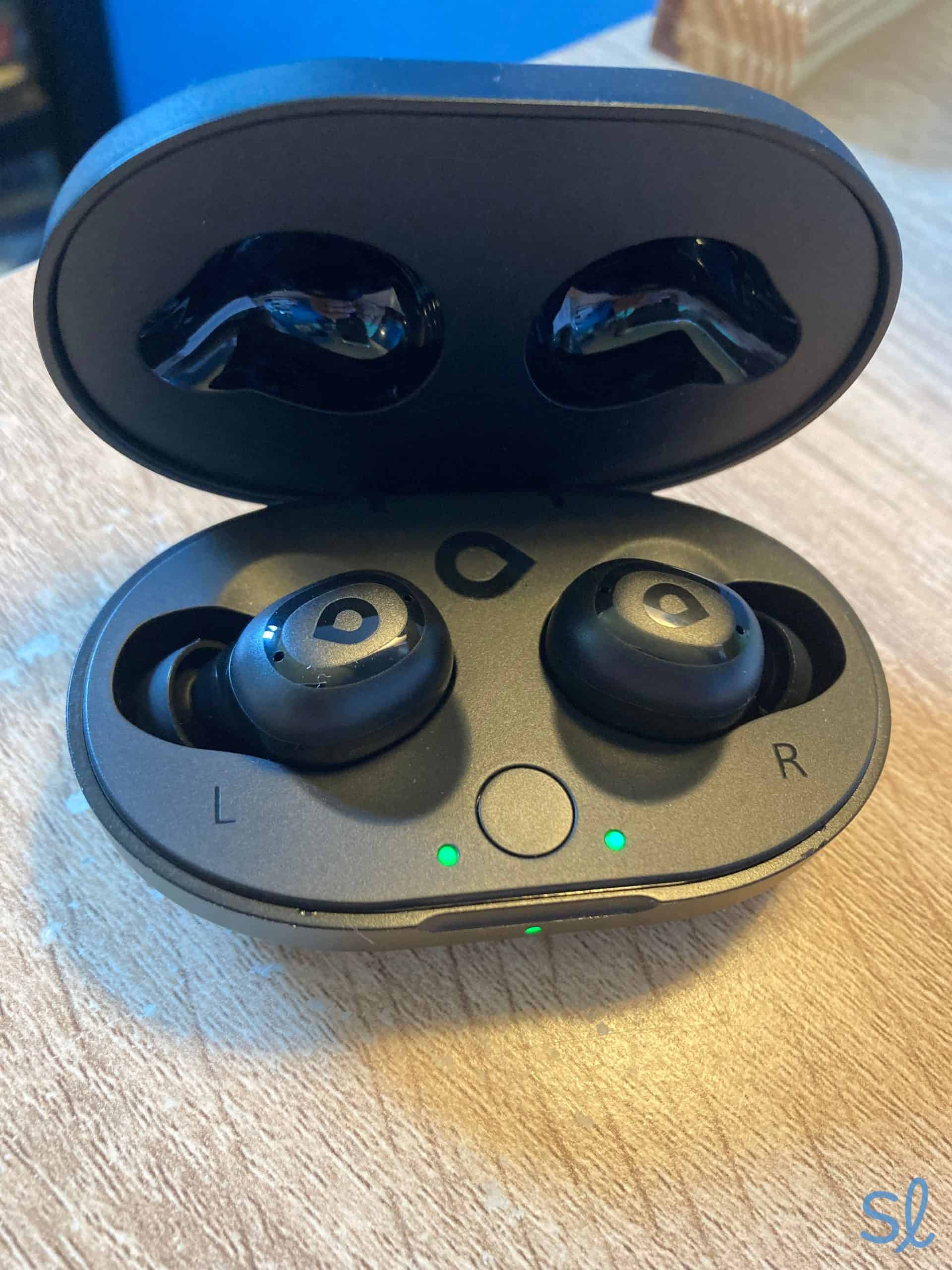
Our team tested all of the iPhone-compatible hearing aids on our list, including Eargo's earbud-style devices.

The Best iPhone-Compatible Hearing Aids for 2026
-
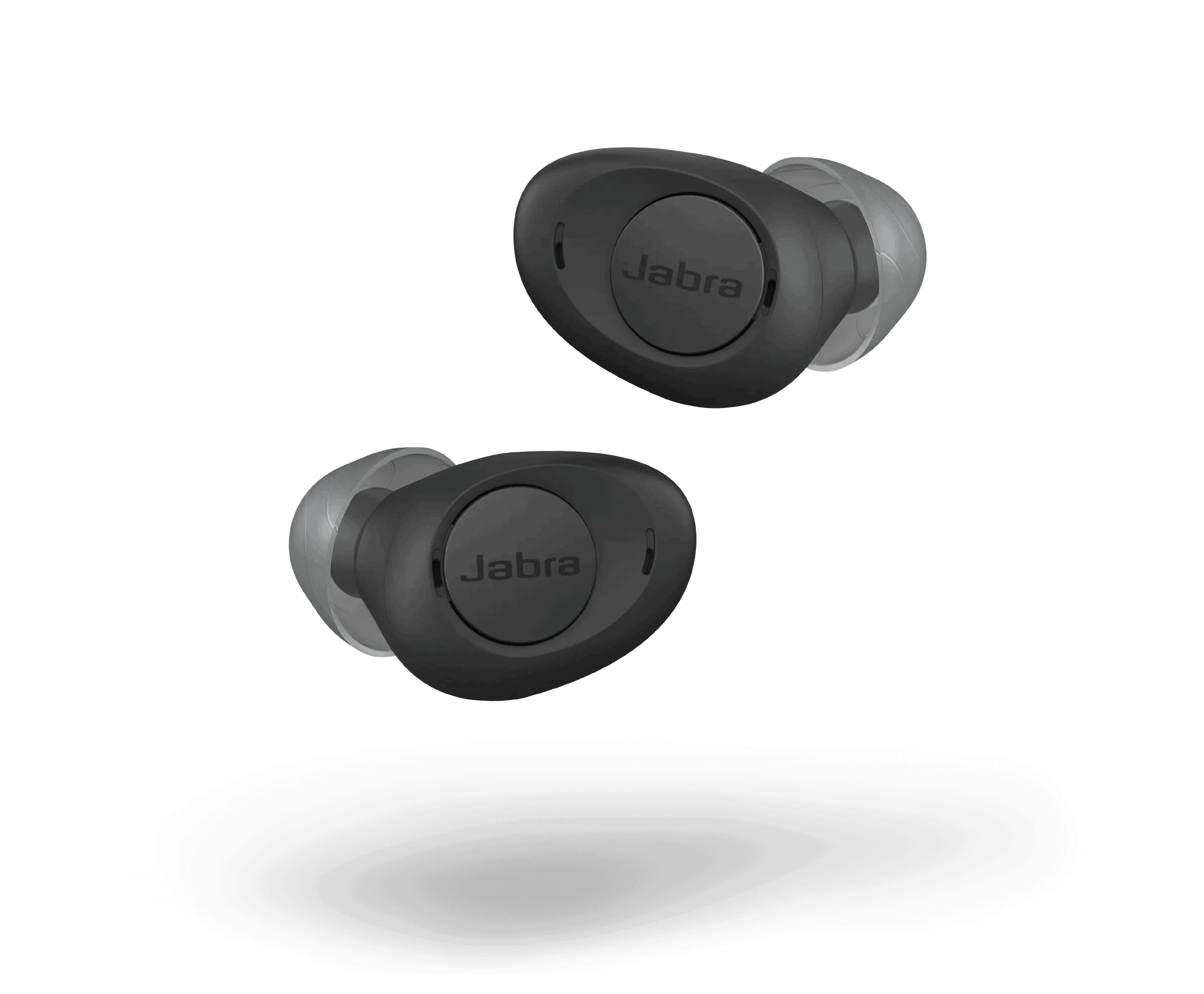
1. Jabra Enhance - Best Bluetooth streaming
See Pricing Links to Jabra EnhanceWhat we like most
- Direct Bluetooth streaming to Apple devices
- Free Jabra Enhance mobile app
- Three years of audiologist support with premium package
Jabra EnhanceSee Pricing Links to Jabra EnhanceOverview:
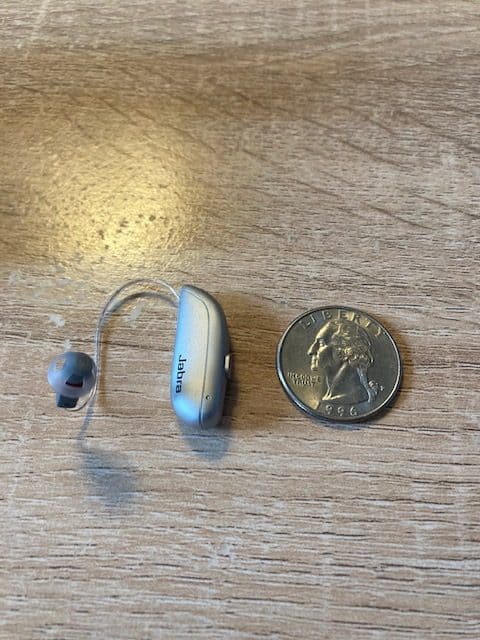
Testing out Jabra Enhance Select 300 hearing aids
Jabra Enhance, previously known as Lively, sells three behind-the-ear (BTE) hearing aid models that directly stream to Apple devices. You can listen to phone calls and stream music, audiobooks, Netflix, and other media directly from your hearing aids. For seniors with an iPhone 11 or newer (and iOS 15.1 or later), the Enhance Select 300 model is recommended. These rechargeable hearing aids offer a solid bang for your buck, clear sound quality, and robust features, including hands-free calling.
» You Might Like: Best Smartphones for Seniors
When you purchase Jabra Enhance hearing aids, you can access the Jabra Enhance Select mobile app. We could adjust settings, change the volume, and seek help from the Jabra Enhance Care team right from our phone. Remote hearing care with Jabra Enhance’s audiology team is available for three years after purchasing a Premium package — an excellent perk from a company that sells hearing aids directly to consumers!
Pros & Cons:Pros About Jabra Enhance
- Direct streaming from Apple devices
- Free iOS app
- Rechargeable and battery-powered options
- Risk-free 100-day trial
- Three-year warranty and virtual audiologist care included with Premium packages
- No prescription required
Cons About Jabra Enhance
- Not suitable for severe to profound hearing loss
- Three-year warranty and audiologist support cost extra
- Only BTE models available
Our Hands-on Experience:iPhone Compatibility
Though you can get the most out of your hearing aids (such as hands-free calling) with a more recent iPhone model, seniors with older iPhones shouldn’t worry about Jabra Enhance. The provider sells made-for-iPhone (MFi) hearing aids that are Bluetooth-ready and compatible with most Apple products, dating back to the iPhone 5s (2013) and the 4th-generation iPad (2012). We had no issues connecting the Enhance Select 300s to our iPhone. Once connected, we could listen to music on the subway and stream calls with friends, without any problems!
Hands-free calling is incompatible with any model before the iPhone 11, and it will only work with select iPad Mini and iPad Pro models. Even if you can’t enjoy direct-to-iPhone streaming due to compatibility issues, the Jabra Enhance Select mobile app still allows you to make setting adjustments and even connect with a hearing professional as needed.
» Our Full Review: Jabra Enhance Hearing Aids Review 2026
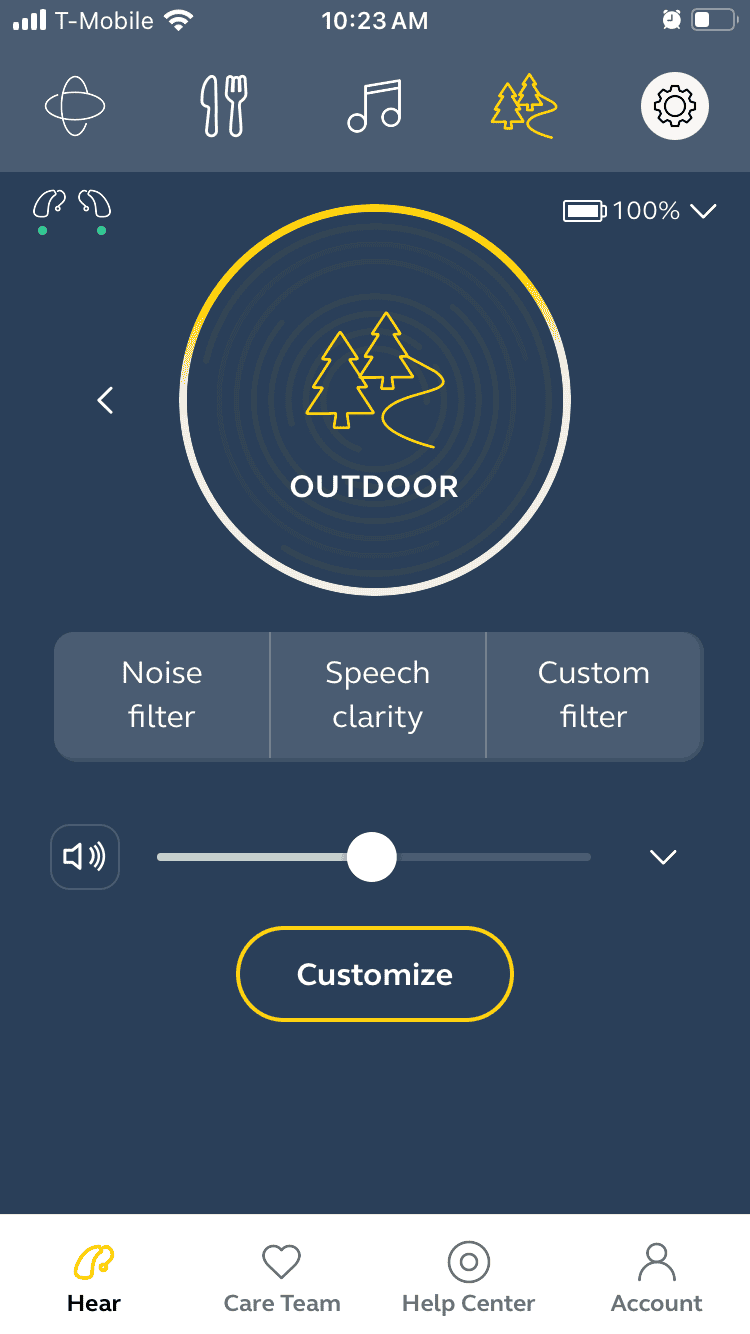
We give the mobile app high marks, as it’s easy to use and customize your devices. We adjusted the settings for noise filters, speech clarity, and more. We could also change between programs, such as Outdoor and Music.

Making adjustments using the Jabra Enhance mobile app
Pricing
Unlike prescription hearing aids from brands like Widex and Oticon, Jabra Enhance is transparent with its pricing. The Jabra Enhance Select 50R costs $1,195 per pair, the Jabra Enhance Select 300 costs $1,695 per pair, and the Jabra Enhance Select 500 costs $1,995 per pair.
These prices are affordable, considering that comparable models from prescription providers like Widex and Oticon can easily cost twice as much (or more). Plus, all packages include hearing aids and a charging case (a one-year supply of batteries with Jabra Enhance Select 50R). Also included are a three-year warranty, three-year loss and damage protection, and three years of virtual audiologist care. While Jabra Enhance offers some great deals, it doesn’t have the most affordable hearing aids on this list. That honor goes to Eargo, starting at $799 per pair.
Did You Know? One in three Americans with hearing loss has not used hearing aids or even sought treatment from a doctor.
-
2. Eargo - Best invisible hearing aids with mobile app
See Pricing Links to EargoWhat we like most
- Bluetooth connectivity via the Eargo case
- Most models work with the Eargo iOS app
- Access to lifetime telecare support
EargoSee Pricing Links to EargoOverview:
Testing out Eargo 7 hearing aids
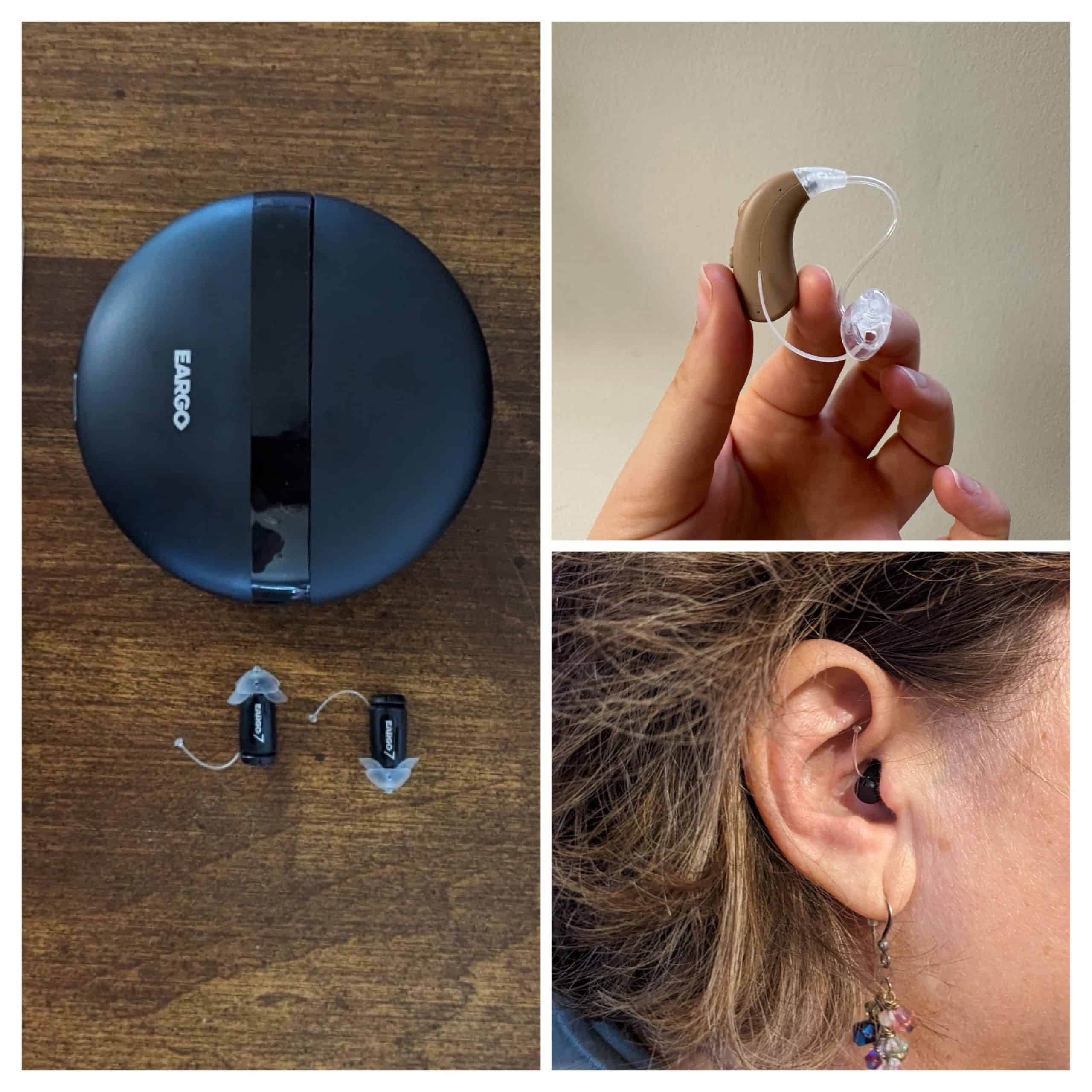
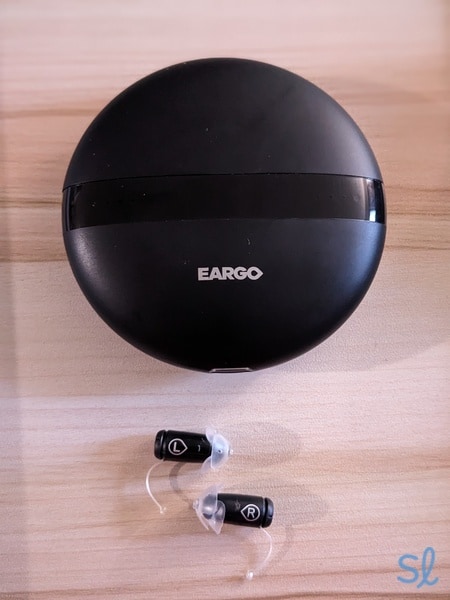
Eargo is a fantastic option for those with iPhones who want an invisible hearing aid. This direct-to-consumer hearing aid provider sells three discreet in-canal models, so you’re truly in control of who knows about your hearing loss. Since Eargo hearing aids are tiny, there isn’t room for Bluetooth technology; this means no streaming to your iPhone. We were disappointed by this, as mobile apps are beneficial for customizing hearing aids. Instead, Bluetooth technology is built into the charging case, which allows you to connect your hearing aids to the Eargo iPhone app for remote adjustments. That includes the earbud-style LINK by Eargo, their most affordable hearing aid at just $799 — nearly $200 less than the Jabra Enhance Select 50R model. This model has direct streaming.
» Related Reading: Best Over-the-Counter Hearing Aids
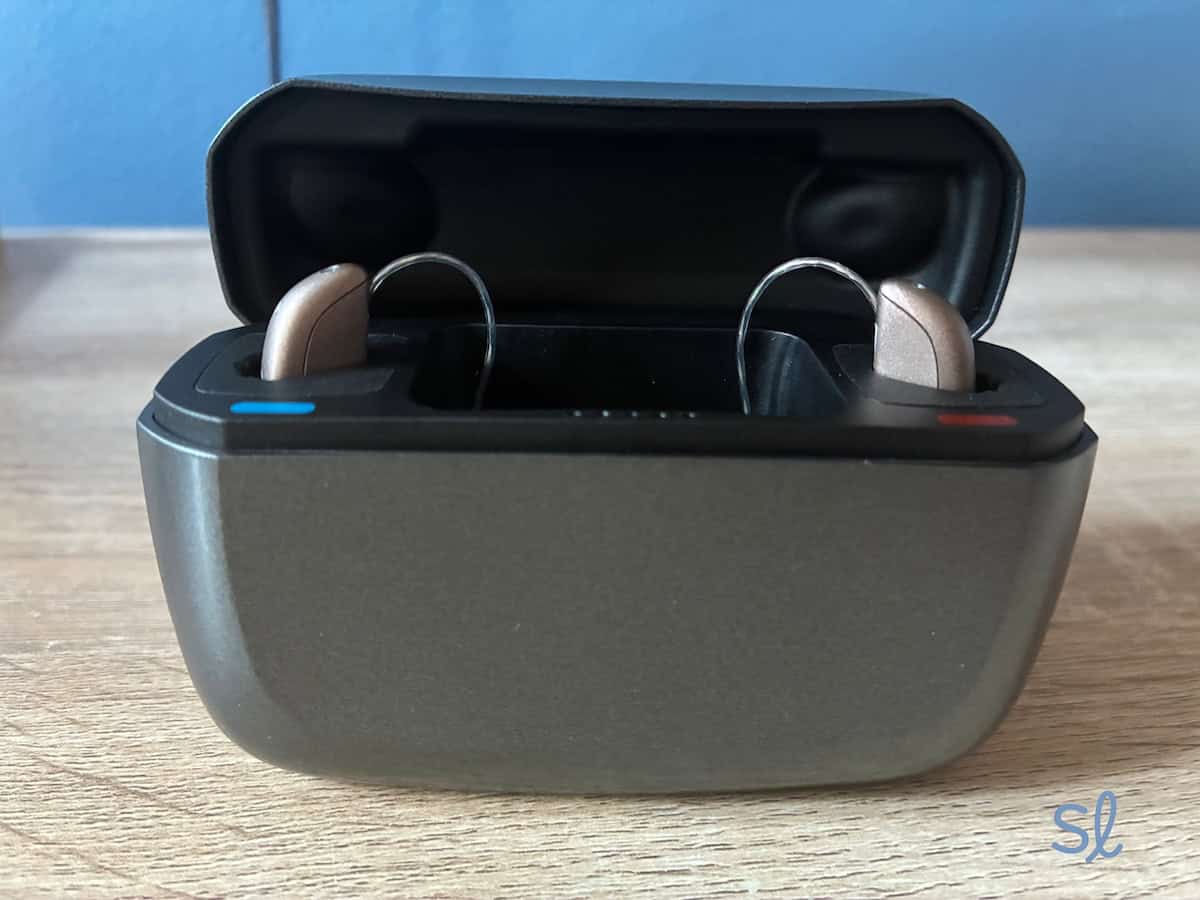
All of Eargo’s models — Eargo Link, Eargo SE, and Eargo 7 — work with Eargo’s mobile app, which is available for iOS devices. We could adjust features such as volume, noise filter, and sound programs. We could also access lifetime telecare support from Eargo hearing professionals. To make adjustments, we placed our hearing aids in the charging case, syncing them via Bluetooth to our iPhone. While this isn’t quite as convenient as Jabra Enhance, Widex, or Oticon, it still makes it easy to connect to just about any iPhone with Bluetooth turned on. Dr. Reisman notes that performance and user satisfaction are very high with Eargo hearing aids for candidates.
Expert InsightsEargo recently released a prescription device that we could customize for individuals with up to moderately severe hearing lossPros & Cons:Pros About Eargo
- Bluetooth built into charging case
- LINK by Eargo model has direct Bluetooth streaming
- Free iOS app for sound adjustments
- Nearly invisible design
- Two-year warranty and lifetime support from licensed hearing professionals
- No prescription required
Cons About Eargo
- Not for severe to profound hearing loss
- Cannot stream media directly to most Eargo models
Our Hands-on Experience:iPhone Compatibility
You may not be able to stream audio from your iPhone directly to your Eargo SE or 7 hearing aids, but the trade-off is worth it for the discreet hearing support. Plus, you can adjust settings with the Eargo mobile app and the Bluetooth technology in the charging case. If streaming directly from your iPhone is vital, you can still opt for the LINK by Eargo.
During testing, we found that the LINK by Eargo had decent quality, but it lacked some of the crispness and resonance that define prescription hearing aids. We found that the sound quality took some getting used to outdoors. It’s a tad tinny, but the noise-reduction feature works well, even on city streets. We had trouble boosting phone calls streamed into our hearing aids at lower volumes.

Testing out LINK by Eargo, the company's earbud-style hearing aids.
» Our Full Review: Eargo Hearing Aid Review
Pricing
Eargo lists pricing directly on its website, which you won’t find with a prescription provider like Widex or Oticon. Eargo hearing aid prices range from $799 to $2,699 per pair, but you can often find sales to knock off a few hundred dollars. Eargo also allows buyers to make monthly payments that can start as low as $23 per month. For the features and support offered, Eargo has solid value. However, these devices aren’t suitable for severe or profound hearing loss. Keep that in mind when considering your needs.
FYI: Not only does Eargo offer competitive pricing, but it is also one of our top picks for invisible hearing aids.
-
3. Widex - Most flexibility for iPhone users
See Pricing Links to ZipHearing.comWhat we like most
- Bluetooth streaming available with most models
- Free companion iPhone app for easy streaming
- Support and telehealth will vary by location
WidexSee Pricing Links to ZipHearing.comOverview:
Testing out Widex Moment hearing aids
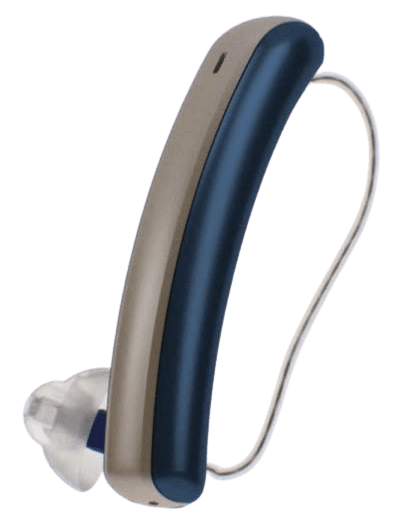
Widex sells three MFi hearing aid lines: SmartRIC, EVOKE, and MOMENT, available in BTE and ITE styles. That gives you more options than you can get with Jabra Enhance, which only offers three BTE models.
Each hearing aid line comes with a Widex companion app. Using the app, you can stream calls, videos, music, audiobooks, and more from your iPhone to your hearing aids. You can also adjust volume and pitch, access sound class, and manage tinnitus using your phone. We love the flexibility of Widex, which gives patients the best hearing environment without visiting their audiologist.
 Expert InsightsFrom Audiologist Dr. Ruth Reisman,Widex has the widest frequency range on the market and ZeroDelay technology; the latter allows music and speech to be prioritized and offers the best sound quality for the user. If you’re looking for top-notch sound quality, Widex is a great choice. Their smart hearing aid design also helps enhance speech audibility and localization by using strategically placed microphones.Pros & Cons:
Pros About Widex
- Multiple MFi models to choose from
- User-friendly mobile app
- Solutions for mild to profound hearing loss
- Rechargeable options
- Water-resistant
- “Zero Delay” in MOMENT product line
- Both ITE and BTE styles
Cons About Widex
- Cannot purchase online
- More expensive than OTC alternatives
Our Hands-on Experience:iPhone Compatibility
With Widex, you’re getting some of the best technology and an easy-to-use mobile app. These are MFi hearing aids, so they’ll work with virtually any iPhone, iPad, and even iPod. Widex doesn’t come with the convenience of an OTC brand like Eargo or Jabra Enhance (you will need a prescription from an audiologist). However, it does ensure that its Bluetooth hearing aids are a great fit for nearly any iPhone user. Plus, having a unique app for each product line ensures that users can adjust and tailor the hearing aids to suit their specific needs.
» Our Full Review: Widex Hearing Aid Reviews
Pricing
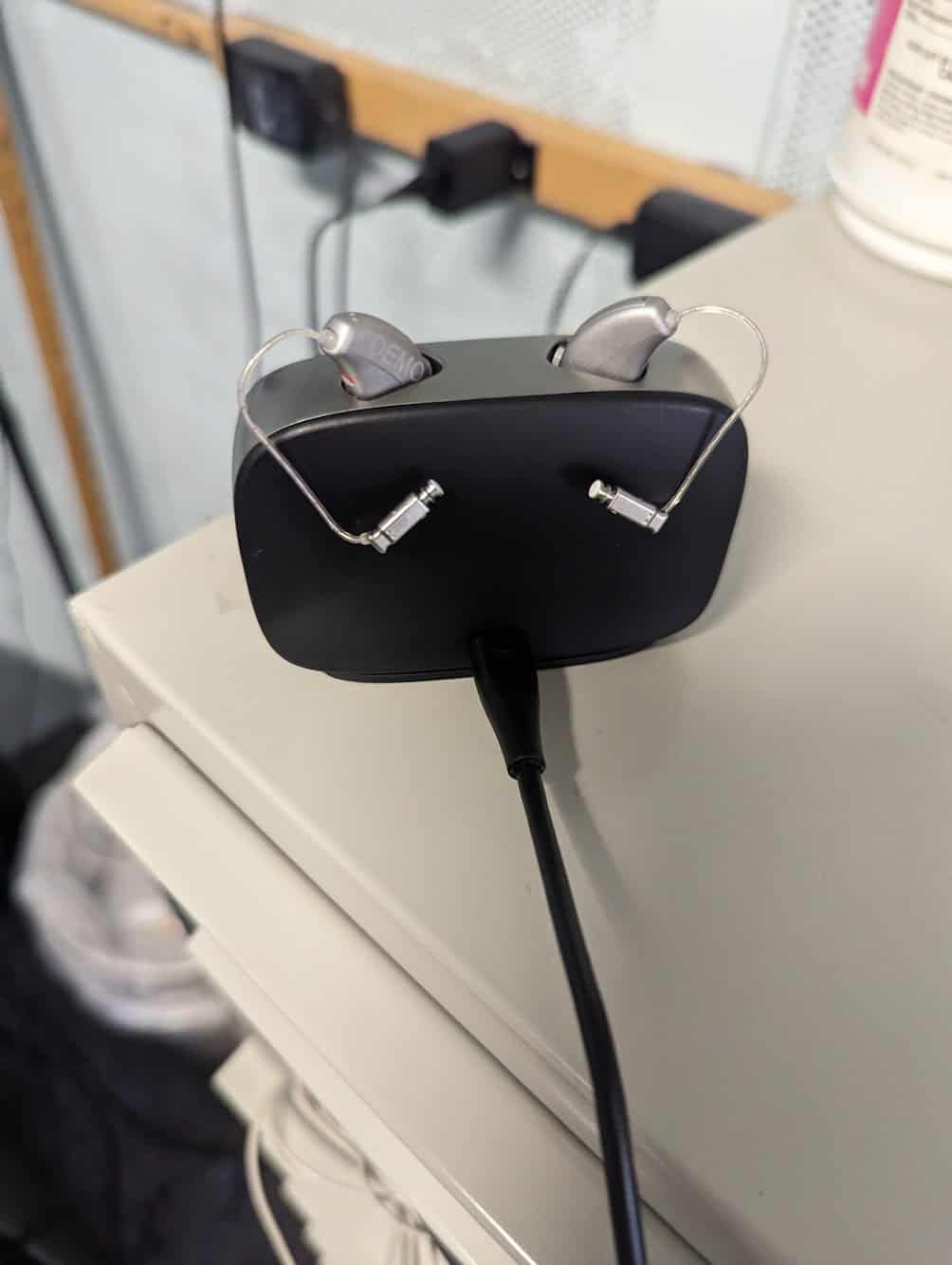
Widex pricing information isn’t available online. Their hearing aids must be purchased in person. Dr. Reisman estimates that most Widex models will vary between $1,000 and $3,750 per hearing aid, similar to Oticon’s pricing.
Visit your audiologist or local hearing aid specialist to discuss the cost and to learn which Widex model might be best for you. Despite higher prices, prescription hearing aids offer customization and care you won’t receive with OTC options like Eargo and Jabra Enhance.

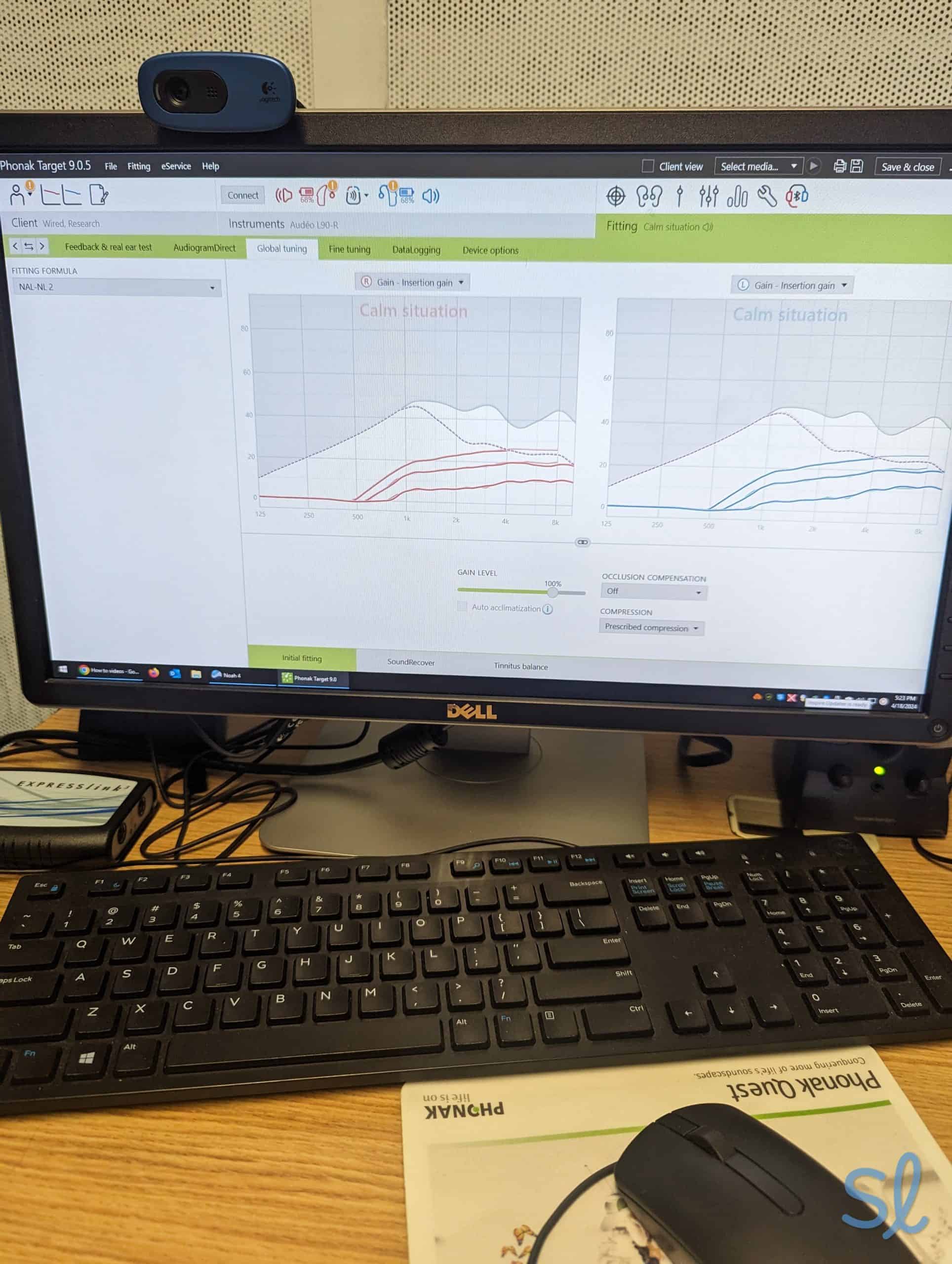
Dr. Ruth Reisman testing and customizing a pair of hearing aids
-
4. Oticon - Best for connecting to multiple Apple products
 See Options Links to ZipHearing.com
What we like most
- Options for all levels of hearing loss
- Personalized listening experience
- BrainHearing technology
OticonSee Options Links to ZipHearing.comOverview:
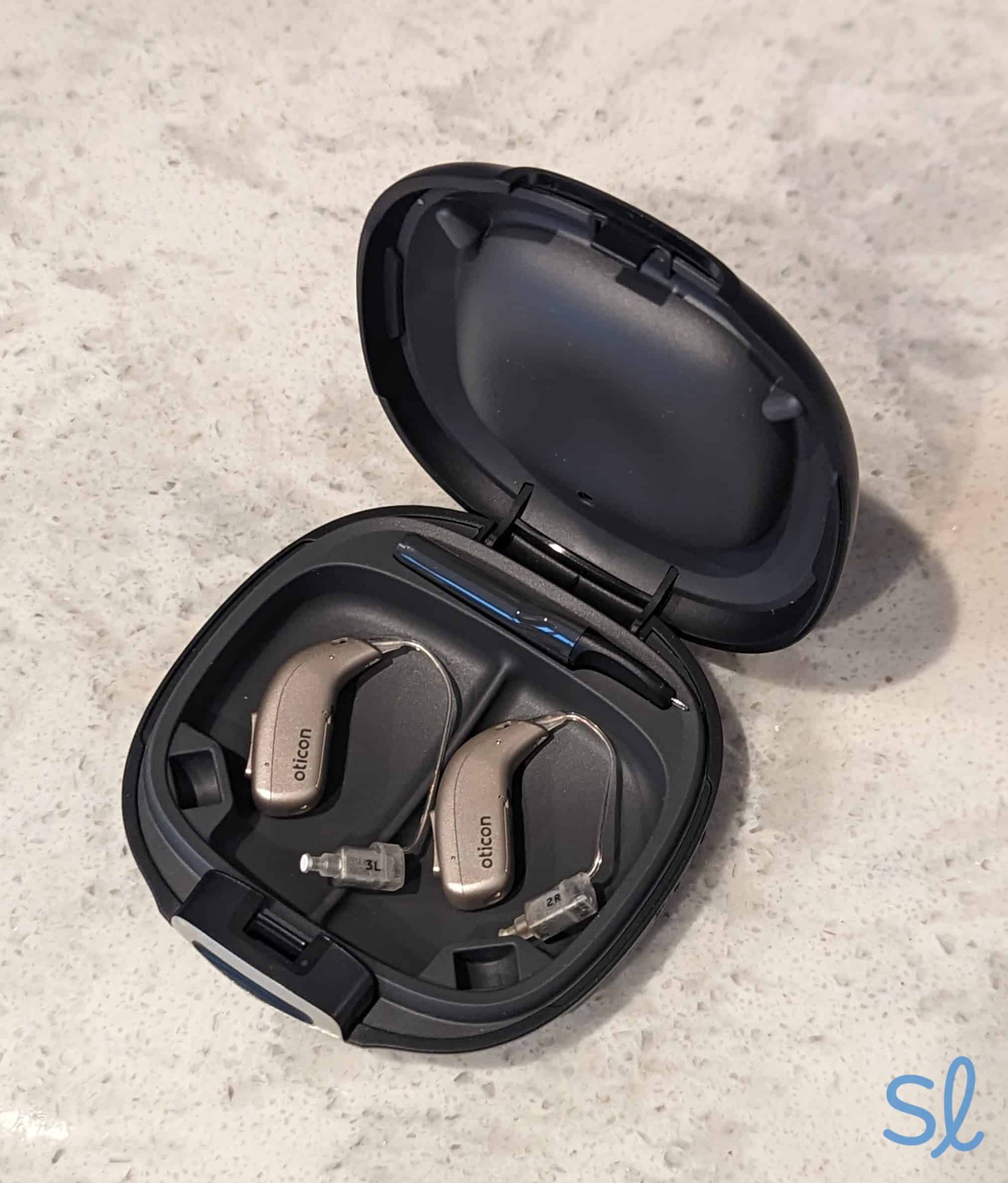
Testing out Oticon hearing aids
Oticon is known for creating some of the most advanced hearing aids on the market; they feature internet connectivity that allows you to connect to multiple Apple products simultaneously. Their hearing aids are MFi and can seamlessly connect to iPhones, iPads, and other Apple devices for streaming calls, media, and more. Tech-savvy users will be impressed by Oticon’s integration with IFTTT (If This Then That), which helps users automate various tasks.
» Compare Providers: Widex vs. Oticon
Using the Oticon mobile app and the IFTTT website, wearers can choose and create “if this, then that” scenarios, called applets. For example, you can set it up so that if a new event is added to your iPhone’s calendar, Oticon will convert the text to speech in your hearing aids. If you have an important event or appointment, your hearing aids will remind you so you don’t miss it! Applets like this only work on iPhones, so this integration is a special perk for Apple users. Dr. Reisman considers Oticon hearing aids some of the best for smart integration and feedback management.
Pros & Cons:Pros About Oticon
- MFi hearing aids
- Mobile app compatibility
- Options for mild to profound hearing loss
- Advanced BrainHearing technology
- IFTTT integration
- Custom ear molds available
- Variety of hearing aid styles
Cons About Oticon
- More expensive than OTC alternatives
- Available only with a prescription
- May not be the best option for less tech-savvy seniors
Our Hands-on Experience:iPhone Compatibility
Wireless connectivity, advanced sensor technology, and multiple style options give Oticon’s product line an edge over other providers. Not only does Oticon deliver all the bells and whistles, but their seamless connectivity with Apple products and IFTTT integration are significant benefits for tech-savvy users. For example, if you live with multiple iPhone users, you could connect to more than one iPhone simultaneously for two-way, hands-free phone and video calls. Regardless of your level of hearing loss, Oticon devices can help you hear clearly and make quick and easy adjustments as needed via the iOS mobile app.
» Our Full Review: Oticon Hearing Aid Reviews
Pricing
Oticon doesn’t disclose pricing on its websites. However, you can expect to pay top dollar for Oticon hearing aids due to their innovative technology. Dr. Reisman estimates that Oticon devices cost $1,000 to $4,000 per ear. Visit your audiologist or a local hearing aid specialist to learn about pricing and insurance coverage.
The Runners-Up
We narrowed the list to our favorite MFi hearing aids, but what about the ones that didn’t make the cut? Below are a few runners-up that might be suitable for some users.
- MDHearing: MDHearing’s range of low-cost BTE and ITE hearing aids works great for older adults with iPhones on a limited budget. For our full thoughts on MDHearing, check out our 2026 MDHearing review.
- Lexie: Lexie doesn’t sell the most advanced hearing aid on the market, but they do offer reliable BTE and receiver-in-canal (RIC) hearing aids with an excellent iOS mobile app. It can be used to complete a hearing test and even program your hearing aids using a smart-fit algorithm. Check out our Lexie hearing aid review to learn more.
- Otofonix: Otofonix sells budget hearing aids that are accessible to seniors of all income levels, including the iPhone-compatible Groove BTE model. Users can fine-tune their Bluetooth hearing aids in the mobile app for an improved listening experience. See what else sets this provider apart from the competition in our full review of Otofonix hearing aids.
What Are “Made for iPhone” Hearing Aids?
When shopping for hearing aids, you may see the phrase “Made for iPhone” or “MFi.” But what exactly does that mean? These hearing aids will connect directly via Bluetooth and/or the manufacturer’s app to your iPhone. You won’t need a separate device to make the connection.
FYI: MFi hearing aids make it easier for seniors with dementia or memory loss to connect their hearing aids to their iPhones without a lot of extra steps.
Apple advertises that all MFi hearing devices are compatible with the following devices:1
- iPhone 5 or later
- iPad Pro
- iPad Air
- iPad (4th generation) or later
- iPad Mini
- iPod Touch (5th generation) or later
Even with that assurance from Apple, you should still verify iPhone compatibility with the hearing aid provider you’re interested in. Features may be limited if you connect your hearing aid to an older device, even if it’s compatible. For example, the Jabra Enhance Select 300 offers hands-free phone calls only when on an iPhone 11 or newer and iOS 15.1 or later.
What Are the Benefits of Hearing Aids That Connect to iPhones?
Choosing a pair of hearing aids that connect to your iPhone gives you access to features you would otherwise miss. Some of these features may make you more likely to want hearing aids in the first place; this is important because the majority of older adults who need hearing aids have never used them.2 Here are some of the top benefits of connecting your hearing aids to your iPhone:
- Quickly make adjustments: Using Apple Hearing Controls, you can easily adjust the volume of the hearing aid and change the programming for MFi hearing aids. You can even adjust settings right from your iPhone’s lock screen for added convenience.
- Locate missing hearing aids: Some hearing aid providers, such as Oticon, include a “Find My Hearing Aid” feature in their app to see the last spot where you last connected to your iPhone. This feature is invaluable, considering how costly it can be to replace a lost hearing aid.
- Stream audio right to your hearing aids: iPhone-compatible hearing aids eliminate the need for pricey wireless accessories or streamers. And you never need to swap out your hearing aids for earbuds when you want to enjoy private listening. Instead, your hearing aids essentially act as Bluetooth earbuds while still functioning as a normal hearing aid.
- Effortlessly switch between Apple devices with Audio Handoff: If your hearing aids are connected to your iPhone, but then you start watching Netflix on your iPad, your hearing aids will automatically connect to your iPad for a seamless listening experience.
- Hear better in noisy environments: The Live Listen feature turns your Apple device into a remote microphone. That means you can hear better in busy, noisy environments. You could place your iPhone in front of your partner when you’re out for dinner so you can understand them better over the restaurant’s noise.
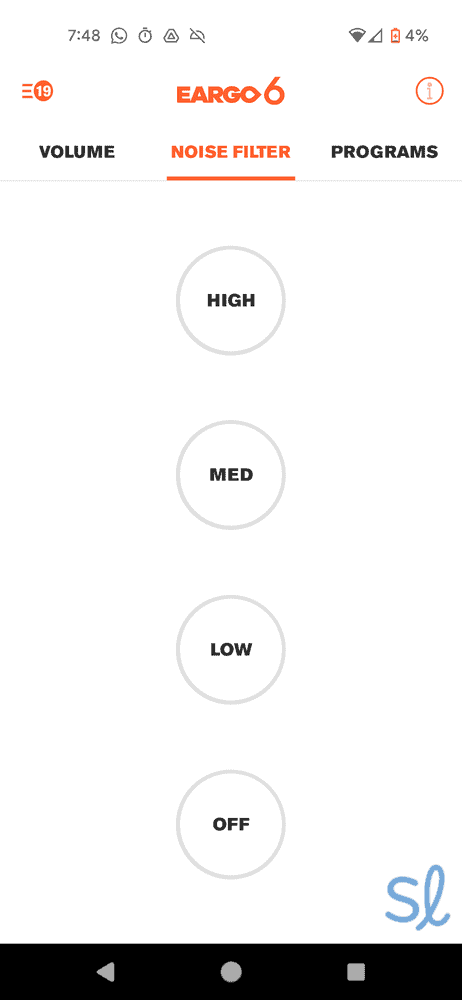
You can easily adjust your hearing aid settings in the Eargo mobile app.
Additional Hearing Aid Resources
Want to compare all of your options? We’ve tested and reviewed hearing aids for several other categories that could help you find the right fit:
Frequently Asked Questions About iPhone Hearing Aids
-
Are iPhones compatible with hearing aids?
iPhones are compatible with select hearing aid models. It depends on the company, the specific hearing aid, and your iPhone model. If you want to purchase hearing aids that are compatible with your iPhone model, confirm compatibility online or with your audiologist before purchase.
-
How do you pair your hearing aids with your iPhone?
Pair your hearing aids through the iPhone’s “Hearing Devices” option under “Accessibility” in the settings menu or by using the hearing aid manufacturer’s app. For more detailed instructions, visit our iPhone pairing guide.
-
Which hearing aids work best with an iPhone?
More than 80 hearing aid manufacturers sell MFi-compatible hearing devices. That includes Oticon, Jabra Enhance, and Widex. You can visit the Apple website for a complete list of Made- for-iPhone hearing aids.
-
Can I use my AirPods as hearing aids?
AirPods do not meet the FDA’s definition of a hearing aid. However, AirPods Pro 2 received FDA authorization in September 2024 to function as over-the-counter hearing aids for adults with mild to moderate hearing loss when paired with an iPhone or iPad running iOS 18.1 or later. Note that standard AirPods were not designed to offer the same benefits as authentic hearing aids; plus, they do not have nearly the same level of support.
-
Do hearing aids work better with an iPhone or Android?
Most hearing aids that connect to smartphones are compatible with a range of iPhone and Android devices. MFi compatibility makes it easier to check if a specific model will work well with an iPhone, while the Android Audio Streaming for Hearing Aids (ASHA) protocol does the same for Android-compatible hearing aids. Whether your hearing aids work better with an iPhone or Android depends on the brand and model of both your hearing aids and smartphone.
-
Apple. (2021). Use Made for iPhone hearing devices.
-
National Institute on Deafness and Other Communication Disorders. (2021). Quick Statistics About Hearing.