Oxygen Concentrators for Sleep Apnea
Understanding the Difference Between CPAP Therapy and Supplemental Oxygen — and When You Need Both


SeniorLiving.org is supported by commissions from providers listed on our site. Read our Editorial Guidelines
Sleep apnea and low blood oxygen can happen at the same time, but they’re not the same problem. Obstructive sleep apnea happens when the airway repeatedly narrows or closes during sleep. Low blood oxygen can happen because of sleep apnea, but it can also come from COPD, pulmonary fibrosis, heart failure, or another condition that affects breathing.
A CPAP machine helps keep the airway open, while an oxygen concentrator adds supplemental oxygen to the air you breathe. One does not automatically replace the other. In this guide, we explain when CPAP is usually enough, when oxygen may be added, why continuous flow is often preferred at night, and what to ask your doctor before using both devices together.
FYI: If your doctor has prescribed you an oxygen concentrator for waking life, we recommend checking out our guide to the best portable oxygen concentrators in 2026!
Table of Contents
Quick Highlights
- An oxygen concentrator does not treat obstructive sleep apnea on its own because it cannot keep a blocked airway open.
- CPAP therapy is usually the first-line treatment for obstructive sleep apnea because it uses pressurized air to keep the airway open during sleep.
- Supplemental oxygen may be prescribed with CPAP if oxygen levels stay low due to COPD, heart failure, pulmonary fibrosis, or another respiratory or cardiac condition.
- Continuous flow oxygen is usually preferred for nighttime use because pulse dose units may not reliably detect shallow breathing during sleep.
- Never add oxygen to CPAP or adjust oxygen flow settings without your doctor’s guidance, since incorrect oxygen use can be harmful.
Can an Oxygen Concentrator Treat Sleep Apnea?
No. An oxygen concentrator cannot treat obstructive sleep apnea by itself because it does not keep the airway open. It can raise the oxygen level in the air you breathe, but it doesn’t stop the airway from collapsing or becoming blocked during sleep.
For most people with obstructive sleep apnea, CPAP, BiPAP, or another positive airway pressure therapy is the more appropriate treatment because it addresses the airway obstruction directly. Oxygen may be added if your oxygen levels remain low despite proper sleep apnea treatment, but that decision should come from your doctor after a sleep study, overnight oximetry, or other testing.
>> Check Out: A Guide to Portable Oxygen
Sleep Apnea vs. Low Blood Oxygen: Two Different Problems
Obstructive sleep apnea (OSA) occurs when the throat muscles relax during sleep and temporarily block the airway. These pauses in breathing can cause oxygen levels to drop — but the root cause is physical obstruction, not an inability of the lungs to process oxygen.1
CPAP machines are primarily used to treat obstructive sleep apnea by delivering a continuous stream of pressurized air through a mask to keep the sleeper's airway open, helping to normalize breathing through the night. Once the airway obstruction is resolved, oxygen levels typically return to normal.
That’s why we recommend asking your doctor to explain your sleep study results in plain language. The key question is not just whether your oxygen levels dropped, but whether they dropped because your airway was blocked, because of another lung or heart condition, or because of both.
In treating obstructive sleep apnea, once the nightly airway obstruction is removed by using CPAP therapy, your lungs may be able to increase blood oxygen content to acceptable levels with just outside air, and supplemental oxygen isn't needed.
An oxygen concentrator, by contrast, addresses low blood oxygen at the source: it enriches the air you breathe with concentrated oxygen. But it cannot open a blocked airway. An oxygen concentrator cannot be used instead of a CPAP machine because oxygen concentrators aren't designed to keep a person's airway open during sleep.

| Treatment | What It Does | What It Does NOT Do | Best For |
|---|---|---|---|
| CPAP | Uses pressurized air to keep the airway open during sleep | Does not add supplemental oxygen | Obstructive sleep apnea |
| BiPAP | Uses two pressure levels to support inhaling and exhaling | Does not automatically correct all oxygen problems | Some people with sleep apnea, COPD, or higher pressure needs |
| Oxygen concentrator | Adds supplemental oxygen to the air you breathe | Does not open a blocked airway | Low blood oxygen caused by respiratory or cardiac conditions |
| CPAP + oxygen | Keeps the airway open while adding supplemental oxygen | Should not be used without physician oversight | Sleep apnea with persistent low oxygen levels, COPD-OSA overlap, or certain cardiac/lung conditions |
Did You Know? In some studies, as much as 75 percent of adults 65 and over have met the criteria for obstructive sleep apnea.2
When Is Supplemental Oxygen Prescribed for Sleep Apnea?
There are specific clinical situations where supplemental oxygen is part of sleep apnea management:
When CPAP isn't sufficient. Oxygen administration has been used as an alternative treatment in patients with OSA who are not tolerant or not compliant with CPAP therapy; the purpose of supplemental oxygen in this situation is to reduce the harmful effects of transient low blood oxygen levels during sleep. However, this approach has limitations — oxygen alone does not address the airway obstruction itself and may prolong apnea duration in some patients. This is a decision that requires close physician oversight.
Central sleep apnea (CSA). Unlike obstructive sleep apnea, central sleep apnea involves the brain failing to send proper signals to the breathing muscles.3 Supplemental oxygen combined with PAP therapy is used to treat some people with central sleep apnea.
Coexisting respiratory conditions. Patients who have both sleep apnea and a separate condition that impairs lung function — such as COPD, pulmonary fibrosis, or heart failure — may have overnight oxygen levels that remain low even when the airway is kept open. In these cases, supplemental oxygen is often prescribed in addition to CPAP.
>> Learn About: Changes in Health and Health Care as We Age
Who May Need Both CPAP and Oxygen?
Some people need CPAP and supplemental oxygen together, but this is not the default for every sleep apnea patient. Your doctor may consider combined therapy if you have:
- Obstructive sleep apnea plus COPD, also known as COPD-OSA overlap syndrome
- Central sleep apnea related to heart failure or another medical condition
- Pulmonary fibrosis or another lung disease that lowers oxygen levels
- Overnight oxygen levels that remain low even when CPAP is working properly
- A documented need for oxygen therapy based on overnight oximetry or arterial blood gas testing
For seniors, the most important takeaway is this: do not assume that low oxygen during sleep automatically means you need an oxygen concentrator. First, your care team needs to determine whether the oxygen drop is caused by airway obstruction, lung disease, heart disease, or a combination of factors.
>> You Might Like: Senior Home Care Guide
CPAP and Oxygen Together: COPD-OSA Overlap Syndrome
COPD-OSA overlap syndrome is a well-recognized clinical condition where patients have both COPD and obstructive sleep apnea simultaneously. Patients with COPD-OSA overlap syndrome have difficulty breathing during sleep due to a restricted airway and are typically advised to use both a CPAP or BiPAP machine and an oxygen device while sleeping. For these patients, continuous flow oxygen delivery is the only suitable option to ensure adequate oxygen levels throughout the night.
For people with both OSA and low blood oxygen levels due to underlying cardiopulmonary disorders, using a CPAP machine with supplemental oxygen can offer significant health benefits. Your physician will typically determine whether this combined approach is appropriate based on your overnight oximetry results and the severity of your underlying conditions.
How to Connect an Oxygen Concentrator to a CPAP Machine
For patients who need both therapies simultaneously, the two devices can be connected using a specialized adapter.
To connect an oxygen concentrator to a CPAP machine, you may need an adapter called an oxygen enrichment port connector (also known as a bleed-in connector). The adapter connects directly to the CPAP machine, with a larger port for the CPAP hose and a smaller port for the oxygen tube.
Some masks have a dedicated hole designed to receive a flow of oxygen from a concentrator, while those without one can use an oxygen enrichment adapter to feed oxygen directly into the CPAP hose.
For caregivers helping set up equipment, the tubing arrangement can be confusing at first. Ask the DME supplier to show you exactly where the oxygen tubing connects, how to position the CPAP hose, and what the machine should look and sound like when everything is working correctly.
>> Related Reading: A Guide to Caregiving in Senior Care
Choosing the Right Concentrator for Nighttime Use
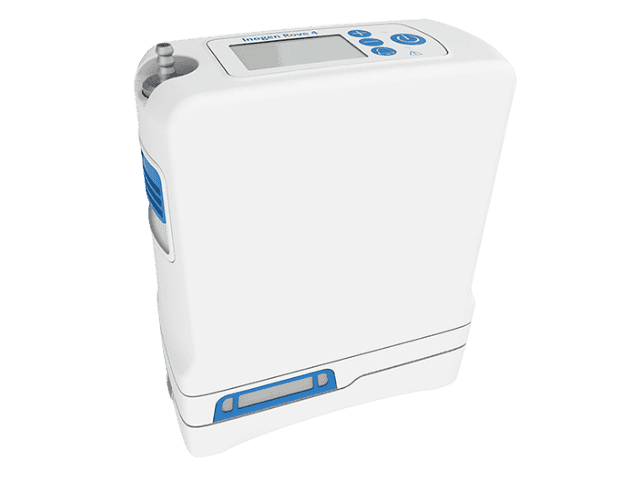
For overnight oxygen therapy, continuous flow delivery is almost always medically preferred. A pulse dose device relies on detecting your breathing to trigger oxygen release — and during sleep, breathing patterns can become too shallow or irregular for the sensor to reliably detect.
The reason doctors lean toward continuous flow for sleep is that shallow and mouth breathers may not trigger the pulse sensor, and if no pulse is triggered, some machines will alarm, waking patients up frequently throughout the night.
For patients who need overnight oxygen at home alongside CPAP, a bedside home concentrator offering continuous flow — such as the Inogen At Home or Voxi 5 — is typically the most appropriate choice. For patients who travel and need to maintain therapy away from home, a continuous flow portable such as the CAIRE Eclipse 5 or O2 Concepts Oxlife Liberty2 offers the same clinical reliability in a more mobile package.
We also recommend thinking about noise, bedroom layout, and backup power. A concentrator that works clinically still needs to fit safely near the bed, allow tubing to reach comfortably, and have a plan for power interruptions.
>> Research Providers: Inogen Review and Pricing
Why You Should Not Self-Treat Sleep Apnea With Oxygen
Do not buy or use oxygen to treat sleep apnea without a prescription. Oxygen therapy can be helpful when prescribed correctly, but it can also create risks if used at the wrong flow rate or for the wrong condition. In some people, especially those with COPD or other respiratory conditions, incorrect oxygen use may worsen carbon dioxide retention or delay proper treatment.
Over-the-counter oxygen products are not a substitute for prescribed oxygen therapy, CPAP, BiPAP, or a sleep study. If you wake up gasping, snore heavily, feel exhausted during the day, or see low oxygen readings overnight, talk with your doctor about formal testing before changing your equipment.
Final Thoughts
An oxygen concentrator does not replace CPAP for obstructive sleep apnea. CPAP keeps the airway open, which is the core treatment goal for most people with OSA. Oxygen therapy serves a different purpose: it raises oxygen levels when the body is not getting enough oxygen despite proper airway support or because of another respiratory or cardiac condition.
For seniors with sleep apnea, the safest next step is testing, not guessing. A sleep study, overnight oximetry, and a clear prescription can show whether you need CPAP alone, oxygen alone for another condition, or CPAP and oxygen together. If oxygen is prescribed for nighttime use, continuous flow is usually the more reliable option than pulse dose during sleep.
Work with your doctor, sleep specialist, and DME supplier before connecting oxygen to CPAP or changing any settings. The right setup can improve nighttime breathing and safety, but only when it is matched to your diagnosis and monitored by your care team.
FAQs
-
Can an oxygen concentrator replace a CPAP machine for sleep apnea?
No — an oxygen concentrator enriches the air you breathe but cannot open a blocked airway. CPAP therapy remains the standard treatment for obstructive sleep apnea. Oxygen may be added on top of CPAP when blood oxygen levels remain low even with the airway open.
-
Do I need both a CPAP and an oxygen concentrator?
Only if your physician determines that CPAP alone isn’t sufficient to maintain your overnight oxygen saturation. Patients with COPD-OSA overlap syndrome or certain cardiac conditions may need both, but many sleep apnea patients do not require supplemental oxygen at all.
-
Why is continuous flow preferred for overnight oxygen use?
Because sleep breathing patterns — especially shallow breaths and mouth breathing — may not reliably trigger a pulse dose sensor, which can result in inconsistent oxygen delivery or false alarms during the night.
-
What is COPD-OSA overlap syndrome?
It’s a condition where a patient has both COPD and obstructive sleep apnea simultaneously. Because both conditions affect nighttime oxygenation, most patients require combined CPAP and continuous flow supplemental oxygen therapy.
-
Is supplemental oxygen safe to use without a prescription?
No — using supplemental oxygen without a prescription and physician oversight carries real risks, including elevated CO2 levels in some patients. Always work with your care team before starting or adjusting oxygen therapy.
-
Mayo Clinic. (2025). Obstructive sleep apnea.
-
National Library of Medicine. (2023). Sleep Apnea in the Elderly: A Great Challenge for the Future.
-
National Library of Medicine. (2025). Central Sleep Apnea in Adults: An Interdisciplinary Approach to Diagnosis and Management—A Narrative Review.