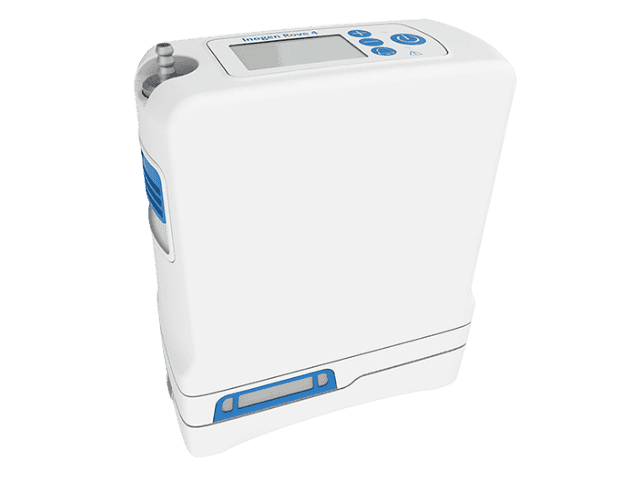
Best Portable Oxygen Concentrators in 2026
Our top picks include lightweight pulse-dose models for errands and travel, plus stronger continuous-flow options for older adults who need more oxygen support.

We evaluated portable oxygen concentrators based on the factors that matter most to older adults and caregivers in everyday life: oxygen delivery type, weight, battery life, ease of carrying, noise level, and whether the unit is realistically suited for errands, travel, or at-home use.
We also compared manufacturer specifications, prescription flexibility, and whether each unit offered practical value for common senior needs, such as room-to-room movement, longer outings, or continuous-flow support.
We paid special attention to one issue that buyers often miss: a portable oxygen concentrator can look great on paper but still be a poor fit if its flow type or battery setup doesn’t match your prescription and routine. That’s why we don’t simply rank the smallest units as the best. Instead, we matched each model to the kind of user it is best for, whether that means lightweight daily portability, stronger continuous-flow support, or higher-output transportable oxygen.
FYI: Portable oxygen concentrators are prescription medical devices, and the FDA recommends using oxygen concentrators only as directed by a health care provider.1
SeniorLiving.org is supported by commissions from providers listed on our site. Read our Editorial Guidelines

- Price range: $2,795 to $3,295+
- Weight: 4.8 pounds
- Unique features: Six pulse-dose settings
- Price range: $795 to $1,795
- Weight: 32 pounds
- Unique feature: At-home oxygen support

- Price range: $2,995 to $3,195
- Weight: about 5 pounds
- Unique feature: Wearable pulse-dose concentrator

- Continuous flow available
- Pulse settings up to 10
- Strong therapy flexibility
- Broad oxygen support
- Continuous flow capability
- Rolling cart included
Contents
Choosing a portable oxygen concentrator can be overwhelming because the “best” model depends less on brand reputation than on your prescription, flow type, battery needs, and how far you plan to carry it. Some older adults do best with a lightweight pulse-dose device for appointments and travel, while others need a heavier continuous-flow unit that can support sleep, higher oxygen needs, or longer periods away from home.
To help you narrow down the options, we compared today’s leading portable oxygen concentrators based on oxygen delivery, weight, battery life, portability, and everyday practicality for older adults and caregivers. Our top recommendation for most active seniors is the Inogen Rove 6, while stronger options like the Oxlife Liberty2 and CAIRE Eclipse 5 make more sense for people who need continuous flow or higher output.

Quick Highlights
- The Inogen Rove 6 is the best fit for most active users because it balances low weight, strong pulse-dose flexibility, and travel-friendly battery options better than heavier transportable units.
- If you need continuous flow, skip the smallest pulse-dose models and look at stronger units like the Oxlife Liberty2 or CAIRE Eclipse 5, which are better suited to higher oxygen needs.
- The best portable oxygen concentrator is not always the lightest one; it is the one that matches your prescription, supports your daily routine, and is practical enough that you will actually use it.
Comparison Chart
| Product | Price range | Best for | Flow type | Weight | Key strength |
|---|---|---|---|---|---|
| Inogen Rove 6 | $2,795 – $3,295+ | Best overall | Pulse dose | 4.8 lbs | Lightweight travel |
| Inogen Voxi 5 | $795 – $1,795 | Home continuous flow | Continuous flow | 32 lbs | Steady home oxygen |
| CAIRE FreeStyle Comfort | $2,995 – $3,195 | Comfortable carrying | Pulse dose | About 5 lbs | Curved ergonomic design |
| Oxlife Liberty2 | $2,699 – $3,399+ | Portable continuous flow | Pulse + continuous | About 6-7.5 lbs | Continuous flow mobility |
| CAIRE Eclipse 5 | $2,595 – $3,200+ | Higher oxygen needs | Pulse + continuous | 18.4 lbs | Broad prescription support |
Pro Tip: Before choosing a concentrator, ask your clinician whether you need pulse dose, continuous flow, or both during exertion, rest, and sleep.
-
1. Inogen Rove 6 - Best Overall Portable Oxygen Concentrator
 Get a Free Guide Links to Inogen.com
What we like most
- Price range: $2,795 to $3,295+
- Weight: 4.8 pounds
- Unique features: Six pulse-dose settings
Inogen Rove 6Get a Free Guide Links to Inogen.comOverview:The Inogen Rove 6 is our top pick because it checks the boxes that matter most for everyday independence: low weight, strong pulse-dose performance, easy controls, and travel-friendly battery options. Inogen lists the Rove 6 at 4.8 pounds with six flow settings and up to 1,260 mL per minute of oxygen output.
We recommend the Rove 6 for older adults who leave home often and want a concentrator that feels realistic for appointments, family visits, flights, and day-to-day errands. It is a better fit than heavier transportable models for users whose prescription can be safely met with pulse dose alone.
>> Check Out: Changes in Health and Health Care as We Age
Pros & Cons:Pros About Inogen Rove 6
- Lightweight enough for errands
- FAA-friendly travel design
- Extended battery available
Cons About Inogen Rove 6
- Pulse dose only
- Premium price range
Price and Value:The Inogen Rove 6 falls into the higher end of the portable oxygen concentrator market, with prices ranging from $2,795 to $3,295 or more. That makes it more expensive than the Inogen Voxi 5 and similar in price to premium pulse-dose models like the CAIRE FreeStyle Comfort.
The value comes from its balance of low weight, six pulse-dose settings, and stronger portability for older adults who leave home often.
FYI: Remember that, if your doctor deems an oxygen concentrator medically necessary, it will likely be covered by Medicare Part B as durable medical equipment.
Features and Performance
The Rove 6 offers six pulse-dose settings, which gives users and clinicians more flexibility than many smaller portable concentrators. At 4.8 pounds, it is one of the easiest models on our list to carry for daily movement, especially compared with transportable continuous-flow units like the CAIRE Eclipse 5. Its biggest strength is that it feels realistic for everyday use: walking into appointments, running errands, visiting family, or moving through an airport.
The tradeoff is that the Rove 6 is pulse dose only, so it’s not the right fit for everyone. Seniors who need continuous flow during sleep, exertion, or longer oxygen therapy sessions may need to consider the Oxlife Liberty2 or CAIRE Eclipse 5 instead.
For active seniors who do well on pulse dose, however, the Rove 6 offers one of the best combinations of portability, oxygen-setting flexibility, and travel practicality.
Customer Feedback
Customer reviews often highlight the Rove 6’s portability and battery life. Caregivers may also appreciate the simple display and lower carrying burden compared with heavier transportable concentrators. Some users might still need an extra battery for longer outings, so battery package and charging routine are important parts of the buying decision.
Read our 2026 Inogen review to learn more about this top brand and their products.
Pro Tip: Ask your oxygen provider to test your oxygen saturation while walking with the device, not just while sitting.
-
2. Inogen Voxi 5 - Best At-Home Continuous Flow Option
Get a Free Guide Links to Inogen.comWhat we like most
- Price range: $795 to $1,795
- Weight: 32 pounds
- Unique feature: At-home oxygen support
Inogen Voxi 5Get a Free Guide Links to Inogen.comOverview:The Inogen Voxi 5 is not a true portable oxygen concentrator for outdoor use, but it earns a place here because many users need a dependable home unit alongside a portable device. Inogen lists the Voxi 5 as a stationary concentrator that delivers up to 5 liters per minute of continuous flow oxygen.
We think the Voxi 5 is best for users who need a dependable home setup and do not need battery-powered mobility from the same machine. It makes the most sense as an at-home oxygen solution, especially for people who want continuous flow in a bedroom or living-room setup.
 Expert InsightsFrom Karen Selby, RN, Thoracic Oncology Nurse and Patient Advocate at The Mesothelioma CenterThe Voxi 5 is great for those patients who may need higher O2 demand, and don't like the feeling of the machine only working when needed. It's also a good choice for mouth breathers.Pros & Cons:
Pros About Inogen Voxi 5
- Continuous flow support
- Good for overnight use
- Lower price than many POCs
Cons About Inogen Voxi 5
- Not battery powered
- Too heavy for travel
Price and Value:The Inogen Voxi 5 is the most affordable model on our list, with prices ranging from $795 to $1,795. That is far less than portable models like the Inogen Rove 6, CAIRE FreeStyle Comfort, Oxlife Liberty2, and CAIRE Eclipse 5, but the lower price reflects an important difference: this is a stationary concentrator, not a battery-powered portable oxygen concentrator.
>> Save More: 9 Helpful Tips for Building a Budget on a Fixed Income
Features and Performance
The Voxi 5 delivers continuous flow oxygen for home use, which is important for seniors whose prescriptions cannot be met with pulse dose alone. It is best suited for bedrooms, living rooms, and caregiver-managed setups where the device can stay plugged in and available throughout the day or night. This makes it a practical option for users who need steady oxygen support but do not need a portable concentrator for outings.
Compared with the Rove 6 or FreeStyle Comfort, the Voxi 5 is not designed around independence outside the home. Its value is predictability: steady oxygen delivery, simple use, and a lower purchase price than most portable models. Seniors who need oxygen during sleep or extended rest may find this type of stationary unit more appropriate than a lightweight pulse-dose device, but anyone who wants battery-powered mobility should look elsewhere.
Customer Feedback
Users tend to appreciate stationary concentrators like the Voxi 5 because they are simple, predictable, and easy to build into a home routine. Caregivers may also prefer this type of setup because the device stays in one place, reducing the need to manage charging, spare batteries, or carrying accessories.
>> Learn More: A Guide to Caregiving in Senior Care
-
3. CAIRE FreeStyle Comfort - Best for Comfortable Carrying

What we like most
- Price range: $2,995 to $3,195
- Weight: about 5 pounds
- Unique feature: Wearable pulse-dose concentrator
Overview:The CAIRE FreeStyle Comfort is designed for people who want a portable concentrator that feels less awkward to carry. Its curved shape sits closer to the body, and CAIRE describes the device as using pulse-flow delivery that senses inhalation and delivers oxygen at the beginning of each breath.
This model is best for users who care as much about carrying comfort as they do about specifications. Compared with boxier pulse-dose units, its curved shape may feel easier to wear for shopping, short outings, and everyday movement.
Pros & Cons:Pros About CAIRE FreeStyle Comfort
- Comfortable wearable shape
- Lightweight for daily use
- Good battery flexibility
Cons About CAIRE FreeStyle Comfort
- Pulse dose only
- Not ideal for all prescriptions
Price and Value:The CAIRE FreeStyle Comfort is priced between $2,995 and $3,195, putting it in the same premium range as the Inogen Rove 6. It costs much more than the Inogen Voxi 5, but unlike the Voxi 5, it is designed for full portable use. Its value comes less from being the cheapest option and more from being easier to wear and carry during daily movement.
Features and Performance
The FreeStyle Comfort is built around wearable comfort. Its curved shape is designed to sit closer to the body, which may make it feel less bulky than more rectangular portable concentrators. At about 5 pounds, it is still light enough for many older adults to carry, but its shape is the feature that really sets it apart from other pulse-dose models in this price range.
Performance-wise, the FreeStyle Comfort is best for users who need oxygen support during walking, errands, appointments, and local travel. The pulse-dose design can help preserve battery life, but it also limits who should use it. Seniors who need continuous oxygen during sleep or exertion may be better served by the Oxlife Liberty2 or Eclipse 5, even though those options are heavier and less convenient to carry.
Did You Know? One study found an average age of 79 among those who self-reported oxygen concentrator use, with roughly 80 percent of those prescriptions offered through Medicare.2
Customer Feedback
Customers often respond well to the FreeStyle Comfort’s less boxy design because it can feel more natural to carry in public. For many seniors, that comfort factor matters: a concentrator that feels easier and less conspicuous to wear is more likely to be used consistently.
-
4. O2 Concepts Oxlife Liberty2 - Best Portable Continuous Flow

What we like most
- Continuous flow available
- Pulse settings up to 10
- Strong therapy flexibility
Overview:The Oxlife Liberty2 is a standout option for people who ask, “What is the best portable oxygen concentrator continuous flow?” It offers continuous flow up to 2.0 LPM and pulse settings 1 through 10, according to O2 Concepts specifications.3
We recommend the Liberty2 for users who need more prescription flexibility than a pulse-only unit can provide. It is a stronger choice than the Rove 6 or FreeStyle Comfort for people who may need continuous flow outside the home, though the tradeoff is more weight and less grab-and-go convenience.
Pros & Cons:Pros About O2 Concepts Oxlife Liberty2
- Pulse and continuous flow
- More flexible prescriptions
- Wearable for some users
Cons About O2 Concepts Oxlife Liberty2
- Heavier than pulse-only units
- Shorter battery life at higher settings
Price and Value:The Oxlife Liberty2 ranges from $2,699 to $3,399 or more, which places it near the Inogen Rove 6 and CAIRE FreeStyle Comfort but with a major advantage: it supports both pulse dose and continuous flow. For seniors who need continuous flow outside the home, that added flexibility can make the higher price easier to justify.
Features and Performance
The Liberty2 offers both pulse-dose and continuous-flow oxygen, making it more flexible than pulse-only units like the Rove 6 and FreeStyle Comfort. It is especially useful for users whose oxygen needs change depending on whether they are resting, walking, or spending longer periods away from home. Its pulse settings up to 10 and continuous-flow capability give clinicians more room to match the device to the user’s prescription.
The main tradeoff is portability. At about 6 to 7.5 pounds, the Liberty2 is heavier than the lightest pulse-dose concentrators, and battery life may drop faster at higher settings or when using continuous flow. We think it is best for planned outings, appointments, or situations where continuous-flow mobility matters more than having the smallest possible device.
Expert InsightsFrom Karen Selby, RN, Thoracic Oncology Nurse and Patient Advocate at The Mesothelioma CenterWeight is one of the first things patients ask about, and for good reason. If a device is too heavy or awkward, it ends up sitting at home instead of going with them.Customer Feedback
Customers and caregivers often choose the Liberty2 when smaller pulse-dose units are not enough for the user’s prescription. The most common value point is flexibility: one device can support more oxygen scenarios than a pulse-only portable concentrator, even if it is heavier to carry.
-
5. CAIRE Eclipse 5 - Best High-Output Option
What we like most
- Broad oxygen support
- Continuous flow capability
- Rolling cart included
Overview:The CAIRE Eclipse 5 is a heavier transportable concentrator, but it is one of the strongest options for users with higher oxygen requirements. CAIRE says the Eclipse 5 supports both continuous and pulse flow oxygen and is designed for travel and broad prescription coverage.
The Eclipse 5 is best for users with higher oxygen needs who are willing to trade true portability for stronger support. It is not the right pick for quick errands or light daily carry, but it may be one of the better options for people whose prescription rules out smaller wearable units.
Pros & Cons:Pros About CAIRE Eclipse 5
- Pulse and continuous flow
- Higher oxygen output
- Good for complex needs
Cons About CAIRE Eclipse 5
- Much heavier device
- Less convenient for errands
Price and Value:The CAIRE Eclipse 5 ranges from $2,595 to $3,200 or more, making it competitively priced compared with the Oxlife Liberty2 and premium pulse-dose options like the Rove 6 and FreeStyle Comfort. It is not a lightweight daily-carry device, but for users who need broader oxygen support, the price can represent strong value.
Features and Performance
The Eclipse 5 is a transportable concentrator rather than a lightweight wearable device. Its biggest strength is oxygen support: it offers both pulse and continuous flow, making it suitable for more complex prescriptions than pulse-only models. For seniors who need continuous flow or stronger oxygen delivery, the Eclipse 5 may be more appropriate than smaller options that are easier to carry but less capable.
The tradeoff is daily convenience. The rolling cart helps with transport, but users should not expect the same grab-and-go experience as the Inogen Rove 6 or CAIRE FreeStyle Comfort. We think the Eclipse 5 is best for seniors who prioritize dependable oxygen output over compact size, particularly those who need a device for longer outings, travel days, or situations where a lighter pulse-dose model would not provide enough support.
Customer Feedback
Customers tend to value the Eclipse 5 for power, reliability, and prescription flexibility rather than lightweight portability. Caregivers may also appreciate the extra support it provides when a smaller concentrator is not clinically appropriate, though the weight can make transportation more challenging.
>> Related Reading: Personal Transportation for Seniors
How to Choose the Best Portable Oxygen Concentrator
Start with your prescription, not the product ads. The most important question is whether you need pulse dose, continuous flow, or both. A lightweight unit may look appealing, but if it cannot safely meet your oxygen needs during walking, rest, or sleep, it’s the wrong device for you.
Next, think about how you will actually use the concentrator. If you mainly need oxygen for errands, appointments, and travel, a lighter pulse-dose model like the Inogen Rove 6 or CAIRE FreeStyle Comfort may be the better fit. If you need stronger support at home or during longer outings, a transportable continuous-flow model like the Oxlife Liberty2 or Eclipse 5 may be more practical.
Finally, pay attention to carrying comfort, battery costs, and how often you are willing to charge the unit.
Continuous Flow vs. Pulse Dose
Pulse dose delivers oxygen when you inhale, which helps conserve battery life. Continuous flow delivers oxygen steadily, which may be needed during sleep or for certain respiratory conditions.
Both pulse dose and continuous flow can help seniors with conditions like COPD breathe more easily. The American Lung Association notes that oxygen therapy can help people with low oxygen levels stay more active and reduce strain on the body.4
Cost, Insurance, and Medicare
Portable oxygen concentrators often cost thousands of dollars, though prices vary by model, battery package, warranty, and supplier. Medicare Part B may cover oxygen equipment and accessories when medically necessary, but coverage typically works through approved suppliers and rental arrangements.5
>> Further Reading: Everything You Need to Know About Insurance for Seniors
Safety Tips
Oxygen supports combustion, so users should never smoke near oxygen equipment. The FDA also warns that oxygen concentrators should be used only with proper medical guidance.
Keep vents clear, clean filters as instructed, and avoid placing the concentrator near heat sources. Caregivers should also keep backup power plans in place for outages.
FAQs
-
What is the best portable oxygen concentrator?
The Inogen Rove 6 is our best overall pick because it is lightweight, powerful for its size, and easy to use.
-
What is the best portable oxygen concentrator continuous flow?
The Oxlife Liberty2 is our top portable continuous flow pick, while the CAIRE Eclipse 5 is better for higher oxygen needs.
-
Can I fly with a portable oxygen concentrator?
Many portable oxygen concentrators are FAA-accepted, but you should confirm with your airline before travel.
-
Does Medicare pay for portable oxygen concentrators?
Medicare may cover oxygen equipment when medically necessary, but it usually works through rental coverage from approved suppliers.
-
Do I need a prescription?
Yes, oxygen concentrators are medical devices that require prescriptions and should be used only under a doctor’s direction.
Final Thoughts
The best portable oxygen concentrator depends first on your prescription and second on how mobile you want to be. For most active older adults who can safely use pulse dose, the Inogen Rove 6 offers the best mix of portability, battery flexibility, and everyday practicality.
If you need more oxygen support than a lightweight pulse-dose device can provide, the Oxlife Liberty2 and CAIRE Eclipse 5 are stronger choices, though both ask you to give up some convenience in return for broader prescription support. And if your oxygen needs are mostly at home, the Inogen Voxi 5 may be the more sensible and affordable option than paying extra for portability you do not really need.
-
FDA. (2020). Recognized Consensus Standards: Medical Devices.
-
National Library of Medicine. (2024). The National Prevalence of Supplemental Oxygen Use in Persons with Chronic Obstructive Pulmonary Disease: A Comparison of Claims-based and Self-reported Supplemental Oxygen Use.
-
OxiLife. (2024). 2.0 LPM continuous flow and pulse settings 1-10.
-
American Lung Association. (2026). Oxygen Therapy.
-
Medicare. (n.d.). Oxygen equipment & accessories.