Portable Oxygen Concentrators for COPD in 2026
How Portable Oxygen Concentrators Can Help COPD Patients Stay Active and Maintain Independence

SeniorLiving.org is supported by commissions from providers listed on our site. Read our Editorial Guidelines
COPD can make everyday activities feel harder, especially when low oxygen levels cause shortness of breath, fatigue, or reduced stamina. For some people with moderate to severe COPD, supplemental oxygen isn’t just about comfort. It can help protect the heart, support activity, and improve survival when used as prescribed.
Portable oxygen concentrators make therapy easier to use outside the home. Instead of relying only on stationary oxygen equipment, many COPD patients can use a portable concentrator for errands, appointments, walks, and travel. This guide explains who may qualify for oxygen therapy, how long it’s typically used each day, what to look for in a portable concentrator, and which types of devices are best for different COPD needs.
Table of Contents
Quick Highlights
- Portable oxygen concentrators can help COPD patients stay active while using prescribed oxygen outside the home.
- Long-term oxygen therapy is generally prescribed for COPD patients with severe resting hypoxemia, often defined as a resting oxygen saturation at or below 88 percent.1
- Research supports long-term oxygen therapy for at least 15 hours per day in COPD patients with severe chronic resting hypoxemia.2
- Pulse dose concentrators may work well for daytime activity, but some COPD patients need continuous flow oxygen, especially overnight.
- The best portable oxygen concentrator for COPD isn’t always the lightest one. It’s the one that matches your oxygen prescription, activity level, battery needs, and ability to carry or roll the device.
FYI: Need help finding the right portable concentrator for you? Check out our guide to the best portable oxygen concentrators in 2026!
Why COPD Patients Often Need Supplemental Oxygen
COPD (chronic obstructive pulmonary disease) is a progressive lung condition — most commonly caused by long-term cigarette smoking — that permanently damages the airways and air sacs in the lungs. Over time, this damage makes it harder to exhale fully, trapping stale air and making it increasingly difficult for the lungs to transfer adequate oxygen into the bloodstream.3
When blood oxygen levels fall low enough at rest, a condition called hypoxemia, the body compensates by making the heart work harder to pump blood more quickly. Over time, this strain can lead to pulmonary hypertension and right-sided heart failure, known as cor pulmonale.
>> Learn About: Changes in Health and Health Care as We Age
Supplemental oxygen reduces that strain by delivering a higher concentration of oxygen with each breath, allowing the blood to absorb adequate oxygen with less effort.
Long-term oxygen therapy (LTOT) is reported to improve survival in patients with chronic respiratory failure,4 and portable oxygen concentrators are one of the primary delivery mechanisms for patients who need oxygen outside the home.
Did You Know? COPD is one of the top 10 causes of death in the United States,5 and many people don’t know they have it until symptoms become more serious.
Who Qualifies for Oxygen Therapy with COPD?
Not every person with COPD needs supplemental oxygen. Prescription decisions are based on clinical testing, not symptom severity alone.
Most international guidelines for the management of oxygen therapy in COPD recommend that oxygen should be considered for patients with a resting PaO2 consistently at or below 55 mmHg, or for patients with PaO2 between 56–59 mmHg who also have polycythemia or clinical evidence of pulmonary hypertension.
>> Also Check Out: Senior Safety in 2026
In practice, your pulmonologist will order arterial blood gas testing or pulse oximetry to determine your resting oxygen saturation. If your resting SpO2 is at or below 88% on room air, you will generally qualify for Medicare-covered long-term oxygen therapy.
| Test Result or Condition | What It May Mean |
|---|---|
| Resting SpO2 at or below 88 percent on room air | Often qualifies for oxygen therapy if documented by a clinician |
| PaO2 at or below 55 mmHg | Common clinical threshold for long-term oxygen therapy |
| PaO2 of 56-59 mmHg with complications | May qualify if there's pulmonary hypertension, cor pulmonale, or polycythemia |
| Oxygen levels drop during activity | May lead to ambulatory oxygen for exertion |
| Oxygen levels drop during sleep | May require nighttime oxygen, often with continuous flow |
Clinical guidelines support long-term oxygen therapy for adults with COPD and severe chronic resting room-air hypoxemia, generally for at least 15 hours per day.
>> Related Reading: Does Medicare Cover Portable Oxygen Concentrators?
Choosing the Right POC for COPD
Not all portable concentrators are clinically appropriate for all COPD patients. Here's what matters most:
Flow settings. Your prescription specifies a flow rate. Make sure the device supports the setting you've been prescribed — both at rest and during exertion, which may differ.
Delivery mode. Many COPD patients do well with pulse dose delivery during waking hours, but may need continuous flow overnight (especially those with COPD-OSA overlap). Confirm the appropriate mode with your physician.
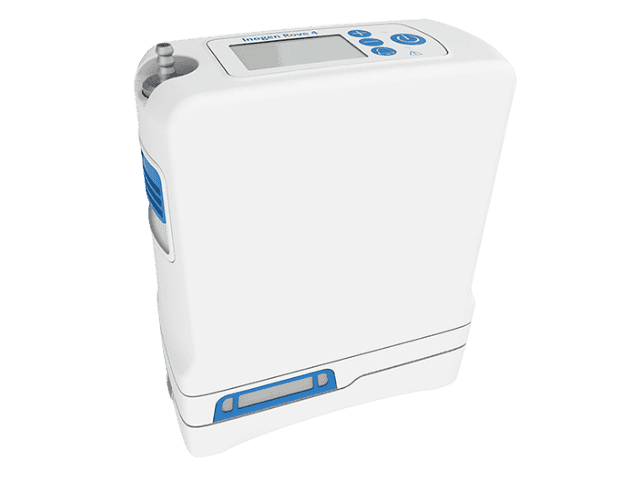
Battery life. For COPD patients aiming for 15+ hours of daily use, reliable battery life and access to AC/DC charging are essential. Models like the Inogen Rove 6 offer up to 12 hours and 45 minutes with an extended battery at the lowest setting.
Weight. COPD already reduces exercise tolerance. A heavy device adds physical burden and can discourage use. Prioritize the lightest unit that fully meets your prescription requirements.
Durability. COPD is a long-term condition. Look for devices with extended service warranties — 5 to 8 years of expected service life reduces the likelihood of disruptive device failures.
>> Learn More: What Seniors Should Know About Portable Oxygen Concentrators for Travel
Common Myths About Oxygen Therapy and COPD
“Starting oxygen means I'll become dependent on it.” You do not become “dependent” on oxygen in the sense of addiction. If your oxygen levels are low, your body already needs oxygen — the supplemental oxygen simply keeps your organs safe. Using oxygen doesn't weaken your lungs; it supports them.
“Oxygen is only for people who are dying.” Oxygen therapy is a long-term treatment, not an end-of-life measure. People use it for years to protect their heart, improve stamina, and prevent complications from low oxygen.
“Portable concentrators are too heavy and complicated.” Many modern POCs weigh under 5 pounds, have simple controls, and are designed for everyday independence — not as burdensome medical equipment.
>> Useful Guide: A Guide to Portable Oxygen
The Bottom Line
For COPD patients with documented low oxygen levels, a portable oxygen concentrator can be much more than a convenience. It can help you follow your oxygen prescription outside the home, stay active, and reduce the strain low oxygen can place on your body.
The best device depends on your prescription. Some people do well with a lightweight pulse dose concentrator for daytime errands. Others need continuous flow oxygen, a stationary unit for overnight use, or a combination of home and portable equipment. Choose based on what your doctor prescribed and what you’ll realistically use.
Work with your pulmonologist and DME supplier to confirm your flow setting, delivery mode, battery needs, and backup plan. The right oxygen setup should support your independence, not make your daily routine harder.
FAQs
-
Does everyone with COPD need supplemental oxygen?
No. Oxygen therapy is prescribed based on blood oxygen levels, not COPD stage alone. Only patients with documented resting hypoxemia (typically SpO2 ≤88% on room air) typically qualify for long-term oxygen therapy.
-
How many hours per day should I use my oxygen concentrator for COPD?
Clinical guidelines indicate a minimum of 15 hours per day is needed to achieve mortality benefits. Many physicians recommend continuous use (close to 24 hours daily) for patients with consistent resting hypoxemia.
-
Can I use a pulse dose concentrator for COPD?
Many COPD patients use pulse dose concentrators successfully during waking hours. Whether pulse dose is clinically appropriate for you — including during sleep — should be confirmed through testing with your pulmonologist.
-
Will Medicare cover a portable oxygen concentrator for my COPD?
Medicare Part B may cover oxygen equipment rental for COPD patients who meet medical necessity criteria, including documented blood oxygen levels below the qualifying threshold. Work with your physician and a Medicare-approved DME supplier to confirm eligibility.
-
Does using supplemental oxygen improve quality of life for COPD patients?
The majority of portable oxygen concentrator users say that they’ve contributed positively to their mobility. For many patients, the combination of better oxygenation and increased mobility translates to meaningfully improved daily function and independence.
-
WebMD. (2025). What Is COPD Hypoxia?
-
National Library of Medicine. (2024). Long-Term Oxygen Therapy for 24 or 15 Hours per Day in Severe Hypoxemia.
-
Mayo Clinic. (2026). COPD.
-
National Library of Medicine. (2024). Health and Economic Impact of Different Long-Term Oxygen Therapeutic Strategies in Patients with Chronic Respiratory Failure: A French Nationwide Health Claims Database (SNDS) Study.
-
CDC. (2024). COPD.