Does Medicare Cover Portable Oxygen Concentrators?
A Senior’s Guide to Medicare Oxygen Benefits, Eligibility, and What to Expect


SeniorLiving.org is supported by commissions from providers listed on our site. Read our Editorial Guidelines
If your doctor has prescribed oxygen therapy, one of the first questions you may ask is whether Medicare will help pay for an oxygen concentrator. The answer is usually yes, but with important limits: Medicare typically covers oxygen equipment as a rental, not a purchase, and you must meet specific medical, documentation, and supplier requirements.
Understanding the rules before you start the process can save you significant frustration and unexpected out-of-pocket costs. This guide walks through Medicare's coverage framework for portable oxygen concentrators in plain language, so you know exactly what to expect.

FYI: Already looking for a portable oxygen concentrator? Check out our guide to the best portable concentrators in 2026!
Table of Contents
Quick Highlights
- Medicare may cover oxygen concentrators under Part B as durable medical equipment, but coverage generally applies to rental costs, not outright purchase.
- In 2026, most Medicare beneficiaries pay a $202.90 monthly Part B premium and a $283 annual Part B deductible before Medicare begins paying its share.
- After the Part B deductible is met, you typically pay 20 percent of the Medicare-approved rental amount, unless Medigap, Medicaid, or another secondary payer helps cover that cost.
- Medicare oxygen equipment rental follows a 36-month payment period, but your supplier must continue providing equipment and maintenance for up to five years if you still medically need oxygen.
- Portable oxygen concentrators can be harder to get than stationary units, so ask your doctor to document both your oxygen levels and your mobility needs.
How Medicare Categorizes Oxygen Equipment
Medicare categorizes oxygen concentrators as durable medical equipment (DME) under Part B — meaning coverage falls under the same rules as other long-term medical devices like walkers, wheelchairs, or home infusion pumps.
Medicare does not cover the cost of purchasing an oxygen concentrator. Instead, coverage applies to rental costs only. You rent from a Medicare-approved DME supplier; Medicare pays its share of those monthly rental payments.1
>> Check Out: Changes in Health and Health Care as We Age
Medicare Eligibility Criteria for Oxygen Coverage
Medicare doesn't cover oxygen equipment simply because a doctor thinks it would help. You're eligible for oxygen delivery under Medicare when your healthcare provider says you aren't getting enough oxygen, your health might improve with oxygen therapy, and your arterial blood gas level falls within a certain qualifying range.
Specifically, meeting all of the following is typically required:
- A qualifying diagnosis (such as COPD, pulmonary fibrosis, or congestive heart failure)
- Blood oxygen saturation at or below 88% on room air, confirmed by clinical testing
- A physician's detailed written order specifying your required flow rate and delivery mode
- A Certificate of Medical Necessity (CMN) completed by your doctor
- Equipment must be from a Medicare-approved DME supplier
In practical terms, the approval process usually works like this:
- Your doctor evaluates your symptoms, diagnosis, and oxygen saturation or arterial blood gas results.
- Your doctor documents that oxygen therapy is medically necessary.
- Your doctor writes an order that specifies your oxygen needs, such as flow rate and delivery method.
- You work with a Medicare-approved DME supplier.
- Medicare pays its approved share of the rental cost if all requirements are met.
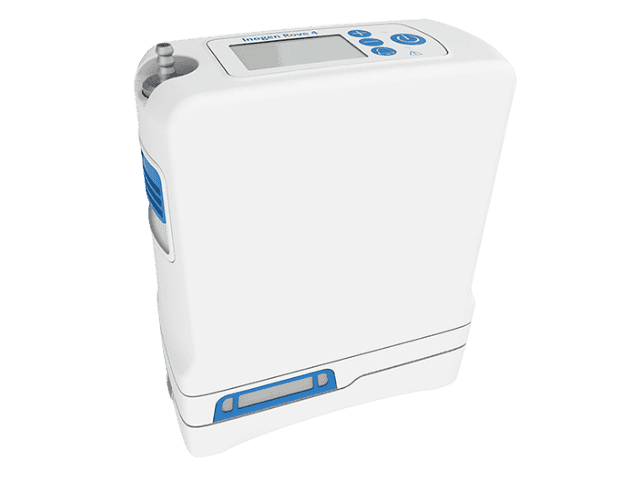
Medicare may cover portable oxygen equipment specifically, but only when you meet oxygen therapy criteria through blood gas or oxygen saturation tests, demonstrate medical need, meet mobility requirements, and rent from a Medicare-approved supplier like Inogen.
>> Learn More: 2026 Inogen review
What Medicare Actually Pays: The Cost Breakdown
Medicare Part B requires a monthly premium and annual deductible. In 2026, the standard Part B monthly premium is $202.90, and the annual Part B deductible is $283.2
After you meet the deductible, you are generally responsible for 20 percent of the Medicare-approved rental amount for oxygen equipment, unless you have Medigap, Medicaid, or another form of secondary coverage that helps pay your share.3
In practice, typical monthly rental costs range from $150 to $400 depending on the model and service package, leaving the patient with a monthly 20% coinsurance payment — often between $30 and $80 per month — unless covered by a Medigap policy or Medicaid.
| Cost Element | Amount (2026) |
|---|---|
| Part B annual deductible | $283 |
| Part B monthly premium (standard) | $202.90 |
| Your coinsurance share of equipment | 20% of the approved amount |
| Typical monthly out-of-pocket range | ~$30 – $80/month |
| Rental period | 36 months |
| Total coverage period (with maintenance) | Up to 5 years |
Did You Know? A Medigap plan can help reduce your out-of-pocket Medicare expenses. Learn more in our guide to the best Medicare Supplement plans in 2026.
The 36-Month Rental Structure Explained
Medicare's oxygen coverage follows a structured timeline that many beneficiaries aren't initially aware of:
If you have Medicare Part B, you will rent your oxygen concentrator from a DME supplier for 36 months (three years). After that period, your supplier will continue to provide coverage for an additional 24 months (two years), as long as you still have a medical need for oxygen therapy.
As long as you have a medical need for oxygen, your supplier must continue to maintain the oxygen equipment in good working order and provide related supplies for that additional 24-month period, up to a total of 5 years.
One important note: the equipment belongs to the supplier throughout the entire 5-year period — Medicare doesn't transfer ownership to the patient at the end of the rental.
>> Save More: 9 Helpful Tips for Building a Budget on a Fixed Income
The Portable Concentrator Catch: What Many People Don't Realize
Here's a nuance that catches many Medicare beneficiaries off guard: portable oxygen concentrators are covered by Medicare only if the DME supplier agrees to offer you a portable option.
Since portable concentrators are more expensive than stationary ones — and because Medicare's reimbursement rate to the supplier is the same either way — many suppliers will only offer stationary oxygen concentrators to Medicare beneficiaries.
Pro Tip: If you're struggling to find a Medicare-approved supplier who will provide a portable concentrator, ask your pulmonologist for a referral to a specialist DME supplier.
Some oxygen companies like Inogen skip the supplier and negotiate directly with Medicare themselves, and as a result are more likely to rent you a portable machine. If portability is important to your daily life, working directly with a manufacturer that participates in Medicare — rather than relying on a general DME supplier — may get you better results.
Also important: if you travel by plane, your oxygen supplier is not required to give you an airline-approved portable oxygen concentrator, and Medicare won't pay for any oxygen related to air travel. Travel rentals are entirely separate from Medicare-covered therapy.
>> Related Reading: A 2026 Guide to Senior Travel and Vacations
Questions to Ask Before Choosing a Medicare Oxygen Supplier
Before you commit to a supplier, ask these questions:
- Do you provide portable oxygen concentrators, stationary concentrators, or both?
- Which specific models are available through Medicare rental?
- Will the equipment meet my prescribed oxygen flow needs during rest, exertion, and sleep?
- What accessories are included, such as batteries, tubing, carts, or carrying bags?
- What happens if the unit breaks or my oxygen needs change?
- Do you provide service if I travel or temporarily stay somewhere else?
- What will my estimated monthly coinsurance be after Medicare pays its share?
These questions can help you avoid one of the biggest frustrations with Medicare oxygen coverage: qualifying for oxygen therapy, but discovering that the supplier does not offer the portable model you expected.
Medicare Advantage and Other Options
Beneficiaries enrolled in Medicare Advantage plans may face restrictions regarding access to certain brands of portable oxygen concentrators, and coverage is not guaranteed — it depends on meeting all eligibility criteria set forth by the plan.
However, a Medicare Advantage plan may pay an even higher proportion of the rental cost, leaving you with a smaller monthly payment than Original Medicare.
If Medicare doesn't cover the specific device you need, additional options include Medicaid (for qualifying low-income beneficiaries), Veterans Affairs benefits, manufacturer assistance programs, and HSA/FSA funds for direct purchase.
>> You Might Like: Senior Discounts in 2026
Medicare vs. Other Ways to Pay for an Oxygen Concentrator
Medicare can lower the cost of oxygen therapy, but it is not always the fastest or most flexible way to get the exact concentrator you want. Here’s how the main payment options compare.
| Payment Option | Best For | Main Advantage | Main Drawback |
|---|---|---|---|
| Original Medicare Part B | Seniors who qualify medically and can work with a Medicare-approved DME supplier | Covers a large share of approved rental costs after the deductible | Usually covers rental, not purchase, and portable models may be harder to access |
| Medicare Advantage | Seniors who prefer plan-managed benefits and may have lower cost-sharing | Plans must cover the same core DME benefits as Original Medicare | Supplier networks, prior authorization, and brand access can vary by plan |
| Medigap + Original Medicare | Seniors who want help with the 20 percent Part B coinsurance | May reduce or eliminate out-of-pocket rental costs, depending on the plan | Requires a separate monthly premium |
| Medicaid or dual eligibility | Lower-income seniors who qualify for additional assistance | May help cover costs Medicare does not pay | Eligibility and benefits vary by state |
| Out-of-pocket purchase | Seniors who want a specific portable model quickly | More control over brand, model, and timing | Portable oxygen concentrators can cost thousands of dollars upfront |
For many older adults, the best path is to start with Medicare coverage and then ask whether a Medigap policy, Medicaid, Veterans Affairs benefits, or manufacturer financing can reduce the remaining cost. If you need a specific lightweight portable unit, paying out of pocket may give you more choice, but it also comes with the highest upfront cost.
The Bottom Line
Medicare can be a significant help in covering the cost of portable oxygen therapy — but the rules are more specific than many people expect, and the path to getting a portable rather than stationary device can require some advocacy.
Know your eligibility requirements before you start, work with your physician to document not just your diagnosis but your mobility needs, and consider working directly with a manufacturer like Inogen that engages with Medicare as a supplier. With the right preparation, Medicare's oxygen benefit can genuinely reduce your costs and support your independence.
Our Methodology
To create this guide, we reviewed Medicare’s current oxygen equipment coverage rules, durable medical equipment requirements, rental timelines, beneficiary cost-sharing, and supplier obligations.
We focused on the questions older adults and caregivers are most likely to have when trying to understand whether Medicare will cover a portable oxygen concentrator, how much they may pay, and why portable units can be harder to obtain than stationary concentrators.
We also compared Original Medicare, Medicare Advantage, Medigap, Medicaid, Veterans Affairs benefits, manufacturer assistance, and out-of-pocket purchase options. Our goal was to explain not just what Medicare covers, but how those rules affect real-world decisions, such as choosing a supplier, documenting mobility needs, estimating monthly costs, and planning for travel.
FAQs
-
Does Medicare cover the purchase of a portable oxygen concentrator?
No, Medicare covers rental costs only, not outright purchase. The equipment remains the property of the supplier throughout the coverage period.
-
How long does Medicare pay for oxygen equipment?
Medicare covers rental payments for 36 months, after which the supplier must continue providing equipment and maintenance for an additional 24 months — up to 5 years total — as long as you still have a medical need.
-
What happens after the 36-month rental period ends?
Your supplier is required to continue providing the equipment and related supplies for up to 24 more months at no additional rental cost, as long as you remain medically eligible. Only coinsurance for maintenance visits may apply.
-
Will Medicare cover a POC for travel?
No, Medicare explicitly does not cover oxygen equipment related to air travel. Travel rentals are a separate, out-of-pocket arrangement.
-
What's the difference between Original Medicare and Medicare Advantage for oxygen coverage?
Both must cover the same core DME benefits, but Medicare Advantage plans may have different cost-sharing rules, supplier networks, and additional benefits. Review your specific plan or call your plan’s member services line to confirm what applies to you.
-
Medicare. (n.d.). Oxygen equipment & accessories.
-
CMS. (2025). 2026 Medicare Parts A & B Premiums and Deductibles.
-
CMS. (2023). Oxygen and Oxygen Equipment – Policy Article.