Best Medical Alert Systems for Those With Dementia, Tested and Reviewed
Bay Alarm Medical is our top pick for seniors with dementia, offering one-button activation, GPS tracking for wandering prevention, 24/7 professional monitoring, and a caregiver mobile app that keeps family members connected and informed.



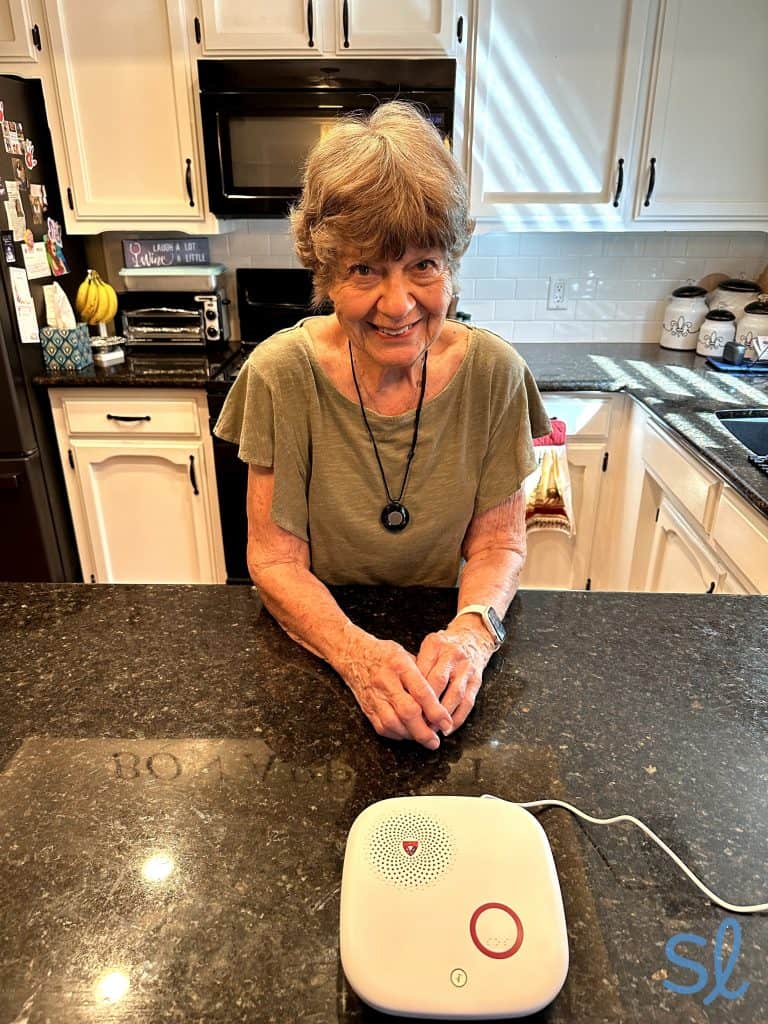
My grandma testing out Medical Guardian’s MGHome Cellular system
How We Tested the Medical Alert Systems for Those With Dementia
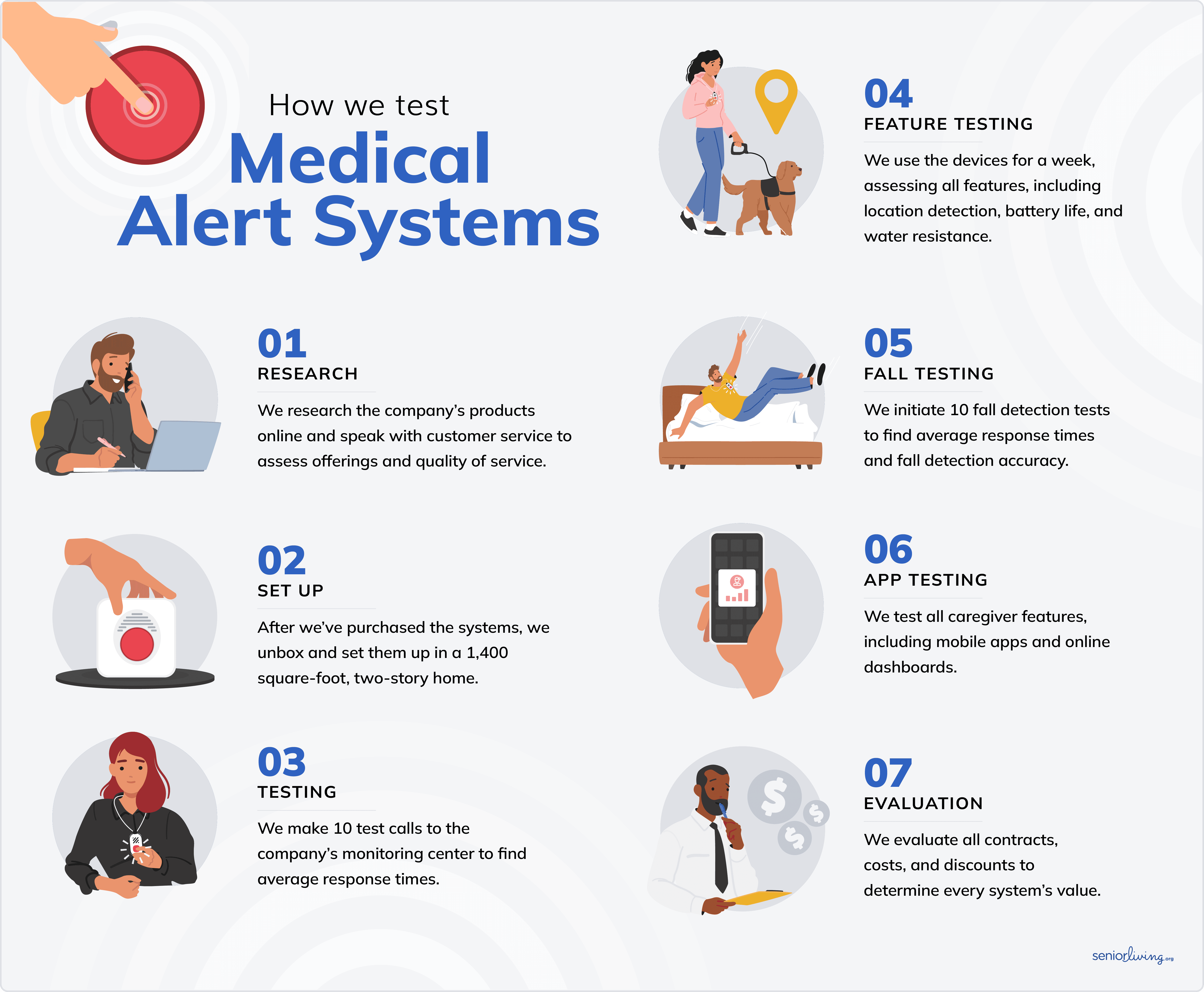
Those with Alzheimer’s or other forms of dementia have unique safety needs when it comes to medical alert systems, so we tailored our testing to those needs. For instance, memory challenges can make it difficult for someone with dementia to remember to wear a pendant or recall how to activate the alert button during an emergency. Wandering behaviors increase the risk of getting lost, making GPS tracking essential. And cognitive decline may prevent someone from effectively communicating their location or needs during a crisis.
That’s why our medical alert and fall-prevention experts carefully evaluated systems based on dementia-specific features like one-button activation, reliable GPS location tracking, automatic fall detection, and caregiver mobile apps. My team and I spent over 1,000 hours testing and evaluating the best systems to create this list.
We tested each medical alert system for a week in a 1,700 square-foot, two-story home. We focused our testing on key areas of the house where those with dementia spend time, including the living room, bedroom, bathroom, and kitchen. We also tested on-the-go systems while running errands and walking around the neighborhood to evaluate GPS detection accuracy, which is essential for those with dementia that may wander. Our team conducted 10 test calls for each system and simulated 10 test falls for fall-detection pendants, as those with dementia are at higher risk of falling.
We also recruited the help of older adults, such as my grandma, to try the systems and provide their feedback.

How We Chose the Best Medical Alert Systems for Those With Dementia
We evaluated and selected our top system using the following criteria:
- Ease of Use: We prioritized systems with one-button activation and intuitive design, since people with dementia may struggle with complex menus or multi-step processes. Devices should be simple enough that the user can activate them during an emergency without confusion.
- GPS Location Tracking: We focused on systems with reliable real-time GPS tracking and geo-fencing capabilities. Wandering is a common and dangerous behavior among those with dementia, so being able to locate your loved one quickly is critical for their safety.
- 24/7 Professional Monitoring: We selected systems with round-the-clock monitoring centers staffed by trained professionals who can respond immediately to emergencies. This ensures consistent access to help, even if the person with dementia can’t clearly communicate their needs.
- Two-Way Communication: We evaluated systems with built-in speakers and microphones for clear, direct communication with monitoring staff. This feature provides reassurance and clarity during stressful situations when someone with dementia may be confused or frightened.
- Automatic Fall Detection: We included systems with automatic fall detection because dementia increases fall risk, and someone who falls may not remember to press the button or may be unable to do so. Automatic alerts ensure help arrives even when the user can’t activate the system themselves.
- Caregiver Integration: We prioritized systems with caregiver mobile apps that send real-time alerts, share location data, and provide device status updates. This gives family members peace of mind and keeps them informed about their loved one’s safety.
- Pricing: We included the best medical alert systems for seniors with dementia at various price points. We focused on affordable systems but also included options with premium dementia-specific features. We considered monthly rates, equipment fees, additional fees, seasonal promotions, and payment plans.
- Customer Service: For those caring for someone with dementia, responsive and compassionate support is essential. We evaluated how well each company’s customer service and 24/7 urgent-response teams understand the unique challenges of dementia care, including patience during confused calls and the ability to reassure users who may not remember contacting them.
- Response Times: When someone with dementia faces an emergency, confusion can escalate quickly, making fast response critical. We placed 10 test calls on each medical alert system and timed how long it took to reach a real person. We made calls from home (in a 1,400-square-foot, two-story home), on walks, and running errands. The systems on our list had average response times of 45 seconds or less—ensuring help arrives before panic sets in.
- Battery Life: Seniors with dementia are more likely to forget to charge devices, which can leave them vulnerable. Many in-home systems use pendants with batteries that can last for a year or longer. On-the-go systems usually need to be charged once a day. Our top picks offer extended battery life and send low-battery alerts to caregivers, not just the user, so you’re never caught off guard.
- Special Features: Dementia brings unique risks that require targeted protection. Some seniors with dementia may get lost or struggle with wandering, for example, in which case, GPS features with geo-fencing alerts are vital. Dementia also increases fall risk, making fall detection a must-have that automatically calls for help even if the person can’t press the button. Finally, many systems include caregiver integration with mobile apps and real-time alerts to ensure loved ones are always in the know.
To learn more about how we test medical alert systems, check out our medical alert system methodology guide.
Why Trust Us
Our senior tech experts have tested dozens of medical alert systems over the years. We’re always researching and trying out the newest tech to keep seniors safe, with special attention to solutions that address dementia-related challenges like wandering, confusion, and memory loss.
All of our medical alert content is reviewed by Linda Schlenker, an occupational therapist with over three decades of experience advising older adults and their caregivers on how to stay safe in their homes. She and her patients have extensive experience using medical alert systems, including those designed for individuals with cognitive decline. Linda approved the systems on our list and provided her insights and expertise.
SeniorLiving.org is supported by commissions from providers listed on our site. Read our Editorial Guidelines

- Prices starting at $27.95 per month
- Fall detection costs $10 per month, an important feature for those with dementia at higher risk of falling
- Free caregiver mobile app,, essential for monitoring someone with dementia who may wander

- Prices starting at $31.95 per month
- Fall detection, an essential feature for those with dementia, costs $10 per month
- Free caregiver mobile app that lets family track location and receive alerts

- Prices starting at $31.99 per month
- Fall detection available for $11 per month for those with dementia at higher risk of falling
- GPS tracking included in On-The-Go system is useful for those who wander

- Prices starting at $24.95 per month
- Fall detection costs just $5 per month, providing affordable protection for those with dementia
- Caregiver mobile app for select systems with a fee
Contents
Medical alert systems can make living with and caring for someone with dementia a little easier. These devices provide critical safety features like GPS tracking for wandering, automatic fall detection, and one-button emergency calls that address the specific risks people with dementia face. Rather than having someone standing by 24/7, you can lean on medical alert devices to alert you if and when there's an emergency, giving both you and your loved one greater peace of mind.
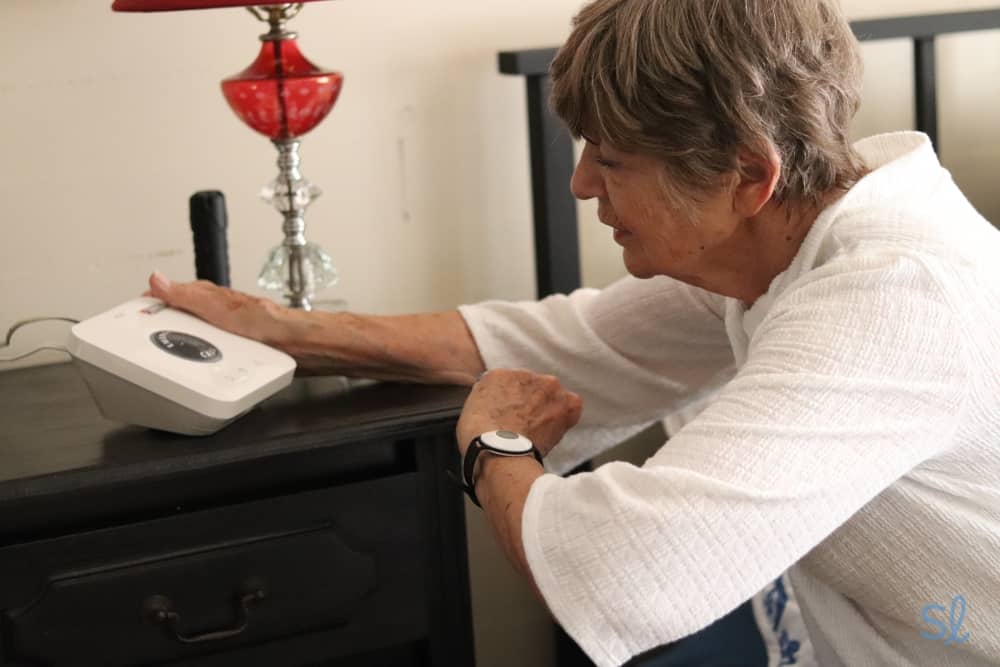
Our editor Taylor Shuman's grandma testing out MGClassic
Our Top Medical Alert Systems for Seniors With Dementia
-
1. Bay Alarm Medical - Bay Alarm Medical’s SOS All-in-One 2
View Packages Links to Bayalarmmedical.comWhat we like most
- Prices starting at $27.95 per month
- Fall detection costs $10 per month, an important feature for those with dementia at higher risk of falling
- Free caregiver mobile app,, essential for monitoring someone with dementia who may wander
Bay Alarm MedicalView Packages Links to Bayalarmmedical.comOverview:
Using Bay Alarm Medical's SOS All-in-One 2
Bay Alarm Medical offers affordable systems designed with simplicity in mind, a critical feature for seniors with dementia who may struggle with complex devices. Prices start at $27.95 per month for their in-home system and $34.95 for their on-the-go systems.
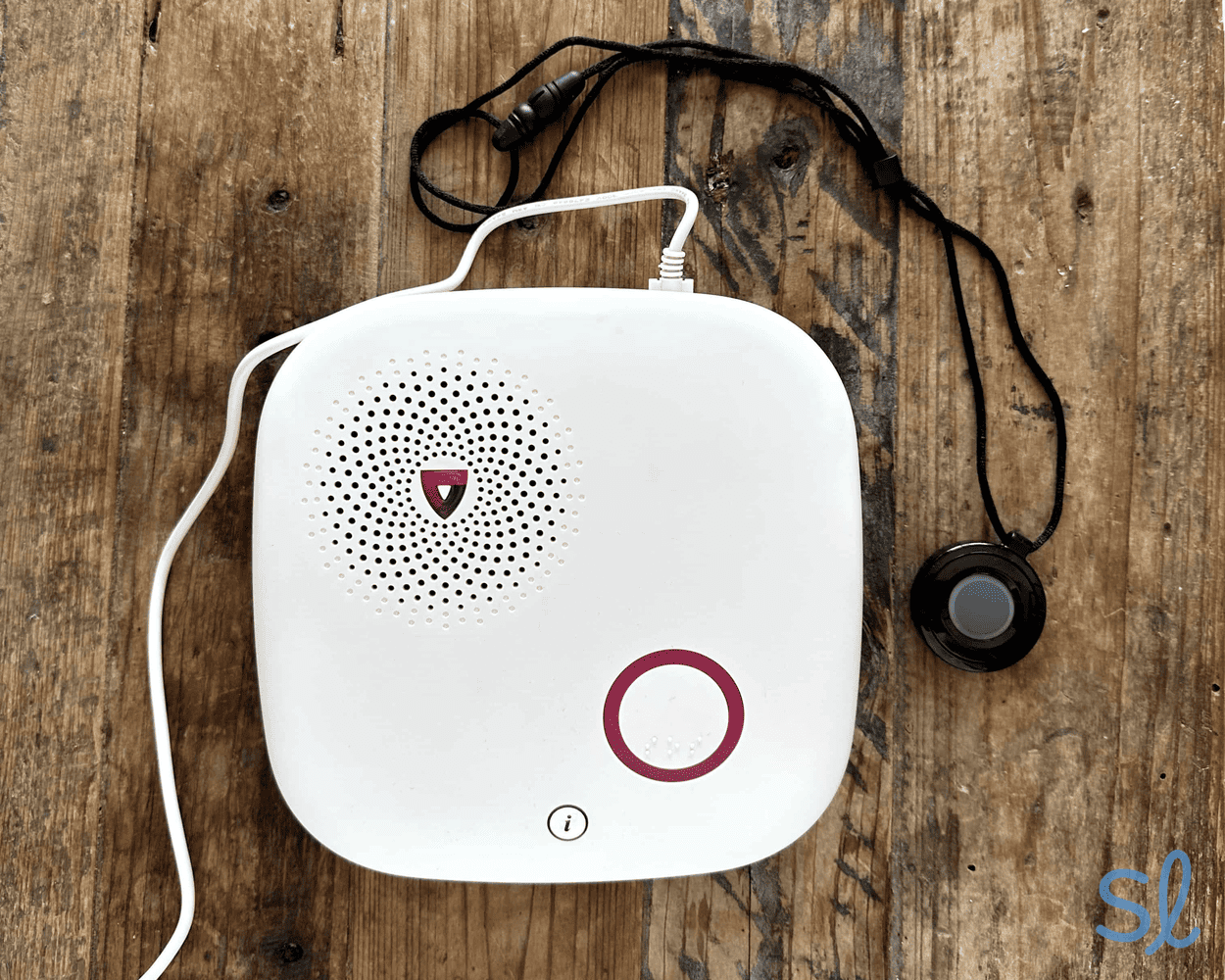
I've tested both, and I'm a big fan of either option. That said, their on-the-go offerings (particularly the All-in-One 2 are a better fit for many seniors with dementia, especially if your loved one tends to wander. The SOS All-in-One 2 is a simple pendant system with one button. It features real-time GPS tracking, which allows caregivers to quickly locate someone who has left a safe area, a common and dangerous situation for people with dementia.
» Our Full Review: Bay Alarm Medical Alert System Review 2026
Bay Alarm Medical's on-the-go devices are available as solo devices or in a bundle with the in-home system. The devices offer one-button activation, making it easy for someone with dementia to call for help without navigating complicated menus.
Current Deal: Bay Alarm Medical is giving new customers one free month of service and free shipping.
Pros & Cons:Pros About Bay Alarm Medical
- Affordable systems and price-lock guarantee
- Bundling options for well-rounded protection if your loved one wanders
- 30-day risk-free trial to see if systems are a good fit for your loved one with memory loss
- Caregiver tracking with some equipment, allowing family members to monitor location and device status for loved ones with dementia
- Excellent customer service, essential for those caring for someone with dementia
Cons About Bay Alarm Medical
- Shipping fees may apply on some orders
- Small product lineup
- Equipment fees on select systems
Our Hands-on Experience:Dementia-Friendly Features
Bay Alarm Medical is particularly well-suited for dementia care thanks to the SOS All-in-One 2. This simple, wearable design is ideal for seniors with dementia who need a device they can't easily misplace. The device comes with your choice of an AT&T or Verizon connection, so you can opt for the cellular carrier with the best service in your area.
» Related Reading: AT&T Cell Phone Plans for Seniors
It will provide extra assurance that your loved one is always protected, regardless of their location, critical for individuals with dementia who may wander or become disoriented. I appreciated having options, since I have great AT&T coverage in my area, while Verizon's service is pretty limited.
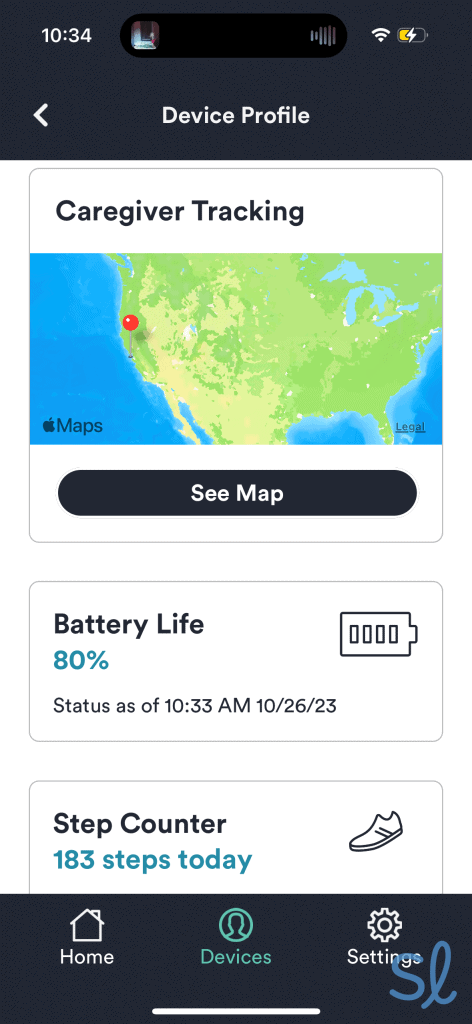
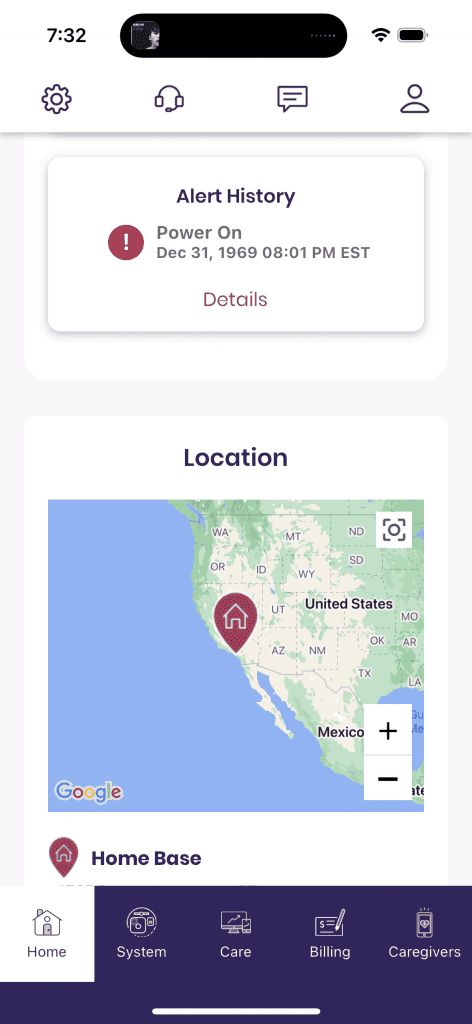
Similar to Medical Guardian, the lightweight device comes with a caregiver tracking app that's especially valuable for dementia care. I can pinpoint the location of my device in real time, view my location history, and receive low-battery notifications in the app. These features help you keep tabs on your loved ones with dementia, providing peace of mind if you're concerned about wandering, confusion, or missing appointments.
» Also Check Out: Best Medical Alert Systems for Veterans
When I tested the caregiver app, I was really happy with the real-time updates. My grandma and I spent the day apart to see how accurate it was, and she was amazed that I knew she’d been to the grocery store and the pharmacy! We were also really happy with the prompt and professional treatment from the customer service team, which would be very important if we couldn’t locate a loved one with dementia.

Navigating Bay Alarm Medical's companion mobile app
The SOS All-in-One 2 has a large red button and built-in speaker—a simple one-button design that's perfect for those with dementia who may struggle with complex technology. Seniors can also wear the help button using a more subtle belt clip.
I tested the fall detection using both the lanyard and the belt clip, and the results were similar to what we experienced with Medical Guardian's systems. The lanyard detected eight of our 10 test falls. The belt clip was less likely to pick up on falls. For dementia patients who are at higher risk of falling, automatic fall detection provides critical protection even if they can't press the button themselves.
Battery Life
Bay Alarm Medical claims the All-in-One 2’s battery lasts 72 hours on one charge. That was accurate in my experience, which I'm pleased with, especially for dementia patients who may forget to charge their devices every day. Plus, caregivers receive low-battery alerts through the app, ensuring the device is always ready when needed.
» Compare Providers: Bay Alarm Medical vs. Medical Guardian
Pricing
If you want a high-quality medical alert system that's affordable for ongoing dementia care, Bay Alarm Medical has a great balance between budget-friendly devices and value. The SOS Home starts at just $27.95 per month with no equipment fees, but that doesn't help if your loved one leaves the house regularly.
That's why the SOS All-in-One 2 is a better option, even though it'll cost you more. It costs $34.95 per month, and you can add fall detection for an extra $10 per month, which is critical for dementia patients who face higher fall risks. The one-time equipment fee is $149.
» Price Guide: Bay Alarm Medical Cost and Pricing
If you want to bundle the SOS Home and SOS Micro (which includes fall detection by default), your plan will cost $54.95 per month. This dual-system approach gives caregivers peace of mind both at home and when their loved one wanders outside.
-
2. Medical Guardian’s MGMini Lite - Medical Guardian’s MGMini Lite
View Packages Links to Medicalguardian.comWhat we like most
- Prices starting at $31.95 per month
- Fall detection, an essential feature for those with dementia, costs $10 per month
- Free caregiver mobile app that lets family track location and receive alerts
Medical Guardian’s MGMini LiteView Packages Links to Medicalguardian.comOverview:
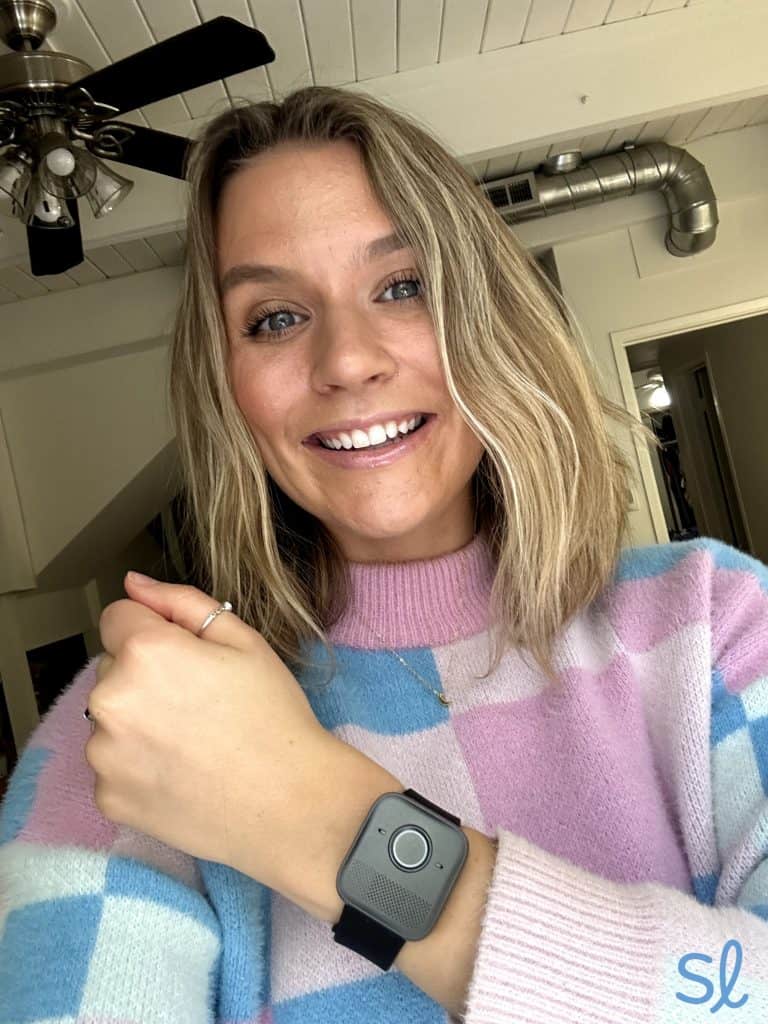
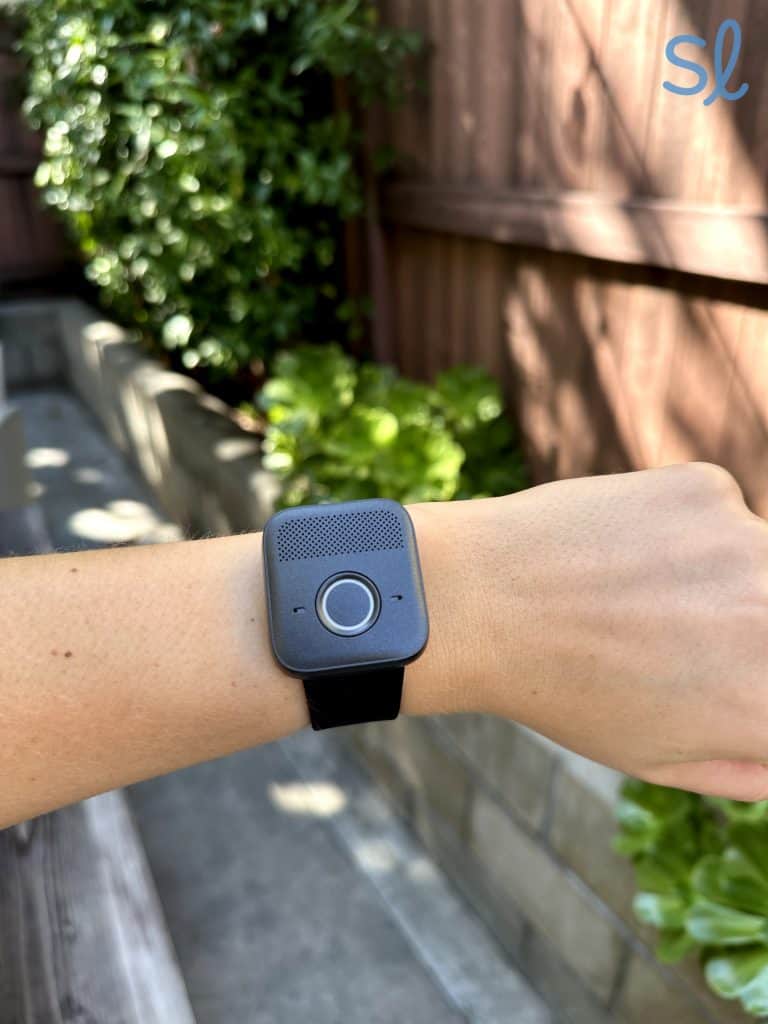
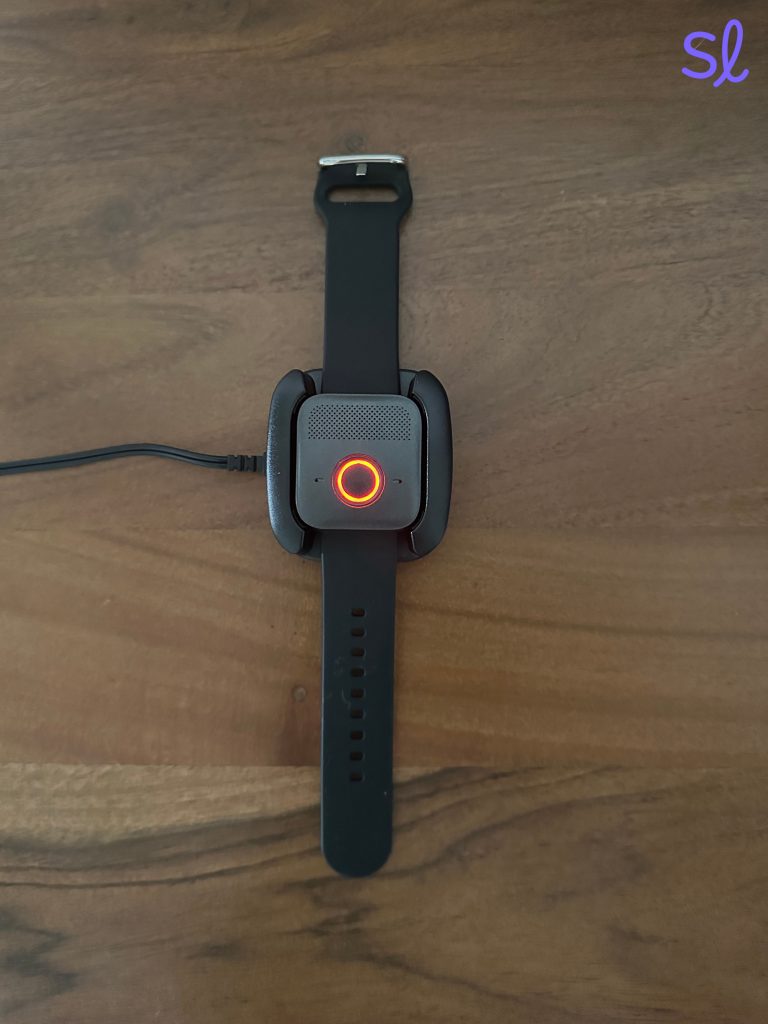
Testing out Medical Guardian's MGMini Lite
For older adults with dementia, the MGMini Lite is one of my favorite systems. It’s as simple as it gets, critical for users who may be confused by complex technology.
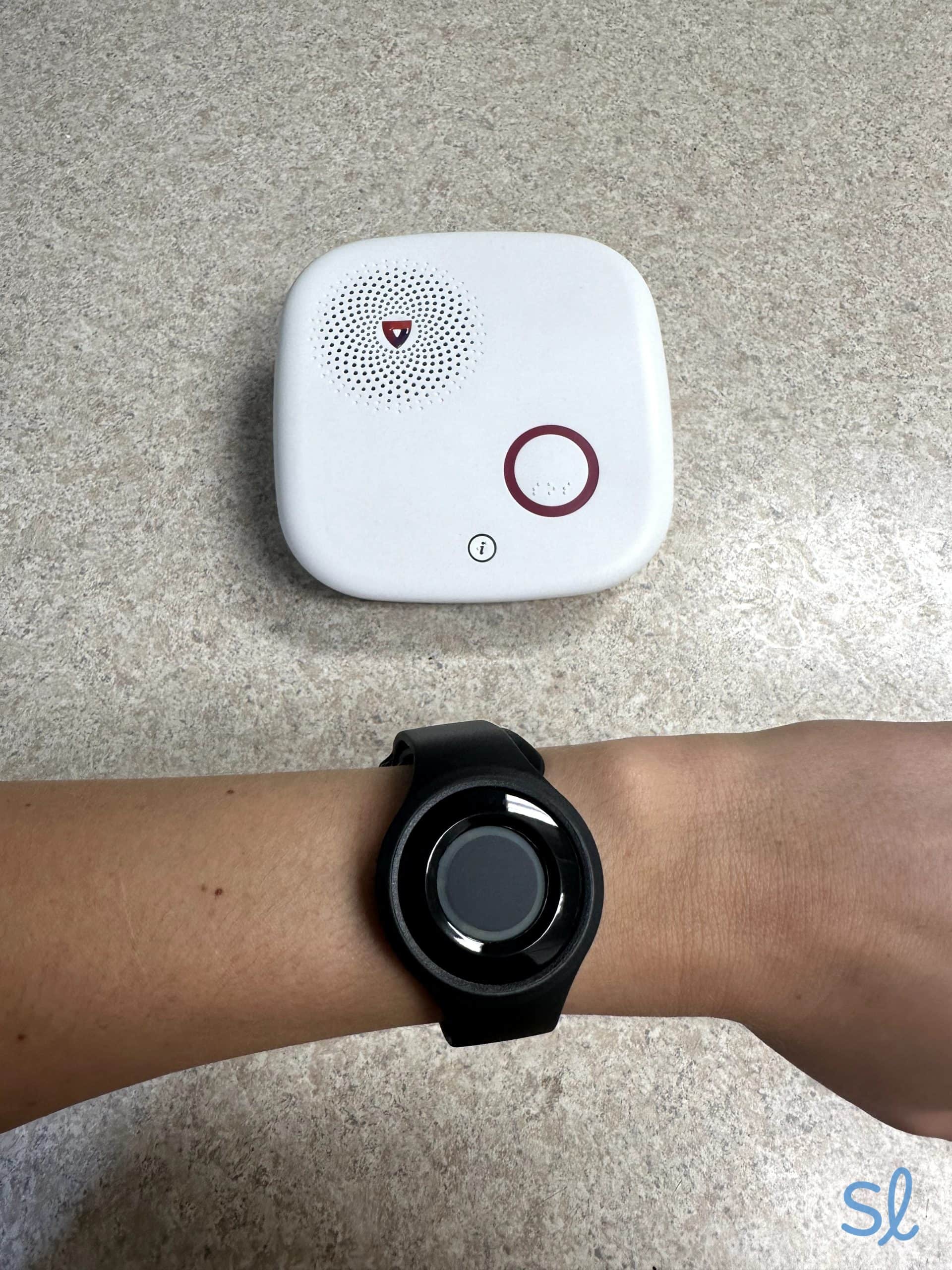
It has one large button used to call for help, and that's about it. It's a water-resistant mobile unit worn on the wrist that features advanced location detection with GPS, Wi-Fi, and LTE technology. This sophisticated tracking is critical for individuals with dementia who are at high risk of wandering, allowing caregivers to locate them quickly if they leave a safe area.
Medical Guardian offers several at-home and on-the-go medical alert systems designed with simplicity in mind, perfect for individuals with dementia. Each system is backed by the company's impressive customer service and a 24/7 urgent-response team trained to handle emergencies involving cognitive decline.
Money-Saving Tip: Medical Guardian is offering current deals that include free ground shipping and a free lockbox on select plans.
Pros & Cons:Pros About Medical Guardian’s MGMini Lite
- Large in-home coverage range, helpful if the person with dementia wanders within the house
- U.S.-based monitoring center
- No activation fees
- Landline and cellular options to cover those with dementia at home and on the go
- Advanced location monitoring with GPS for tracking dementia patients who wander
Cons About Medical Guardian’s MGMini Lite
- Higher device fees for the MGMini and MGMini Lite
- No free trial to decide if the system is right for your loved one with dementia
- Potentially limited service in rural or remote areas (for the cellular system)
Our Hands-on Experience:Dementia-Friendly Features
I've tested all five of Medical Guardian's systems, and I've found that the MGMini Lite is one of the best choices for seniors with dementia. It addresses the unique challenges dementia presents by combining simplicity with powerful safety features.For someone with dementia who may struggle with complex devices, this one-button activation design eliminates confusion. There are no menus and nothing to remember beyond pressing the button when help is needed.
The button has a bright blue ring that lights up when pressed, so you'll know that you've done it correctly. This visual confirmation is helpful for those with cognitive decline, providing reassurance that the alert has been sent.
The MGMini Lite is small and lightweight, so I often forgot I was wearing it. The less irritating or noticeable the system is, the less likely the user is to remove it, a common concern with dementia patients who may not understand why they're wearing the device.
Trying out Medical Guardian's MGMini Lite
I tested the waterproof device in different locations at various times of day and night. During each test, I usually connected with a Medical Guardian agent in under 20 seconds. This fast response time is critical for dementia patients, who may become anxious or confused if they have to wait long for help. It took a full minute to reach someone when I tested the system in my home, though.
Medical Guardian's agents were always helpful and friendly, whether I was testing for an emergency or simply reaching out with a question. For someone with dementia, having access to calm, reassuring voices through 24/7 professional monitoring can make all the difference during a stressful moment.
The speaker was also quite loud, and I had no trouble hearing the person on the other end of the line. Clear two-way communication helps responders assess the situation and provide reassurance, which is especially important when the person may be disoriented or unable to clearly explain what's happening.
» Dive Deeper: 2025 Medical Guardian Review
One of my favorite features for caregivers and loved ones is the MyGuardian mobile app. Through the app, you can monitor the user's location, check the device's status and power level, see a history of emergency calls placed, create a care plan, and more. The real-time GPS tracking is excellent for dementia patients who may wander. You can see exactly where your loved one is at any moment, providing peace of mind and enabling quick action if they leave a safe area. The app was simple to navigate and easy to use.
FYI: Looking for senior-friendly mobile apps? Check out our guide to the best apps for older adults.
Checking my system's location in Medical Guardian's MyGuardian mobile app
Battery Life
The MGMini Lite has up to a 24-hour battery life, which means regular charging is necessary, something to consider for someone with dementia who may forget to charge their device regularly. I found it easiest to wear the device throughout the day and charge it at bedtime, which is a simple routine that helps those with dementia build consistency.
That falls short of comparable wearable devices from LifeFone, but it's still pretty solid. I tested the MGMini Lite for a week, and I only needed to charge it five times, a manageable routine for caregivers helping someone with dementia stay safe.
» Compare Providers: Medical Guardian vs. LifeFone
Charging the MGMini Lite
Pricing
At $46.95 per month, the MGMini Lite is one of Medical Guardian's more expensive mobile systems, and there's also an equipment fee of $149.95. Still, it provides excellent value for those living with dementia who need reliable GPS tracking, two-way communication, and 24/7 professional monitoring.
To help prevent fall-related injuries, I'd recommend adding fall detection for $10 per month. Studies show that those with dementia are at a much higher risk of falling, so this feature is essential, in my opinion.1 In the event of a fall, the system will automatically detect it and call for help, even if the user is unable to press the help button.
-
3. ADT’s Medical Alert - ADT’s On-the-Go
See Pricing Links To Adtmedalert.comWhat we like most
- Prices starting at $31.99 per month
- Fall detection available for $11 per month for those with dementia at higher risk of falling
- GPS tracking included in On-The-Go system is useful for those who wander
ADT’s Medical AlertSee Pricing Links To Adtmedalert.comOverview:
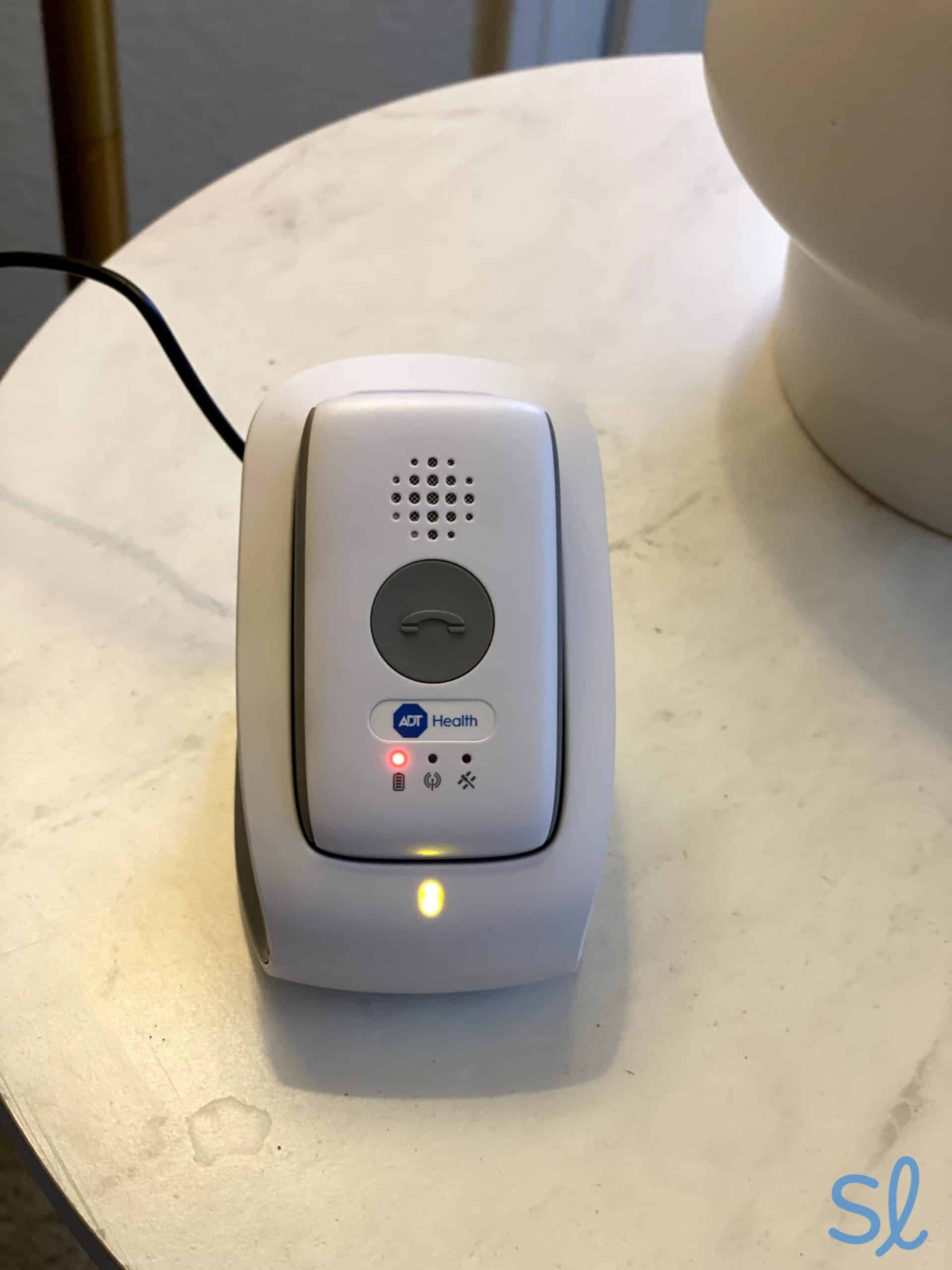
Charging my On-The-Go ADT system
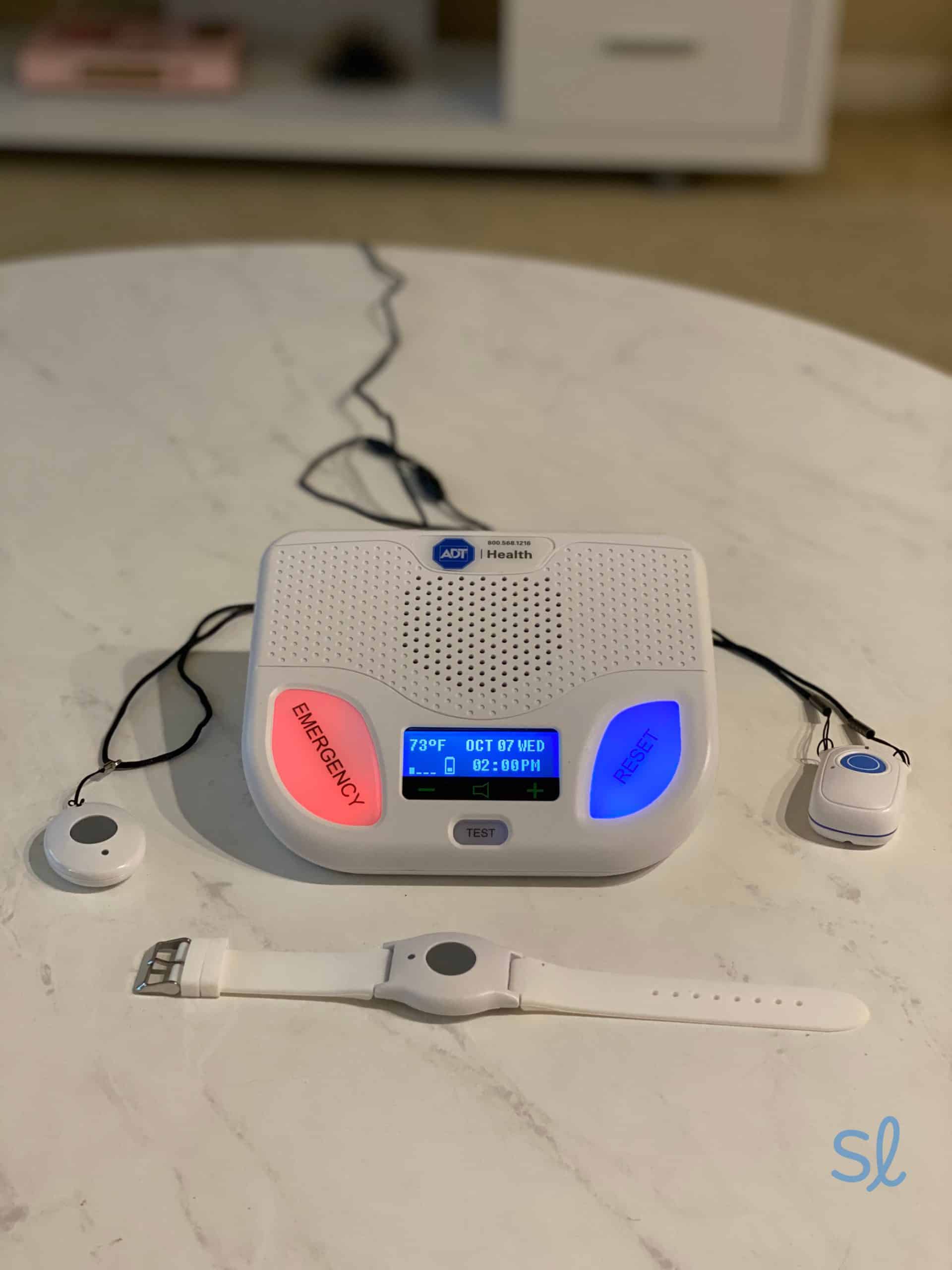
ADT is a trusted name in home security. They also offer three medical alert systems, one of which we highly recommend for older adults with dementia who need reliable protection both at home and on the go.
Prices start at $29.99 per month for the Basic system, but we think it's worth the extra $10 per month to go with the On-The-Go system, which offers GPS tracking and optional fall detection. These are both great features for seniors with dementia who tend to wander or become disoriented in unfamiliar surroundings.
» System Review: ADT Medical Alert System Review
If you choose one of ADT's home-based systems, you still get several great features tailored to dementia care. Like LifeFone, ADT's two at-home systems offer temperature sensors to ensure the temperature doesn't go above or below a safe level, helping prevent dangerous situations for someone who may not recognize when they're too hot or too cold.
Pros & Cons:Pros About ADT’s Medical Alert
- On-The-Go system features GPS tracking for locating loved ones with dementia who wander
- Cellular systems use AT&T’s nationwide network
- Optional fall detection for those at higher risk of falling
- Strong speakers with volume control for clear two-way communication
- Lifetime warranty
- Monthly rates never increase
- No equipment fees
Cons About ADT’s Medical Alert
- Only one on-the-go system
- At-home units have relatively short ranges
- No mobile app for caregivers, which limits real-time alerts and location sharing
Summary:Dementia-Friendly Features
ADT made our list of best medical alert systems for seniors with dementia thanks to their On-the-Go system, which combines GPS tracking with simple one-button operation, two must-haves for dementia care.
There are multiple ways for seniors to wear the system, including on their wrist, around their neck, or in their pocket, offering flexibility for individuals who may resist wearing devices.

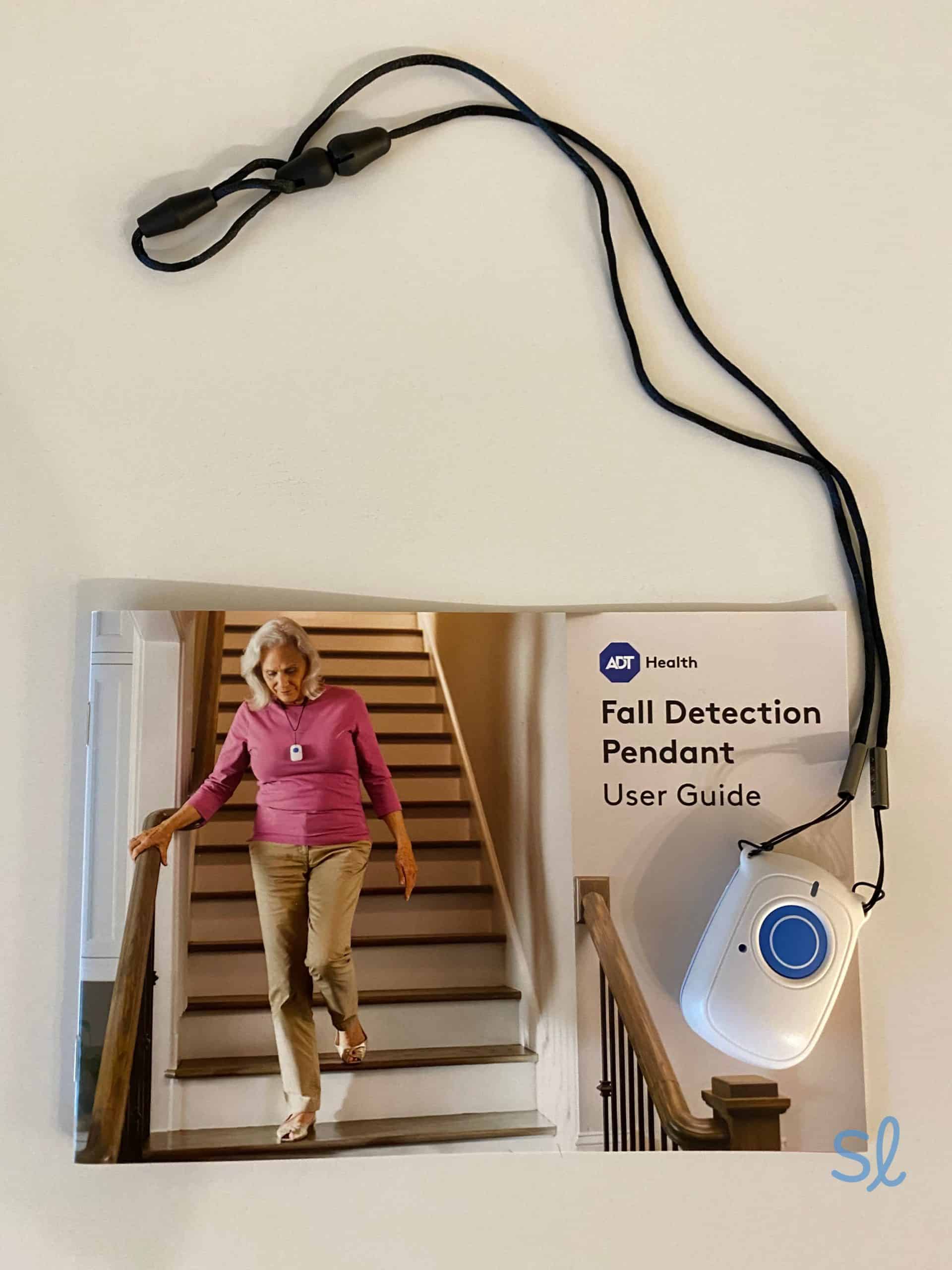
My automatic fall detection pendant from ADT Health
Remember that, like most fall detection devices, ADT’s system can’t offer 100 percent accuracy. During my testing, the fall detection worked well, but there’s no guarantee that it will always detect a real fall, so keeping the help button nearby is still vital.
Unlike Bay Alarm Medical, ADT’s cellular systems only work with AT&T. This could be a drawback if you live in an area with mediocre AT&T service. However, I always had a strong cellular connection while testing the On-the-Go system.
I was disappointed that ADT doesn’t offer a companion app for caregivers like Bay Alarm Medical does. When my grandmother went out for a walk wearing the device, I had no way to track her location or get in contact with her via ADT’s system. My only option was to text or call her cell phone.
Still, if you add fall detection to the On-the-Go system, it gives you peace of mind knowing that trained professionals can keep track of your loved one’s location and send help if needed.
Battery Life
The water-resistant mobile device has a battery life of up to 40 hours on a single charge, which is a little better than Medical Guardian’s MGMini Lite. This is great for those with dementia who may forget to regularly charge their device. But it falls short of comparable systems from Bay Alarm Medical.
To ensure your loved one has a full day’s charge, I recommend putting the mobile device in its charging cradle at night when your loved one with dementia goes to sleep. It typically takes about three hours to recharge, so I always woke up to a fully charged device.
Pricing
Pricing is one area where ADT doesn’t get the highest marks from us. Even their most affordable at-home system is $31.99 per month, which is slightly cheaper than Medical Guardian, but a few dollars more than Bay Alarm Medical. Additionally, the prices only go up with the Plus and On-The-Go systems, starting at $39.99 and $41.99, respectively. Fortunately, ADT frequently runs sales.
» Pricing Guide: ADT Medical Alert Systems: Pricing and Getting the Best Deal
Fall detection costs an additional $11 per month, which is $1 more than the industry standard. Additionally, while there are no equipment fees, every system includes a one-time $99 activation fee.
-
4. LifeFone’s At-Home Landline - Best fall detection
 See Pricing Links to LifeFone’s At-Home Landline
What we like most
- Prices starting at $24.95 per month
- Fall detection costs just $5 per month, providing affordable protection for those with dementia
- Caregiver mobile app for select systems with a fee
LifeFone’s At-Home LandlineSee Pricing Links to LifeFone’s At-Home LandlineOverview:
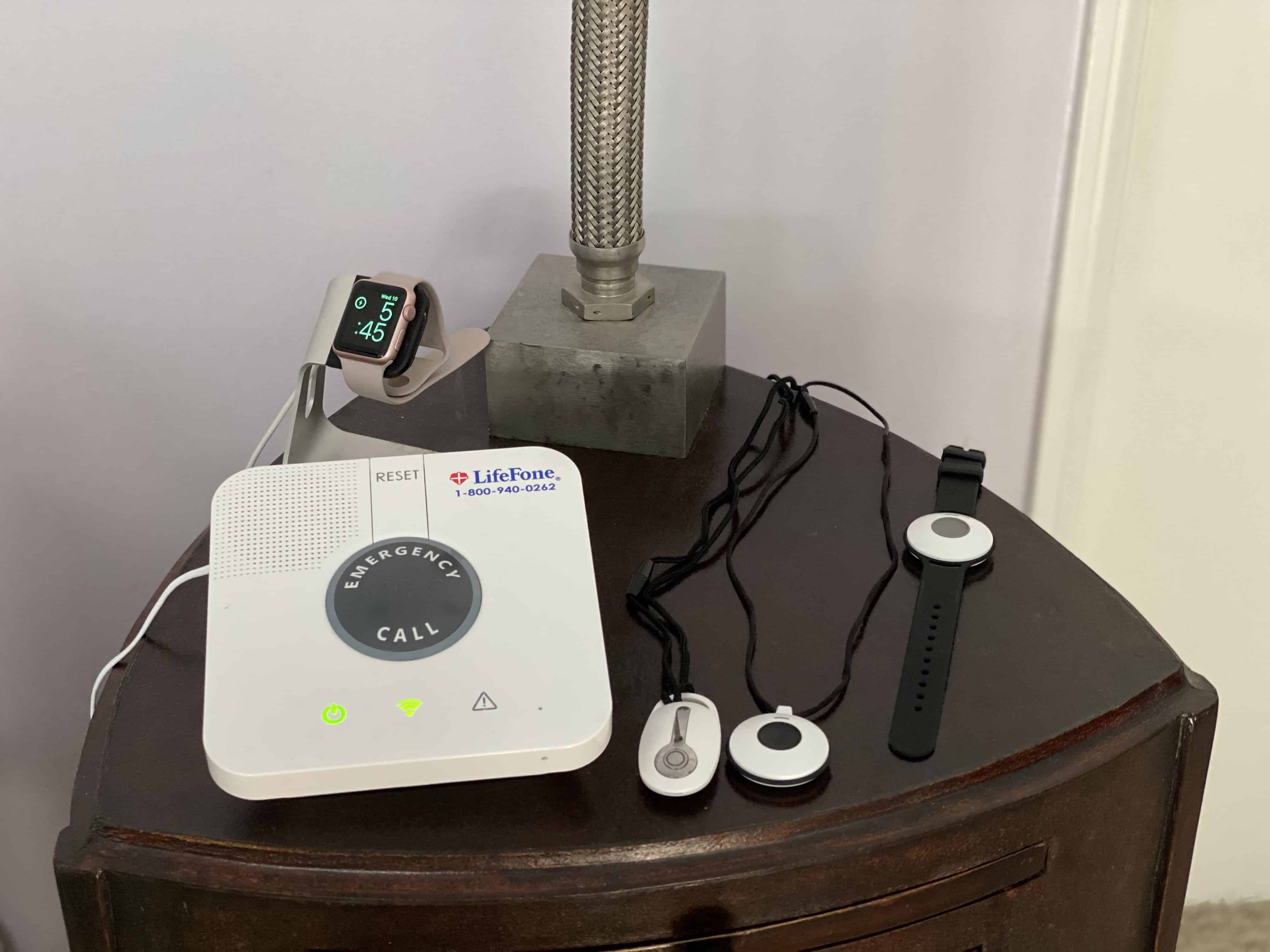
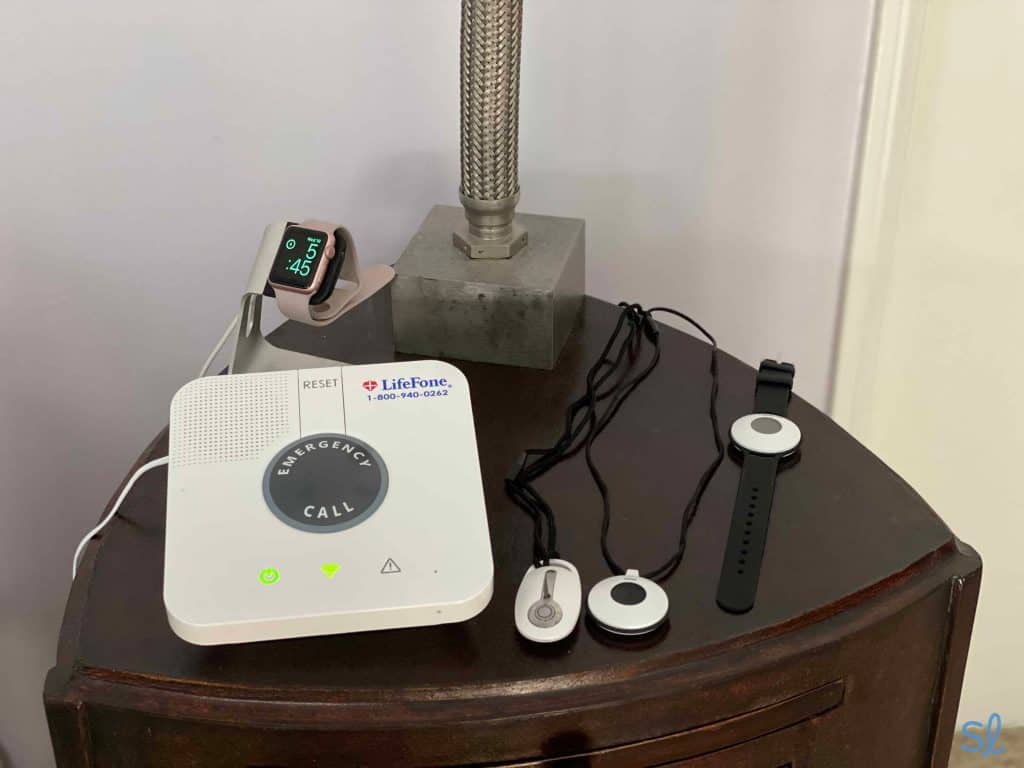
LifeFone At Home Landline or Cellular Equipment
The company offers a variety of systems, but their At-Home Landline system is one of my top picks for those with dementia. It’s simple, easy to use, and features temperature monitoring to protect you from emergencies other than falls. This is helpful since individuals with dementia may not recognize dangerous heat or cold conditions.
For individuals with dementia, LifeFone’s simple one-button activation and optional fall detection make daily safety more manageable. You can add fall detection to any in-home system for just $5 per month, which is half the cost of fall detection from Medical Guardian or Bay Alarm Medical.
» Related Reading: 2026 LifeFone Review
Pros & Cons:Pros About LifeFone’s At-Home Landline
- Simple one-button activation ideal for dementia users
- Lifetime price guarantee
- Anytime cancellation with prorated refunds
- Large in-home coverage range (up to 1,400 feet) is excellent for those with dementia who may wander room to room
- Affordable fall detection—critical for dementia patients at higher risk of falls
- Caregiver mobile app with location tracking helps monitor loved ones with dementia
- Free spouse monitoring
Cons About LifeFone’s At-Home Landline
- No language support
- Expensive add-ons and accessories
- Best rates require an annual plan
- Limited GPS features on some plans may not be ideal for seniors who frequently wander outdoors
Our Hands-on Experience:Dementia-Friendly Features
LifeFone’s affordable fall detection is a major plus for older adults with dementia who face a higher risk of falls due to cognitive decline and mobility challenges. If you go with the at-home system (my personal favorite), the base has a range of up to 1,300 feet.
I tested it, and the wearable device was still working when I walked upstairs to the opposite end of the house. This extended range is reassuring for dementia patients who may wander from room to room.
LifeFone's At-Home unit includes a 32-hour backup battery that kicks in if the power goes out. Navigating the house in the dark during a power outage could increase the chance of a fall for someone with dementia, so I appreciate the backup protection that keeps monitoring active even when the lights go out.
Battery Life
Since the base unit of LifeFone's At-Home unit plugs into the wall, you don't have to worry about batteries. I appreciate the longevity of LifeFone's help buttons. Whether you choose the pendant or the bracelet, the battery lasts up to three years.
LifeFone will monitor the remaining life of your battery and send you a new one when it runs low. This is a fantastic feature for seniors with dementia and their caregivers. You never have to worry about teaching your loved one how to charge a device or remembering to check battery levels yourself, as the system handles it automatically. Even if the power goes out, you'll still have backup support until the electricity comes back on.
Pricing
LifeFone's prices range from $29.95 to $47.95 for month-to-month plans with no up-front activation or equipment fees. There are discounts available for quarterly and annual payment plans. You can also choose from several add-ons, such as a caregiver app with location tracking (essential for monitoring wandering behavior in dementia patients), a medication reminder service (helpful since dementia can make it difficult to remember daily medications), and daily check-in calls (which provide routine and reassurance for those with cognitive decline).
The At-Home Landline package with fall detection is our top pick. It's an excellent value at just $29.95 per month, and fall detection only adds an extra $5 monthly. That’s a small price for the peace of mind it brings when caring for someone at higher risk of falling.
Check out our video review of LifeFone below to learn more.
This video will show you the LifeFone family of Medical Alert Systems for those who are always home and those who go out often.
How Do Medical Alert Systems Help People With Dementia?
A medical alert system designed for dementia is more than just a piece of technology; it's a lifeline that addresses the unique challenges faced by individuals with cognitive decline. It offers assurance for loved ones and allows seniors to get help when required.
For people with dementia who may struggle to remember phone numbers, articulate their needs clearly, or even recognize they're in danger, monitoring professionals can get in touch with emergency contacts or emergency responders, even if your loved one is unable to articulate what's wrong or doesn't know where they are.
Plus, with features like GPS location tracking and caregiver apps, it's easier than ever for families to address wandering, which is one of the most dangerous behaviors associated with dementia. The technology helps family members be better caregivers for someone with dementia, even if they live across the country, by providing real-time location updates, activity monitoring, and instant alerts when help is needed.
Best Medical Alert System Features for Seniors With Dementia
If your loved one has dementia, it's important to prioritize a few key features to best meet their needs. Dementia presents unique challenges like confusion with complex devices, increased fall risk, and wandering, so it’s important to choose a system designed with simplicity, reliability, and caregiver support.
Fall Detection
Falls are the leading cause of injury among older adults.3 Seniors with dementia face an even higher risk of falling due to balance issues, medication side effects, and confusion. Wearable fall detection devices sense the wearer's position and send an alert to the monitoring company if they fall. This is useful for individuals with dementia who may not remember to press a help button after a fall or may be unable to communicate clearly. Automatic fall detection ensures help is summoned even when the person cannot call for it themselves.
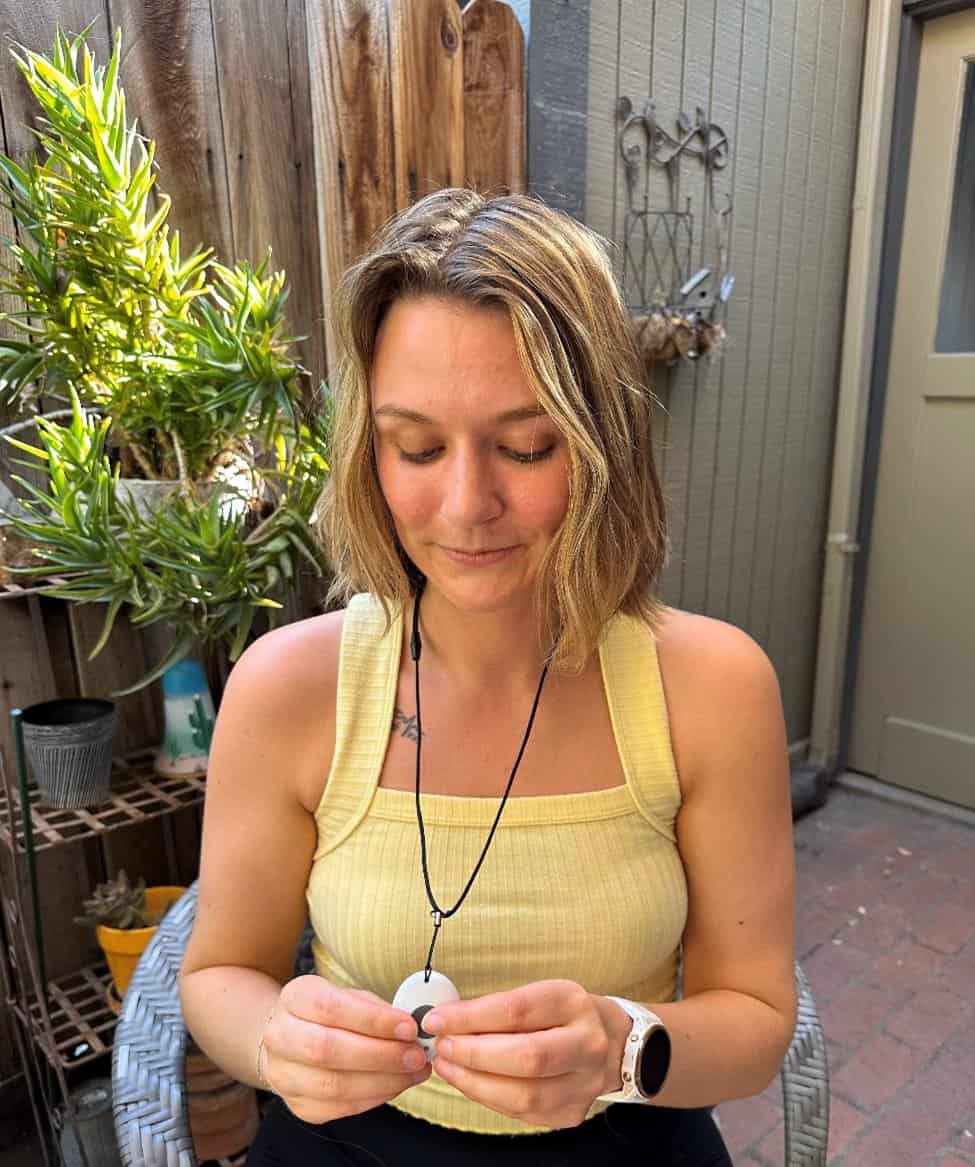
Testing out a Medical Guardian fall detection help pendant
Caregiver App
Some companies offer caregiver integration features, which are invaluable for families caring for someone with dementia. Caregivers download an app on their mobile device to receive alerts about their loved one's location, activity, device battery level, and more. For dementia patients who may wander or forget to charge their device, these real-time notifications provide added peace of mind.
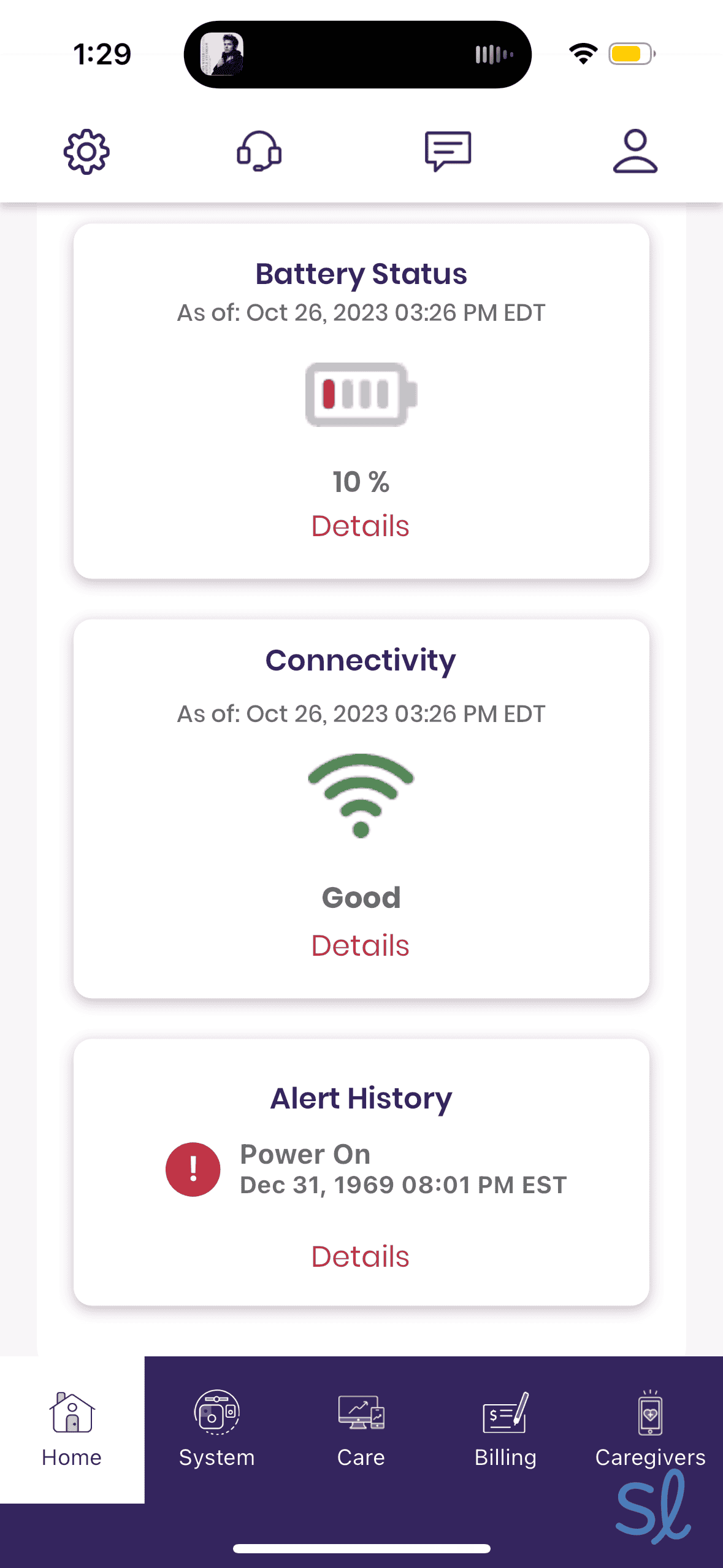
Using Medical Guardians MyGuardian mobile app
Trained Operators
Find out if the company you're considering uses monitoring professionals accustomed to working with older adults with dementia who may be confused, unable to articulate their emergency clearly, or struggle to follow instructions. It ensures that they know to speak loudly and clearly and to take action if the caller is confused or silent. Operators trained in dementia care are more patient, better at calming distressed users, and quicker to dispatch help when communication is limited.
Long Battery Life
Older adults with dementia may struggle to remember daily tasks, such as charging their phone or medical alert system. Forgetting to charge a device can leave someone vulnerable during an emergency, so long battery life is a must-have feature.
Prioritize systems with a long battery life, such as LifeFone's At-Home & On-the-Go VIPx system, which has up to 10 days of battery life for on-the-go use. Additionally, look for systems that send low-battery alerts to caregivers, ensuring the device stays functional without relying on the user to monitor it.
Medication Reminders
Everyone forgets to take their meds from time to time, but meds can be even more difficult to keep track of for individuals with dementia. Missing doses can worsen cognitive symptoms and increase health risks, making medication management a top concern for caregivers.
Some medical alert brands, such as LifeFone, offer medication reminders to help your loved one better manage their medications. These gentle audible prompts help maintain routine and ensure critical medications are taken on time, supporting both physical and cognitive health.
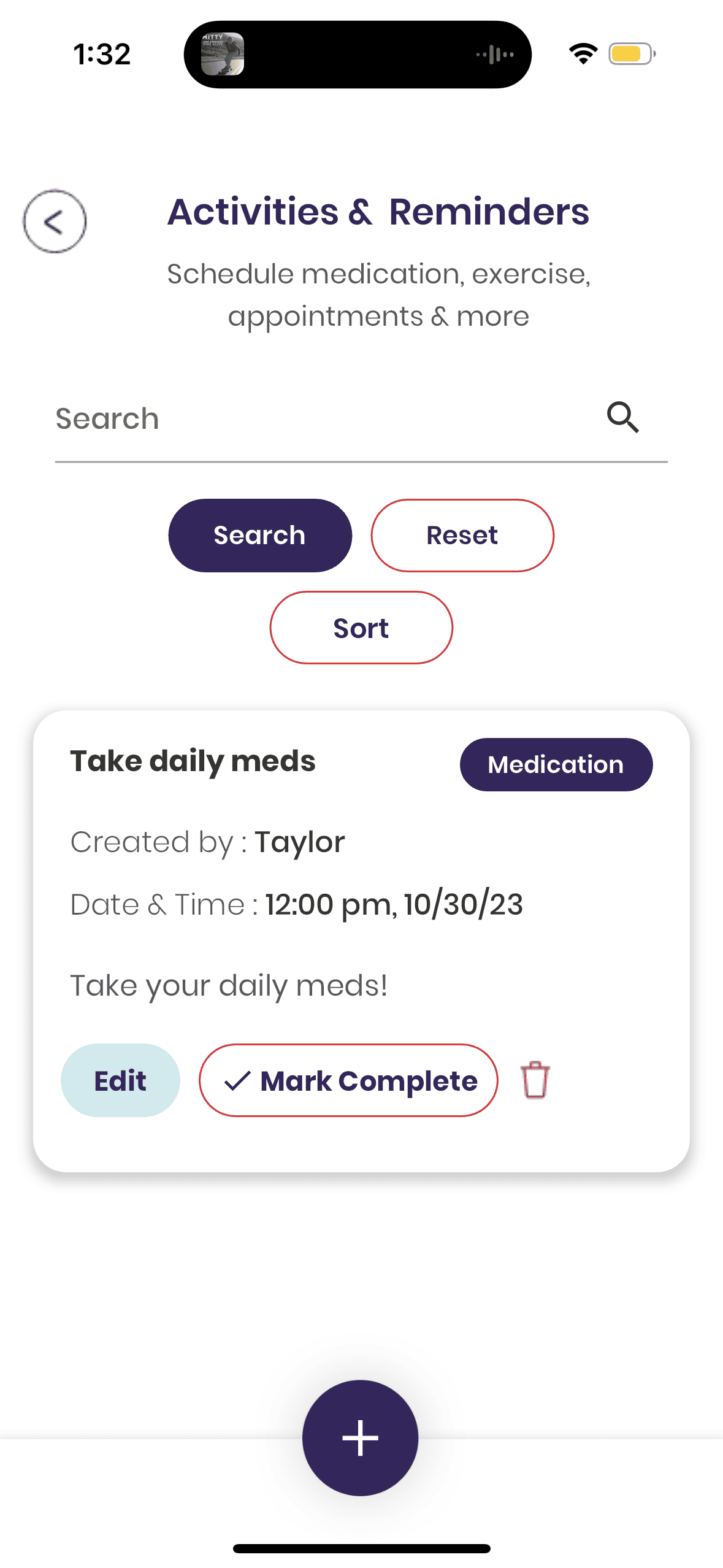
Setting reminders in Medical Guardian's MyGuardian mobile app
GPS Tracking
Wandering is one of the most dangerous behaviors associated with dementia, affecting around 6 in 10 individuals with the condition. Real-time GPS tracking allows caregivers and emergency responders to locate a loved one quickly if they leave home unexpectedly. This proactive safety measure is essential for preventing dangerous situations and providing fast intervention when someone with dementia goes missing.
One-Button Activation
People with dementia often struggle with complex technology, so simplicity is key. A medical alert system with one-button activation eliminates confusion and ensures the user can call for help without navigating menus or touchscreens.
Wearable devices like pendants or wristbands are intuitive and can be pressed easily in an emergency. Look for devices that are tamper-resistant or difficult to remove, so your loved one continues wearing it throughout the day.
Frequently Asked Questions
-
Should seniors with memory loss use medical alert systems?
Most seniors with memory loss could greatly benefit from a medical alert system. Seniors with cognitive impairment, including dementia, are more likely than those without it to suffer a fall.4 A medical alert system is a great way for loved ones, caregivers, and emergency responders to act swiftly if and when a fall occurs.
-
What are monitoring systems for people with dementia?
Medical alert systems allow seniors with dementia to benefit from 24/7 monitoring. Features vary by system, but they most often allow loved ones and monitoring agents to detect when a fall has occurred or the user has wandered away from home.
-
Do Medicare and Medicaid pay for medical alert systems for seniors with dementia?
Medicare does not typically cover medical alert systems, but Medicaid may cover medical alert systems for eligible beneficiaries with dementia. The systems fall under the Medicaid category of Personal Emergency Response Services, or PERS.
-
Can medical alert systems prevent seniors with Alzheimer’s from wandering away?
No, medical alert systems can’t prevent older adults with Alzheimer’s or another form of dementia from wandering, but they can alert loved ones and response agents if and when a senior does wander. The system can even track their location so they can be found as quickly as possible.
-
National Library of Medicine. (2022). Injurious falls before, during and after dementia diagnosis: a population-based study.
-
National Council on Aging. (2023). Get the Facts on Falls Prevention.
-
National Center for Biotechnology Information. (2017). Risk Factors Associated with Falls in Older Adults with Dementia: A Systematic Review.
-
National Library of Medicine. (2025). A META-ANALYSIS OF FALL RISK IN OLDER ADULTS WITH ALZHEIMER’S DISEASE.