How to Get Free Hearing Aids for Seniors
Find out how seniors can reduce hearing aid costs through federal programs, state Medicaid coverage, manufacturer foundations, and Medicare Advantage plans, plus key income requirements for 2026.
Our Top Low-Cost Hearing Aid Recommendations
There are various ways to qualify for free or low-cost hearing aids from many major providers. That said, not all hearing aids are the same. You may find that one brand offers hearing aids better suited for your needs and budget than another. To help you find the best hearing aids for you, here are a few of the highest-rated, budget-friendly hearing aid providers we have reviewed.



Over 28 million Americans could benefit from hearing aids, but only 30 percent of Americans aged 70 and over (with hearing loss) have ever tried them1. There are many reasons why seniors may let their hearing loss go untreated — a big one being sticker shock. The average cost of one hearing aid hovers around $2,300, and if you need to purchase two of them, it can definitely be a blow to your budget.
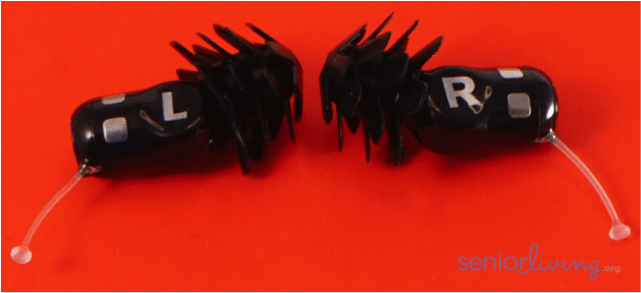
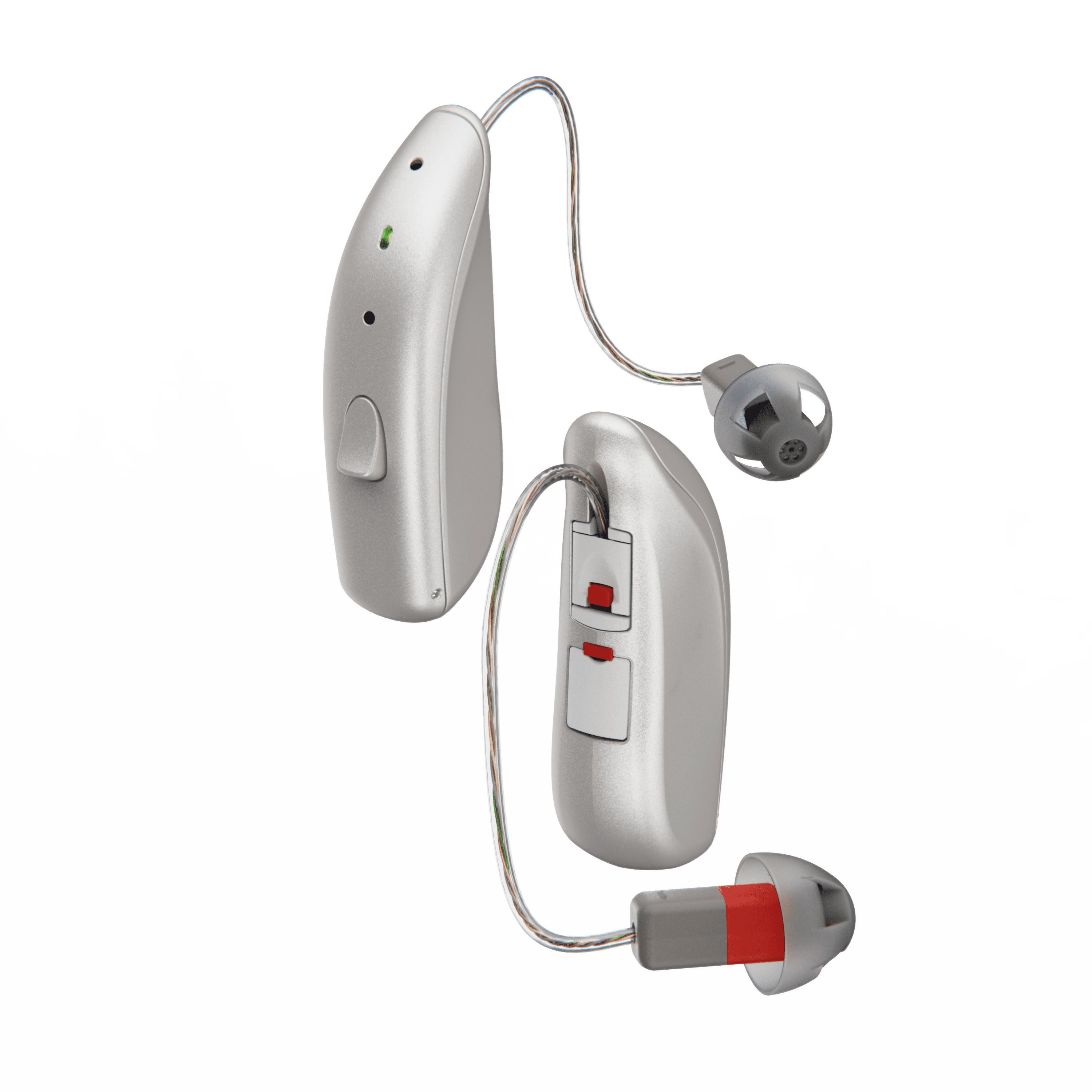
Eargo Hearing Aids
If you’re living on a fixed income, or simply want a great deal on hearing aids, there are some resources to check out. Getting free or reduced-cost hearing aids is possible, but we admit it isn’t always easy. We’ve done some digging on discounts, resources, and insurance in hopes of helping seniors save money on a hearing aid purchase or possibly get free hearing aids altogether!
Did You Know? There are several OTC hearing aid brands that sell affordable devices, so you don’t have to bust your budget for better hearing. Visit our list of the best cheap hearing aids to find out how you can save.
Can You Get Free Hearing Aids in 2026?
You can follow several avenues to save big bucks on hearing aids. Here is a quick overview of your options, then we’ll dive into the details to see if you qualify.
- The Veterans Health Administration
- Medicaid
- Vocational rehab
- National and state foundations
- Insurance and Medicare Advantage
Outside of private insurance benefits, you’ll generally need to fall below certain income thresholds to be eligible for free hearing aids. While this may be based on income levels in your area, the federal poverty guidelines can help you determine if you’ll be eligible for select state or national programs.
As of 2026, the federal poverty income threshold is set at $15,960 per year for an individual, or up to $33,000 per year for a family of four2. Most programs require that you are at or below 200% of the federal poverty guideline. For an individual, that means your annual income could be no higher than $31,920, or up to $66,000 for a four-person household.
Watch the video below for the inside scoop on how to get free or reduced-cost hearing aids. Audiologist Brad Ingrao chats with Jeff Hoyt, our editor-in-chief, about everything you need to know:
Compare Free Hearing Aid Programs Side-by-Side
| Program | Best Fit For | What You Can Get | Biggest “Catch” | How to Start |
|---|---|---|---|---|
| VA | Veterans and their family members | Hearing exam + hearing aids + fittings + follow-ups | Must be eligible for and enrolled in VA health care; process can feel paperwork-heavy | Apply for VA health care (online, phone, or in person at VAMC/CBOC) |
| Medicaid | Low-income seniors eligible for state Medicaid | Exams, fittings, and hearing aids in some states | Coverage is state-by-state; some states offer no hearing aid coverage | Call your state Medicaid office and ask for “adult hearing aid benefits” |
| Vocational rehabilitation | Adults working or seeking work and in need of hearing help to do the job | Hearing aids if needed for employment, plus related services | Usually tied to employment goals (not retirement) | Contact your state vocational rehabilitation office |
| Foundations and nonprofits (state and national) | Seniors who don’t qualify for VA or Medicaid but can show financial need | Free or discounted devices through programs, donation networks, or partner clinics | Can involve waitlists, limited inventory, or specific eligibility requirements | Start with HearingLoss.org, local Area Agency on Aging, and hearing-aid charity listings |
| Manufacturer foundations (Miracle-Ear, Starkey, etc.) | Seniors with financial need who can complete an application | Free or reduced-cost hearing aids through foundation programs | Application-based; may require documentation and clinic participation | Apply through the foundation’s site and follow their clinic instructions |
| Private insurance/ Medicare Advantage | Seniors with MA or private plans that include hearing benefits | Exams + discounted devices; sometimes a device allowance | Benefits are plan-specific and may require in-network providers | Call your plan provider and ask for your hearing aid benefit/allowance in writing |
Can You Get Free Hearing Aids From the Veterans Health Administration (the VA)?
Hearing loss is the most common service-related injury for U.S. veterans.3 If you were in the service and are experiencing hearing loss in your golden years, the Veterans Health Administration, which is part of the U.S. Department of Veterans Affairs (VA), may be able to give you free hearing aids, or at least a significant discount on them.
How to Qualify for VA Healthcare
To get hearing aids from the VA, you’ll need to apply for healthcare coverage through the Veterans Health Administration (VHA). This arm of the VA addresses current healthcare needs; it does not establish service connection for any injuries or disabilities you may have incurred during your service. You can apply online or over the phone.
You may also be able to establish eligibility at a local VA Medical Center (VAMC) or Community-Based Outpatient Clinic (CBOC). You’ll need your DD-214 and valid health insurance cards. The VA will also do a “means test,” so having a few years of tax returns handy can speed things up.
Going in person is often the preferred option, as a local VAMC may be able to get you enrolled on the spot, whereas online or over-the-phone applications take roughly one week to be processed. In years past, a paperwork backlog saw many applicants waiting months to be approved, though the Department of Veterans’ Affairs was able to clear this backlog in late 20254.
Once you are deemed eligible for general VA healthcare, you are automatically eligible for audiology care, including hearing evaluations, hearing aids, assistive hearing technologies, and even cochlear implants if you need them. The VHA also provides comprehensive evaluation and treatment for tinnitus.
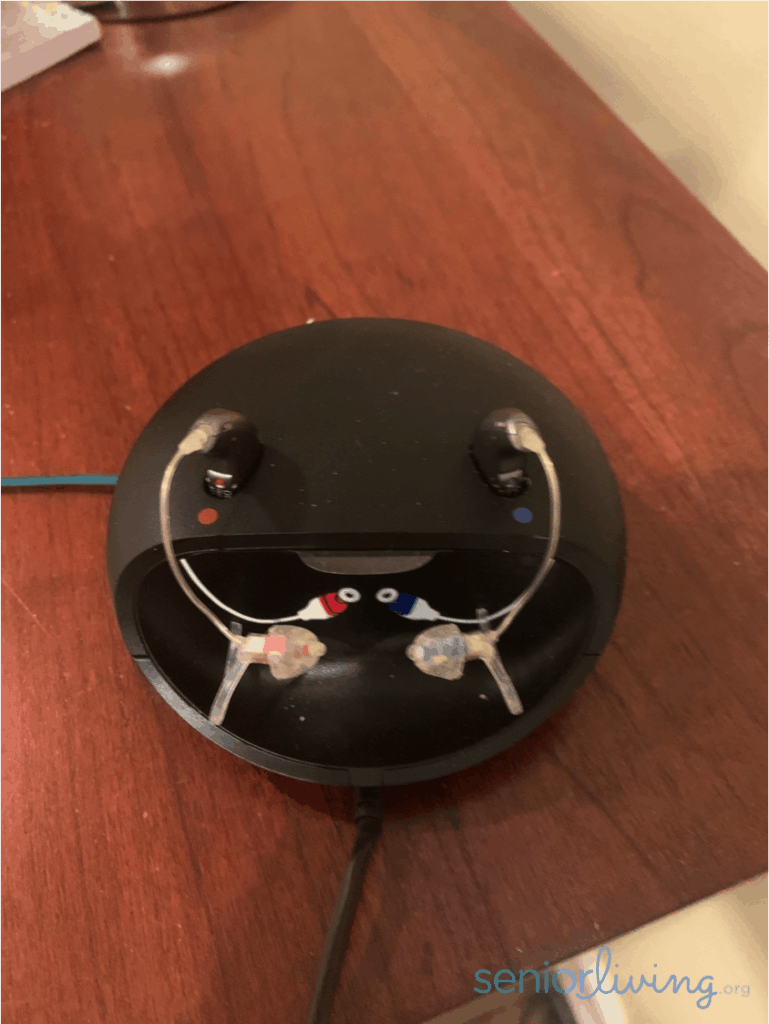
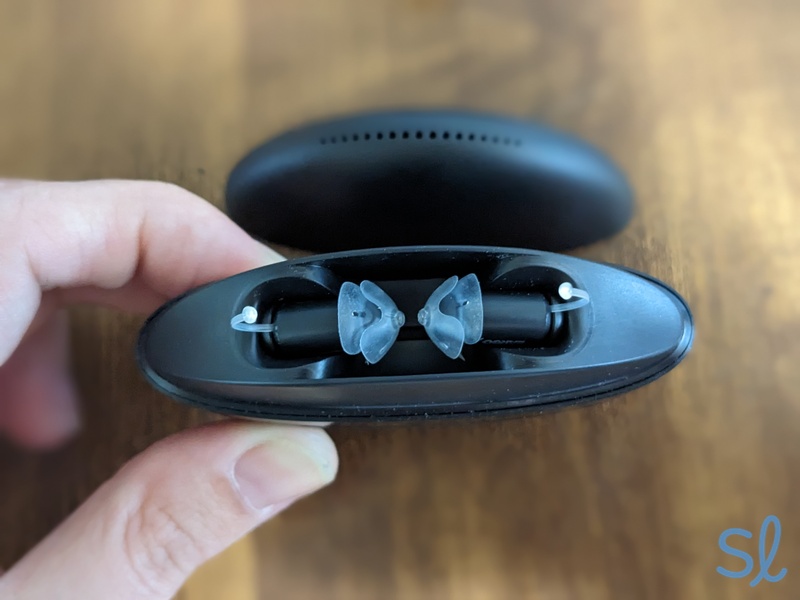
Oticon Rechargeable Base Station
If your income is above a certain level, you may be required to pay about $100 in copayments for the evaluation and fitting, but the cost of the devices themselves are fully covered if you are eligible. Batteries, consumable supplies like wax guards, and follow-up care are also provided. If you are eligible but already bought hearing aids elsewhere, you can register them with the VA and then get these supplies at no cost.
Keep in mind that the VA’s income limits for copayment coverage vary by year and your location. You can learn more about how VA income limits affect your health coverage and check the current VA income limits for 2026 on the VA website.
VA-issued hearing aids are all “premium” level from the “big six” (Oticon, Phonak, ReSound, Signia, Starkey, and Widex) and their immediate subsidiaries (Unitron, Rexton, etc.). The VA contract also covers accessories like Bluetooth streamers, advanced remote microphones, and even specialized alerting systems that ensure you hear important alerts like smoke and carbon monoxide alarms.
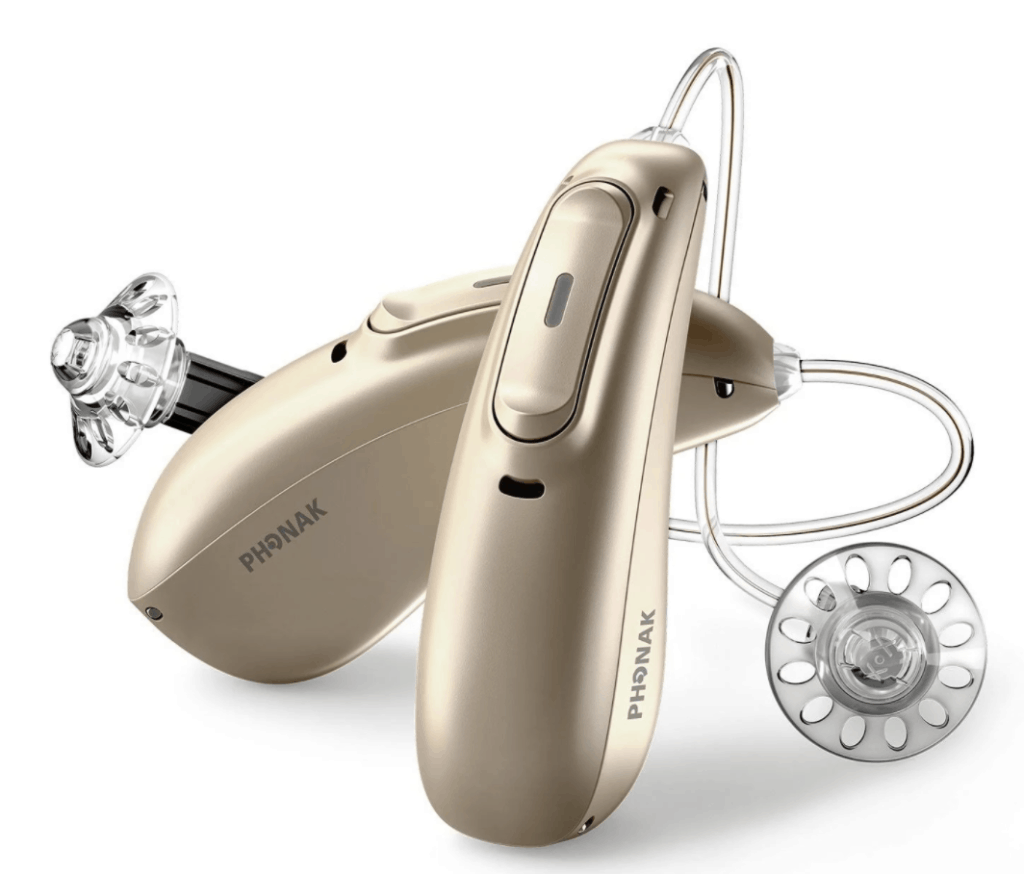
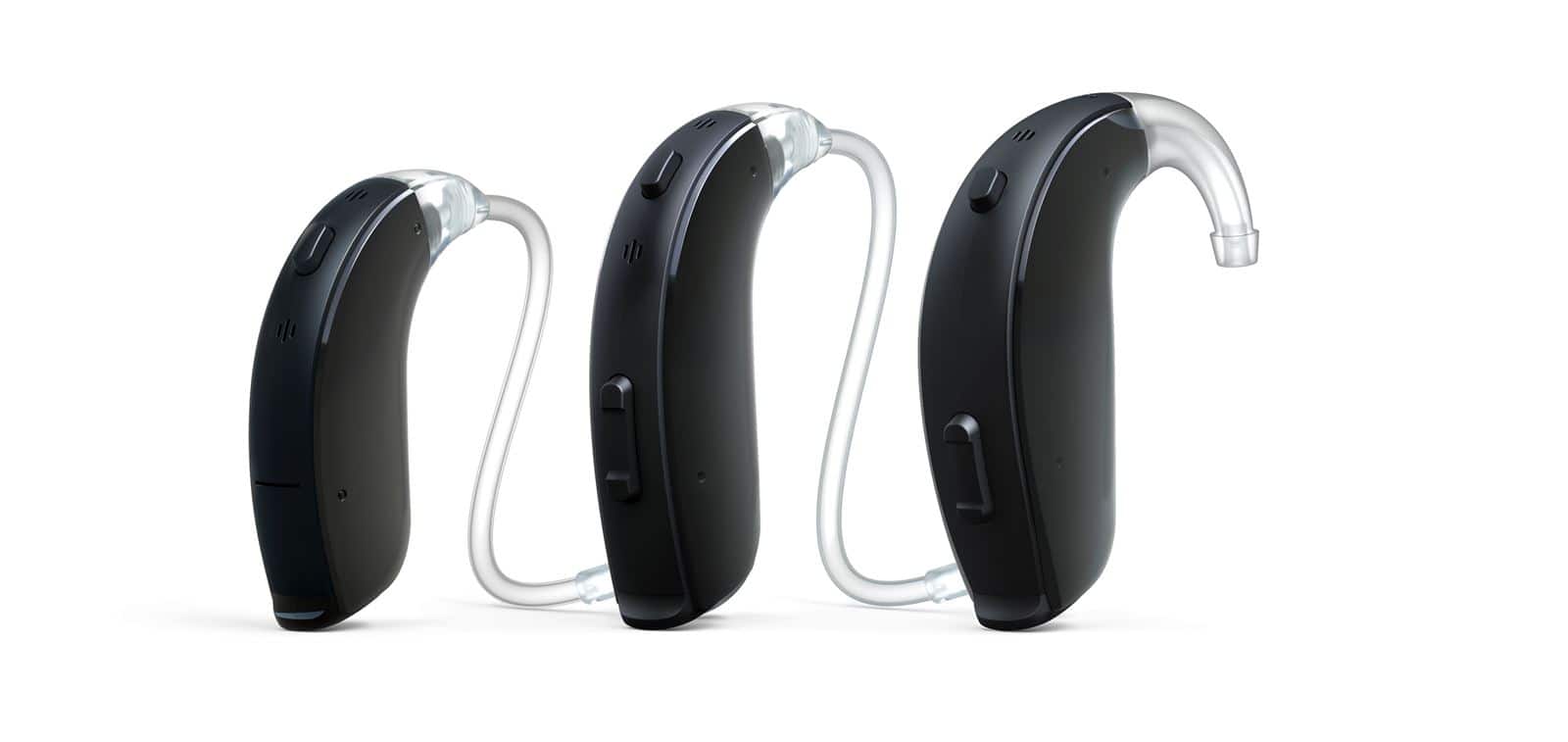
One of Phonak's BTE hearing aid styles
We recommend finding your nearest VA facility to discuss hearing aid benefits with a local representative in person or over the phone. They can help you navigate finding treatment and exploring possible coverage for your hearing loss.
If you feel your hearing loss is due to your military service, you will need to open a claim with the Veterans Benefits Administration. This requires filling out VA Form 21-526EZ and submitting it online, by mail, or in person. If you are eligible for VHA healthcare, you do not need a service connection for hearing loss or tinnitus to get hearing aids from the VA.
Does Medicaid Pay for Hearing Aids?
In the U.S., Medicaid hearing aid coverage varies from state to state. As of 2026, Medicaid covers those under the age of 21 who require hearing aids, and this applies nationwide. For seniors, however, location is the primary determining factor when seeking hearing aids through Medicaid.
Some states may cover hearing assessments and maintenance, while other states cover the entire device. Unfortunately, some states don’t offer any Medicaid coverage for hearing services and devices, leaving some low-income seniors to pay out of pocket.
To find out what you qualify for, we recommend contacting your state’s Medicaid office to learn more. Also, the Hearing Loss Association of America provides a comprehensive list of what each state covers.
Medicaid Hearing Aid Coverage by State
To save you some time, we’ve compiled a list of the 18 states that do not offer any kind of hearing aid coverage through Medicaid in 2026:
- Alabama
- Arizona
- Arkansas
- Colorado
- Delaware
- Idaho
- Louisiana
- Michigan
- Mississippi
- Missouri
- North Carolina
- Oklahoma
- Pennsylvania
- Tennessee
- Utah
- Virginia
- Washington
- West Virginia
There are also five states that have not reported their Medicaid hearing coverage for 2026. These states may or may not offer any coverage for hearing devices or hearing care: Illinois, Iowa, Nevada, New York, and South Carolina.
The remaining 27 states (plus the District of Columbia) offer varying degrees of coverage. Here are the 19 states that offer coverage for hearing aids through Medicaid with no copayment requirements:
- Alaska
- California
- Connecticut
- The District of Columbia
- Florida
- Hawaii
- Indiana
- Maryland
- Massachusetts
- Minnesota
- New Hampshire
- New Jersey
- New Mexico
- Ohio
- Oregon
- Rhode Island
- Texas
- Vermont
- Wyoming
If you discover that hearing aids aren’t covered by Medicaid in your state, or you’re not eligible for Medicaid, no reason to lose hope. You may be able to take advantage of one of the other resources below!
Will Vocational Rehabilitation Pay for Hearing Aids?
Vocational rehabilitation helps people who have disabilities get or keep a job. If you are an older adult who has yet to retire and need hearing aids to perform your job duties or obtain employment, you may be able to receive a hearing aid through your state’s vocational rehabilitation program. Seniors can see if their state offers hearing aid coverage and if they qualify for vocational rehabilitation services by contacting their state office.
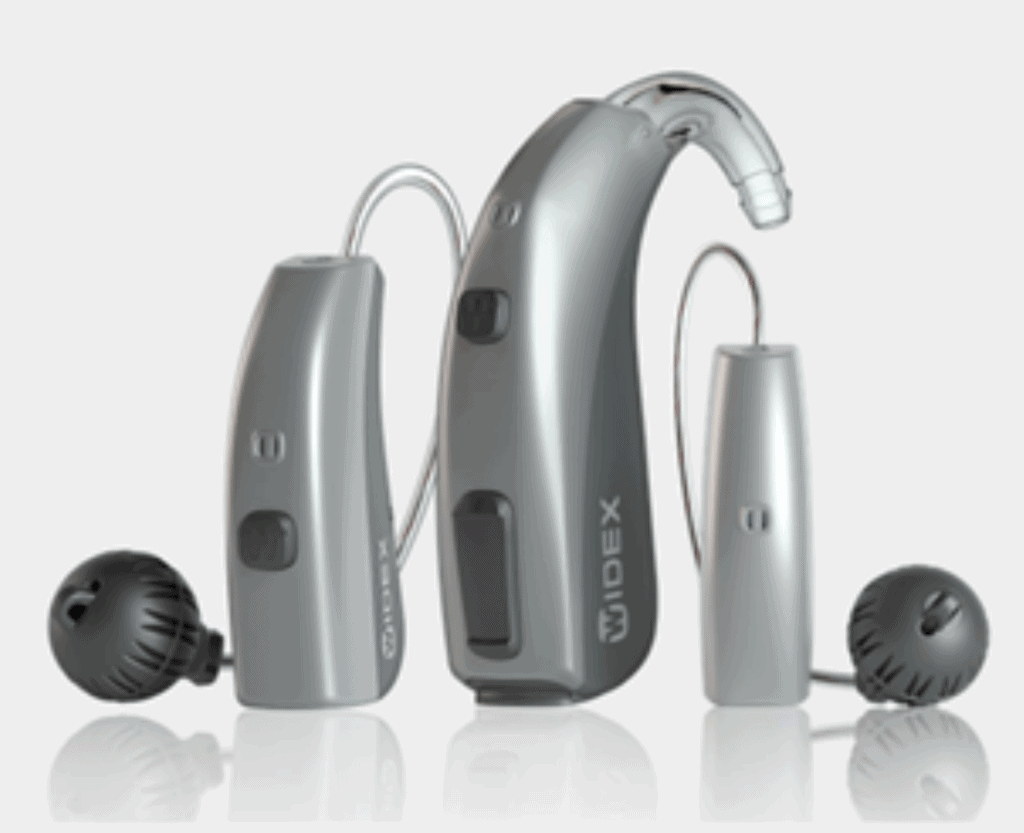
Widex Evoke Hearing Aids
National and State Resources for Free Hearing Aids
Many agencies and foundations at the national and state levels provide assistance to seniors in purchasing hearing aids. For seniors seeking financial hearing aid assistance, it is just a matter of contacting these foundations and filling out any necessary applications to see if you qualify for help. It can take some time, but if it saves you thousands of dollars, we think it is worth it!
For a list of financial assistance options, visit HearingLoss.org. You may also find an option through the list provided by the Hearing Aid Project at the state or national level. Your local Area Agency on Aging (AAA) may also be able to direct you to local resources.
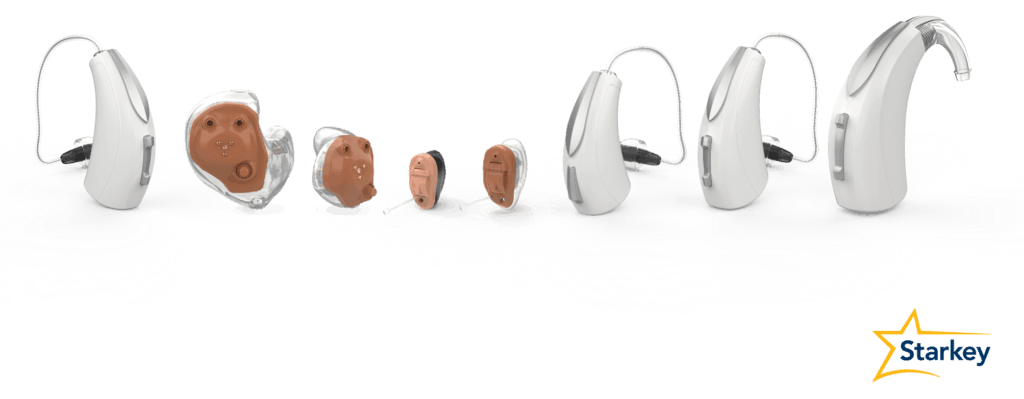
Starkey Hearing Aids Lineup
Hearing Aid Foundations May Offer Assistance
Some major hearing aid companies, like Miracle-Ear and Starkey, have established foundations to provide hearing aids to people who need them but may not be able to afford them. You can visit the Miracle-Ear Foundation and Starkey Cares (formerly provided by the Starkey Hearing Foundation) to fill out an application and see if you qualify for assistance from them.
While it’s nice to know there are alternatives if you don’t qualify for Medicaid, VA benefits, or a similar government program, the requirements for these foundations can be quite stringent, and (counterintuitively) expensive.
Here’s a breakdown of requirements and potential hurdles to consider when applying for free hearing aids through the Miracle-Ear Foundation (Gift of Sound) or Starkey Cares (Hear Now).
| Details | Miracle-Ear Foundation (Gift of Sound) | Starkey Cares (Hear Now) |
|---|---|---|
| Where to apply | Through a local participating Miracle-Ear location | Through a Starkey Cares Partner (local clinic helps verify eligibility) |
| Proof of hearing need | Documented hearing loss requiring hearing aids | Program requires clinical pathway via partner clinic |
| Income requirements | Household income at or below 200% of federal poverty guidelines | Income limits are set by the program and vary by year and location |
| Additional financial requirements | Must have exhausted other resources (insurance, Medicaid, VA, charities, etc.); must be denied financing available at the Miracle-Ear location | Requires financial documentation for eligibility screening; no financing-denial requirement |
| Application fee | $200 for adults | $300 application fee |
| What you get | Hearing aids provided through program (with follow-up expectations) | Hearing aids provided for the cost of the application fee, ordered and fitted through partner clinic |
You might get sticker shock at the application fees, but if your application is accepted, these fees cover the cost of fittings and short-term follow-up care. It’s also important to consider, however, that you could buy a pair of hearing aids outright for the same price from an affordable OTC provider like MDHearing. Note that OTC hearing aids are only suitable for mild hearing loss.
Does Insurance Cover Hearing Aids?
Private Insurance
Most private insurance plans cover hearing assessments and hearing aid fittings, but it is rare for health insurance to cover the full cost of hearing aids. You may have a copay or pay completely out of pocket for the hearing devices. Some plans may contract with a certain hearing aid provider to get you a discounted price, so you might get a better deal on a high-quality hearing aid by using the provider your insurance plan has contracted with.
Plans vary greatly, so it is important to call your provider and make sure you know the details of your plan. Here are some important questions we suggest you ask when speaking with a representative:
- What is my hearing aid benefit?
- Are the benefits limited to a specific model or brand of hearing aid?
- Do I have to use a certain in-network provider?
Also, ask for your benefits to be sent to you in writing via mail or email. This will make sure you know exactly what you have coverage for and hold your insurance provider accountable.
Medicare Advantage
Some Medicare Advantage plans provide hearing aid coverage, while others don’t. Plans vary depending on your state and insurance company. The best course of action is to call your Medicare Advantage representative and inquire about the specifics of your plan and the hearing services it covers.
Health Savings Plans
If you have exhausted other resources and end up having to pay for your hearing aids out of pocket, don’t forget to use your health savings plan if you have one! Since hearing aids are medical devices, you can use a health savings plan for the purchase. You can use the following health savings plans to purchase hearing aids:
- Flexible spending account (FSA)
- Health savings account (HSA)
- Health reimbursement account (HRA)
If you do have to pay for hearing aids out of pocket, it’s important to remember that you may be able to deduct these expenses when you file your taxes. This is true for eligible hearing aid expenses that you purchased for yourself, as well as those you purchased for a spouse or qualifying dependent.
Take Our Free Online Hearing Test
Wondering if you have hearing loss?
Grab your headphones and get an evaluation in minutes.
-
National Institute on Deafness and Other Communication Disorders. (2024). Quick Statistics About Hearing, Balance, & Dizziness.
-
HHS. (2026). 2026 Poverty Guidelines.
-
U.S. Department of Veterans Affairs. (2021). Hearing Loss.
-
VA News. (2025). VA eliminates Veteran family health care backlog.
-
Medicaid. (n.d.). Early and Periodic Screening, Diagnostic, and Treatment.
-
IRS. (2026). Topic no. 502, Medical and dental expenses.