
10 Simple Ways Seniors Can Save Money on Utility Bills
There are several easy ways to save on utilities, including changing out air filters, using smart lights, looking for senior discounts and more.

SeniorLiving.org is supported by commissions from providers listed on our site. Read our Editorial Guidelines
A 2025 AARP poll found that about two-thirds (63 percent) of Americans who were 50 or older saw an increase in their electric bills and 83 percent were worried about an increase in the cost of their electricity service.1
As data centers grow to meet an increasing demand for artificial intelligence (AI), senior advocates don’t want to see utility companies pass on the increased cost to consumers, especially older adults who often must choose between paying for heat and buying medicine.
With prices continuing to rise, it’s important for older Americans to find ways to save more on their fixed incomes. Even those not on fixed incomes prefer not to spend needlessly on utility bills.
You don’t have to suffer in sweltering heat or freeze inside your home when temperatures dip outside. Utilities can be a major monthly cost, but we found ways to lower that cost. Below you’ll find 10 simple ways to save on your utility bills.
1. Change Your Air Filter
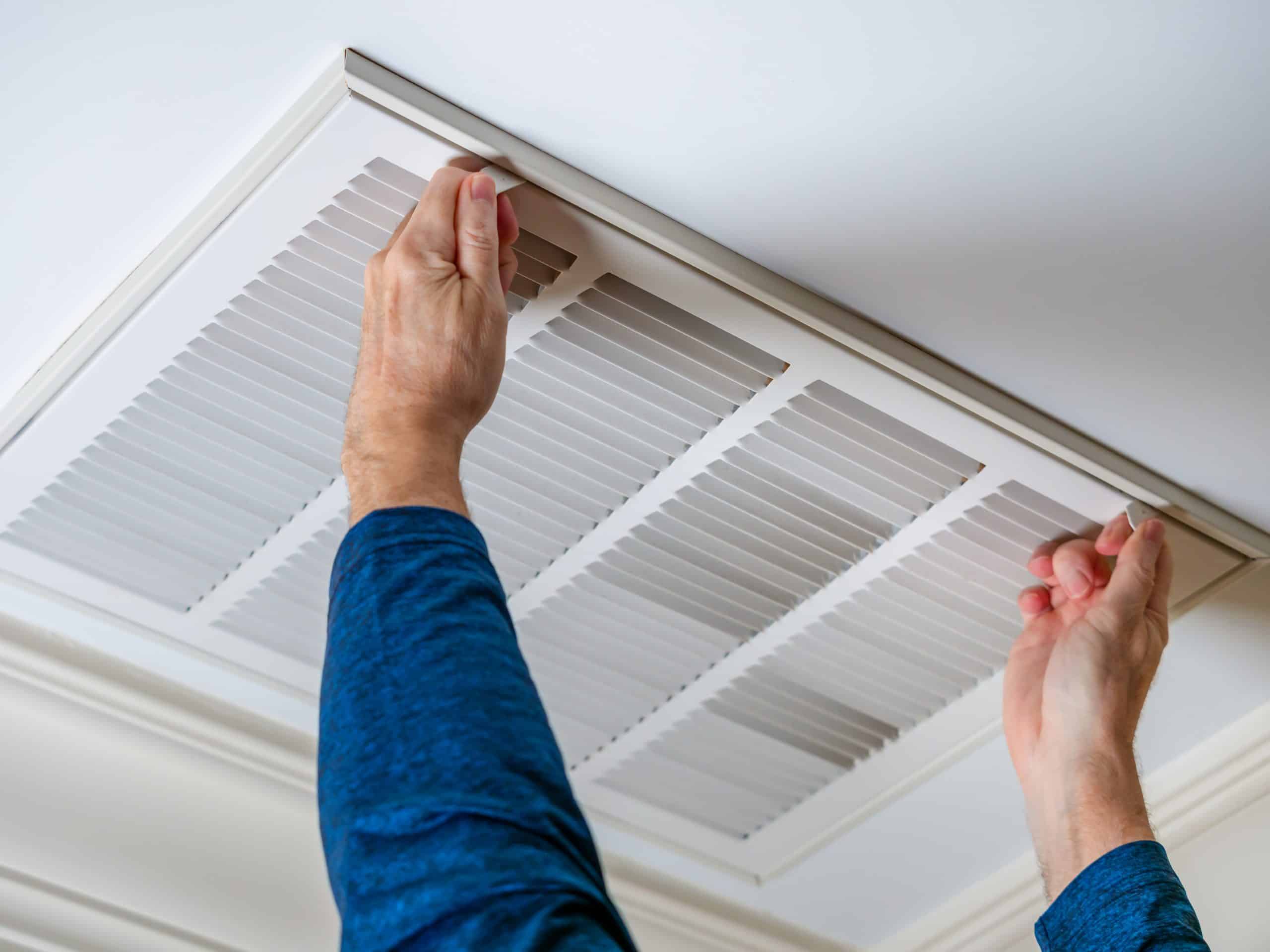
Extensive air conditioning usage could cost you hundreds of dollars on your electric bill. One way to get the most out of your AC — especially in the hotter months — is to change your air filter. Your AC is more likely to break down when your filter is clogged because it has to work harder to produce cool temperatures.
Regularly changing your air filter not only helps you cut down on energy usage, but you’ll also lower your energy bill and keep humidity levels down. You’ll also keep your house cleaner by trapping dust, pollen and other particles before they circulate through your home. (A clogged filter allows these contaminants to settle on your furniture and floors.) You’ll also protect your AC from wear and tear.
Pro Tip: Want more tips on how you can save each month? Check out our frugal living tips for seniors.
2. Use Fans
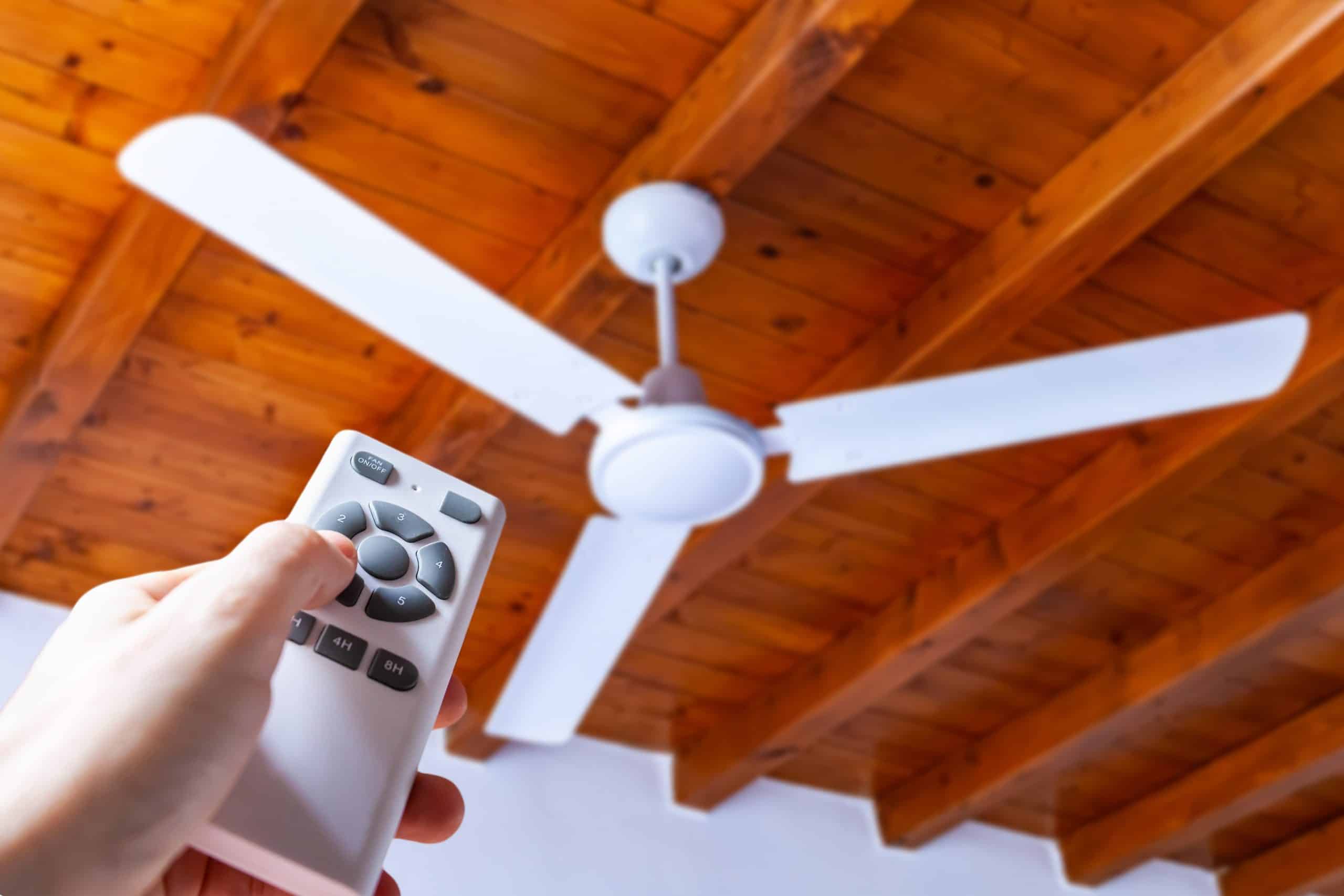
Another way to keep yourself cool without racking up a huge energy bill is to rely more on fans. Fans use about 1 percent of the energy that ACs use. You could have your fan on for a full day and still use less energy than you would for 15 minutes of air conditioning.
Ceiling fans, table fans, wall fans and pedestal fans are all great, low-energy means of staying cool. The fans may not be an end-all-be-all solution for every household, but you can still save a lot on your energy bill by switching between your AC and fans throughout the day.
Did You Know? The U.S. Centers for Disease Control and Prevention (CDC) suggests you only use fans if your indoor room temperature is lower than 90 degrees Fahrenheit.2 Why is that? When temperatures go above 90, a fan may actually increase your body temperature. You’re circulating more hot air and increasing the rate of sweat evaporation, which could lead to heat exhaustion.
Drawbacks of using fans: Unlike fans, air conditioners help you by removing moisture from the air, reducing humidity and allowing your body to cool more effectively through natural perspiration. When humidity is high, sweat doesn’t evaporate as readily from your skin, so you feel hotter even at the same temperature.
You also have to be physically close to the fans for them to work. Lastly, many don’t realize fans cool you and not the room. Fans blow air over your skin, which promotes moisture evaporation, but it doesn’t cool the entire room.
3. Draw Your Curtains and Lower Your Blinds

Many people think blinds and curtains don’t make much of a difference in reducing interior temperatures, but they do. Window coverings really cool off a home’s interiors during the hot summer months, which lowers electric bills. According to the Department of Energy, drapes can reduce heat by a whopping 33 percent.3
Pro Tip: Window awnings can also cool an area on hot summer days by up to 65 percent on your south-facing windows and 77 percent on your west-facing windows!
You can use curtains, drapes, window awnings, shades, blinds and reflective film to reduce solar heat levels in your home. Some tips to optimize your usage include:
- Keep your curtains as close to the windows as possible.
- Use medium-colored draperies.
- Use lighter shades during the summer and darker shades in the winter.
4. Save With Smart Lights
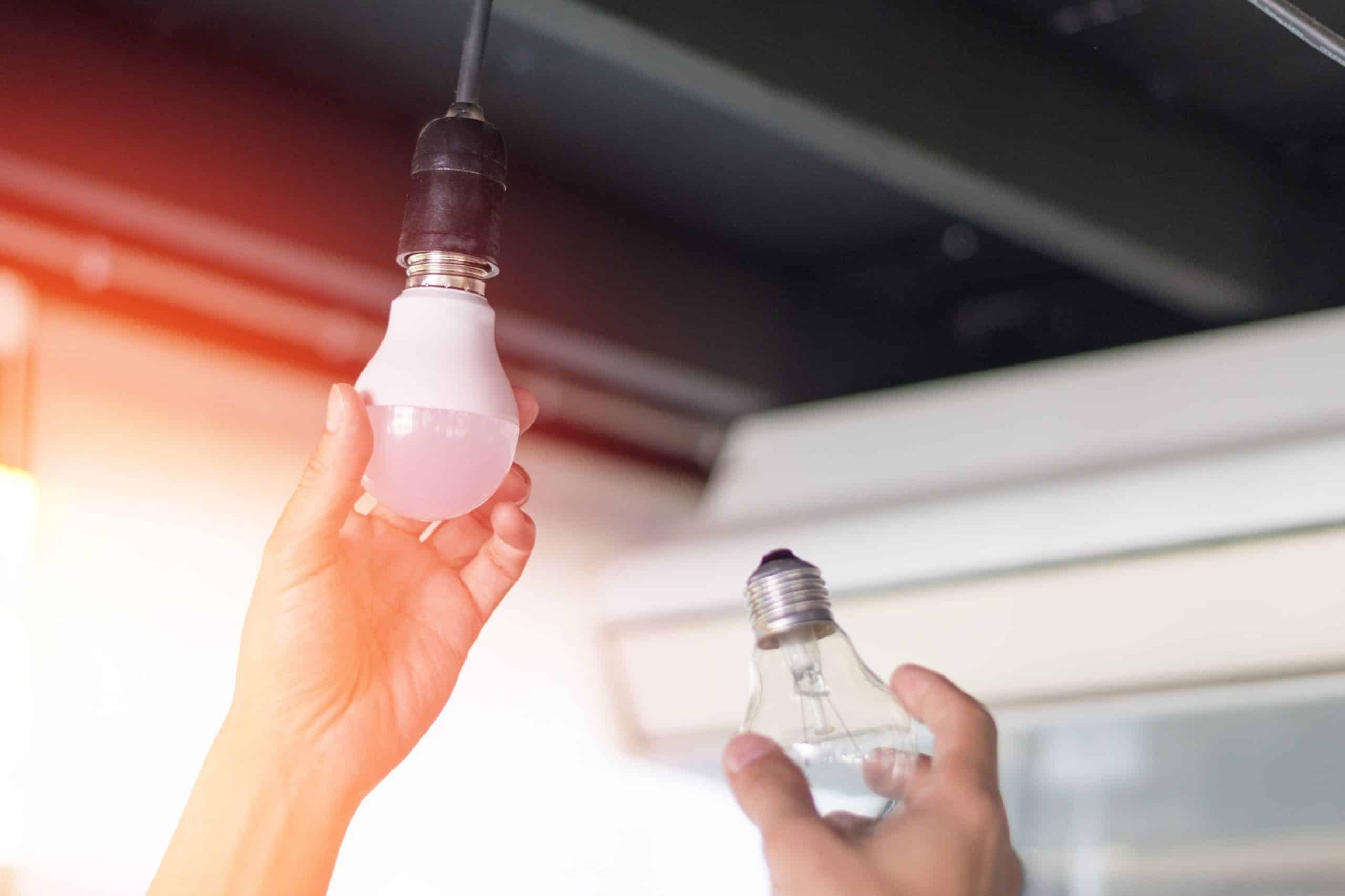
This tip may seem simplistic, but choosing the right light bulbs could save you hundreds of dollars per year on your energy bill.
According to Energy.gov, lighting accounts for 15 percent of the average home’s energy usage.4 When it comes to light bulbs, LED bulbs, not incandescent, are the best option to save energy on your electric bill.
Pro Tip: LEDs use 75 percent to 90 percent less energy, depending on the LED product and previous bulb used, and they last up to 25 times longer than traditional incandescent bulbs. The U.S. Environmental Protection Agency says the average household saves about $225 a year by using LED lighting.5 It’s a no-brainer: LED is the way to go.
5. Optimize Your Thermostat
Adjusting your thermostat by 7 to 10 degrees Fahrenheit from its normal setting for eight hours a day can reduce your bill by up to 10 percent.6 Adjust the temperature for times you’ll be sleeping or away from home. Having a smart thermostat to automate the temperature changes can also improve efficiency and savings even more.
6. Unplug Devices Not In Use
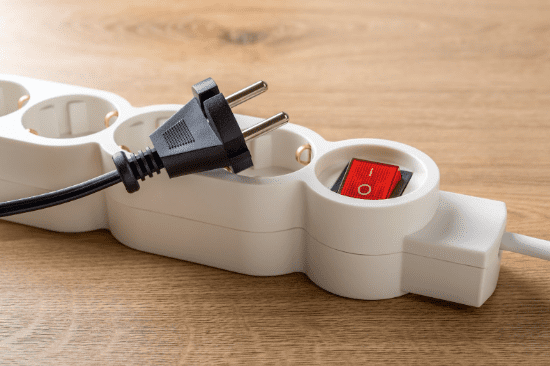
When left plugged in while you’re away, many devices draw phantom power and consume energy. Major culprits include cable TV boxes, gaming consoles and desktop computers. The U.S. Department of Energy estimates that unplugging your smaller devices will have a modest effect on your bill, saving only 5 percent to 10 percent of the average household's energy use.
Yet for the average American home, that translates to a yearly savings of $100 to $200. So, pull the plug on electronics, the television, the printer and your coffee maker when you go out. Make sure your lights are turned off too.
Another quick way to reduce your energy usage is to use power strips. UL-listed power strips help you manage phone chargers and lamps. (Do not use them for high-wattage devices such as microwaves and toaster ovens!) With power strips, you can also turn off multiple devices instantly, rather than having to unplug each unused device one by one from their outlets.
7. Seal Leaks in Your Home
AARP says you can protect yourself from soaring energy bills by using caulk and weather-stripping to seal any leaks.7 It reduces the workload on your cooling and heating systems. You’ll likely see a reduction on your energy bill between 10 percent and 20 percent. And materials to seal leaks usually cost less than $30.
Pro Tip: Check out the U.S. Department of Energy’s Weatherization Assistance Program to assist you in making your home more energy efficient at no cost.
8. Bundle Up In the Winter

We’ve talked a lot about how to stay cool during warmer months, but what about colder months? Electricity bills can add up quickly when the heat is blasting, so one quick and easy way to stay warm is to bundle up.
Put on a pair of warm socks, accrue a selection of comfortable sweaters and find a favorite blanket or two to keep yourself warm. If you have a fireplace, you can also stay warm by making a roaring fire at a fraction of the cost of keeping your heater on.
FYI: Heaters generally use more energy and generate higher electric bills than air conditioners, especially if you live in a colder region. That’s because the process of creating heat is more energy-demanding than removing it.
9. Cook and Bake During the Colder Seasons

This tip will keep you both satiated and warm during the cooler months. Oven and stovetop heat can keep your house nice and toasty, and you can maximize the residual heat by cracking your oven door open when you’re finished.
Cooking and baking at home saves you money, since you’ll rely less on your heater. You can freeze your goodies to have in the warm months too. You’ll also save on what you’d otherwise spend at restaurants.
Pro Tip: For more information about how to be more financially savvy, check out our guide to finance for seniors.
10. Take Advantage of Senior Discounts and Resources

Most utilities offer deadline extensions and payment plans. Whether you’re looking at gas, water, electricity or sewage services, some providers also offer utility discounts to Americans over the age of 65.
Low-income households or those that have a disabled family member may be eligible for senior discounts on basic utilities and monthly charges.
Bill-pay assistance may also be available through the Low-Income Home Energy Assistance Program (LIHEAP), a federal program administered by states. To see if you qualify, use the LIHEAP eligibility tool or call the National Energy Assistance Referral hotline at 866-674-6327.
You can learn more about senior discounts for utilities and other services in our video below.
Conclusion
Staying comfortable at home during extreme heat and cold doesn’t have to cost you a fortune on your utility bills. By planning smartly, using energy-saving refrigerators and other appliances, and following the tips outlined above, you can greatly reduce your utility bill.
Looking for more ways to say? Check out our guides below:
-
AARP. (2025). Americans 50-Plus Are Concerned About Utility Costs Going Up.
-
CDC. (2025). About Heat and Your Health.
-
U.S. Department of Energy. (n.d.). Energy Efficient Window Coverings.
-
U.S. Department of Energy. (n.d.). Lighting Choices to Save You Money.
-
United States Environmental Protection Agency. (2023). U.S. EPA’s ENERGY STAR Program Celebrates over 25 Years of Achievements in Lighting Efficiency.
-
U.S. Department of Energy. (n.d.). Programmable Thermostats.
-
ARRP. (2025). AARP Fights Nationwide to Protect Older Adults from Utility Rate Hikes.