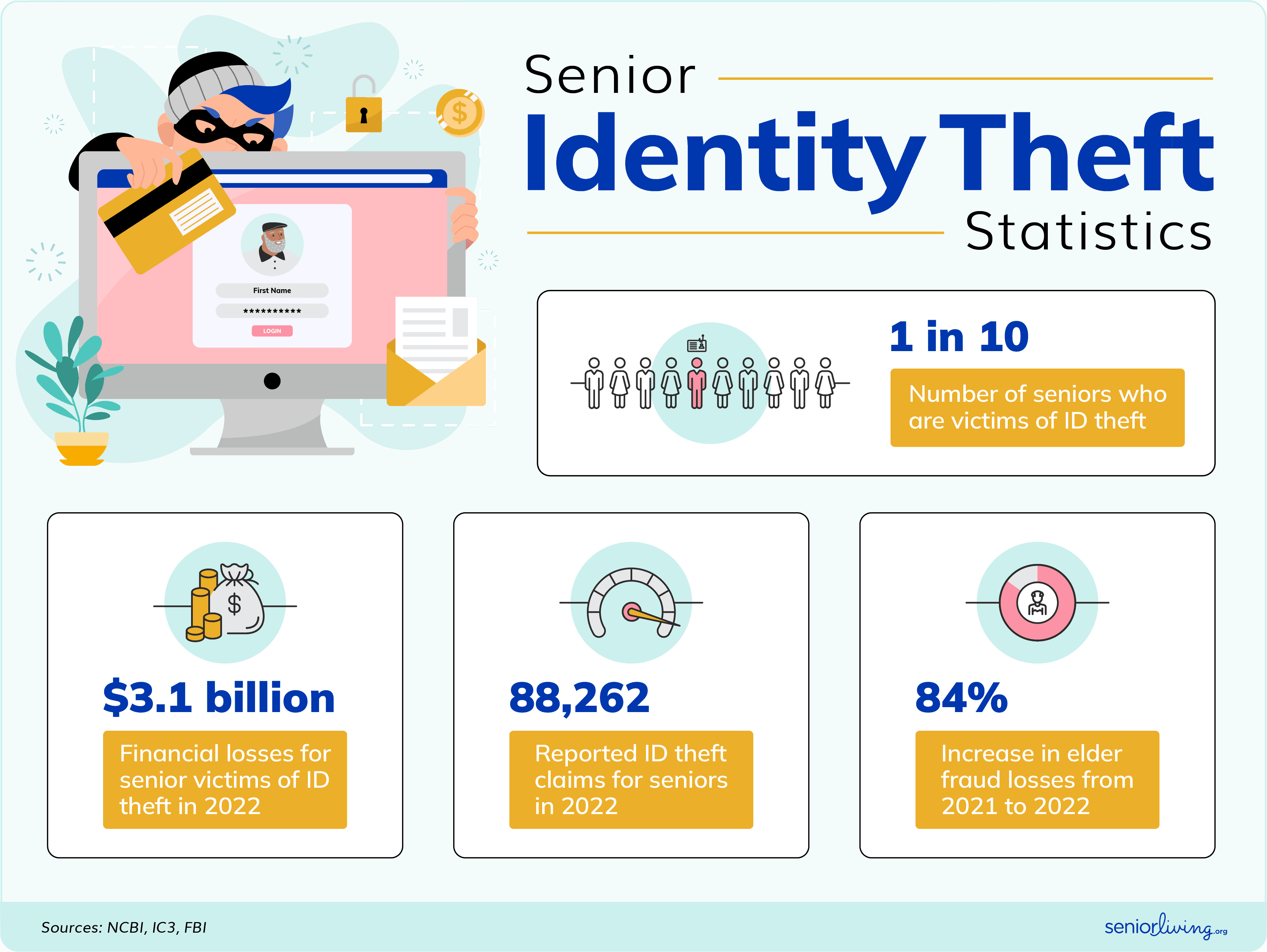
Identity theft can happen to anyone, but seniors are a commonly targeted group. According to the Federal Trade Commission, consumers reported losing more than $12.5 billion to fraud in 2024, which is a historic high.
Identity theft, a criminal act, occurs when someone steals your identity in order to enrich themselves financially. The thief may get their hands on your personal documents, bank or credit card log-ins, driver's license, or Medicare card. They may even steal your information off of prescription pill bottles!
When criminals target a senior in their identity theft schemes, it is considered to be elder fraud. This type of fraud may be perpetrated by a stranger, acquaintance, so-called friend, or sadly, a family member.
Read on to learn all about identity theft, and how you can protect yourself from scams.

Expert Insights
From Cybersecurity Expert Adam Pilton,
As an ex-cyber detective, I’ve dealt with hundreds of cyber crime and fraud cases. Many of them started with social engineering and identity theft. The tactics discussed in this article are often used by cybercriminals because they are effective. However, with the right knowledge in place and preventative controls, you can protect yourself against these attacks.
Types of Identity Theft Seniors Should Look Out For
Cybercrime and identity theft is so common that it's sometimes referred to as “the crime of the 21st century.” Because these schemes can be difficult to prosecute and often go unreported, criminals see them as easy and low-risk.
All older adults, no matter their level of assets, are at risk. And, let's face it, technology keeps racing on to ever new heights. Many seniors don't have the technological knowledge that scammers consistently finetune in order to take advantage of others.
To keep you safe, let’s look at some of the common schemes targeting seniors.
Family emergency scams
You may get a hysterical phone call from someone, claiming to be your adult child or grandchild. Thanks to AI, the voice may sound identical to the person you love. You will be asked to wire money or hand over money to a messenger, to help the family member “in need.” They may pretend they've had car trouble, been kidnapped, or been in an accident.
This type of scam preys on your emotions. If you get a call like this, your first instinct may be to act fast, but don't. Instead, hang up and call the person who you think may be in trouble. Very often, they will turn out to be fine.
It also helps to have a secret code word or name that your family uses to identify themselves. If so, ask for this information when you're on the phone with the probable scammer. If they don't know the code, hang up immediately.
Expert Insights
From Cybersecurity Expert Adam Pilton,
With the continued rise of Artificial Intelligence (AI), we are seeing the evolution of these scams happening in real space. From an SMS claiming to be from a family member who has lost their phone and had to buy a new one (hence the new number they will be using), to artificially generated voices and now deep fake videos. These are all designed to do one thing: gain your trust and get you to act quickly before you realise what is happening. The end goal is frequently to steal money from you.
Medicare/Health Insurance Identity Theft
The vast majority of seniors in the U.S. have Medicare. This makes it easier for scam artists to perpetrate Medicare or health insurance fraud. There’s no need for research to determine who the healthcare provider is; it’s Medicare.
In Medicare or health insurance scams, the criminals impersonate themselves as a Medicare agent to entice seniors to provide them with their personal information. Very often, this is done via phone, both landlines and cell phones. Or, they’ll deliver bogus senior-targeted services at makeshift mobile clinics to gather personal information which is then used to bill Medicare, pocketing the proceeds.
To protect yourself, never give out your Medicare or health insurance ID number over the phone. Also check the credentials of the medical professionals you see in person to determine if they are recognized by Medicare.
For additional protection, ask your phone carrier what tools they provide to reduce or eliminate scam and phishing calls. For example, AT&T has ActiveArmor. T-Mobile has Scam Shield.
The FBI also offers information on common schemes and tips to help you avoid health care fraud and health insurance fraud.
Internet Fraud and Identity Theft
Seniors are not always as adept at using computers as they need to be to safely use them. This makes them easy targets for automated internet scams. Not to mention, the “bad guys” get better all the time at cheating honest people.
Some of the strategies scammers use include:
- Fake virus scanning software: Pop-up browser windows that claim to be virus scanning software. In some instances, the user is swindled out of the cost of the fake software. Or, a virus is downloaded onto your computer and nabs your data, including usernames and passwords.
- Persuasive or threatening emails: These are often used to steal funds and gather personal information. These emails are persuasive, as the sender claims to be from a high-level authority organization, such as Social Security, the IRS, your bank, or an insurance company. The email urges immediate action, often threatening loss or punishment. By indicating the need for urgent action, the recipient’s focus is targeted on the importance of the task at hand which in turn lowers their guard.
- Company impersonation: Emails claim to be from a legitimate institution or company asking you to verify or update your personal information.
- Membership issues: Indicate that your membership to an organization has been canceled and you need to contact them immediately to resolve the issue
- Government fraud: Claim you need to update your “official record” such as with a governmental organization
- Package notifications: Say you missed a delivery or that more information is needed to deliver a package
- Account notifications: Indicate you need to click on a link to confirm or unlock your account
- Fake refunds: Offer unexpected refunds or payments, such as a fake IRS tax refund, banking on the fact that it’s hard to turn down free money
All it takes is one click. If you click on any links found inside these emails, the following may occur:
- The electronic device you used to read your email is immediately infected with malware
- You are taken to a dummy login page, where the hacker easily steals your login credentials, credit card numbers, etc.
Expert Insights
From Cybersecurity Expert Adam Pilton,
These attacks are often used in combination, which heightens the emotional reaction and pressure to react. I dealt with a case in which an older woman clicked a link from a phishing email and shared some of her personal details. This resulted in a phone call, and within 24 hours a courier had been sent to her home to collect cash that she had been convinced to withdraw from her bank account.
Social Security Identity Theft
For criminals who don’t want to pay their personal taxes, your Social Security number may be very valuable to them. Criminals using your Social Security number can avoid paying taxes through various means. There are at least five types of identity theft using a Social Security number:
- Financial identity theft takes place when someone uses your personal information for financial gain. Identity thieves use your Social Security number, other information they have gathered, and your good credit to apply for more credit in your name. After using the credit cards, they don't pay the bills which damages your credit and you may begin to receive calls from creditors demanding payment for goods you never purchased. Examples of financial identity theft include bank fraud, credit card fraud, mail fraud, computer fraud, wire fraud, and employment fraud.
- Government identity theft takes place when someone uses your personal information in interactions with the U.S. government. Examples include someone using your Social Security number and your personal information to file a tax return in your name requesting a refund. This is known as Stolen Identity Refund Fraud (SIRF) and is essentially stealing money from the U.S. Treasury in your name.
- Criminal identity theft takes place when someone uses your Social Security Number when dealing with law authorities. For example, they have used your number when arrested which can lead to an arrest warrant for you.
- Medical identity theft takes place when someone uses your Social Security Number to receive treatment and emergency care. When this occurs, you can receive bills for their care, reach Medicare and health insurer plan limits, and get denied coverage because of misinformation. Plus, your safety may be compromised when you need care, and misinformation that is now in your medical record file is used to provide you with treatment.
- Utility fraud occurs when someone uses your Social Security number and other personal information to open utility service contracts or upgrade services on already existing accounts.
To make matters worse, your Social Security number and other personal information can be sold on the dark web and used again and again by other fraudsters and criminals. Pilton notes that “the latest data reveals that a Social Security Number is valued for as little as $1. This makes it affordable to almost every cyber criminal, meaning protecting it is of the utmost importance.”
Once someone has your Social Security number, they, in essence, become you. In your name, they can collect tax refunds, commit crimes, collect benefits and income, use health insurance, establish residences, and so much more. If you’ve lost your Social Security number, it can be challenging to clean up the mess, but there are things that you can do to begin the process.
Other Identity Theft Schemes That Target Seniors
According to experts at the FBI and other consumer support agencies, people who grew up in the 1930s, 1940s and 1950s were raised to be polite and trusting. Con artists exploit these traits, knowing it’s difficult for these individuals to say no.
Expert Insights
From Cybersecurity Expert Adam Pilton,
When it comes to cyber crime, speed of reaction is important to prevent cyber criminals from effectively completing their actions. It’s important to recognise that anybody can become a victim to a cyber criminal. I helped a senior leader within a multi-national organisation who had clicked on a phishing link, as he was distracted and responding to emails on his phone whilst stepping out of a taxi. Feeling shame or embarrassment is natural, but this should never prevent us from seeking help promptly.
Additionally, the crimes often go unreported, whether out of shame or simply not knowing who to call. The following are common scams seniors encounter. Be sure to click on the links provided to learn more and to get tips to help prevent being victimized.
- In Advance fee schemes, a person pays money to the fraudster in anticipation of getting something of greater value, such as a loan, investment, contract, gift, etc. The Nigerian Letter or “419” Fraud is an example of this.
- In Telemarketing Fraud, people often send money and share personal or financial information to unknown callers, increasing their chance of becoming a telemarketing victim.
- In Bank Account or Financial Identity Theft, a criminal gains unauthorized access to your bank account. If an identity thief gets access to your account, you need to read the Electronic Funds Transfer Act and take immediate action.
- Military Identity Theft occurs when a criminal uses a service member's personal information to claim their military benefits. Veterans may be scammed when called to “confirm” their disability status; when in fact, the call was intended to retrieve their personal information instead.
- Credit Card Fraud occurs when someone fraudulently uses a credit or debit card for financial gain.
- Wire Transfer Fraud occurs when a fraudster uses a person's personal information to electronically transfer money from your account or fraudulently convinces you to transfer money to them through a scam.
Watch our YouTube video below for tips on how to avoid common senior scams. You can also find out more about additional types of common scams, including charity fraud and romance scams on the FBI website.
Social Media and Identity Theft
Social media is a wonderful way to stay connected with the people and places you love, and most of us use it regularly. Not only are criminals turning to social media sites, such as Facebook, LinkedIn, Instagram, and X (formerly Twitter), to gather personal information about their targets, but they may also be using social media to select their targets, as well.
Pro Tip: The Consumer Financial Protection Bureau has written an extensive “Money Smart for Older Adults“ guide designed to help older adults, family caregivers, and others recognize, prevent, and report financial exploitation. The FDIC (Federal Deposit Insurance Corporation) also offers a Money Smart for Older Adults Training Curriculum.
You may not think twice about sharing a grandchild’s birthday picture, a beloved pet, or pictures of your birthday dinner in a post. But those posts shared more than you realize. In addition to a happy memory, you have inadvertently shared your grandchild’s name, their birthday, your pet’s name, and the date of your birth – all things that people frequently use as passwords.
This is something that every person should remember as they share personal information on social media sites, and as they choose passwords and security question answers. Although these personal things make it easy for a person to remember passwords and security questions, it also makes them an easy victim.
Expert Insights
From Cybersecurity Expert Adam Pilton,
It’s also very common to see people use the same password across multiple accounts. This could allow cyber criminals to easily gain access to multiple accounts by simply breaching one account. Always use a completely different password for every account, as well as using Multi Factor Authentication (MFA).
Plus, people who are very active in social media and share lots of personal information are often targets for fraudsters.
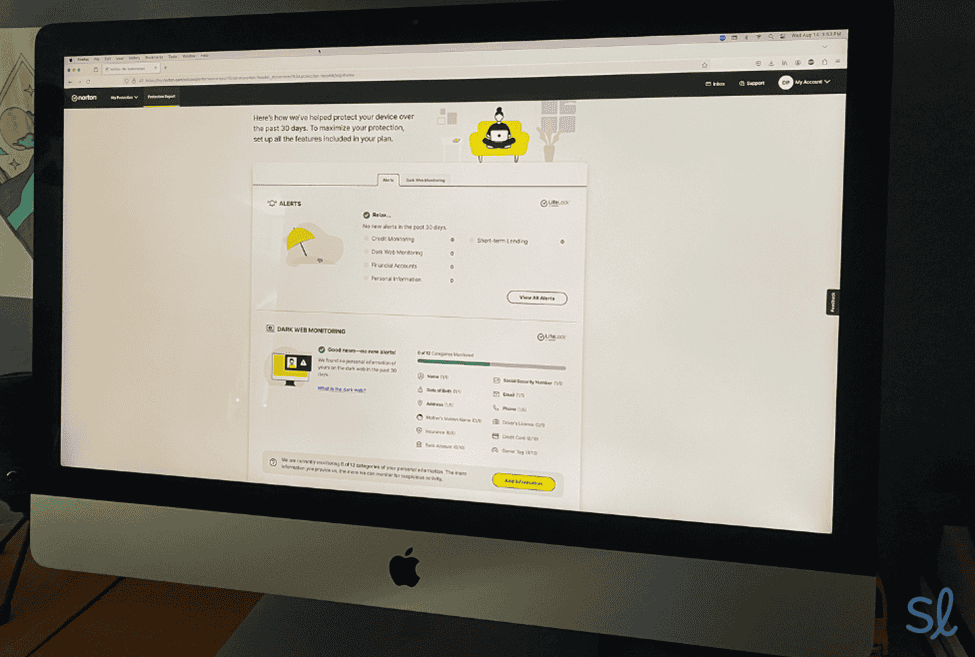
Identity Theft Protection Companies
In addition to strong preventative controls, such as strong, unique passwords and MFA, identity purchasing identity theft protection can provide additional peace of mind and monitoring.
Many companies can provide you with this insurance. They include:
- Identity Guard
- Identity Force
- LifeLock
- Experian IdentityWorks
Final Thoughts
Identity theft is a serious and growing problem, but you can take action to protect yourself. It is vital that older adults do everything in their power to protect their information.If you fall victim to a scam, know that you're not alone. You can and should be proactive on your own behalf.
If you suspect you have fallen victim to identity theft, the worst thing you can do is to do nothing. Don't be too embarrassed or afraid to talk about it with someone you trust. Keep phone numbers handy of the people and organizations you may need to contact such as your bank, the police, credit card companies, etc. If your caregiver is the perpetrator, you may need to contact Adult Protective Services to get the help you need. You can also call your local police precinct, your state's attorney general, or an elected official, such as an assembly member.