
Best States for Older Adults in 2021
In our yearly rankings of states for seniors, we’ve considered fifteen factors that our readers consider crucial to living a long and happy life. These include cost and access to health care, cost of living and tax burden, and lifestyle considerations. While everyone’s criteria for where to live is a little different, we’ve provided all of the data below for you to make your own decisions.
For older adults (or younger ones who want to be prepared), deciding where to spend your golden years is no simple task. For those considering an interstate move and those who hope to age in place, it's helpful to understand the benefits and drawbacks each state offers.
To analyze the states based on which are best for older adults, we studied all 50, comparing them across 15 statistical categories covering things like taxes, income, cost of living, weather, and much more. Jump to the bottom of the page to see our full methodology and sourcing.
Read on for the full study or to discover which states shine in the categories you care most about. But check out some key findings below:
- Florida continues to lead as the top overall state for older adults, ranking in the top quarter across our three major statistical categories. Montana remains among the lowest-scoring states for seniors.
- Every major region of the country is represented in the top 10 overall states, with Southern states making up the largest share of top-ranked locations.
- Mississippi and Delaware continue to perform strongly, each earning multiple top 10 category finishes.
The Best and Worst States for Older Adults
Top 10 States
- Florida
- Oklahoma
- Mississippi
- Delaware
- Massachusetts
- Maryland
- North Dakota
- California
- North Carolina
- South Carolina
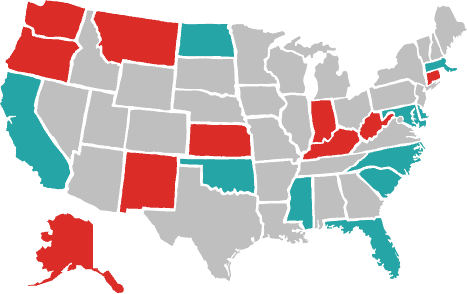
Bottom 10 States
- Oregon
- Kentucky
- New Mexico
- Kansas
- Alaska
- West Virginia
- Washington
- Indiana
- Connecticut
- Montana
| State | Relative tax burden | Rank | SSI tax? | Monthly ownership costs | Rank | Annual electricity cost | Rank | Median income 65+ householder | Rank | Average annual retirement income 60+ | Rank | T&F Rank | Average monthly Marketplace premium after tax credit | Rank | % of 65+ with Medicare coverage | Rank | Active physicians per 100,000 people | Rank | Nursing and in-home health workers employed per 1,000 ppl 65+ | Rank | Life expectancy from birth | Rank | H&M Rank | Pop % 50+ | Rank | Median age | Rank | Average annual temperature | Rank | Average cooling degree days | Rank | Culture Rank | Overall Rank |
|---|---|---|---|---|---|---|---|---|---|---|---|---|---|---|---|---|---|---|---|---|---|---|---|---|---|---|---|---|---|---|---|---|---|
| Median | 8.8% | — | — | $1,142 | — | $1,625 | — | $52,380 | — | $31,450 | — | — | $198 | — | 97.2% | — | 278 | — | 142 | — | 77.5 | — | — | 38.5% | — | 39.2 | — | 52 | — | 916 | — | — | — |
| Alabama | 7.8% | 9 | No | $905 | 4 | $2,150 | 48 | $45,820 | 45 | $29,380 | 34 | 22 | $142 | 9 | 97.5% | 15 | 229 | 43 | 118 | 41 | 73.2 | 48 | 28 | 38.9% | 18 | 39.8 | 19 | 65 | 6 | 1938 | 22 | 6 | 17 |
| Alaska | 5.6% | 1 | No | $1,485 | 40 | $1,820 | 39 | $64,750 | 4 | $42,180 | 3 | 1 | $205 | 26 | 95.8% | 43 | 292 | 21 | 183 | 7 | 76.6 | 33 | 20 | 34.2% | 48 | 35.5 | 49 | 32 | 50 | 46 | 50 | 50 | 45 |
| Arizona | 8.6% | 20 | No | $1,108 | 20 | $1,795 | 38 | $55,290 | 18 | $33,650 | 19 | 16 | $228 | 34 | 97.1% | 25 | 255 | 32 | 115 | 43 | 78.0 | 16 | 48 | 38.2% | 30 | 38.7 | 33 | 60 | 11 | 3100 | 34 | 23 | 40 |
| Arkansas | 9.4% | 32 | No | $850 | 2 | $1,560 | 22 | $41,680 | 49 | $26,720 | 47 | 23 | $203 | 25 | 97.8% | 13 | 220 | 47 | 132 | 34 | 73.8 | 44 | 44 | 38.3% | 27 | 39.2 | 26 | 61 | 10 | 1849 | 28 | 17 | 39 |
| California | 9.7% | 38 | No | $1,795 | 48 | $1,455 | 15 | $64,180 | 5 | $43,150 | 2 | 6 | $195 | 23 | 95.2% | 48 | 295 | 19 | 188 | 5 | 79.7 | 2 | 15 | 35.8% | 45 | 37.5 | 43 | 58 | 14 | 1027 | 37 | 39 | 8 |
| Colorado | 8.7% | 25 | Sometimes | $1,380 | 39 | $1,185 | 3 | $62,150 | 9 | $37,290 | 8 | 17 | $282 | 45 | 96.5% | 34 | 302 | 16 | 145 | 23 | 78.8 | 7 | 40 | 35.6% | 47 | 37.6 | 42 | 45 | 37 | 378 | 4 | 30 | 33 |
| Connecticut | 10.4% | 45 | Sometimes | $1,770 | 46 | $2,150 | 49 | $64,120 | 6 | $36,780 | 9 | 48 | $310 | 47 | 95.6% | 45 | 371 | 6 | 158 | 15 | 79.5 | 3 | 26 | 41.2% | 8 | 41.7 | 7 | 50 | 30 | 657 | 10 | 11 | 49 |
| Delaware | 5.8% | 2 | No | $1,190 | 30 | $1,700 | 28 | $63,850 | 8 | $34,520 | 17 | 2 | $238 | 36 | 98.2% | 5 | 300 | 17 | 139 | 30 | 77.2 | 27 | 35 | 41.6% | 6 | 41.9 | 6 | 58 | 15 | 1218 | 26 | 7 | 4 |
| Florida | 7.1% | 5 | No | $1,205 | 32 | $1,850 | 41 | $53,750 | 24 | $34,980 | 14 | 10 | $115 | 5 | 96.4% | 35 | 280 | 23 | 99 | 49 | 78.1 | 13 | 14 | 42.5% | 5 | 43.0 | 5 | 73 | 1 | 3689 | 9 | 2 | 1 |
| Georgia | 8.3% | 15 | No | $1,110 | 21 | $1,880 | 42 | $52,010 | 29 | $32,900 | 21 | 21 | $148 | 12 | 96.6% | 33 | 241 | 39 | 110 | 47 | 75.9 | 39 | 30 | 35.8% | 46 | 37.7 | 40 | 66 | 4 | 1747 | 38 | 22 | 25 |
| Missouri | 8.2% | 12 | Sometimes | $1,124 | 14 | $1,847 | 27 | $56,789 | 41 | $31,420 | 38 | 43 | $206 | 20 | 97.2% | 14 | 273 | 22 | 170 | 8 | 77.8 | 39 | 17 | 36.9% | 19 | 39.2 | 25 | 55 | 19 | 1315 | 11 | 16 | 27 |
| Montana | 7.5% | 8 | Yes | $1,253 | 24 | $1,497 | 7 | $59,654 | 33 | $32,130 | 36 | 47 | $227 | 26 | 97.7% | 6 | 247 | 30 | 114 | 40 | 79.3 | 26 | 41 | 39.1% | 9 | 40.8 | 9 | 40 | 47 | 236 | 48 | 46 | 50 |
| Nebraska | 9.4% | 35 | Sometimes | $1,283 | 27 | $1,696 | 20 | $62,567 | 26 | $31,297 | 41 | 44 | $104 | 3 | 96.6% | 23 | 239 | 34 | 166 | 11 | 79.8 | 19 | 1 | 34.3% | 41 | 37.1 | 46 | 48 | 33 | 1025 | 39 | 45 | 14 |
| Nevada | 8.7% | 24 | No | $1,316 | 29 | $1,676 | 18 | $66,086 | 17 | $43,430 | 6 | 5 | $199 | 18 | 95.3% | 39 | 214 | 45 | 94 | 48 | 78.5 | 33 | 47 | 34.9% | 37 | 38.7 | 31 | 50 | 28 | 2204 | 19 | 36 | 34 |
| New Hampshire | 7.2% | 6 | No | $1,819 | 44 | $1,883 | 29 | $70,444 | 13 | $32,425 | 35 | 26 | $310 | 44 | 96.4% | 29 | 315 | 9 | 125 | 33 | 80.3 | 10 | 39 | 41.5% | 3 | 43.3 | 2 | 43 | 40 | 329 | 7 | 10 | 28 |
| New Jersey | 10.2% | 44 | No | $2,260 | 50 | $1,649 | 17 | $78,431 | 3 | $40,532 | 10 | 28 | $307 | 43 | 94.4% | 47 | 307 | 11 | 133 | 27 | 80.6 | 7 | 37 | 37.3% | 17 | 40.5 | 10 | 54 | 21 | 929 | 13 | 14 | 29 |
| New Mexico | 9.0% | 27 | Yes | $1,060 | 7 | $1,255 | 2 | $56,425 | 42 | $40,020 | 11 | 41 | $227 | 26 | 96.3% | 30 | 245 | 31 | 145 | 17 | 78.2 | 37 | 29 | 36.6% | 22 | 38.9 | 27 | 54 | 20 | 1082 | 30 | 26 | 43 |
| Oregon | 8.1% | 23 | No | $1,342 | 37 | $1,398 | 13 | $56,231 | 16 | $32,450 | 18 | 13 | $258 | 40 | 96.5% | 27 | 303 | 12 | 108 | 45 | 79.8 | 16 | 42 | 36.8% | 21 | 40.2 | 15 | 47 | 34 | 275 | 36 | 41 | 41 |
| Pennsylvania | 8.3% | 26 | No | $1,169 | 28 | $1,610 | 26 | $50,784 | 34 | $27,120 | 39 | 38 | $224 | 33 | 96.6% | 24 | 321 | 8 | 174 | 6 | 78.9 | 28 | 16 | 39.3% | 7 | 41.3 | 8 | 50 | 28 | 738 | 5 | 5 | 12 |
| Rhode Island | 9.5% | 43 | Sometimes | $1,496 | 42 | $1,695 | 34 | $55,523 | 21 | $31,420 | 22 | 49 | $202 | 26 | 95.4% | 38 | 370 | 4 | 161 | 13 | 80.1 | 13 | 8 | 38.7% | 10 | 40.6 | 11 | 51 | 27 | 609 | 23 | 21 | 38 |
| South Carolina | 7.3% | 10 | No | $942 | 9 | $2,018 | 47 | $50,379 | 36 | $29,127 | 28 | 18 | $135 | 7 | 97.3% | 12 | 230 | 38 | 106 | 46 | 77.4 | 42 | 24 | 37.8% | 13 | 40.4 | 12 | 65 | 8 | 1,963 | 18 | 4 | 10 |
| South Dakota | 7.7% | 11 | No | $1,082 | 19 | $1,682 | 31 | $53,565 | 25 | $28,583 | 31 | 19 | $159 | 13 | 96.5% | 28 | 240 | 33 | 153 | 14 | 79.7 | 22 | 19 | 36.1% | 28 | 38.2 | 38 | 42 | 42 | 725 | 6 | 34 | 16 |
| Tennessee | 6.0% | 3 | No | $960 | 11 | $1,845 | 43 | $47,856 | 44 | $26,174 | 45 | 12 | $164 | 14 | 97.0% | 18 | 253 | 29 | 108 | 44 | 76.8 | 43 | 31 | 36.2% | 26 | 39.5 | 23 | 60 | 13 | 1,406 | 32 | 20 | 20 |
| Texas | 8.0% | 19 | No | $1,279 | 34 | $1,870 | 44 | $54,617 | 23 | $31,515 | 20 | 35 | $137 | 8 | 94.1% | 49 | 225 | 41 | 166 | 12 | 79.1 | 28 | 9 | 30.1% | 49 | 35.6 | 48 | 66 | 5 | 2,959 | 44 | 40 | 18 |
| Utah | 8.6% | 28 | Yes | $1,183 | 31 | $1,055 | 1 | $64,853 | 7 | $33,144 | 15 | 40 | $95 | 4 | 95.2% | 41 | 216 | 44 | 136 | 24 | 80.2 | 13 | 3 | 25.5% | 50 | 31.7 | 50 | 48 | 32 | 545 | 42 | 49 | 26 |
FYI: If you're deciding where to move for retirement, visit our planning for housing in retirement guide to learn about other important factors to consider.
Conclusion
Less than 10 percent of people retire to a state other than the one they already live in1. But for those who are considering a move, looking at data like the one in this analysis can point you in the direction of a state that ensures your golden years are exactly that.

Methodology
We compared the states across dozens of categories, narrowing down the list of ranking factors to 15. For each category, we calculated a median value that was then compared to each state's result in each category. The result was a point value representing each state's relative performance in each category. A figure below 1 means a state had a worse-than-median result.
The one exception to this method of comparison was the category covering how many hot weather days each state has. Because of the enormous variation in climate across the country, it was necessary to compare the states to others of similar geography. So in that category, each state’s points were based on how much warmer its weather is compared to states with similar numbers of hot days.
Here's a look at the categories that made the cut, what each one measures, and how they played into each state's score.
Tax and Finances
The data points in this category account for about 40 percent of each state's total score, making it the most heavily weighted category that we considered.
- Relative tax burden: A percentage that combines property tax, individual income tax, and sales and excise taxes as a percentage of personal income. The most recent year for the combined rates is 2022, based on Tax Foundation data.
- Tax on Social Security benefits: A measure of whether a state taxes Social Security income; states that don’t tax this type of income received one point, states that do tax this type of income received zero points, and those that tax some but not all people with this type of income received half a point. As of 2025, only nine states tax Social Security benefits to some degree.
- Monthly housing costs: A dollar amount that represents the average monthly ownership cost for mortgaged and non-mortgaged housing units. This includes taxes, loans, insurance, and other housing costs from 2023.
- Annual electricity cost: A dollar amount that represents the average annual cost for residential electric bills per state based on data published by the U.S. Energy Information Administration.
- Median income, 65-plus: The median annual household income in households led by those 65 and older, as reported by the U.S. Census Bureau.
- Average annual retirement income: The mean amount of retirement income per household with retirement income, which includes distributions from pension, 401(k), and IRA plans. The data is published annually by the U.S. Census Bureau.


Health and Medicine
This category accounted for about 33 percent of the total score, making it the second-weightiest category.
- Average Marketplace premium: A dollar figure representing what the average beneficiary pays after income tax credits for a Marketplace health care plan per month. This data is reported by the Centers for Medicare and Medicaid Services. The most recent year for this data is 2025.
- Percentage of 65-plus with Medicare coverage: A percentage of each state’s population of residents 65 and older who have Medicare coverage. This is a U.S. Census Bureau figure, most recently reported for 2023.
- Active physicians per 100,000 people: The number of doctors employed per 100,000 people living in each state. This figure is from an annual study published by the Association of American Medical Colleges, most recently in 2024.
- Nursing and in-home health workers per 1,000 older adults: The number of nursing care and in-home health care workers employed per 1,000 older adults in each state. This is a calculation of employment data from the U.S. Bureau of Labor Statistics and population data from the U.S. Census Bureau; the most recent year for both elements was 2023.
- Life expectancy from birth: The estimated number of years a person is expected to live from their birth. This data is based on analysis from the Centers for Disease Control and Prevention, most recently published in 2024 (reflecting 2023 data).

Culture and Lifestyle
These data points accounted for a combined 26 percent of each state's overall score.
- Population 50 and older: The percentage of people in each state who are over 50 years of age; this is 2023 data from the U.S. Census Bureau.
- Median age: The median age of each state’s residents.
- Average annual temperature: The overall average temperature in each state for 2023, as published by the National Oceanic and Atmospheric Administration.
- Average cooling degree days: An average of the annual number of cooling degree days per state between 2019 and 2023, as reported by the U.S. Environmental Protection Agency. A cooling degree day is a measurement of the temperature difference between the high on a given day and 65 degrees; for example, if an area hits 95 degrees, that equates to 30 cooling degree days. For Alaska, the base temperature used in the calculation was 60 degrees.
Citations
- Allworth Financial. (2025). Here's Where Retirees Are Moving.