2 in 3 Americans Worry That a Single Event Could Derail Their Retirement, As Inflation Erodes Their Low Savings

Key Findings
- Inflation is Americans’ top retirement concern. Rising prices have Americans fretting, whether it’s overall prices or healthcare costs, particularly the cost of long-term care — a cost 77% of Americans say their retirement savings couldn't withstand.
- The typical American adult has less than $50,000 stored away. Nearly 4 in 10 adults have less than $10,000 saved, while even a typical saver nearing retirement (55+) has only between $50,000 and $99,999.
- Americans worry that just one event could ruin their retirement. About 2 in 3 Americans (67%) are concerned that a single major event could derail their retirement.
- About 62% of U.S. adults have little or no confidence they’ll have enough money to live comfortably through retirement, but many avoid investments that could help close the gap: just 30% own individual stocks and 22% hold mutual funds or ETFs.
- Despite inflation concerns, Americans trust low-return assets most, such as checking and savings accounts. About 5 in 6 savers (83%) call these inflation-exposed cash accounts “safe.”
- Gold was most often named the best place to move money during high inflation. However, just 10% of U.S. adults invest in gold or a gold IRA.
Inflation is climbing again, as sustained high energy costs ripple through the economy and force the Federal Reserve to raise interest rates to tamp down prices for the first time in more than three years. While inflation fell in 2024 and 2025, it’s still on pace to exceed the central bank’s long-term target of 2% for the sixth straight year in 2026. Combine rising prices with Americans’ low savings, and it’s little wonder that 80% of Americans say there’s a retirement crisis, according to research from the National Institute on Retirement Security.
Given the frothy economy of the past few years, how do Americans feel about their retirement finances now, and what are they doing about it? SeniorLiving.org and Goldco surveyed 916 U.S. adults about their savings, investments, and financial worries. The survey shows that Americans are not well prepared for retirement. Many are deeply concerned about inflation and rising retirement costs, yet aren't taking the right financial steps to protect themselves.
Americans of All Ages Are Unsure If They Can Retire, As Inflation and Low Savings Hit Hard
Inflation is driving retirement costs higher, and Americans don’t feel confident they can afford it. For many Americans, a single shock (such as needing long-term care or a large medical bill) could put their retirement finances in serious jeopardy. Our survey results show that the typical saver has less than $50,000 saved.
How Much Do Americans Have Saved for Retirement?
Retirement savings is one of the clearest indicators of why Americans are unsure whether they can enjoy a comfortable retirement, even without forces such as inflation. We asked: “How much have you personally saved or invested for retirement so far?”
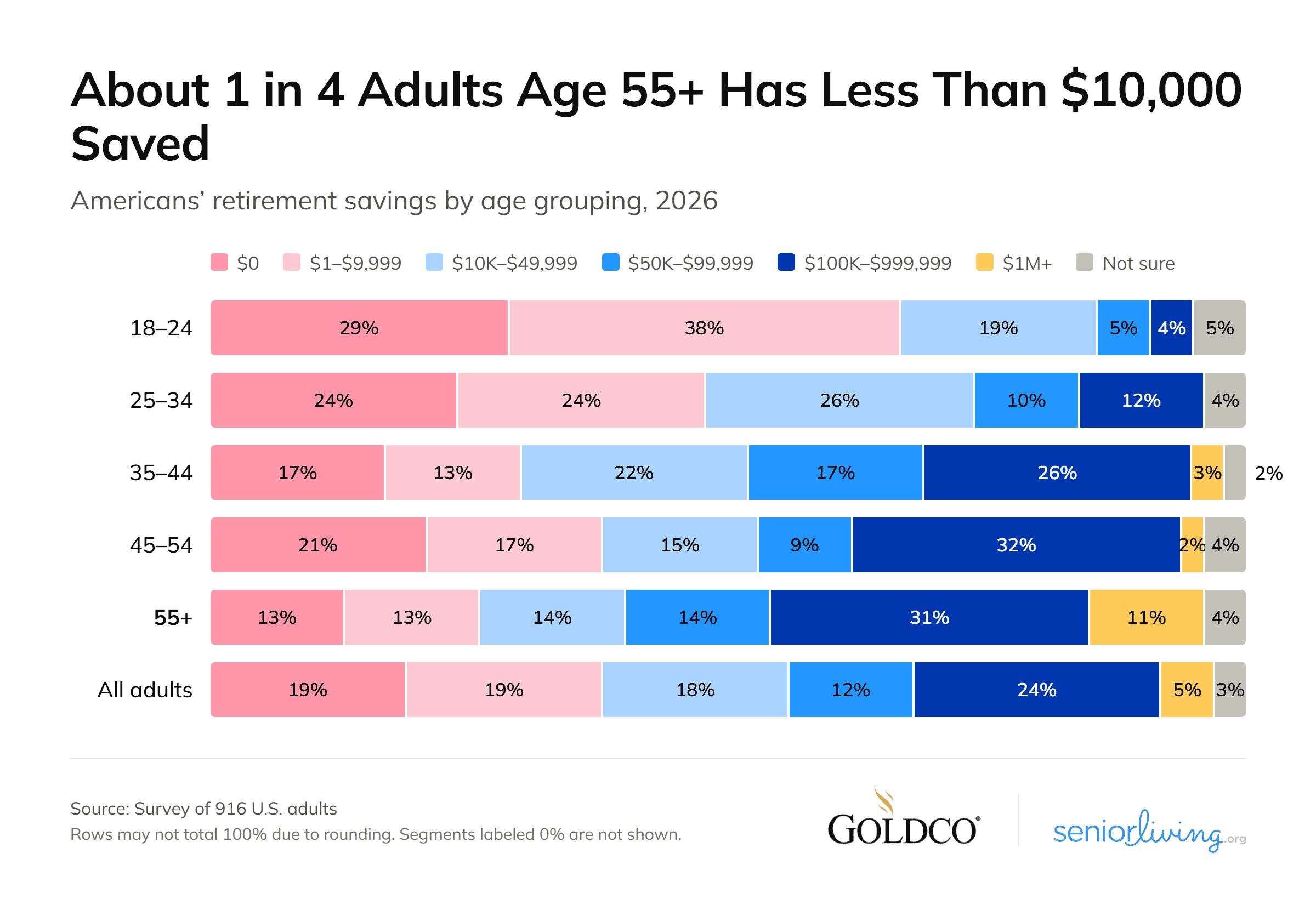 The typical adult has only $10,000 to $49,999 saved for retirement, and the data show other startling trends. For example, nearly 4 in 10 adults have less than $10,000 socked away, and after decades of working, about 1 in 4 adults age 55+ has less than $10,000 saved.
Another key trend: Americans’ savings don’t ramp much with age. Normally, older Americans should have far more assets, since they saved and invested over a long period. But the results show only a small ramp. For example, 1% of the youngest age group reports $250,000-$499,999 in assets, and that grows to just 11% in the 55+ group. It’s a similar story at higher savings levels: retirement assets increase only slightly as age rises.
Those savings levels are well below what financial advisors recommend for retirement. For example, Fidelity Investments recommends that workers target the following savings:
- 1 time your annual salary by age 30
- 3 times by age 40
- 6 times by age 50
- 8 times by age 60
- 10 times by age 67
Fidelity notes that full-time workers earned a median of $1,235 per week in the first quarter of 2026, or more than $64,000 annually. So, Fidelity’s savings guidance suggests a typical worker should have about $192,000 saved by age 40 and around $384,000 at age 50.
In contrast, the survey shows that 70% of the 35-44 age group has less than $100,000 saved, while 62% of the 45-54 age group has less than $100,000 – both far short of Fidelity’s guidance.
Most Americans Don’t Believe They Can Afford a Comfortable Retirement
In each group, most Americans don’t feel confident they’ll have enough money to live through retirement. We asked: “How confident are you that you will have, or currently have, enough money to live comfortably throughout your later years—whether or not you ever fully stop working?”
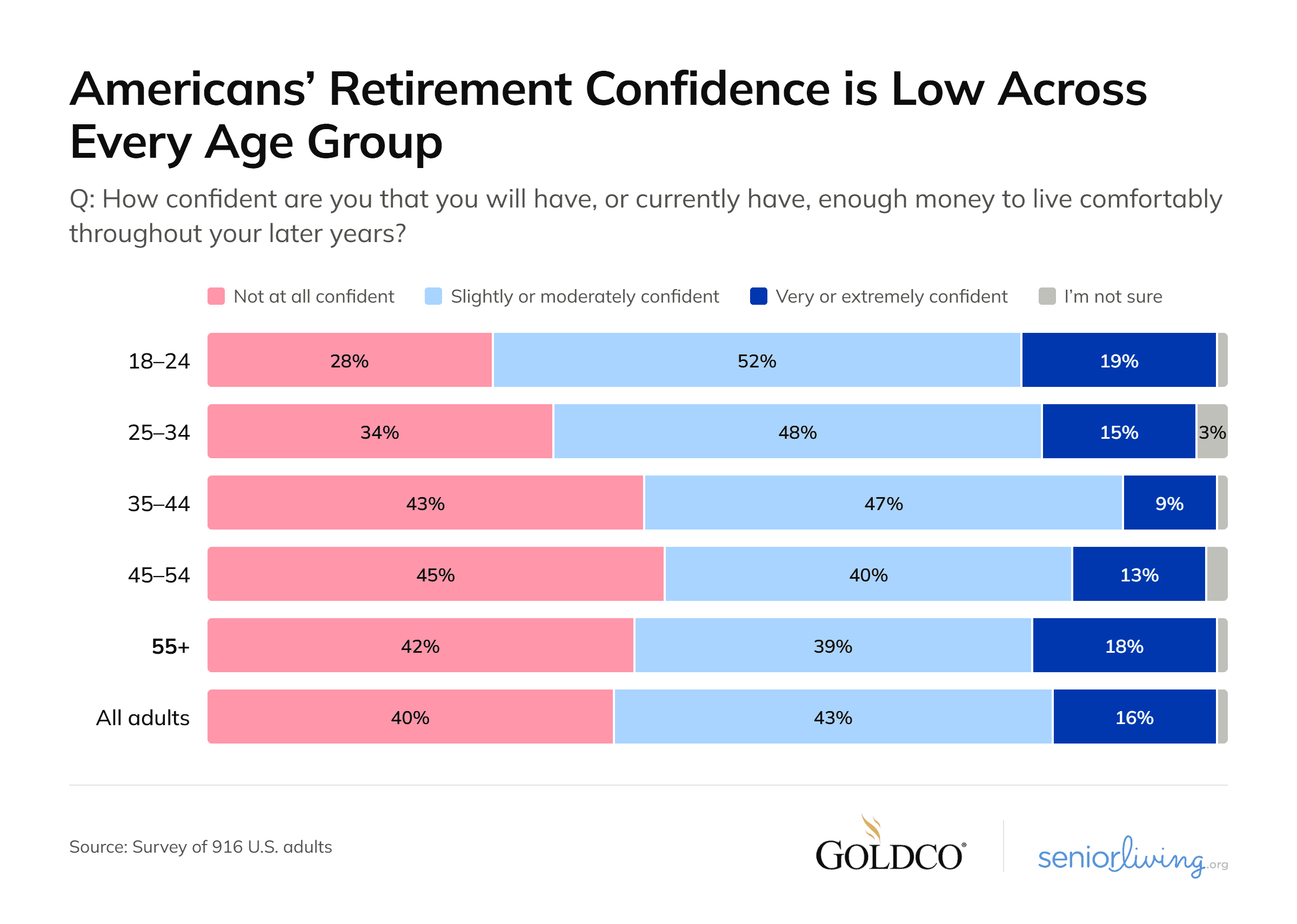 Across age groups, Americans are not convinced they can afford their golden years, and 62% of U.S. adults overall have little to no confidence in their retirement savings. In fact, Americans are nearly four times more likely to say they’re not confident they can afford retirement than to say they’re highly confident they can.
It’s distressing that even the youngest age groups are only mildly more confident in their ability to pay for retirement than the average. These groups have decades until retirement, meaning they have plenty of time to save and invest to build a nest egg that offers financial security.
It’s not only a question of personal finances, but also collective finances. Americans have been bombarded for years about the dwindling reserves of the Social Security trust fund, which is on track to run out in 2032. In the absence of a fix, Social Security benefits would need to be cut by 22%, meaning that recipients, most of them retirees, would receive only 78% of their benefits.
Social Security is a key pillar of retirement income, comprising 30% of the income of Americans aged 65 and older in 2019, per a recent report from the Congressional Research Service. But the figure is much higher for lower-income households, making up 83% and 64% of the income of the lowest and second-lowest income quintiles, respectively.
What Is Americans’ Biggest Retirement Worry?
Rising prices are Americans’ largest retirement-finance worry, per the survey. We asked those with savings: “Which of the following is your greatest concern when you think about your retirement finances?”
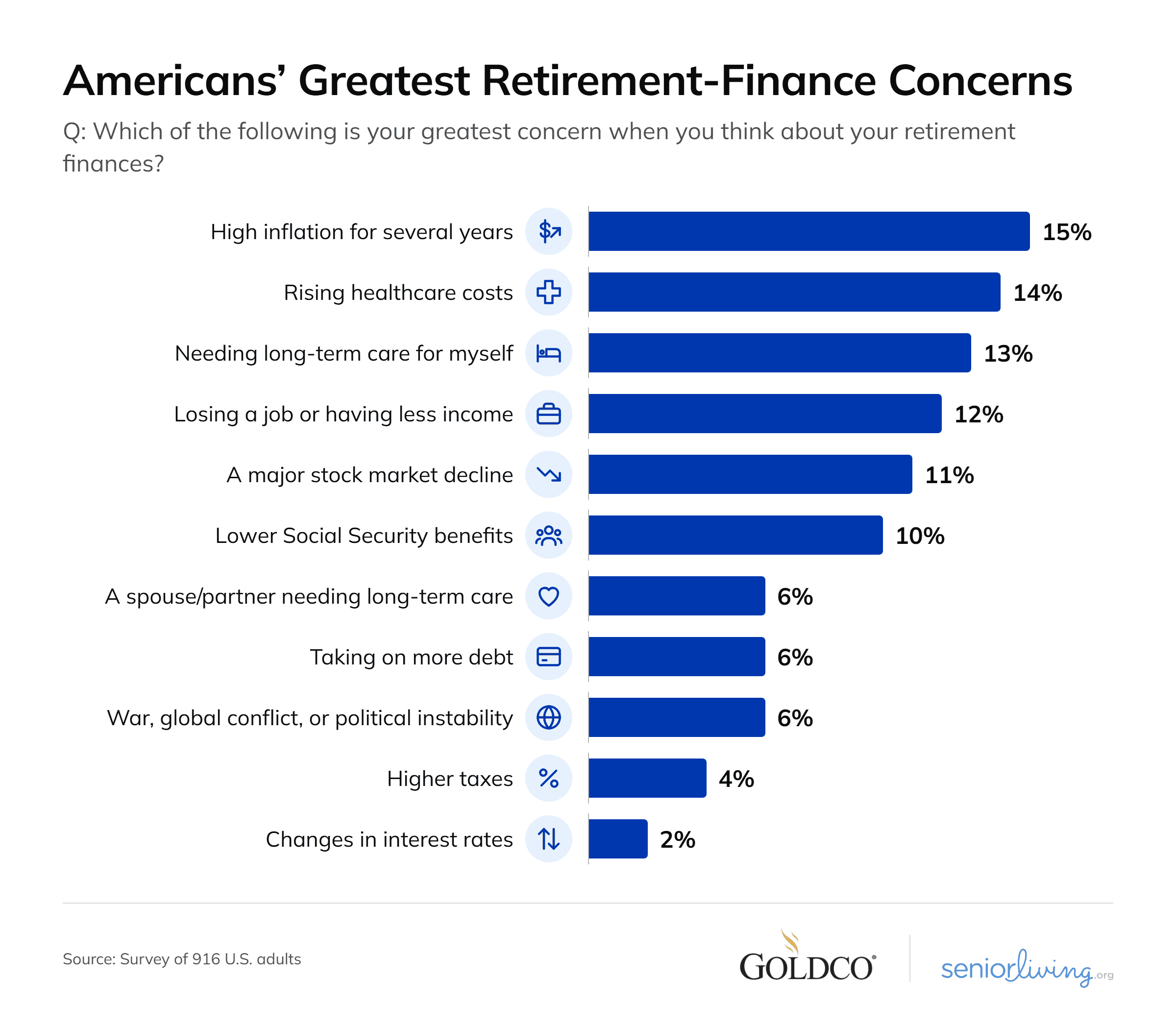 Overall, 15% of Americans named inflation as their top concern regarding their retirement finances. Not far behind at 14% is the rising cost of healthcare, a form of inflation, while worry about long-term care for oneself rounds out the top three at 13%.
Inflation is the top worry for adults age 44 and younger. Meanwhile, older generations focus more on overall medical costs. The 45-54 age group named rising healthcare costs as their top worry (17%), while the 55+ group named the need for long-term care as their top pick (21%).
Americans may be especially worried about future inflation because of the fresh memory of COVID stimulus and snarled supply chains that pushed prices higher in 2020-2022. Overall prices rocketed 31% from 2019 to August 2026, as measured by the Consumer Price Index.
Healthcare expenses have driven inflation for decades. The U.S. Bureau of Labor Statistics reported total inflation of 381% from August 1986 to August 2026, or about 4% annually on average. Seniors are among the largest users of healthcare, so their budgets are especially exposed to rising healthcare costs and the growing need for services.
Long-Term Care Could Cripple Americans’ Finances
Americans say long-term care costs are where their finances are most vulnerable. We asked: “How well do you think your retirement savings could handle each of the following situations?” Respondents could answer “not at all well,” “slightly well,” “moderately well,” “very well,” or “extremely well.”
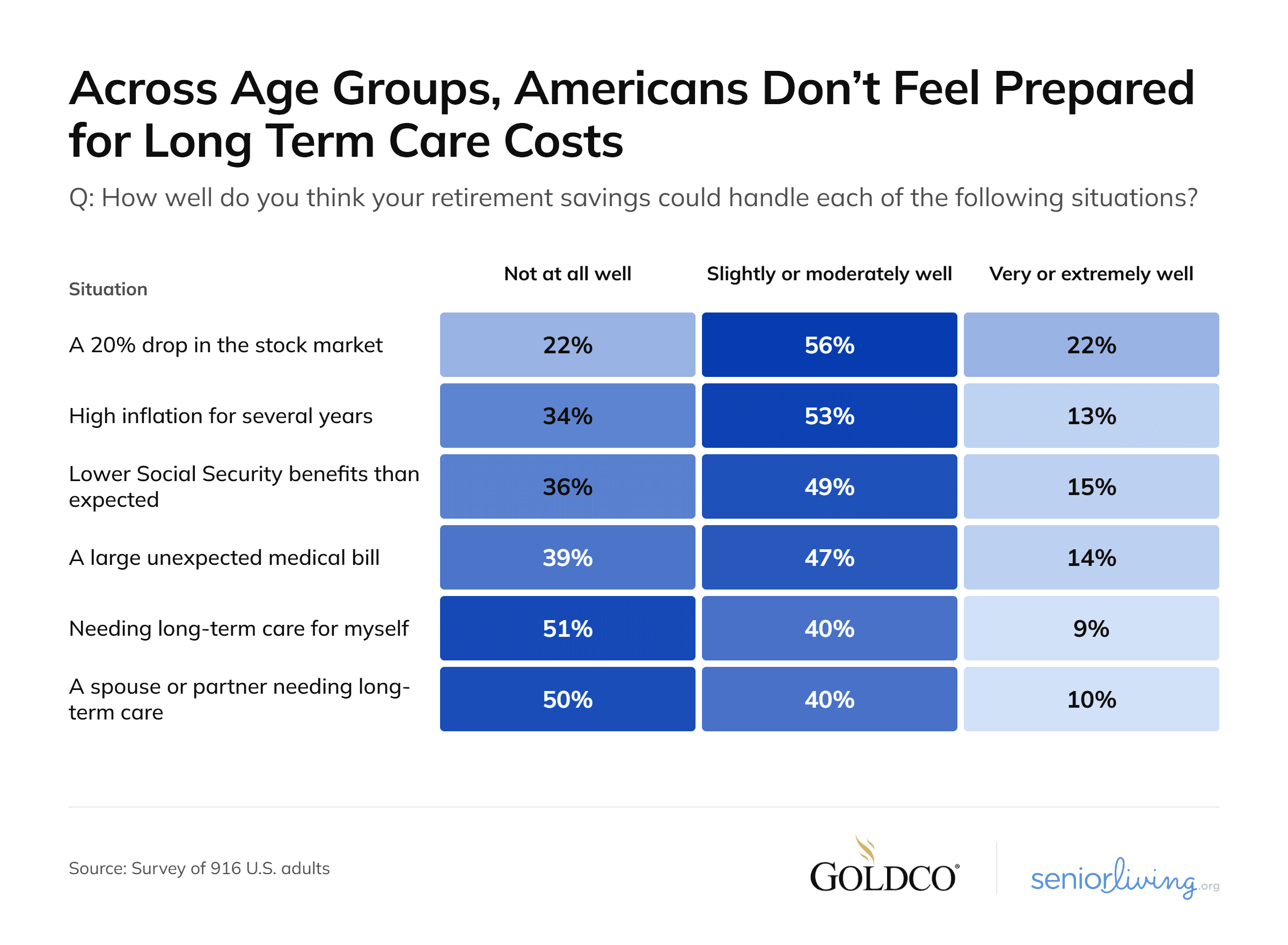
A whopping 77% of Americans say their retirement finances could not withstand the cost of long-term care. Across all age groups, the cost of long-term care (either for oneself or one’s spouse) is the top concern. A large medical bill (65%) and lower Social Security benefits (64%) rounded out the top budget breakers.
Americans’ concerns here are well-founded, given the price of long-term care. The median cost of a private nursing-home room in June 2026 was $11,294 per month, or more than $135,000 a year, according to our data. For typical Americans with retirement savings of less than $50,000, long-term care costs would wipe out their retirement savings in a few months.
A total of 65% of Americans say they’re unprepared for a major unexpected cost. It’s not just those with low savings who feel it, either. Of those with $250,000 to $499,999, only 27% are “very” or “extremely” prepared, rising to just 33% for those with $500,000 to $1 million. It would take at least $1 million for a majority (53%) of Americans to feel ready for unexpected expenses.
Americans Prefer Cash Assets, Despite Low Returns
Despite concerns about affording retirement, Americans still see cash assets as a safe place for retirement money, even though they rarely outpace inflation significantly. Yet, many Americans recognize that gold and high-return assets such as stocks can beat inflation over time and grow purchasing power, but many don’t own them.
What is the Safest Asset for Retirement Savings?
Americans picked checking and savings accounts as the safest asset for retirement money, a belief that could destroy their retirement if it’s their main asset. We asked those with savings: “How safe or risky do you think each of the following is as a place to keep retirement savings?”
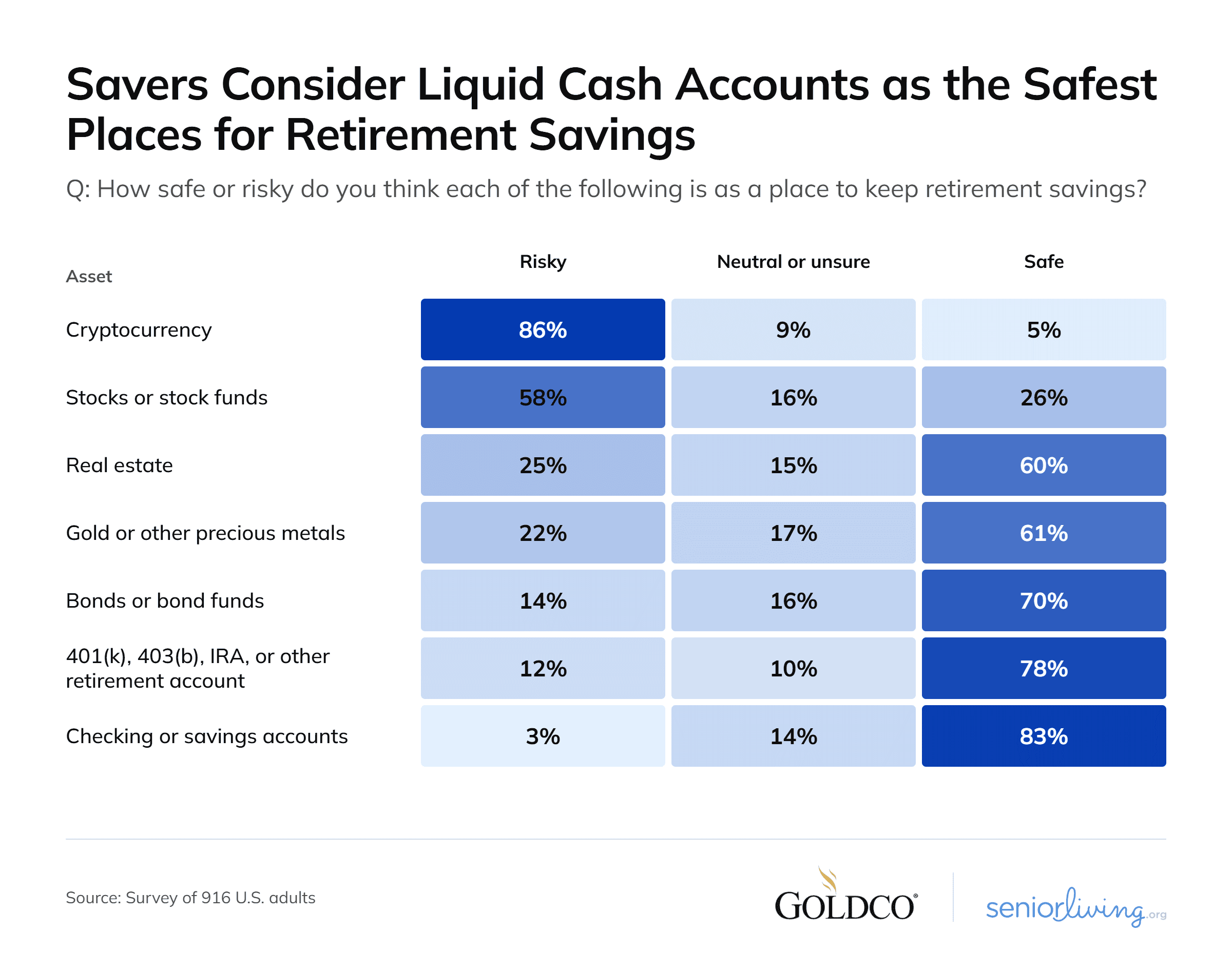 Americans with retirement assets viewed checking or savings accounts as the safest asset, with 83% of respondents naming them. Retirement accounts such as a 401(k) or IRA came in second place, with 78% calling them safe, while 70% named bonds or bond funds as safe.
However, the devil is in the details here, and some assets are safe in some circumstances and quite risky in others. For example, checking and savings accounts are safe for short-term needs, but inflation will certainly erode the value of money in these accounts over time. These accounts won’t earn enough to outpace inflation, making them long-term losers. However, 63 percent of people with savings in the study said they have little to no appetite for investment risk. This group is hesitant to risk losing what they have saved, even if it means they will not reap the potential rewards of moderate investment risk.
Surprisingly, Americans consider retirement accounts safe, but safety depends heavily on what they’re invested in. These accounts are just “tax-advantaged wrappers” for other assets rather than investments themselves. For example, workers can use an IRA to invest in stocks, bonds, or even cash assets such as CDs – all of which are rated as less safe in this survey.
Even relatively safe bonds can be quite risky if purchased at the wrong time, as investors in long-term Treasury bonds found out in 2020-2021.
Interestingly, stocks are perceived as highly risky, but they have one of the strongest long-term track records here, with about 10% annual returns over time, as measured by the S&P 500 stock index. They’re among the riskiest assets in the short term, but retirement savers need their earning power to build wealth since they easily outpace inflation over almost any time frame.
While 61% called gold or other precious metals safe and 21% said gold was the safest place to move money during inflationary periods, just 10% of all adults say they have a gold or gold IRA investment.
Americans Are Underinvested in Tax-Advantaged Retirement Accounts
Overall, the typical person in our study had savings in about three types of assets or accounts, and many are not taking the full benefit of tax-advantaged retirement accounts such as IRAs or employer-sponsored plans such as a 401(k) or 403(b). Most don’t own high-return assets such as stocks, gold, mutual funds, and exchange-traded funds (ETFs). We asked: “Which of the following do you currently have money in?”
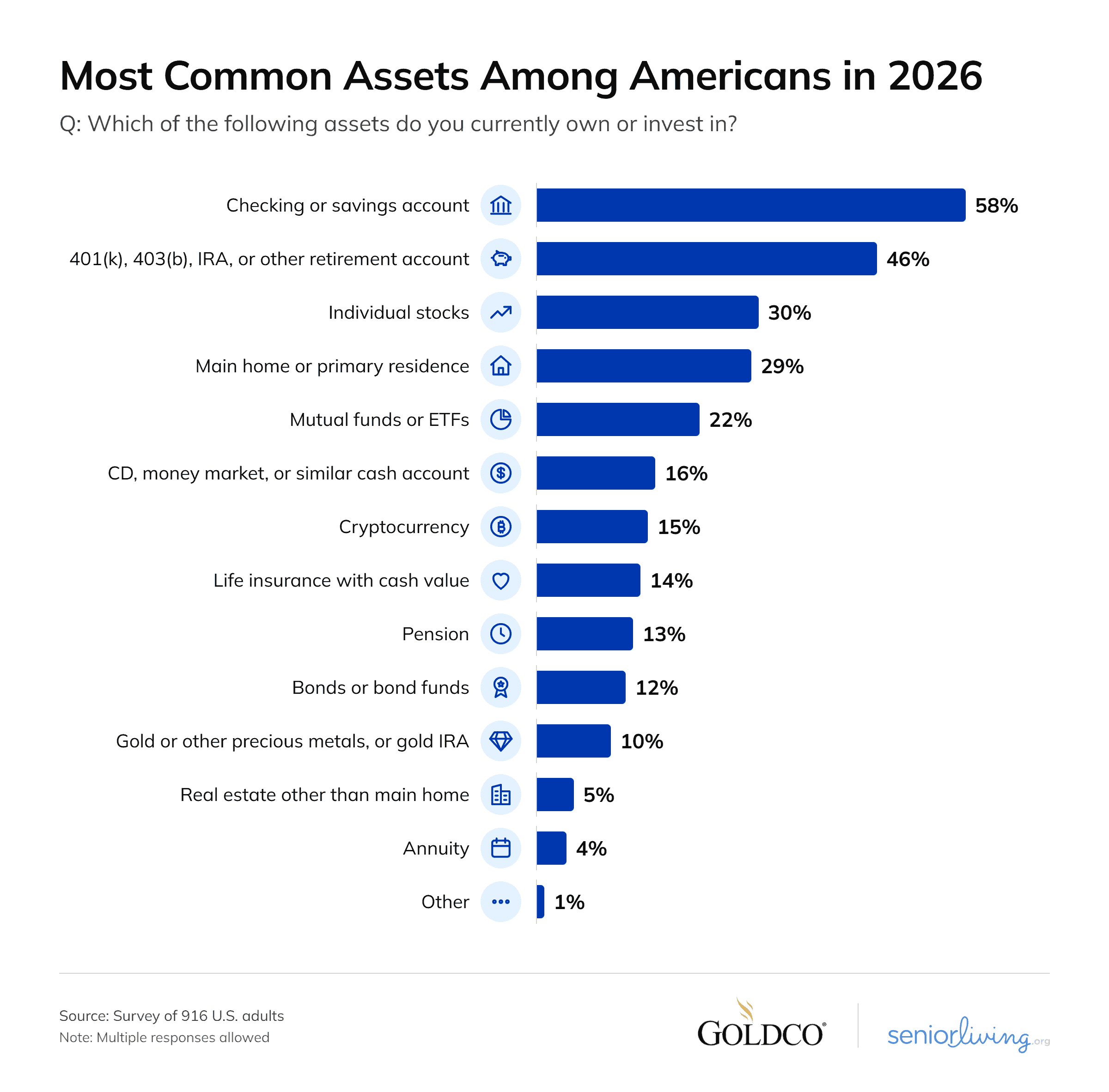 Less than half of all adults have a tax-advantaged retirement account, meaning they miss out on many benefits: tax-deferred or tax-free earnings, employer matching funds, and the ability to invest in high-return assets such as stocks, stock funds, or even gold. While some employers don’t offer retirement plans, anyone with earned income can access an IRA.
Checking and savings accounts are the most common assets and useful for near-term cash needs, but they’re poor long-term investments and lose to inflation. Even seemingly safe cash accounts such as CDs and money market accounts won’t outperform inflation much over time.
In contrast, the stock market has returned about 10% annually over long periods. Individual investors can usually access S&P 500 index funds in retirement accounts, meaning they can earn high long-term returns and enjoy a major tax advantage that boosts returns further.
Gold investments also act as a defensive store of value, helping protect purchasing power. About 68% of American adults have never owned gold, and the biggest hurdle for potential gold investors is unfamiliarity. A total of 42% of those with no gold holdings say they don’t know enough about it as one of the main reasons they don’t own any. However, 34% of current gold owners are “very” or “extremely” likely to buy in the next year, compared to 4% of non-owners.
Americans Pick Gold as a Safe Haven Amid Inflation
Americans selected gold as their top investment choice during a period of high inflation. We asked those with savings: “In your opinion, which of the following would be the safest place to move money during a time of high inflation?”
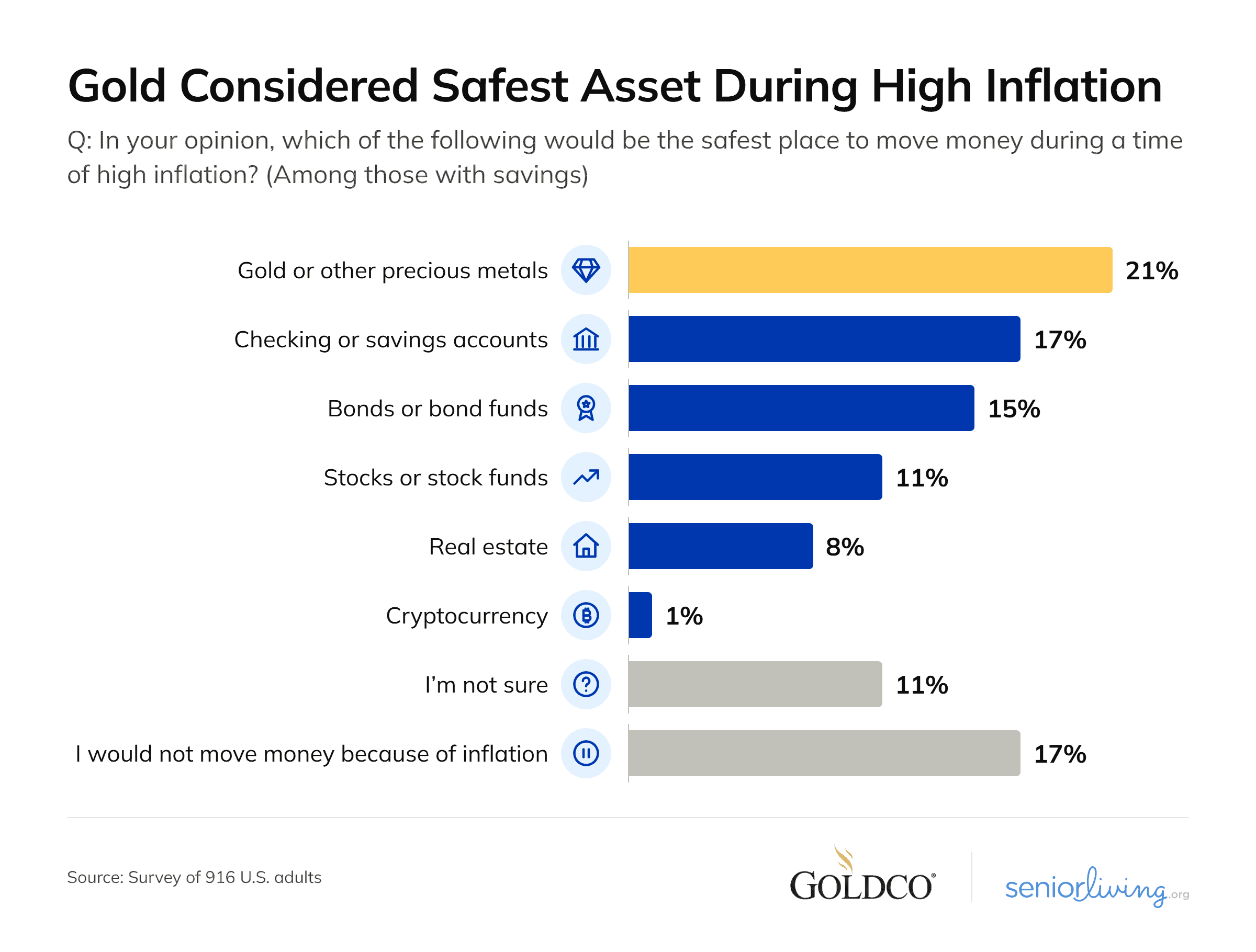 A total of 21% of American savers named gold as their pick to move money during inflation, and gold has a well-known reputation as a store of value over time and a “turn-to” asset in times of economic stress. Gold’s returns have been strong recently, with the precious metal rising from around $2,000 in March 2023 to around $4,300 in September 2026 – more than 100% gain.
Gold appeals to potential investors for its safety, though they may define it differently. Current gold investors hold it primarily for stability (60%) and diversification (50%), and potential gold investors value it for stability, wealth preservation, and diversification (45% each).
Another 11% identified stocks as an attractive place during inflationary periods, and they can offer strong returns if inflation doesn’t soar. After all, companies often pass price increases along to consumers, so their profits rise with inflation. So, buying stocks amid inflation is like investing in the “house” since they’re direct beneficiaries.
How Can Americans Achieve a Better Retirement?
The survey shows that Americans are not well-prepared for retirement – and they know it. So, what can they do to build up their nest egg?
- Invest in higher-return assets. While cash accounts might feel safe, their returns rarely outpace inflation. High-return investments such as stocks, stock funds, and gold can deliver attractive returns over time and increase purchasing power, even if they feel riskier in the short term.
- Maximize tax-advantaged accounts. Tax-advantaged retirement accounts such as an employer-sponsored 401(k) or IRA let workers invest without the drag of taxes, so workers can amass a greater sum of money faster. Even if your employer doesn’t offer a retirement plan, anyone with earned income can open an IRA.
- Retirement investing is a marathon, not a sprint. Investing is not a lottery, and you need to play the long game. Once you’ve set up an investment plan to build wealth, you’ll need to add to it over time so your nest egg keeps growing. Experts also advise workers to avoid tapping into retirement accounts when times get tough.
Time is investors’ biggest ally in building wealth, so get your retirement plan in order as soon as possible and get your money working for you.
Methodology
SeniorLiving.org and Goldco conducted this survey online in September 2026. It included responses from 916 U.S. adults. Quotas were set to ensure the sample is representative of the U.S. population by age, sex, and ethnicity. The median household income of respondents falls within the $50,000 – $74,999 range. The survey has a margin of error of approximately ±3.2 percentage points at a 95% confidence level.
Figures are self-reported and reflect respondents' perceptions and intentions, not verified financial holdings or outcomes. Percentages may not sum to 100 due to rounding, and multiple-response questions (asset holdings, gold reasons, reasons for change) exceed 100% by design.