
Which States are the Most Dangerous for Seniors?
Violence in American society garners no shortage of media attention. This has created entire months devoted to raising awareness of domestic abuse to advocacy against gun violence or cyberbullying. It seems like for every segment of the population that experiences specific threats or acts of violence, there's a corresponding push to understand and reduce that violence.
The CDC’s WISQARS (Web-Based Injury Statistics Query and Reporting System) tool reports data related to both fatal and nonfatal injuries across the country. For nonfatal injuries, the figures are not split out by state, but they are for fatal injuries, which can include homicide, suicide, and police
While older Americans are much less likely overall than their younger counterparts to become homicide victims, some states paint a far darker picture for those over 65. According to 2023 CDC data, homicide rates for seniors vary significantly by state, with certain regions showing notably higher rates of violent deaths among older
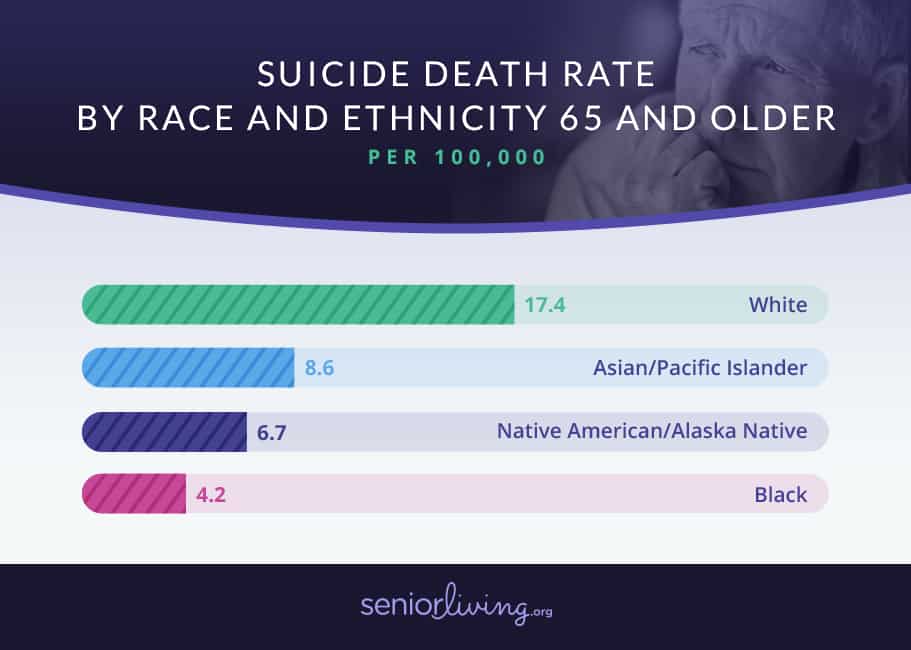
For the oldest Americans, suicide remains much more common than either homicide or police action. Suicides account for approximately 87 percent of the violent deaths of Americans 65 and older as of 2023.
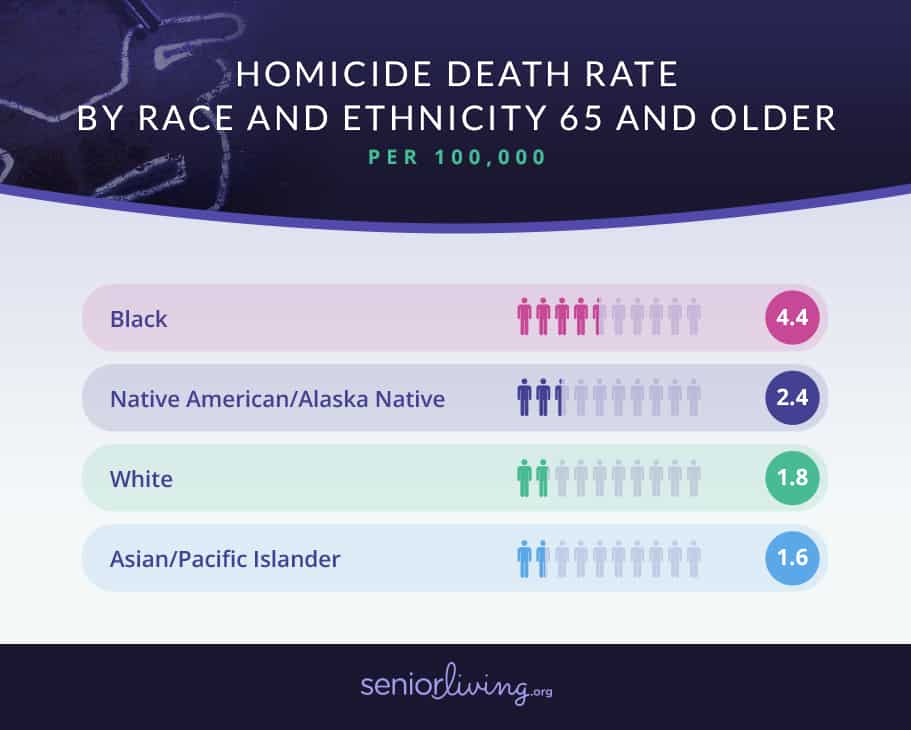
Perhaps it’s not surprising, but major differences also exist when the data is broken down along racial lines. For instance, older African-Americans are far more likely to be homicide victims, while older white Americans are more frequently suicide victims. According to 2023 CDC data, the homicide rate for Black Americans aged 65 and older is approximately three times higher than that of their white
>> Related Article: Elder Abuse Statistics
MOST AND LEAST DEADLY STATES FOR SENIORS
National-level data, such as the rise in the national violence rate noted by the CDC, is definitely important to understanding the state of violence against older Americans, but this is a huge and diverse country. What's true in one state isn't always true in another, so we wanted to explore which states pose the greatest risk of violence for older Americans.
The CDC's WISQARS (Web-Based Injury Statistics Query and Reporting System) tool reports data related to both fatal and nonfatal injuries across the country. For nonfatal injuries, the figures are not split out by state, but they are for fatal injuries, which can include homicide, suicide, and police intervention.
While older Americans are much less likely overall than their younger counterparts to become homicide victims and the trends are going in a positive direction, some states paint a far darker picture for those over 65.
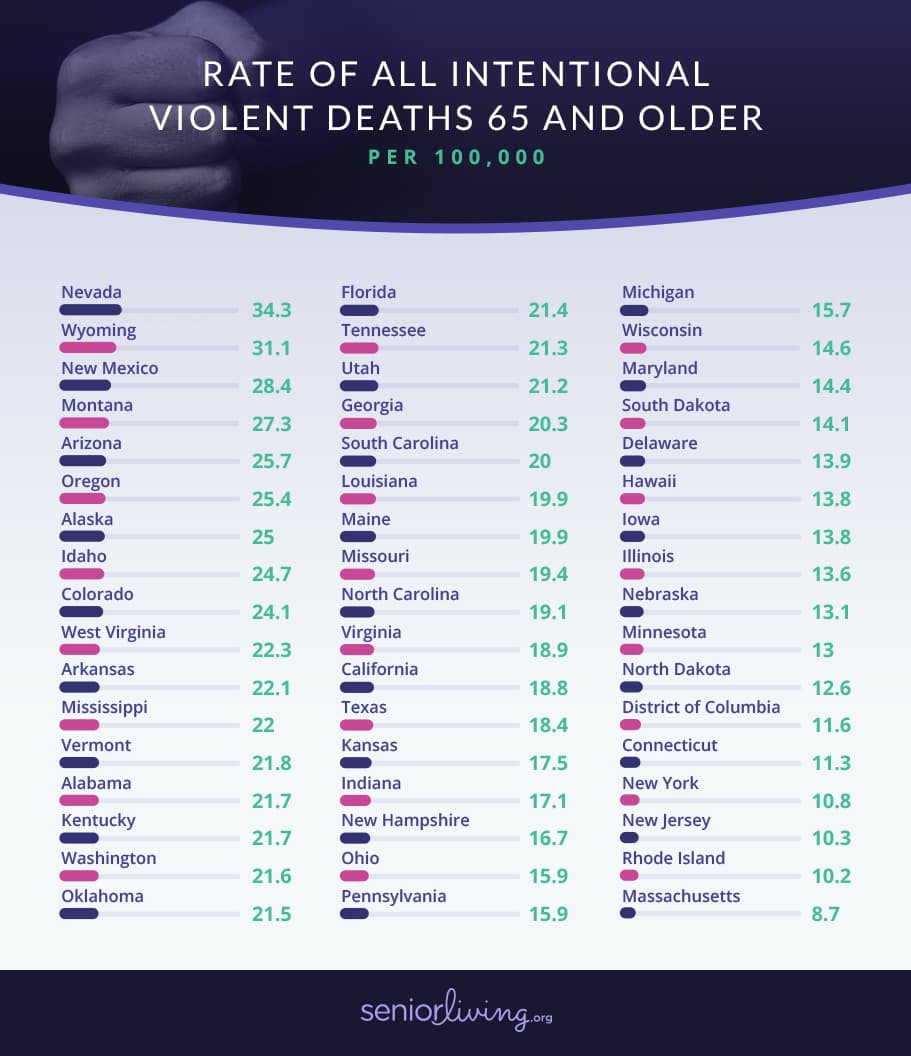
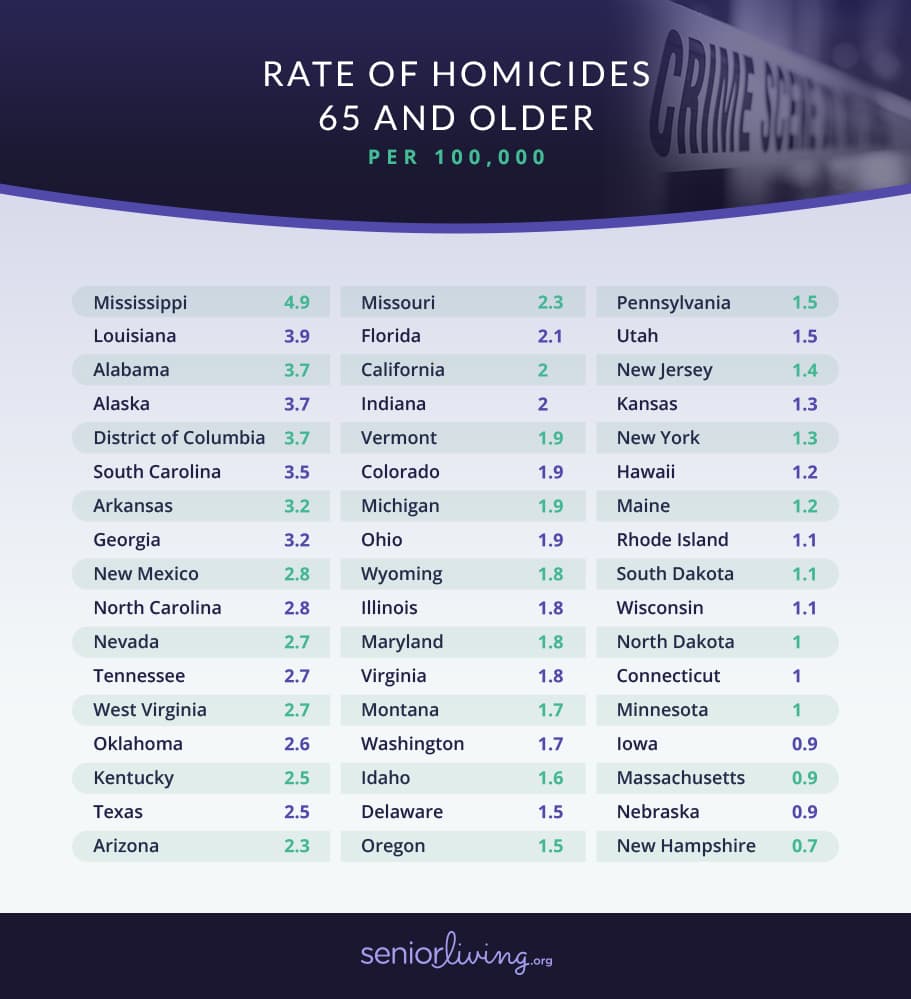
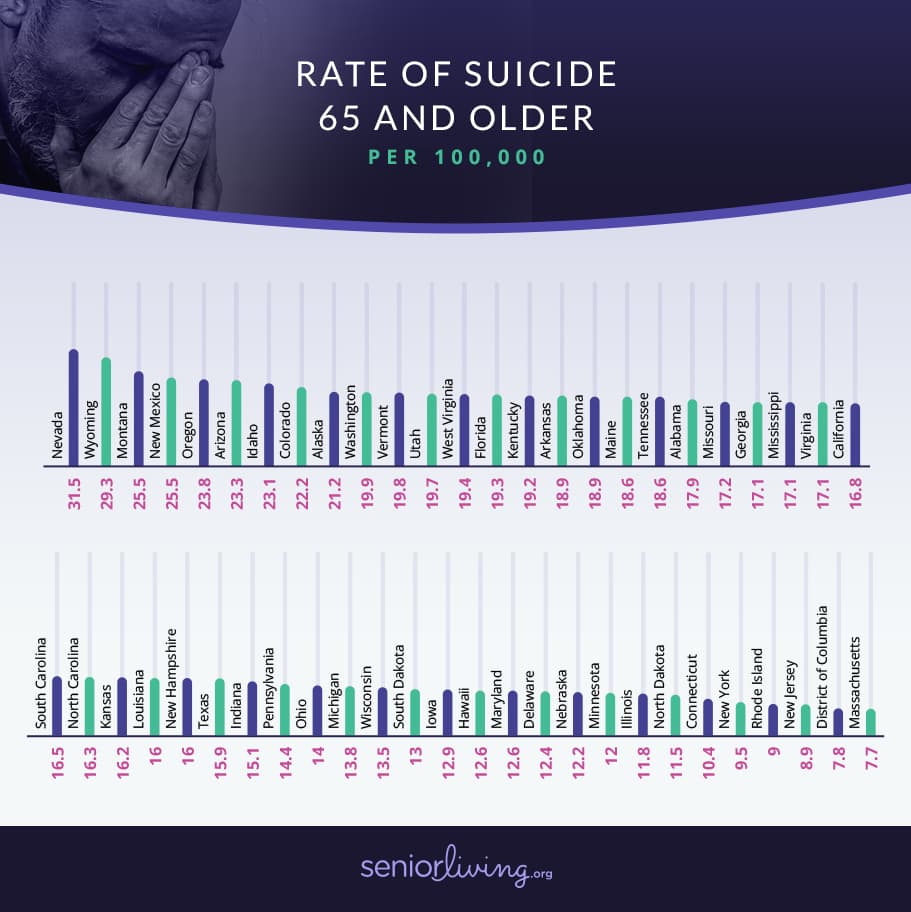 For the oldest Americans, suicide is much more common than either homicide or police action. Suicides account for more than 88 percent of the violent deaths of Americans 65 and older. But in which states do homicides, such as murder or manslaughter, account for the highest percentage of overall violent deaths of older Americans?
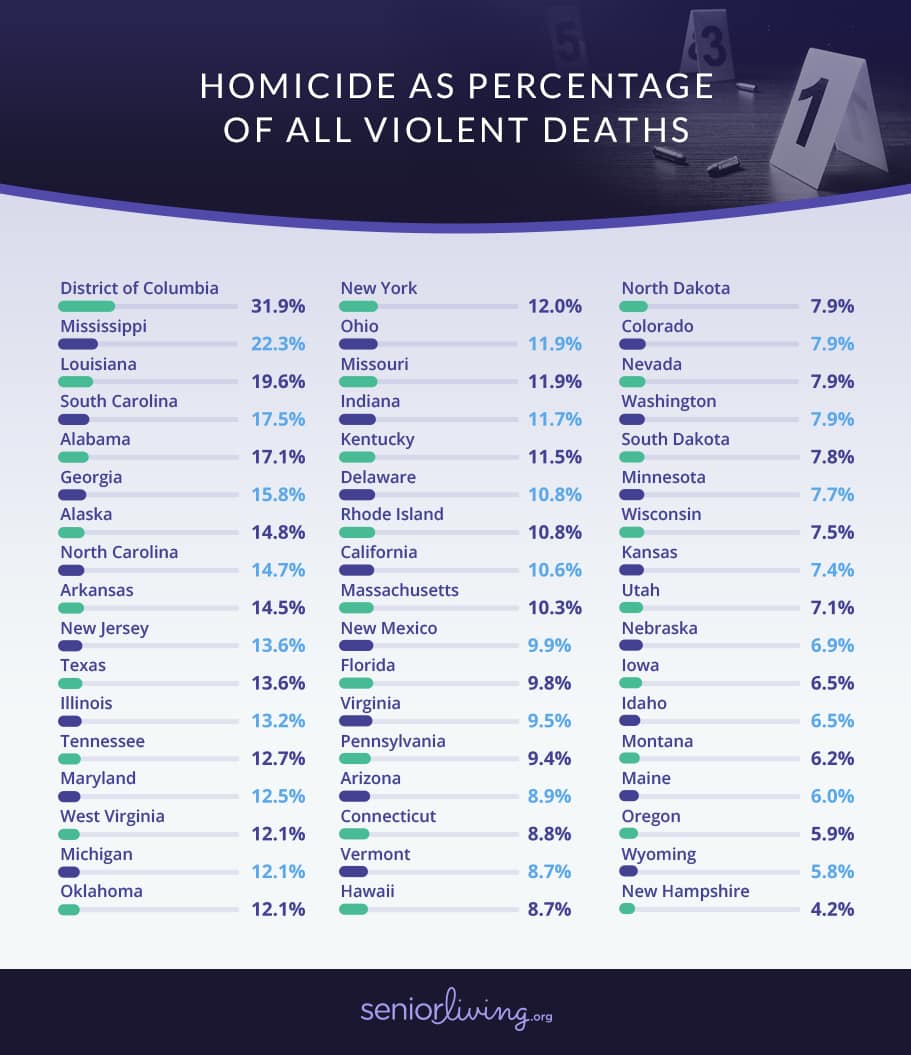 Perhaps it's not surprising, but major differences also exist when the data is broken down along racial lines. For instance, older African-Americans are far more likely to be homicide victims, while older white Americans are more frequently suicide victims.
OTHER VIOLENCE AGAINST OLDER AMERICANS
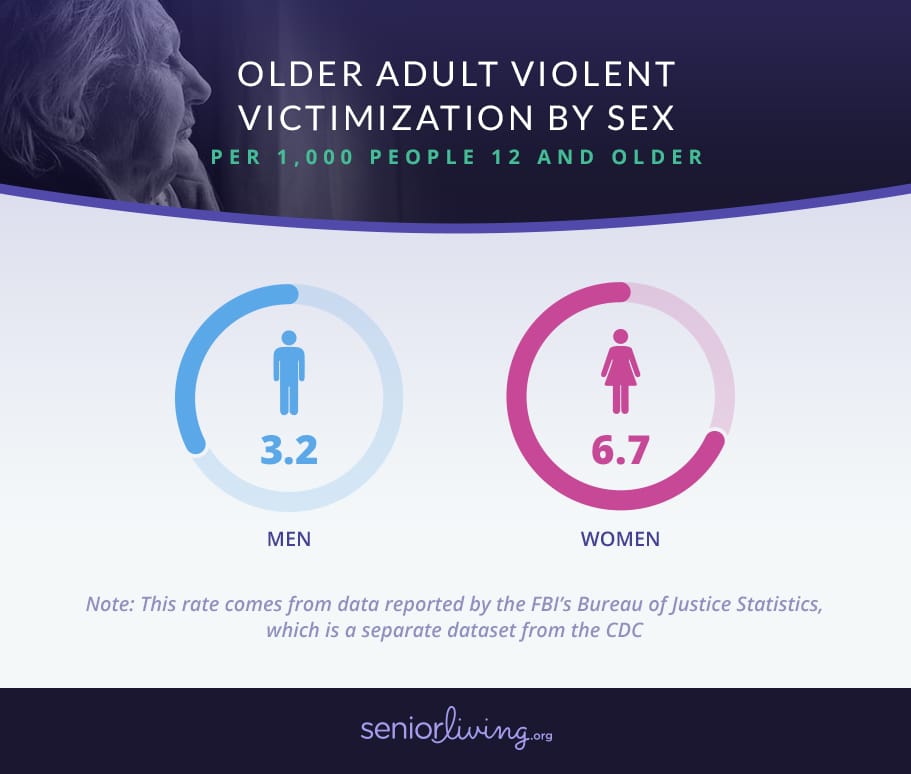
Though the trends have shown concerning increases in recent years, older Americans are still statistically less likely to be the victims of violence than their younger counterparts. For instance, according to 2023 Bureau of Justice Statistics data, the total rate of violent victimization among those 12 and older is 16.4 per 1,000 people, while for those 65 and older, the rate is just 4.8 per 1,000
However, older women are much more likely to experience violence than older men to the tune of about double the rate.
 Let’s explore other characteristics of nonfatal violence against older Americans. Using the CDC’s WISQARS tool, we can analyze violence data in many ways, including looking at the age of the victim, what caused the injury, and whether the incident was intentional.
INTENT
Among those 65 and older suffering nonfatal injury in recent years, about two-thirds were the result of assault, according to CDC data through
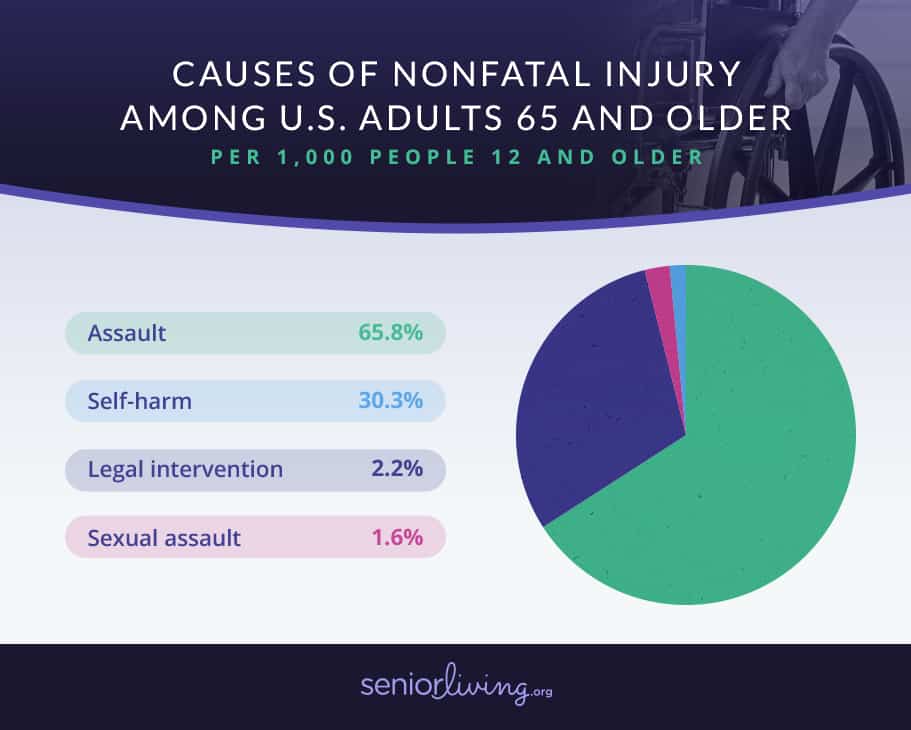 Among all other Americans, nonfatal self-harm injuries are much less common (approximately 19 percent), and while police incidents account for a still-small proportion of nonfatal injuries, legal intervention is slightly more common for those under 65.
METHOD
Most nonfatal assaults of older Americans involved striking or physical contact, but nearly 1 in 5 were poisonings, according to 2023 CDC injury
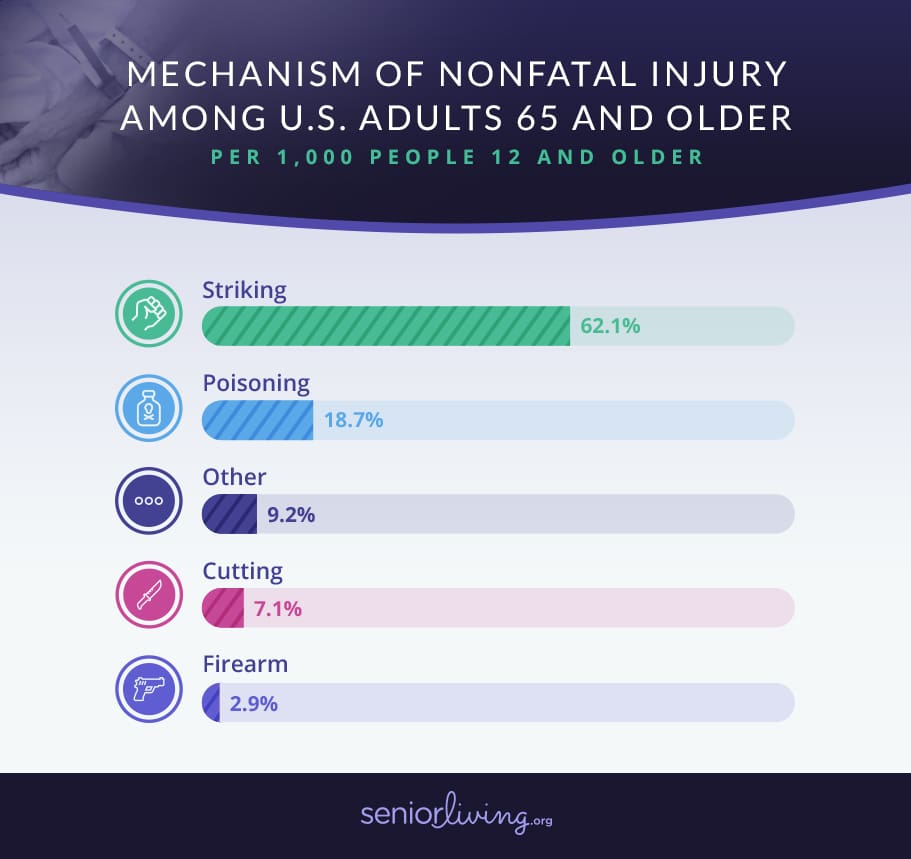 Poisoning-related injuries are much less common for Americans under 65, though that still accounts for more than 1 in 10 injuries. Among those under 65, approximately 10 percent of nonfatal injuries were caused by poisoning.
AGE
Among older Americans, those who are the youngest in the age group have by far the highest rate of nonfatal violent injuries.
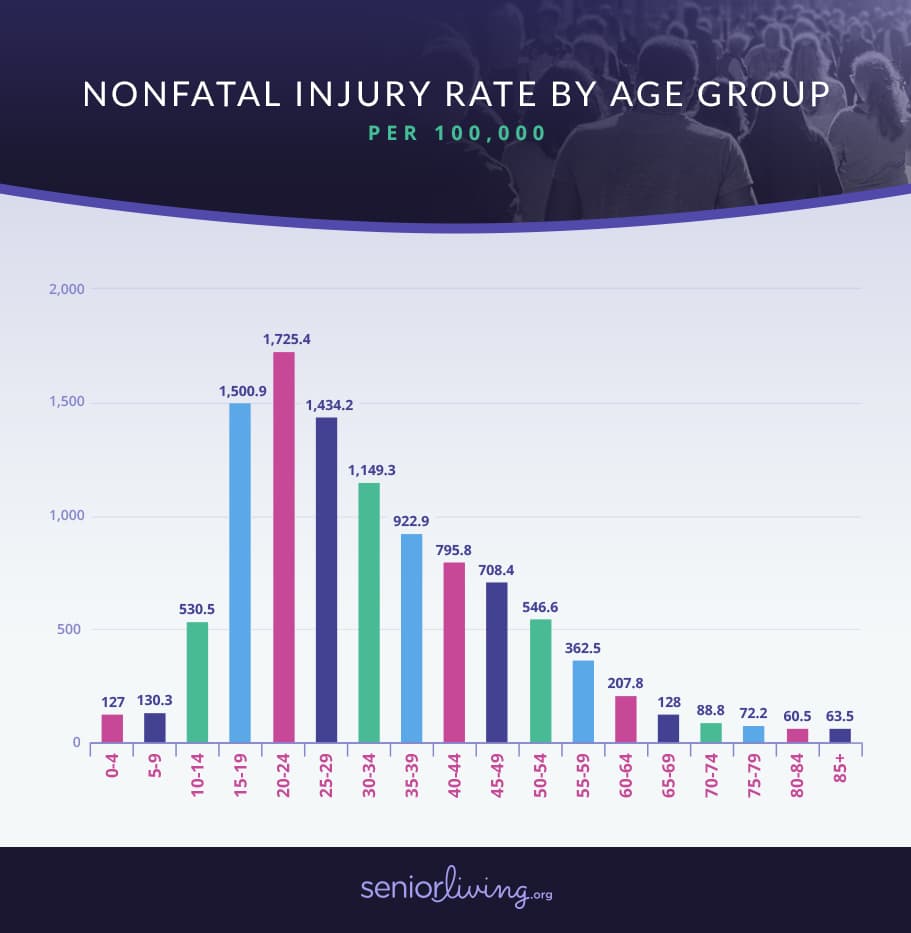 Violent injuries to Americans between 65 and 69 remain elevated compared to older age groups. However, those between 15 and 24 are by far the most likely to be the victim of such incidents, according to 2023 CDC data.
ELDER ABUSE: HOW TO SPOT IT & STOP IT
Elder abuse includes physical abuse or assault, emotional abuse, neglect, exploitation, sexual abuse or assault, and abandonment. While perpetrators can include strangers, older Americans often are victimized by people they know, including children, spouses, and other caregivers.
While CDC statistics show us elder abuse continues to be a significant concern in the United States, the truth is that the majority of elder abuse incidents are never reported to police. In fact, research indicates that only about 1 in 14 cases of elder abuse are reported to authorities, meaning approximately 93 percent go
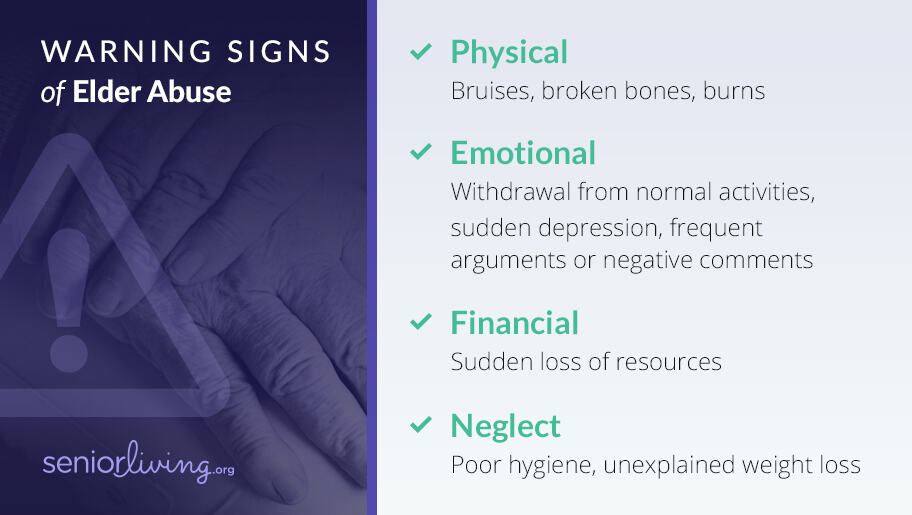
How can you spot elder abuse? The National Institute on Aging says the warning signs of elder abuse
- Unexplained injuries such as bruises, burns, or fractures
- Sudden changes in financial situations or unexplained withdrawals
- Poor hygiene or living conditions
- Withdrawal from normal activities or social interactions
- Unusual behavior from caregivers, such as preventing visitors or speaking for the older adult
- Signs of emotional distress, including anxiety, depression, or fearfulness
- Bedsores, weight loss, or other signs of inadequate care
 If you suspect elder abuse, what should you do? In most states, laws specifically prohibit elder abuse and statutes outline specific penalties for those who break such laws. Contact your local police and/or adult protective services immediately. You can also call the National Elder Abuse Hotline at 1-800-677-1116 for guidance and resources.
FYI: Worried about keeping yourself or a loved one safe? There are many safety precautions for older adults you can take.
CONCLUSION
As we age, many parts of our lives begin to undergo major changes. We stop working. For those of us who are lucky, the stresses of everyday life become less significant. But with data showing persistent concerns about violence against older adults, it’s clear far too many older Americans are stuck in situations that are dangerous and potentially deadly.
ABOUT THIS REPORT
Where possible, we’ve linked to the original sources throughout this story. Several insights are based on data contained within the CDC’s WISQARS tool, which covers fatal and nonfatal injury information. We used the data filtering tools on the site to determine state-level violent death and national violent injury rates. This analysis incorporates the most recent data available through 2023.
FAIR USE STATEMENT
Feel free to share the material on this page for noncommercial purposes. When using any text or images from this page, please properly attribute the material and include a link back to the URL of this page.